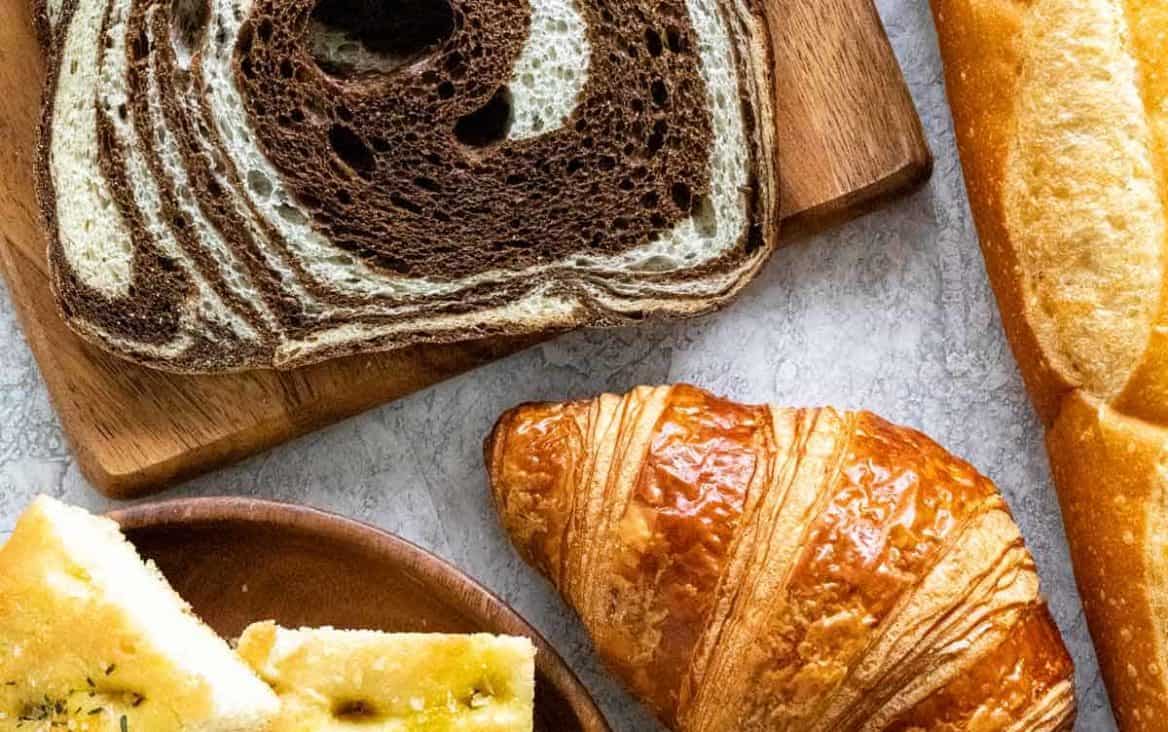
Bake with confidence using my tested bread recipes, from soft dinner rolls and hearty loaves to scones, biscuits, and quick breads. I explain how yeast and leavening work, so your baked goods rise beautifully every time.
Yeast is what makes bread rise. As it ferments, it releases carbon dioxide that gets trapped in the dough’s stretchy gluten network, giving loaves a light, airy crumb and deeper flavor.
Essential tips and tricks for baking with yeast. Learn about the common types available at the market and how to substitute these ingredients accordingly. Prepare to have your baking knowledge rise to new heights! The smell of freshly baked bread is one of life’s many gifts. From crusty baguettes and foldable slices of pizza to…
Soft, fluffy rolls and buns come from enriched doughs. Yeast makes them rise, while butter, milk, eggs, and sugar tenderize the dough so they bake or steam up pillowy and light.
Quick breads skip the yeast and rise with baking soda or baking powder instead. Mix the batter just until combined for a tender crumb, since overmixing makes loaves dense and tough.
A hot oven gives muffins a quick burst of rise for tall, domed tops. Stir the batter gently and only until the flour disappears, so the inside stays soft and tender.
For flaky biscuits and tender scones, keep the butter cold. As the cold butter melts in the hot oven, it releases steam that puffs the dough into light, flaky layers.
Cornmeal gives cornbread its hearty texture and sweet corn flavor. A hot oven sets the batter quickly, baking up a golden crust with a moist, tender center.