
Made by bees entirely from flower nectar, honey is one of the oldest sweeteners in the kitchen. But not all honey tastes the same. Depending on the flowers the bees visit, it can be pale and delicate or dark and malty. Here’s a guide to the most popular types of honey, the different forms you’ll find, and how to store, bake, and cook with them.

What Is Honey?
Honey is a natural sweetener made by honeybees from the nectar of flowering plants. According to the National Honey Board, bees travel about 55,000 miles and visit more than two million flowers to gather enough nectar for just one pound of honey. Bees make honey to store as food for the winter, and luckily for us, a healthy hive produces more than it needs.
How Do Bees Make Honey?
Honeybees collect nectar from flowers and carry it in a special second stomach called a crop. Back at the hive, the nectar is passed between bees, and enzymes break its sucrose down into simpler sugars, mainly fructose and glucose. The bees deposit the nectar into the wax cells of the honeycomb, then fan it with their wings to evaporate much of the water. Once it’s thick and concentrated, they seal each cell with beeswax to store it.
Why Honey Tastes Different
Every flower’s nectar has its own aroma and flavor, and that comes through in the honey. Much of the honey you’ll find at the store is polyfloral, or wildflower honey, made from the nectar of many different flowers. Monofloral (single-varietal) honey comes from hives placed near one main type of flower, crop, or tree, so it takes on that plant’s distinct flavor.
Color is a helpful clue. Lighter honeys, like clover and acacia, tend to be mild and delicate. Darker honeys, like buckwheat and avocado, have stronger, richer, more molasses-like flavors.
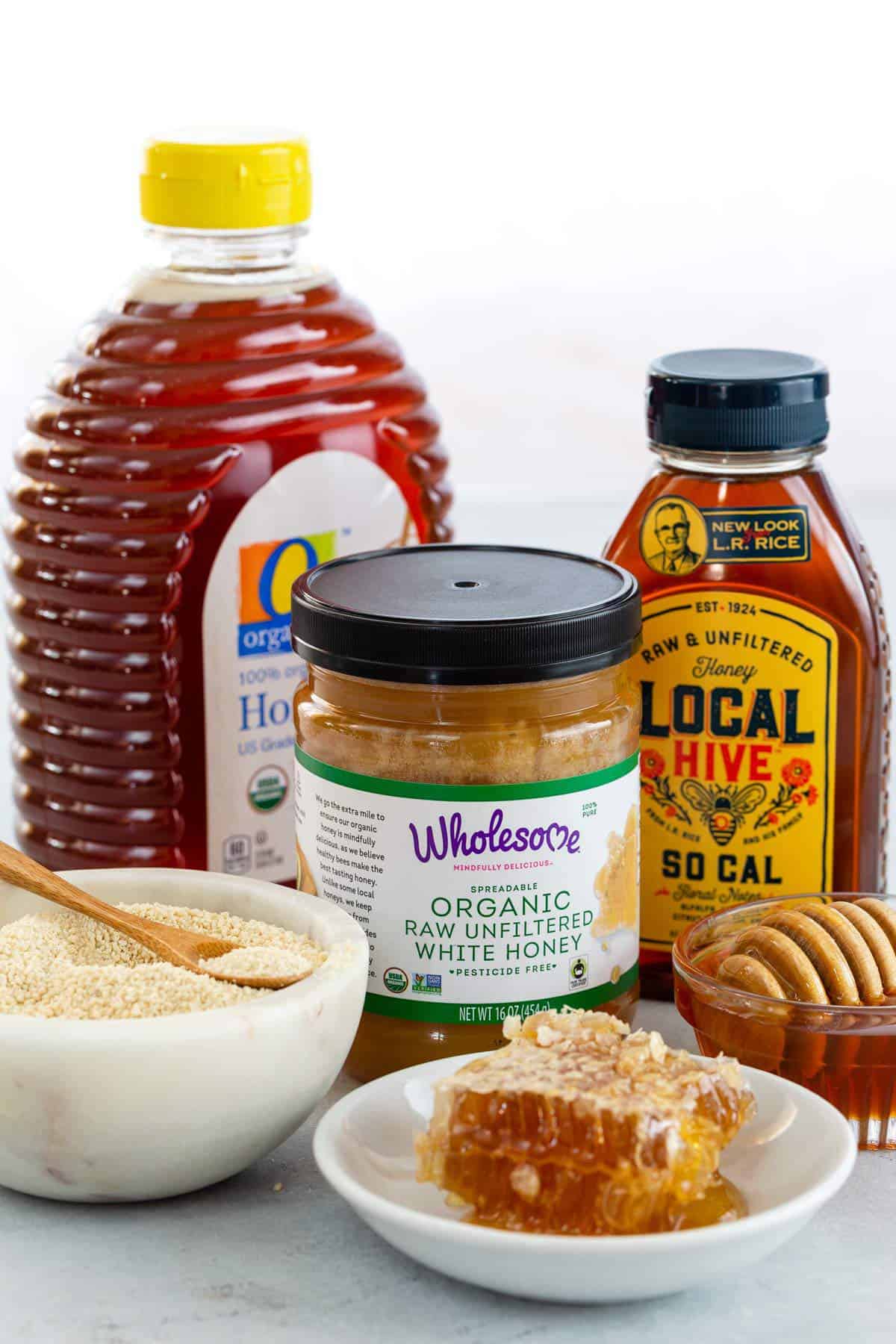
Types of Honey at a Glance
| Type | Color | Flavor | Best Uses |
|---|---|---|---|
| Clover | Light | Mild, sweet, floral | Everyday baking, tea, dressings |
| Wildflower | Light to amber | Varies by season and region | Toast, yogurt, marinades |
| Alfalfa | Light | Mild, slightly spicy | Everyday cooking and baking |
| Orange blossom | Light | Citrusy, floral | Tea, desserts, fruit, glazes |
| Acacia | Very light | Delicate, clean, mildly sweet | Drizzling, tea, cheese boards |
| Sage | Light | Mild, sweet | Drizzling, baking |
| Tupelo | Light amber | Buttery, floral | Biscuits, cornbread, tea |
| Sourwood | Light amber | Buttery, slightly spicy | Biscuits, desserts |
| Basswood | Light | Fresh, bright, slightly sharp | Tea, dressings |
| Blueberry | Light amber | Fruity | Pancakes, yogurt, baking |
| Rosemary | Light | Herbal | Roasted vegetables, cheese |
| Eucalyptus | Amber | Herbal, slightly menthol | Tea, marinades |
| Avocado | Dark | Rich, buttery, molasses-like | Baking, sauces |
| Buckwheat | Dark | Bold, malty, molasses-like | Barbecue sauce, gingerbread, rye breads |
| Manuka | Dark | Earthy, slightly bitter | Eating by the spoonful, tea |
Popular Types of Honey
Clover Honey
One of the most common honeys in the U.S. It’s light in color with a mild, sweet, floral flavor, making it a great all-purpose honey for baking and cooking.
Wildflower Honey
Made from the nectar of many different flowers, wildflower honey varies in color and flavor depending on the region and season. Local wildflower honey is a fun way to taste what’s blooming near you.
Alfalfa Honey
A good honey for everyday use, alfalfa honey is light in color with a mild flavor.
Orange Blossom Honey
Made from citrus blossoms, this honey is sweet with a light citrusy, floral flavor that’s lovely in tea and desserts.
Acacia Honey
Very pale with a delicate, clean sweetness. Because it’s high in fructose, it stays liquid for a long time before crystallizing.
Sage Honey
A light-colored, mildly sweet honey that also stays liquid longer than many varieties.
Tupelo Honey
Made from the white Ogeechee tupelo tree in the southeastern U.S., this light amber honey has a buttery, floral flavor and a devoted following. Like acacia, it’s slow to crystallize.
Sourwood Honey
Made from sourwood trees in the Appalachian Mountains, sourwood honey has a slightly buttery, spicy flavor.
Basswood Honey
Also called linden honey, it’s one of the lightest honeys, with a fresh, slightly sharp flavor.
Blueberry Honey
Made from the flowers of blueberry bushes, this honey is light amber with a mild, fruity flavor.
Rosemary Honey
Light in color with a noticeable herbal flavor from the rosemary plant. Try it drizzled over roasted vegetables or cheese.
Eucalyptus Honey
An amber honey with an herbal aroma and a hint of menthol. Its flavor pairs well with tea.
Avocado Honey
Despite the name, it doesn’t taste like avocados. Made from avocado tree blossoms, it’s dark with a rich, buttery, molasses-like flavor.
Buckwheat Honey
A dark honey with a bold, malty flavor similar to molasses. It stands up well to spices in gingerbread and barbecue sauce.
Manuka Honey
Made from the flowers of the manuka tree in New Zealand, manuka honey is dark and thick with an earthy, slightly bitter flavor. It’s one of the most expensive honeys, so it’s best enjoyed on its own rather than baked.
Raw vs. Processed Honey

Raw honey is taken straight from the hive and only strained to remove bits of wax and debris. It isn’t heated, so it keeps its full floral aroma and may contain tiny particles of pollen. It often looks cloudy and tends to crystallize sooner.
Most honey sold in squeeze bottles has been gently heated and finely filtered. This makes it clear and keeps it liquid longer on the shelf, though heating can mute some of the more delicate floral flavors.
Important: Never give honey of any kind, raw or processed, to babies under 12 months old. Honey can contain spores of the bacteria that cause infant botulism, which heating doesn’t reliably destroy. Honey in baked goods is also not recommended for infants.
Forms of Honey

- Liquid honey: The most common form, extracted from the honeycomb and strained or filtered.
- Comb honey: Honey still sealed in the beeswax comb, just as the bees stored it. The wax is edible and chewy.
- Chunk honey: A piece of honeycomb in a jar with liquid honey poured over it.
- Creamed honey: Also called whipped or spun honey. It’s honey that’s been crystallized in a controlled way so the crystals stay very fine, giving it a smooth, spreadable texture like soft butter.
- Dried or granulated honey: Honey that’s been dehydrated into crystals or powder for use in dry mixes and baking.

Why Honey Crystallizes
Honey is a supersaturated sugar solution, meaning it holds more sugar than water can normally keep dissolved. Over time, the glucose naturally separates out and forms crystals, turning the honey cloudy and grainy. Crystallization is completely normal and doesn’t mean the honey has spoiled. Honeys with more glucose, like clover and dandelion, crystallize faster, while high-fructose honeys like acacia, sage, and tupelo stay liquid longer. Cool temperatures speed up the process, which is why honey firms up in the refrigerator.
How to Store Honey
Store honey in a tightly sealed jar in a cool, dry cupboard or pantry, away from heat and sunlight. Thanks to its low moisture and natural acidity, honey keeps almost indefinitely. Keep the rim of the jar clean, use clean, dry utensils, and avoid letting water get into the jar. Skip the refrigerator, since it speeds up crystallization.
How to Decrystallize Honey
To bring crystallized honey back to a smooth liquid, set the jar in a bowl of warm water and let it sit, stirring occasionally, until the crystals dissolve. You can also spoon it into a microwave-safe bowl and warm it on the lowest power setting in short bursts, just until it starts to melt around the edges, then let it finish liquefying at room temperature. Avoid boiling or overheating, which can darken the honey and dull its flavor.
Baking with Honey
Honey adds moisture, a lovely floral flavor, and a golden color to baked goods. Because it’s a liquid and slightly acidic, it changes how a recipe behaves, so a few adjustments help when substituting it for sugar:
- Use ½ to ⅔ cup of honey for each 1 cup of sugar. Honey is denser and sweeter than granulated sugar, so you need less. Start at the lower end with darker, stronger-flavored honeys.
- Reduce the other liquids in the recipe by ¼ cup for each 1 cup of honey, since honey is about 17 to 20% water.
- Add ¼ teaspoon of baking soda for each 1 cup of honey, if the recipe doesn’t already call for it, to balance honey’s acidity and help with rise.
- Lower the oven temperature by 25°F. The sugars in honey brown faster, thanks to browning reactions, so this helps prevent over-browning.
For your first try, replace half of the sugar with honey, then adjust from there. The flavor and texture won’t be exactly the same, but honey also helps baked goods stay moist and soft longer. Try it in my honey cornbread muffins. Find more swaps in my guide to common baking substitutes.
Cooking with Honey
Measuring sticky honey is easier if you lightly coat the measuring cup or spoon with cooking spray or oil first, so the honey slides right out. Here are some of my favorite ways to use it:
- Dressings: Whisk a spoonful into a vinaigrette with Dijon mustard to balance the acidity.
- Glazes: Brush it on meats and vegetables near the end of cooking, like honey glazed ham or baked honey mustard chicken, so the sugars caramelize without burning.
- Marinades and sauces: Honey adds balance to salty and spicy flavors, like in honey garlic shrimp, honey hot wings, and other marinades.
- Breakfast: Drizzle it over yogurt, oatmeal, or pancakes, or use it to sweeten homemade granola.
- Cheese boards: Pair a delicate honey or comb honey with cheese, or try baked brie in puff pastry.
- Drinks: Honey dissolves easily in warm liquids, so it’s perfect for tea, lemonade, and cocktails.
Is Honey Vegan?
No. Honey is made by bees, so it’s not considered vegan. Maple syrup and agave are popular plant-based alternatives. Learn more in my vegan food list. Honey is commonly used in paleo cooking, but it isn’t allowed on the Whole30, which excludes all added sweeteners.
Recipes with Honey
- Honey Cornbread Muffins
- Honey Garlic Shrimp
- Honey Hot Wings
- Slow Cooker Honey Garlic Chicken
- Baked Honey Mustard Chicken
- Baked Honey Glazed Ham
- Grilled Pork Chops with Honey Mustard Glaze
- Honey Orange Glazed Brussels Sprouts
Frequently Asked Questions
Clover honey is one of the most common honeys in the U.S. Wildflower honey, made from many different flowers, is also widely available.
Stored in a sealed container at room temperature, honey keeps almost indefinitely. It may crystallize or darken over time, which is normal. If it smells sour or fermented, which can happen if water gets in, discard it.
Yes. Crystallization is a natural process and doesn’t mean the honey has spoiled. Warm it gently in a bowl of warm water to make it smooth again.
Yes, with a few adjustments. Use ½ to ⅔ cup of honey per cup of sugar, reduce other liquids by ¼ cup per cup of honey, add ¼ teaspoon baking soda per cup of honey, and lower the oven temperature by 25°F.
No. Don’t give honey in any form to babies under 12 months old because of the risk of infant botulism.




Leave a Comment