
So, you’re in the market for some new pots and pans. Before you stick with nonstick or buy something new and funky (silicone, maybe?), let’s talk about the pros and cons of all the types of cookware materials.
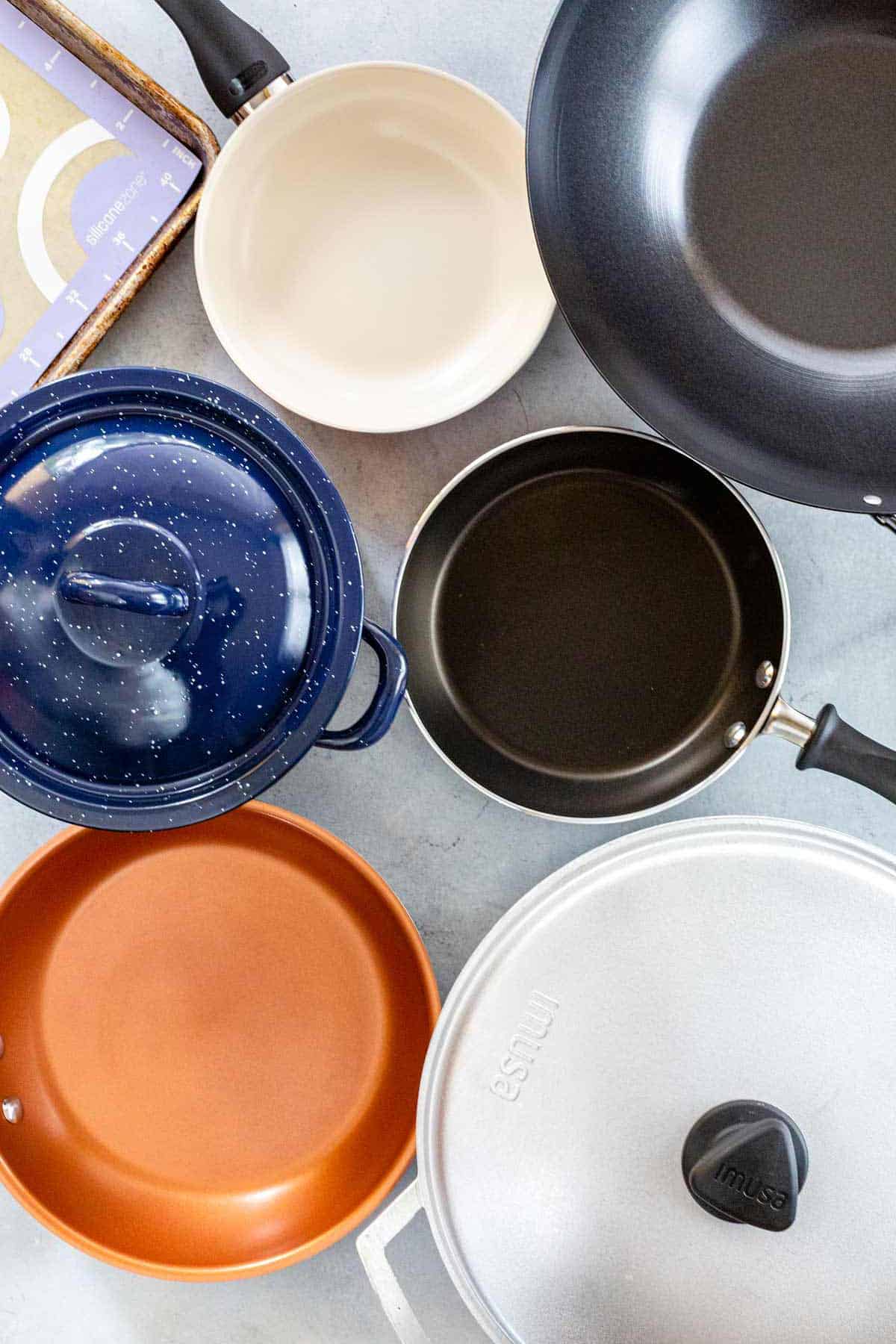
You have so many options when it comes to cookware that it can feel a little overwhelming. Which material is the best? Which lasts longer? Which is most versatile?
Each of the different types of pans has its pros and cons, so it’s really about choosing what’s best for your cooking style. This quick guide covers what makes each material great and what its drawbacks are.
Jump To a Section
Types of Pan Materials at a Glance
Here’s a quick comparison of the most common pan materials, what each one does best, and what to watch out for. Induction cooktops only work with magnetic pans, so if a magnet sticks to the bottom of a pan, it’s induction-ready.
| Material | Best for | Watch out for | Induction? |
|---|---|---|---|
| Cast iron | Searing and high heat; goes from stovetop to oven; holds heat well | Needs seasoning; can rust; not for acidic foods | Yes |
| Enameled cast iron | Cast iron cooking without seasoning; fine for acidic foods | Pricey and heavy; less nonstick than seasoned cast iron | Yes |
| Stainless steel | Nonreactive for acidic foods; dishwasher safe; oven safe with all-steel handles | Food can stick and burn on; heats less evenly unless it has an aluminum or copper core | Most |
| Carbon steel | Searing and stir-frying; lighter than cast iron; nonstick when seasoned | Needs seasoning; hand wash only; not for acidic foods | Yes |
| Copper | Quick, even heating that responds fast to temperature changes | Expensive; needs polishing; reacts with acidic and alkaline foods | Only with a magnetic base |
| Aluminum | Lightweight and affordable; anodized is sturdier and scratch-resistant | Regular aluminum reacts with some foods; anodized costs more | Only with a magnetic base |
| Hard-anodized aluminum | Durable, scratch-resistant pans that heat evenly; a common base for nonstick | Costs more than regular aluminum | Only with a magnetic base |
| Nonstick | Delicate foods, easy cleanup, and cooking with less oil | Coating wears over time; avoid high heat and metal utensils | Depends on the base |
| Glass | Casseroles and baking dishes that go straight to the table | Not nonstick; food can burn; uneven heat | No |
| Ceramic | Nonstick cooking without a PTFE (Teflon) coating | Nonstick quality fades; hand wash only | Depends on the base |
| Silicone | Nonstick, stain-resistant bakeware like baking mats | Less long-term research on it | No |
Cast Iron

Virtually indestructible, cast iron is an old-fashioned cooking material that develops a natural nonstick seasoning when it’s cared for properly.
Pros: It’s affordable and durable. It’s also versatile and can handle high heat, going from the stovetop to the oven. It holds heat well, so once it’s preheated, it cooks food evenly and sears steaks beautifully.
Cons: It needs a little more TLC to clean and maintain than some other materials. It’s not ideal for cooking acidic foods, which can strip the seasoning. It can also rust if it isn’t maintained properly.
Enameled Cast Iron

Enameled cast iron has a porcelain enamel coating that prevents rust and makes cleanup easier. Like regular cast iron, it can go from the stovetop to the oven, and it’s a popular material for a Dutch oven for soups and stews.
Pros: It has the cooking benefits of cast iron but cleans up more easily and doesn’t need seasoning. It’s better for cooking acidic foods like tomato sauce, since there’s no seasoning to strip and the food won’t react with the iron.
Cons: It’s pricey, and it isn’t always as nonstick as a well-seasoned cast iron pan. It’s also heavy, which can make storing it tricky.
If you’re shopping for a piece, here are my picks for the best enameled cast iron cookware.
Stainless Steel

Stainless steel cookware is a popular choice, but it’s not all created equal, and the higher-end lines deliver better results.
Pros: It’s nonreactive, so it won’t affect the taste of your food when cooking with acidic or alkaline ingredients. It’s also dishwasher safe, and oven safe as long as the handles are all stainless steel.
Cons: On its own, it doesn’t distribute heat as well as some other materials, though higher-end lines add an aluminum or copper core to fix this. It’s also tougher to clean, since burnt-on food can really cling to the surface. Here’s how to clean stainless steel pans.
Carbon Steel

Carbon steel pans are made mostly of iron with a little carbon. They’re durable like cast iron but much thinner, and carbon steel is the classic material for a wok.
Pros: Like cast iron, it holds heat well, which makes it ideal for searing. However, it’s much lighter than cast iron. As long as it’s seasoned properly, it stays naturally nonstick.
Cons: It needs seasoning to maintain, and cleaning isn’t the easiest. It’s not dishwasher safe, and you shouldn’t cook acidic foods in carbon steel pans.
Copper

While copper can look like a novelty item, it’s not ideal for everyday cooking.
Pros: It conducts heat quickly and evenly, so it cooks food evenly and responds fast when you adjust the heat. That’s why some manufacturers add copper to the core of stainless steel pans, which otherwise heat less evenly.
Cons: It doesn’t come cheap. It also needs polishing with lemon or vinegar and salt to keep it in good condition. Like cast iron, it reacts with acidic and alkaline foods, which can give them a metallic taste.
Aluminum

There are two types of aluminum you’ll find on shelves: regular aluminum and anodized aluminum. Each has its own pros and cons.
Pros: Regular aluminum is lightweight and affordable, and it heats quickly and evenly. Anodized aluminum is sturdier, more durable, and more scratch-resistant than regular aluminum.
Cons: Regular aluminum has the same drawback as copper: it reacts with certain foods. That makes anodized aluminum the better choice for cooking, though it’s more expensive.
Hard-Anodized Aluminum
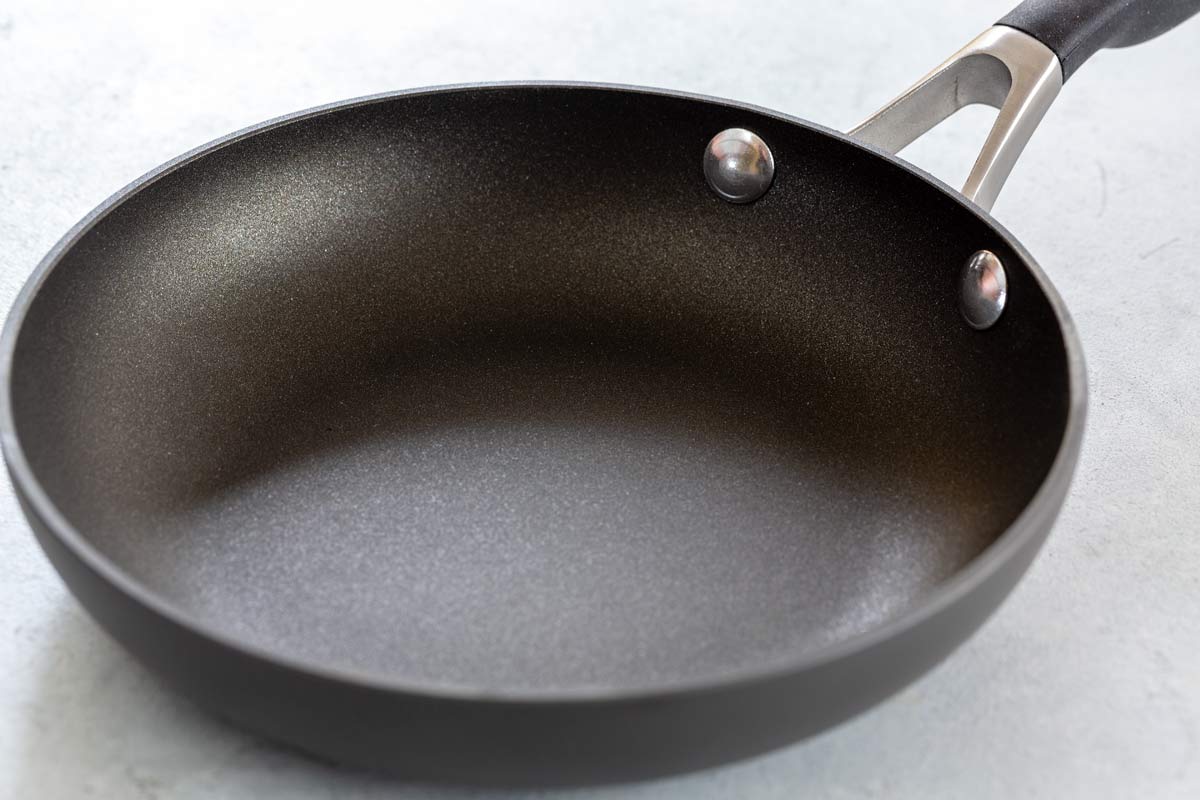
Hard-anodized aluminum is aluminum that’s been treated to form a hard, tough surface layer. It’s the base of many nonstick pans, which pair the even heating of aluminum with a nonstick coating.
Pros: It heats quickly and evenly like regular aluminum, but it’s much more durable and scratch-resistant. It’s also less reactive, so it holds up better with acidic foods.
Cons: It costs more than regular aluminum. Most hard-anodized pans don’t work on induction cooktops unless they have a magnetic steel base, and pans with a nonstick coating need the same care as other nonstick pans.
Nonstick

It’s a go-to cookware material for delicate foods like eggs and fish, and there are real advantages to cooking with nonstick pans and pots as long as you keep a few rules in mind.
Pros: The most obvious benefit is in the name: they’re nonstick. The smooth coating is easy to clean and needs less oil when cooking.
Cons: The coating can wear, chip, or flake over time, especially with high heat or metal utensils. Higher-quality pans tend to hold up better, but they’re usually more expensive. Avoid heating the pan without oil and skip very high heat, and you’ll get more use out of it.
Glass

Glass is typically reserved for casserole and baking dishes. You don’t come across many people cooking with glass pots and pans. They aren’t as widely produced, but they are available.
Pros: The biggest pro is that you can see the food as it cooks, so it’s easy to keep an eye on its progress. Glass dishes also double nicely as serving dishes, so you don’t have to change dishes before serving.
Cons: It isn’t nonstick, so food is more prone to sticking and burning. Compared to other materials, its heat distribution isn’t great.
Ceramic

While it’s often called ceramic nonstick cookware, it’s usually an aluminum pan with a silica-based coating that has a ceramic-like finish.
Pros: It’s nonstick, though not as slick as regular nonstick pans. It doesn’t use a PTFE (Teflon) coating, and it’s thought to be more environmentally friendly.
Cons: The nonstick quality can fade over time. It’s not dishwasher safe, since the dishwasher can wear down the coating.
Silicone

Silicone is made from bonded silicon and oxygen. In the kitchen, you’ll mostly find it as bakeware, like baking mats and molds, rather than stovetop pans.
Pros: It’s stain-resistant, easy to clean, and nonstick.
Cons: Because it’s newer to the market, there’s less long-term research on it.
Which Pan to Use for Which Job
Most kitchens do best with a few different pan materials. Here’s where each one shines:
- Eggs, pancakes, and delicate fish: nonstick or ceramic
- Searing steaks and chicken: cast iron or carbon steel
- Stir-frying: a carbon steel wok
- Tomato sauces and other acidic dishes: stainless steel or enameled cast iron
- Pan sauces: stainless steel, which builds flavorful browned bits on the bottom of the pan
- Soups, stews, and braises: an enameled cast iron Dutch oven
- Casseroles and baked dishes: glass
- Lining baking sheets: a silicone baking mat
More Kitchen Tool Guides


Frequently Asked Questions
There isn’t one best material. Each type has its pros and cons, so the right pan depends on how you cook. Cast iron and carbon steel are great for searing, stainless steel and enameled cast iron handle acidic foods, and nonstick is the go-to for delicate foods.
Stainless steel and enameled cast iron are nonreactive, so they’re the best choices for acidic ingredients. Cast iron, carbon steel, copper, and regular aluminum can react with acidic foods and affect their flavor.
Cast iron and enameled cast iron can go from the stovetop to the oven, and so can stainless steel pans with all-stainless-steel handles. Glass is typically used for casseroles and baking dishes.
Induction cooktops need magnetic cookware. Cast iron, enameled cast iron, carbon steel, and most stainless steel pans work. Aluminum, copper, and glass don’t unless the pan has a magnetic steel base. A quick test: if a magnet sticks to the bottom of the pan, it will work on induction.
Stainless steel is dishwasher safe. Wash cast iron, carbon steel, and ceramic nonstick pans by hand to protect their seasoning or coating.
Regular aluminum is lightweight, affordable, and heats quickly, but it reacts with certain foods. Anodized aluminum is sturdier, more scratch-resistant, and less reactive, though it costs more.
Most kitchens end up with a mix of materials, so choose the pans that fit the way you cook most often!


Anthony Darpino says
Your image for a copper pan is not copper. It’s aluminum with a copper-colored nonstick surface. Also, copper does not retain heat. Instead, it is highly conducive so heat transfers through it very rapidly. It heats up fast and cools down faster than any other commonly used material. This “responsiveness” is what makes copper cookware so special, as it gives chefs very close control over heat application.
Jessica Gavin says
Hi Anthony, thanks for note and insights! I updated the image.
Cherylynn says
Thank you for this information. Very helpful. I would be interested in knowing which brands you would recommend in different cookware.
Harshad says
Hi I will recommend Aluminium nonstick cookware for vegetarians recipe as it is not cooked on very high flame whereas for nonveg they can use stainless steel cookware or ceramic coated cookware As they can be easily washed
Jon Einar Mattias Visser says
I do not recomend a particular brand, but I always rather go and buy pans in a shop. This way I can check out the construction of the pan, if ithas flaws and what not.
I look at what type of material (refer to the article), type of handle (avoid screw handles if possible) and what your goal is with cooking.
If you like to put your pan in the oven, look for steel handles. Some cookware has removable handles for this purpose, which may help with space for other things in your oven.
A wok pan is fine with a non oven compliable handle like wood. This type of handle can help with heat dissipation, a wok pan gets ultra hot. Wood is common on a wok pan. Try to avoid plastic though. This is not durable and becomes nasty real fast.
As for the type of handle fastening method, riveted or welded handles are superior. Riveted handles are potentially harder to clean on frying pans and the like (portrusions in the pan); welded handles are easy to clean but a fail is fatal. It will snap of rather than get loose like a riveted handle. It is fixable, although a riveted handle is easyer to fix at home (who can weld at home anyways…?)
As for copper pans and aluminium, they are almostalways riveted because welding these materials is pretty hard!
The last type of handle is the one piece mould, commonly found on cast iron: this is very durable! And really good, though it can get wuite hot so be carefull.