

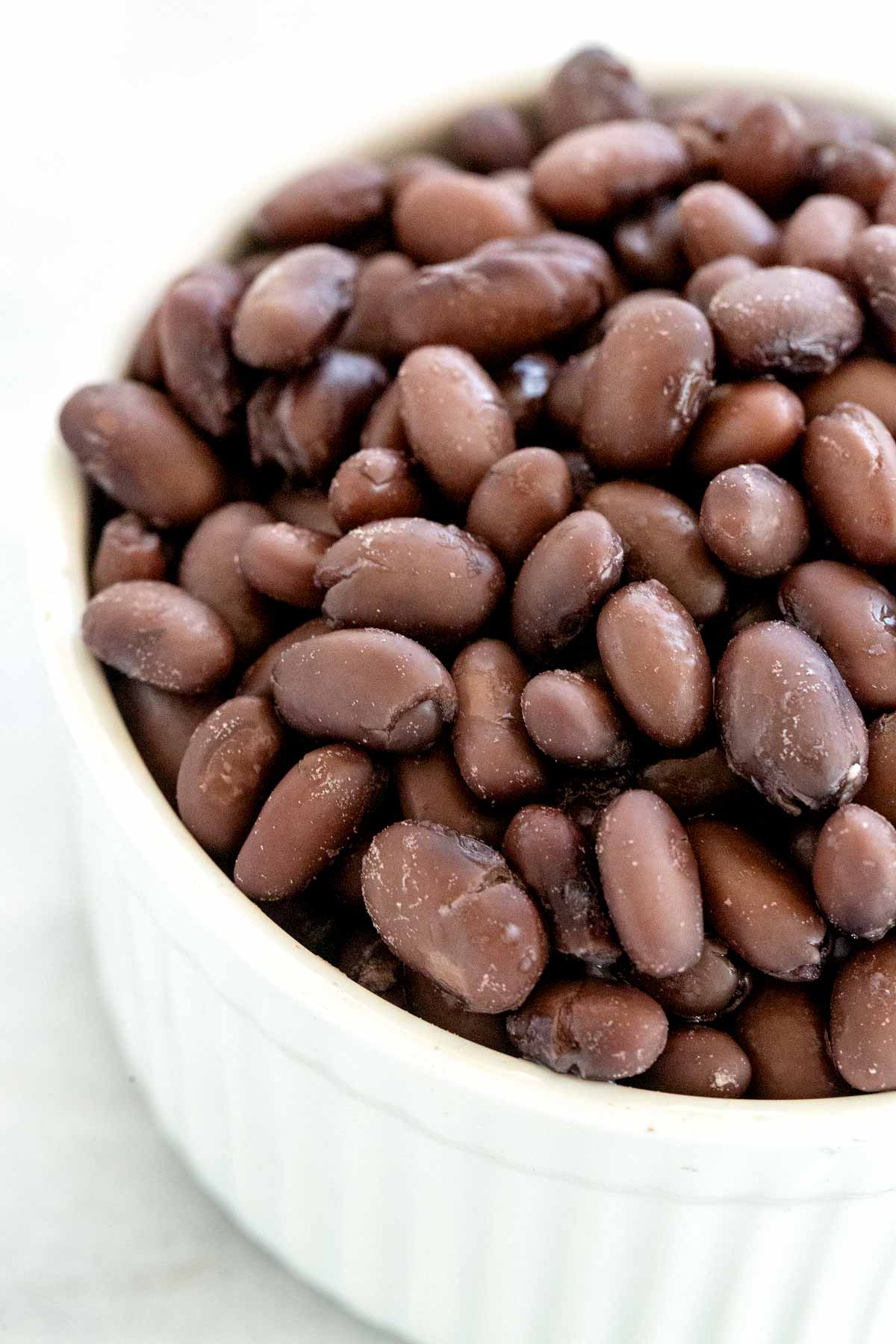
Learn how to cook black beans like a pro! For tender, creamy legumes, follow these easy tips for soaking and finishing them on the stovetop. Add perfectly cooked beans to salads, dips, soups, stews, chilis, and side dishes for a boost of protein and fiber.
Jessica’s Recipe Science
- Soaking rehydrates the beans before cooking, helping water reach the starchy center for more even cooking and a creamier texture.
- Salt seasons the beans from the inside out as they soak, while water softens the outer seed coat and prepares the beans for cooking.
- Gentle simmering lets the beans’ starches absorb water, and the pectin in their cell walls breaks down without bursting.
Featured Comment 18
“Just made your black beans, very tasty. Soaked overnight, cooked 1 ½ hours in salt water with bay leaf. Excellent!!!”—Judee J.
Why It Works
Learning how to cook black beans on the stovetop from scratch is easy, affordable, and yields the best flavor. Of course, there’s no denying that pre-cooked canned beans are super convenient. It’s often my go-to option when I need a quick vegetarian protein, but unfortunately, they tend to be mushy and over-saturated with sodium.
The process is straightforward: soaking the beans in salt water softens the skins so that the outside is edible and the interiors are soft. For those short on time, I share a “quick soak” option, or you can add a pinch of baking soda to speed up the cooking time.
Jump To a Section
Ingredients You’ll Need
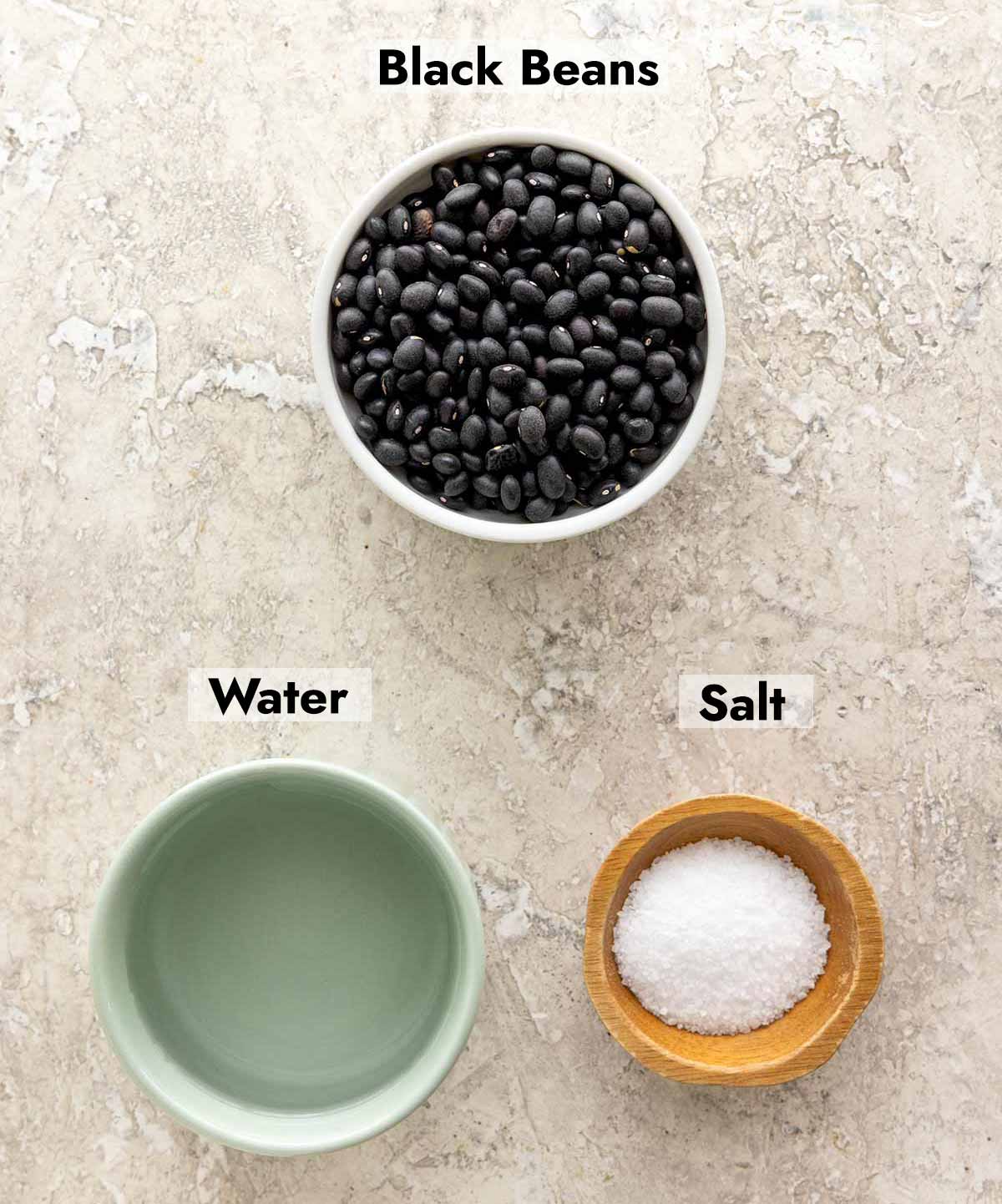
- Beans: Dry black beans are an affordable grocery store option. It’s a pantry staple, so I can make this delicious side dish anytime.
- Water: During soaking, water rehydrates the dried beans, helping them cook more evenly and reducing cooking time. During cooking, it provides the moisture needed to soften the beans and hydrate their starches, creating a tender, creamy texture.
- Salt: During soaking, salt penetrates the beans, seasoning them throughout and helping them retain their structure as they hydrate. During cooking, it continues to season the beans from the inside out, resulting in more flavorful, evenly seasoned beans.
See the recipe card below for all ingredients and measurements (US and metric).
Ingredient Substitutions
- Bean Swaps: You can use other types of beans for this soaking and cooking method. Try kidney beans, cannellini, lima, pinto, or chickpeas. Keep the soak time the same, but adjust cook time as needed.
- Salt: You can use other types of salt. You can replace coarse sea salt 1:1 with kosher salt. If using table salt, add 1 tablespoon for soaking and ½ teaspoon for cooking. Adjust the seasoning to taste after cooking.
- Liquid Options: To add more flavor to the cooking liquid, you can use vegetable stock/broth, chicken stock, or chicken broth.
- Flavoring: As the beans simmer, add more aromatics and flavor to the cooking liquid. Sauté diced onion in olive oil, then add garlic, bay leaves, oregano, or seasonings like cumin, coriander, black pepper, and chili powder to boost flavor.
- Acidic Ingredients: Add acidic ingredients like tomatoes, lemon or lime juice, or vinegar toward the end of cooking. Acid makes the skins stay firm, so the beans will never cook through.
How to Cook Dried Black Beans
Step 1: Prepare the Black Beans
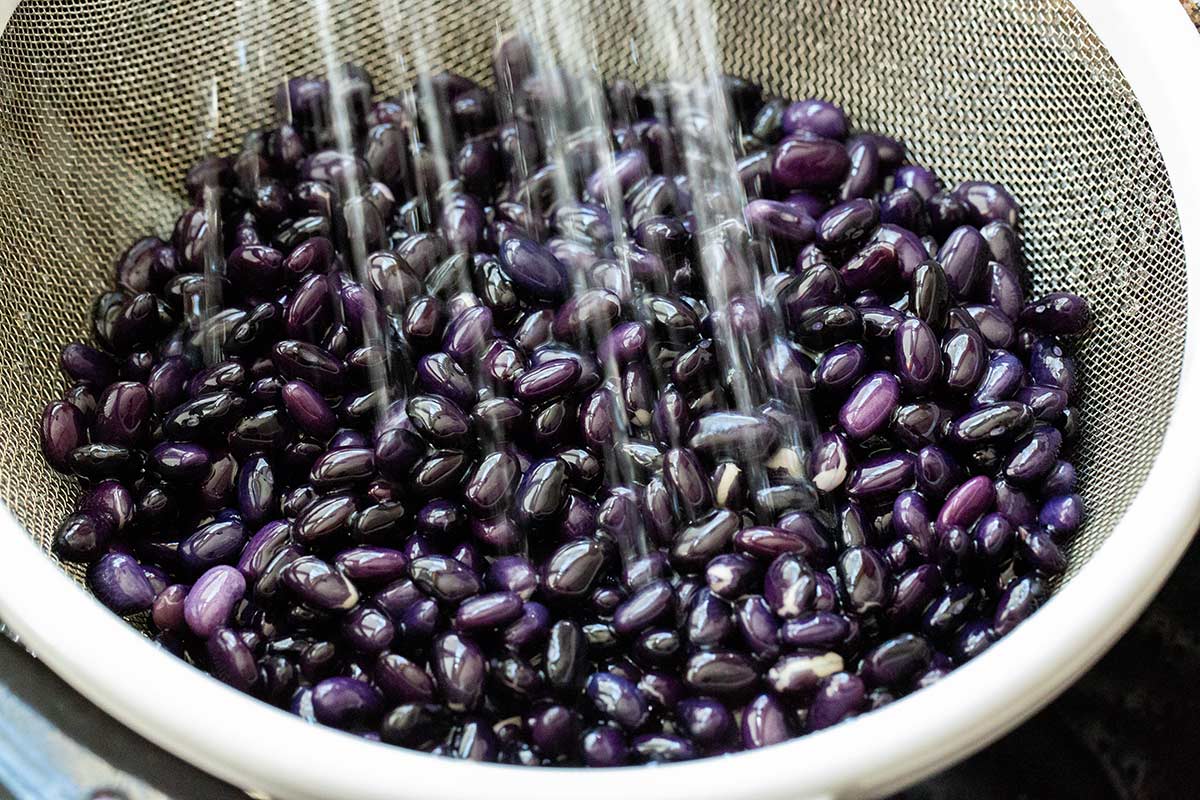
Pour the dried beans into a colander and discard any broken beans. They aren’t unsafe to eat, but they can cook faster than whole beans and become soft or mushy before the rest of the beans are fully tender. Picking through the beans also lets you remove any small stones or other debris that may be mixed in. Rinse the unsoaked beans well to clean the surface.
Step 2: Soak the Black Beans
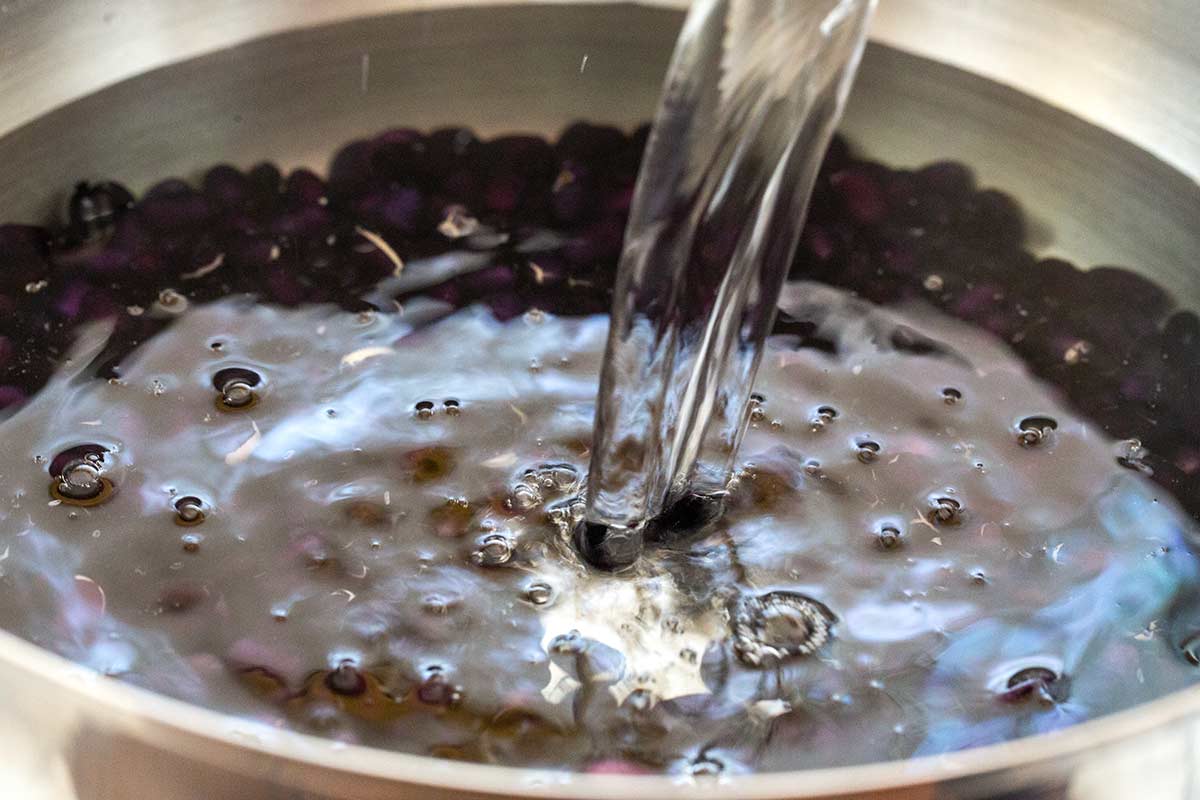
I soak 1 cup of black beans in 1 cup of cold water mixed with 1 ½ tablespoons of kosher salt. This is easy to scale up! Soaking gives the tough, fibrous outer seed coat time to evenly absorb water and soften. The starchy centers will turn creamier as more water moves inside, heats, and gelatinizes. A bonus is that soaking allows the beans to cook faster. Taking a few minutes the night before will save you time later.
Tips for Faster Soaking: Try the quick soak beans method for dried black beans if you have less time. Simply soak in hot, salted water for 1 hour. Then you can cook on the stovetop until tender. This method should take about 2 to 2 ½ hours, instead of 9+ hours. This works great for any dried beans such as red kidney, navy, pinto, and garbanzo.
Step 3: Cook the Black Beans
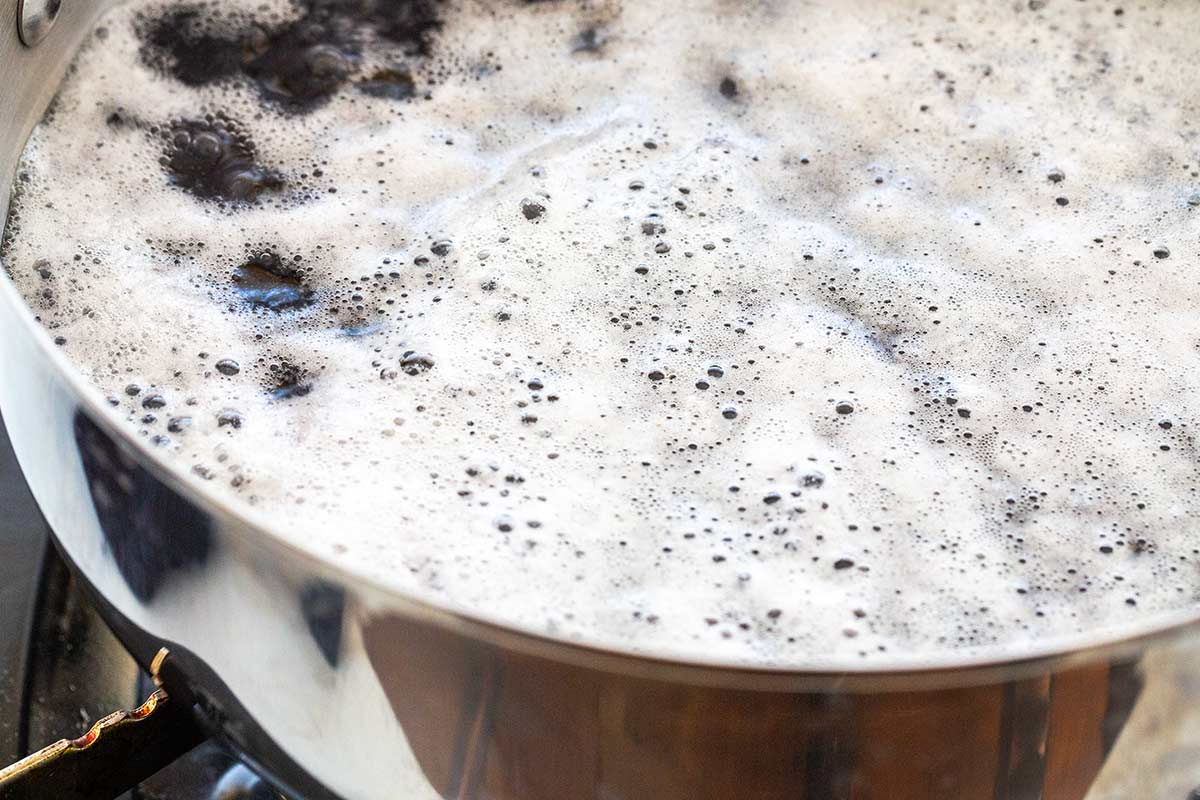
Bringing the beans to a boil first, then reducing to a gentle simmer, helps them cook evenly without breaking apart. Simmering the soaked beans in salted water allows heat and moisture to penetrate evenly, softening the starches and breaking down the pectin in the cell walls. The 60- to 90-minute cooking time makes the beans creamy and tender without turning them mushy.
Tip for Faster Cooking: Add a small amount of baking soda to the cooking water after soaking. This technique creates an alkaline environment that rapidly breaks down the pectin in the skins and can cook the beans in under 1 ½ hours. It also helps to keep the blackish purple anthocyanin pigments in the skin. About ⅛ teaspoon of baking soda to 1 cup of beans will do.
Step 4: To Serve
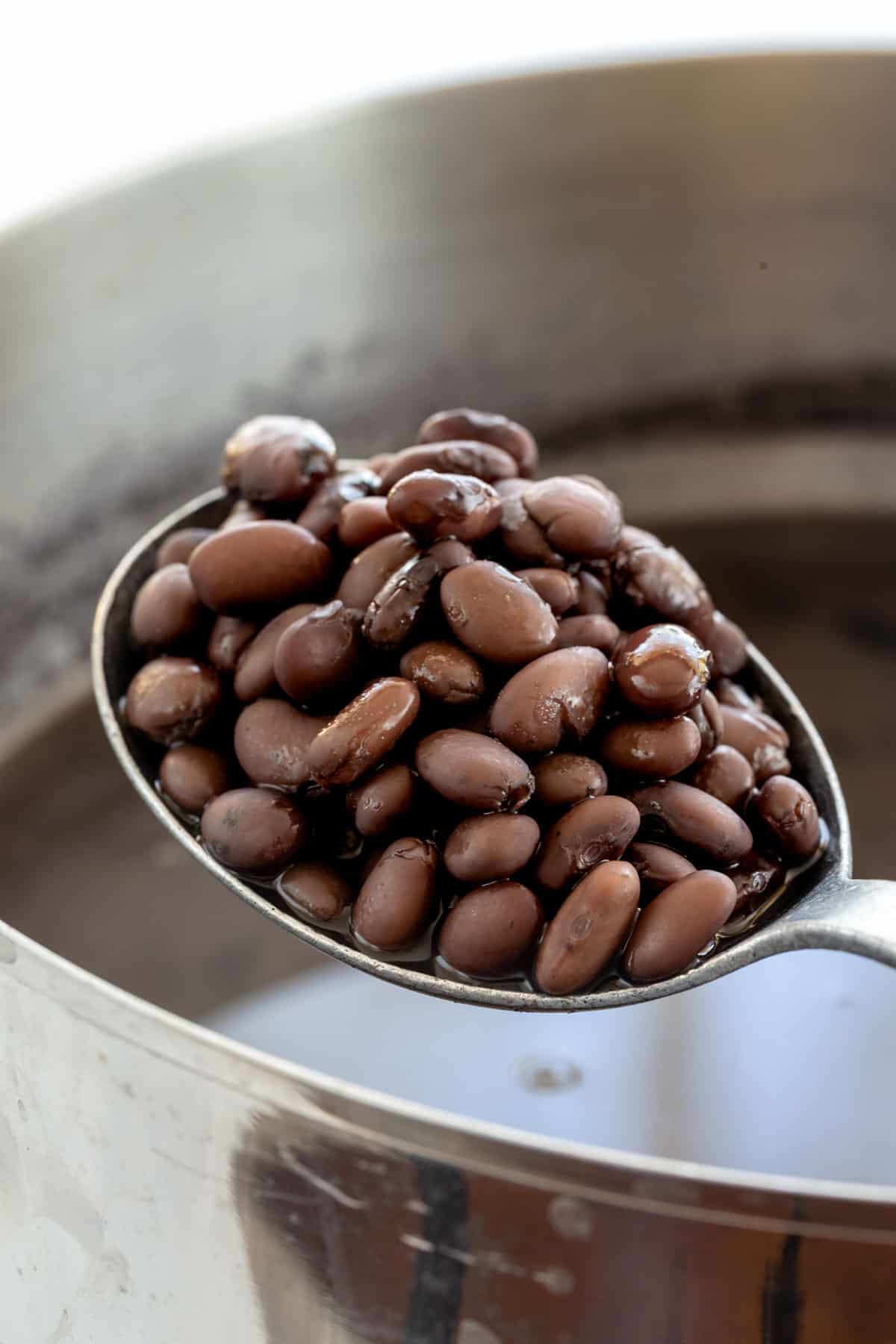
The black beans are ready to serve as a simple and healthy side dish, or you can use them to make black bean burgers, black bean chili, or black bean soup.
I like to pair them with another main dish like shrimp tacos, chicken enchiladas, street tacos, or a protein-and-grain bowl. I’ll also make a batch of black beans for meal prep; store them in an airtight container in the fridge for the week, or in the freezer for a few months.
Frequently Asked Questions
Yes, it can help to reduce some of the gas and discomfort that a person may experience. How? Beans contain oligosaccharides, small-chain carbohydrates that are not easily digestible by humans, but gut-friendly bacteria love to feed on them, and the result is gas. Soaking, either overnight or quickly in hot water for 1 hour, helps to remove some of those carbohydrates like stachyose. Make sure to drain and rinse the beans after soaking and cooking.
Pick over the dried beans, removing any broken beans or debris, then rinse well. Add the beans to a large bowl, cover with water, and add salt. Soak for 8 to 24 hours, then drain and rinse. Transfer the soaked beans to a large pot and add 4 cups of water and salt. Bring to a boil, then reduce the heat to low, cover, and simmer until the beans are tender, about 1 to 2 hours. Taste, then drain and serve as desired.
The only way to check for “bad” dry beans is at the end of soaking. Older beans will have wrinkly skin. Fresher beans will look smooth, plump, and nearly double in size after soaking. When beans are picked and processed, they can get holes in their seed coats from physical bumping, changes in storage temperature and moisture, or microorganism growth, which lets water in. If the entire batch looks like this, toss them out! The texture will be gritty instead of creamy.
Cooking dried black beans takes some planning. For the standard soaking method, soak the beans in cold, salted water for 8 to 24 hours, or use the quick soak method by covering them with hot water for 1 hour. After soaking, simmer the beans on the stovetop for 1 to 2 hours, or until tender.
Canned black beans are already fully cooked, so you only need to heat and season them. Drain and rinse the beans, then add them to a saucepan with a small amount of water or broth. Season as desired and simmer over medium-low heat for 5 to 10 minutes, stirring occasionally, until heated through. You can also add them directly to soups, stews, tacos, salads, or other dishes without additional cooking.
When making Instant Pot black beans, you can skip the soaking process. Using a high-pressure cooker, 1 pound of dried black beans will be ready in about 1 hour.
For dried black beans, a slow cooker typically takes 6 to 8 hours on LOW or 3 to 4 hours on HIGH, depending on the age and size of the beans. Soaking beforehand can shorten the cooking time, but it isn’t always necessary with a slow cooker. Cook until the beans are completely tender, then season and serve.
Black beans are from the Phaseolus vulgaris family, and they stand out for their fiber-rich qualities. They are also a source of plant-based protein and elevated levels of minerals and B vitamins. They also contain prebiotics that help to grow and sustain the healthy bacteria in the digestive system.
Serve This With


If you enjoyed this tutorial on How to Cook Black Beans, please leave a 🌟 star rating and let me know how it went in the 📝 comments below!
How to Cook Black Beans (Stovetop Method)

Ingredients
Soaking Beans
- 8 cups cold water
- 1 ½ tablespoons kosher salt
- 1 cup dried black beans
Cooking Beans
- 4 cups water
- 1 teaspoon kosher salt
Instructions
- Prepare the Black Beans – Pick over and discard any broken dried beans. Add dried black beans to a colander and rinse with water.
- Soak the Black Beans – In a large bowl, add 8 cups of water and 1 ½ tablespoons of salt and stir to dissolve. Add the rinsed beans and soak for at least 8 hours, up to 24 hours at room temperature.Quick Soak Option: Bring the water, salt, and beans to a boil for 2 minutes. Turn off the heat, cover the beans, and soak for 1 hour.
- Cook the Black Beans – Drain and rinse the soaked beans in a colander. In a large pot, add the soaked beans, 4 cups of water, and 1 teaspoon of salt. Bring the water to a boil over medium-high heat. Cover and reduce heat to low. Simmer the beans over low heat until tender, about 60 to 90 minutes.
- To Serve – Drain the black beans and serve as desired.
Notes
- Adding Baking Soda: Add ⅛ teaspoon of baking soda to the cooking water after soaking. This creates an alkaline environment that rapidly breaks down the pectin in the skins and can cook the beans in under 1 ½ hours.
- Storage: Let the black beans cool, then refrigerate in an airtight container for up to 4 days. For longer storage, freeze in an airtight container or freezer-safe bag for up to 3 months. Thaw overnight in the refrigerator before reheating.
Nutrition Facts
Percent Daily Values are based on a 2000-calorie diet. All nutritional information is based on estimated third-party calculations. Each recipe and nutritional value will vary depending on the brands you use, measuring methods, and portion sizes per household.


Fred says
You mention using an instant pot…do you have the pressure and release times?
Thank you.
Jessica Gavin says
Yes, I have a recipe for instant pot black beans. Manual high pressure for 30 minutes, 20 minutes natural release. Hope that helps!
Judee Jablonowski says
Just made your black beans, very tasty. Soaked overnight, cooked 1 1/2 hours in salt water with bay leaf. Excellent!!!
Nick says
Thanks mama!
Nick says
If I want to cook two16oz bags of dried black beans at once do I need to use 32 cups of water?
Jessica Gavin says
Hi Nick- For the quick soak or overnight soak, you could do 16 cups of water for 32 ounces of beans. Just make sure the water covers the surface. I would then cook the beans in fresh 16 cups of water after draining.
Aza says
Jessica is right about the salt. Black beans are special because they have thin skins and they blow open easily. Even an 8 hour soak in unsalted water will produce dozens of blown beans. Salting the water slows down water penetration and produces more even softening (with less blow outs and more uniformity of outcome) — not to mention a tastier bean.
Jessica Gavin says
Thanks for your insights!
Jeff Hillmeyer says
I have perfected cooking black, pinto, red beans, and just about whatever type in this category ( you could try other types but will require shorter times). When I moved to a high altitude climate, I discovered one key ingredient to eliminate when cooking. SALT. Almost any bean comes out soft and cooks faster, no matter which method. You simply add it afterwards to taste. But by far, the easiest way to cook is in a crock pot, because no soaking (quick or overnight) is required. When I make pintos or black beans, to give it a good basis to reheat later for any other style, I add whole cumin that I rub between my hands to crack a bit and lots of fresh garlic that I chop coarsely (about 4 cloves per 1 lb bag of beans). Then, after about 4 hours later, check for tenderness, and if to your liking, add the salt then, and only then! Remember one thing, SALT is your enemy while cooking, but absolutely magical to add when you’re ready to eat! Add a lot of water (almost to the top of the crock pot) to get something soup-like, and rememeber you can always cook out water, but you can never add it to make the flavor stand.
Keri says
After cooking the black beans can they be stored in a mason jar in the refrigerator or frozen for later use?
Jessica Gavin says
Yes! You can refrigerate the beans or freeze them for use later.
Steven says
Hello Jessica, hope you are safe and well. I bought Goya black beans soaks them over night, cooked on the stove top, put them in the slow cooker bit they never got nice. Toss them out…What happened. I’m afraid to try again. Thank you much
Louis Urban Kohler says
what to do with excess water after cooking?
Jessica Gavin says
The saltwater can be discarded when the beans are drained and rinsed.
Jessica Gavin says
You can discard the cooking water.
marie says
Jessica, Louis, the water in which the beans are cooked can can be used as stock.
TD says
You can pour the salted water on weeds, not in your vegetable garden, or on grass that grows in cracks of your sidewalks.
Jessica Gavin says
Wow, good to know that the salted water is a natural way of controlling unwanted weeds!