
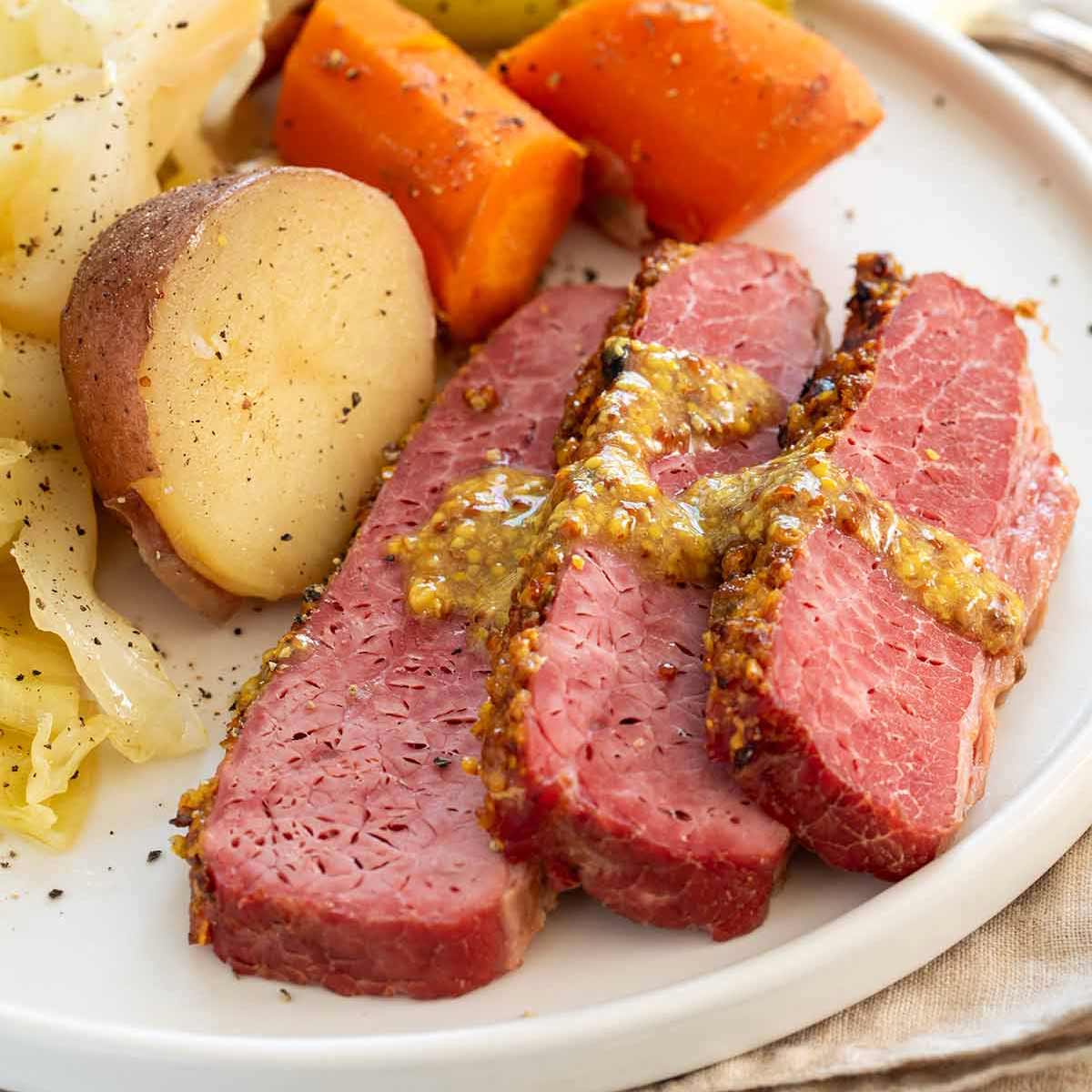
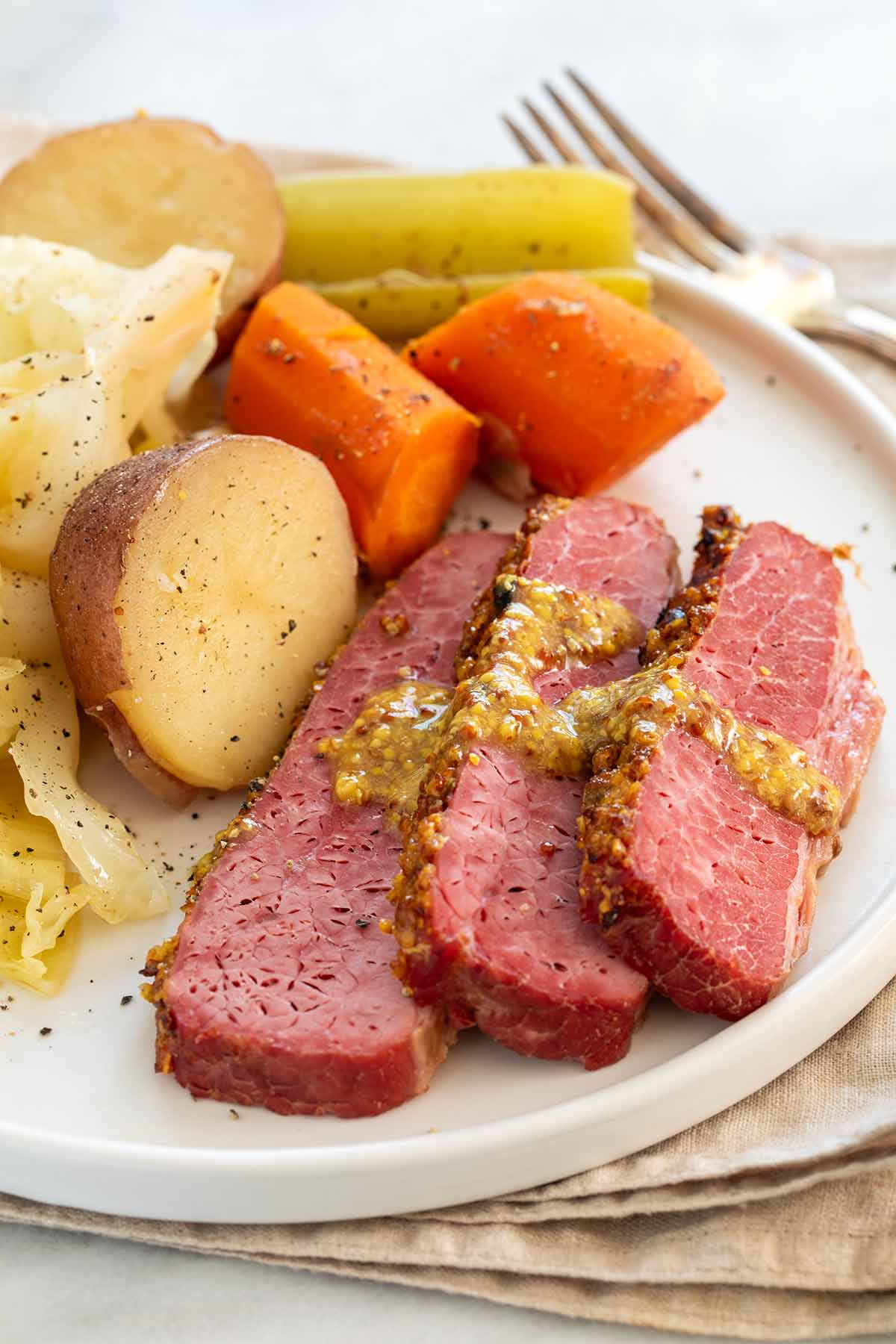
For a delicious Irish feast on St. Patrick’s Day, try my slow cooker corned beef and cabbage recipe with Guinness mustard sauce! The beef brisket cooks low and slow in a Crock-Pot with hearty root vegetables until everything is tender and flavorful.
Interested in other methods? Try my Instant Pot corned beef or baked corned beef.
Jessica’s Recipe Science
- The flat cut corned beef brisket is ideal for a uniform thickness and tighter grain, cooking evenly.
- Slow-cooking corned beef allows collagen in the brisket to convert to gelatin between 160 and 180°F, transforming the tough cut into tender, juicy meat.
- Add the cabbage during the last hour of cooking so the leaves steam gently and soften without overcooking.
Featured Comment 19
“I had never made corned beef and cabbage before, but I found this recipe and decided to give it a go. It was outstanding. I followed the recipe exactly as Jessica explains on this webpage. The meat was very tender and so flavorful, and the mustard was fantastic. This will be the only corned beef recipe for me going forward.”—Analisa
Why It Works
It must be the luck of the Irish that you found this slow cooker corned beef recipe! Cooking the brisket in a slow cooker is ideal for yielding tender slices of meat and perfectly cooked vegetables. The consistent moist heat in the enclosed vessel ensures that this tough cut of beef gets braised gently.
A hearty combination of root vegetables simmers along with the corned beef, making it a complete meal to celebrate St. Patrick’s Day. To enhance the dish, a mixture of Guinness and mustard is spread over the roast, which is then broiled just before serving to create a flavorful crust. Yes, the words “flavorful” and “Irish food” can coexist! Plus, you can use leftover corned beef to make corned beef hash or reuben sandwiches the next day!
Jump To a Section
Ingredients You’ll Need
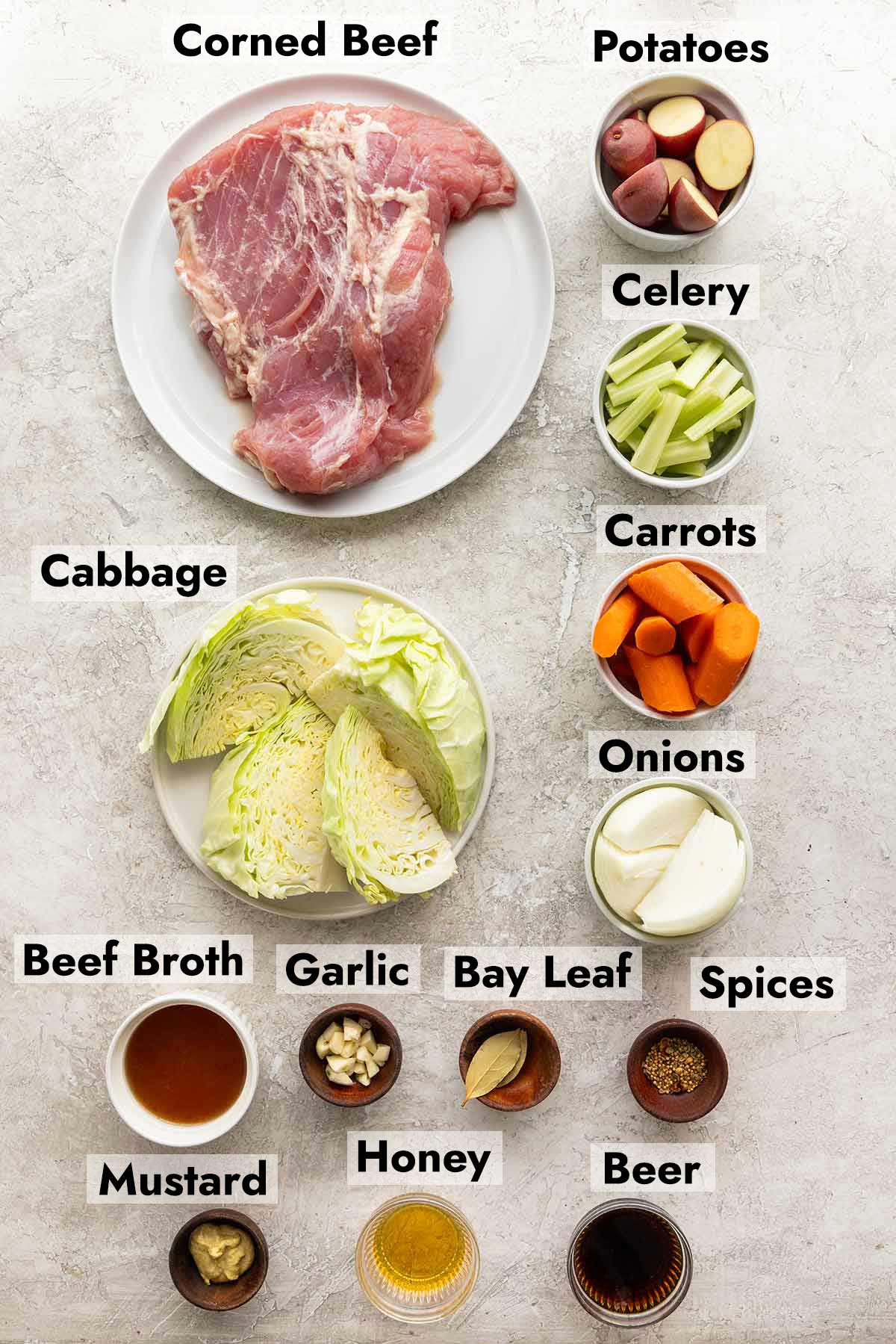
- Corned Beef: The brisket will be labeled as flat-cut or point-cut corned beef at the market. The flat cut is leaner and has a more consistent width. I use this cut for this recipe. The point cut is thicker at one end and tapers down on the other. This has more marbeling with extra fat and tends to be more stringy.
- Seasoning: This is the tiny, clear packet that comes with the brisket. It’s usually a mixture of whole mustard seeds, coriander seeds, crushed bay leaf, red chilies, fennel, and dill seed. I also add whole bay leaves and chopped garlic.
- Stock: I use beef broth to flavor the meat and vegetables.
- Potatoes: I use halved baby red potatoes. The waxy texture holds its shape well when simmering. Cut large potatoes into quarters.
- Aromatic Vegetables: Add a mirepoix mixture of carrots, celery, and yellow onions. This adds dimension to the cooking liquid and veggies to the meal.
- Cabbage: Use a whole head of green cabbage. The leaves are robust and hold together after simmering. The cooked cabbage has a pleasant, sweet taste.
- Sauce: I use a combination of coarse-ground Dijon mustard, Guinness beer, and honey. This gives a balance of tangy, sweet, and bitter flavors that pair well with the savory beef.
See the recipe card below for all ingredients and measurements (US and metric).
Ingredient Substitutions
This slow cooker corned beef brisket recipe is easy to customize! Try these tasty options:
- Liquid: Vegetable stock or chicken stock can be added for a lighter flavor. Swap out some of the stock for Guinness, beer, or Irish ale to add a hoppy and malty flavor to the braising liquid.
- Vegetables: Try turnips, rutabagas, or butternut squash. Add in some kale or spinach right before serving for extra leafy greens.
- Potatoes: Other types of potatoes, like white or Yukon Gold, are also delicious. Skip the russets, they are mealy and will break down too quickly.
- Seasoning: Add more aromatics like whole peppercorns, whole allspice, ground black pepper, red pepper flakes, or sprigs of thyme or rosemary.
- Sweetener: Add brown sugar, honey, or maple syrup to the mustard sauce.
- Mustard: You can use regular Dijon mustard for a smooth texture. Try horseradish sauce for a spicy kick!
How to Make Corned Beef and Cabbage in a Slow Cooker
Step 1: Prepare the Corned Beef
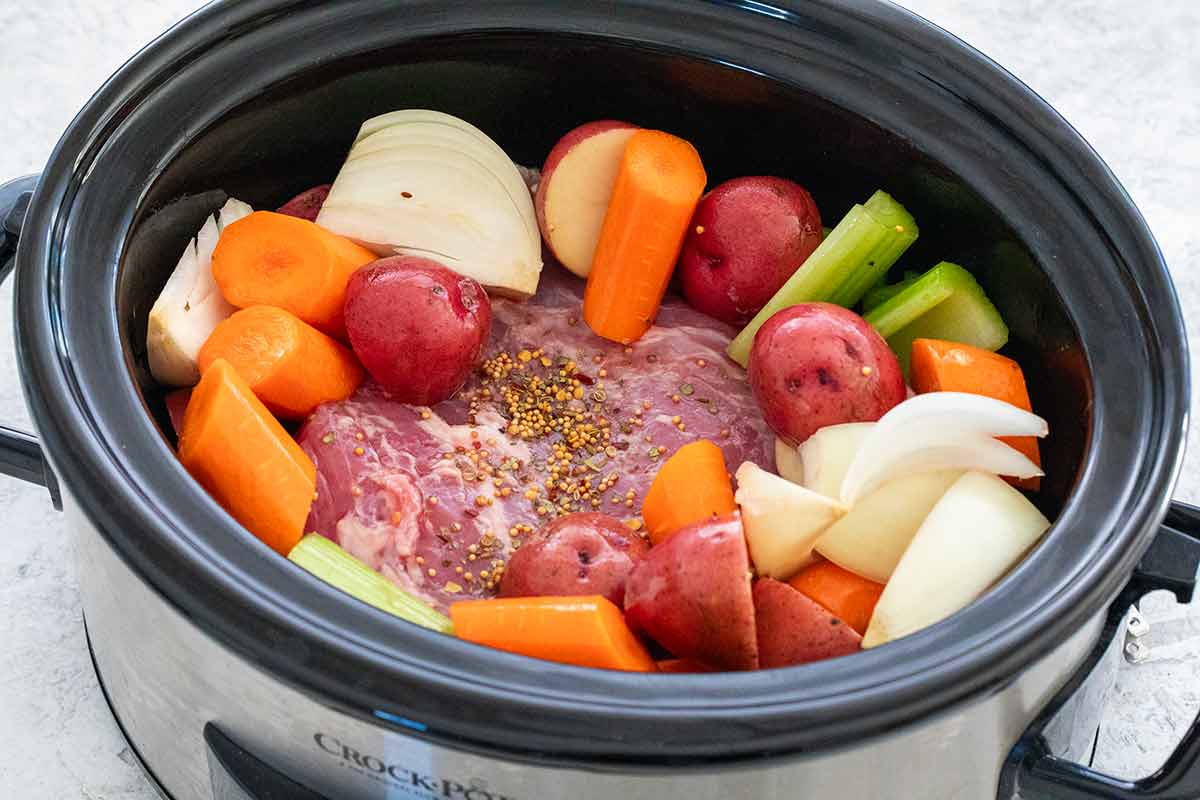
There’s typically a large fat cap left on the brisket during the curing process. Trim most of it off, leaving about a 1/8-inch layer on top, or remove it completely. Too much fat when braising will make the liquid greasy. Add the brisket fat-side up to the bottom of a slow cooker, then sprinkle the pickling spice on top. This ensures it will be submerged in the liquid.
Tips for Perfect Execution: For convenience, I use the pickling spice packet that comes with the brisket. It adds intense aromatics to the cooking liquid and infuses the meat with more flavor. It’s typically made up of black peppercorns, mustard seeds, coriander, dill, celery seeds, bay leaves, and sometimes red pepper flakes.
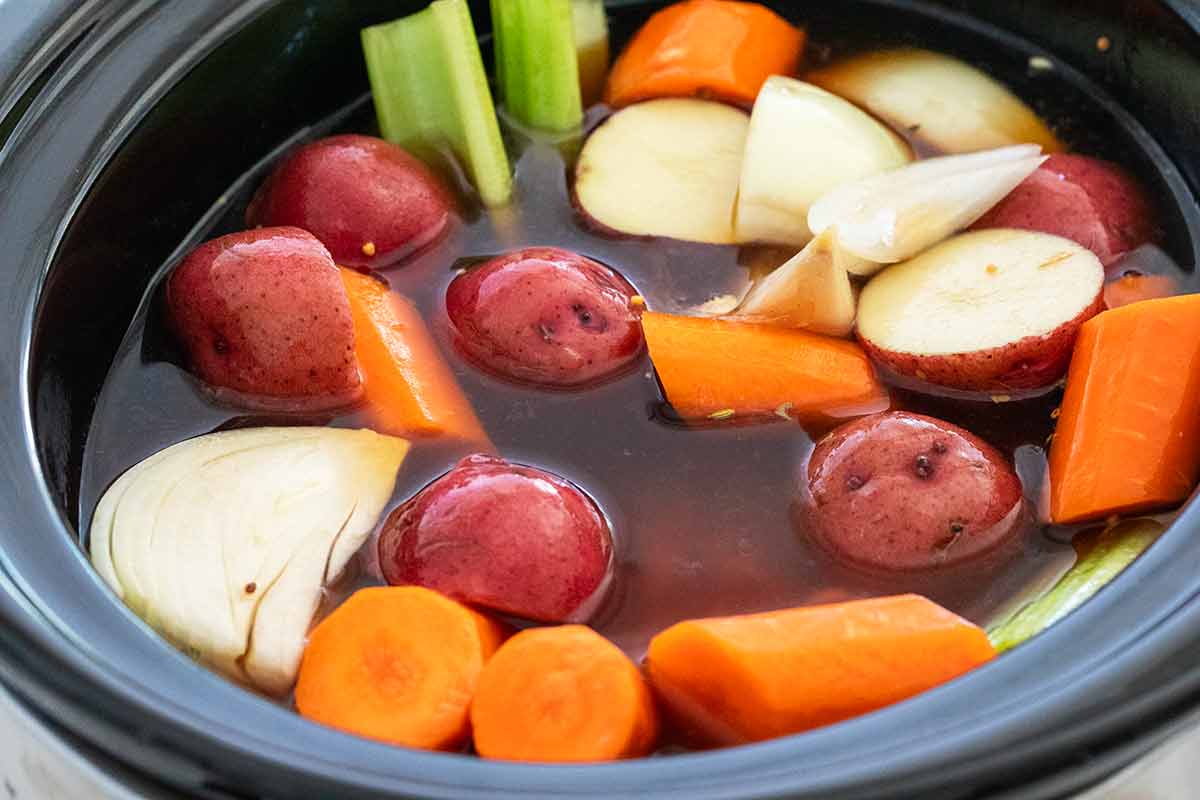
Step 2: Add the Vegetables and Broth
Make sure to cut the vegetables into larger pieces to account for the long cooking time, as they tend to shrink. Add the potatoes, colorful carrots, celery, onion, and bay leaves along the sides and on top of the beef. Pour the beef broth into the crockpot.
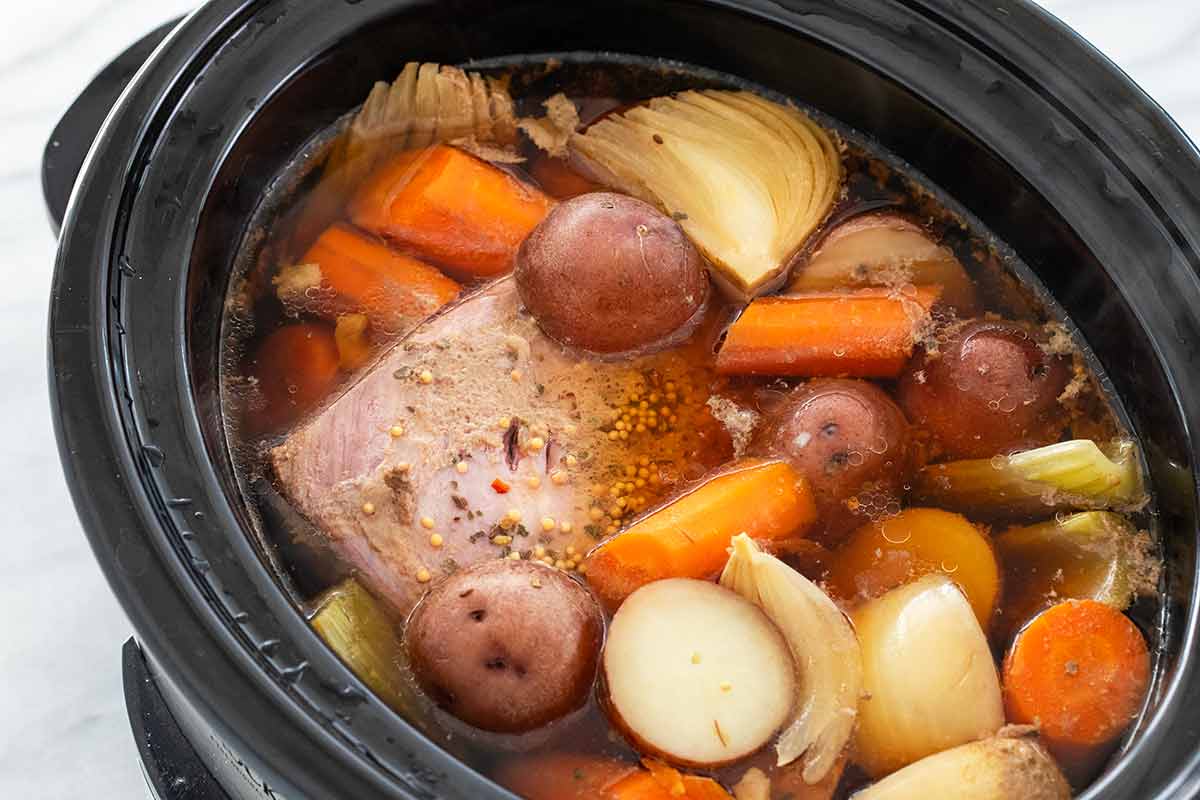
Step 3: Slow Cook
Cover and cook until the meat and vegetables are fork-tender. For a 2- to 3-pound corned beef brisket, cook on high for 4 to 5 hours or on low for 8 to 9 hours. And that’s before adding in the cabbage. The meat will still appear pinkish when fully cooked. Cooking time depends on the size of the roast.
Ingredient Chemistry: The collagen will gel between 160 and 180ºF (71 to 92ºC) and should be maintained at that temperature for at least an hour.
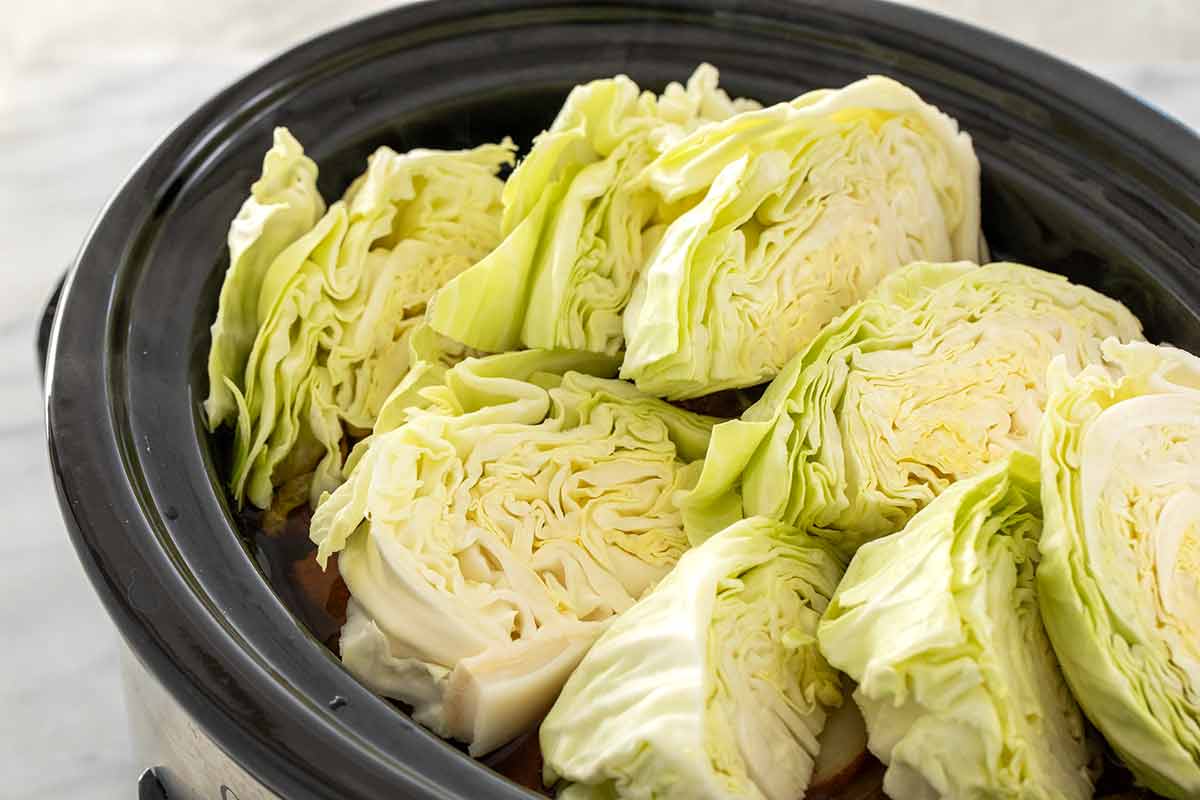
Step 4: Add the Cabbage
Soggy, mushy cabbage happens when it simmers too long in the broth. To avoid this, cut the cabbage into 2-inch wedges. Add the cabbage on top of the beef towards the last hour of cooking. This yields sweet, steamed leaves that still hold their shape and texture.
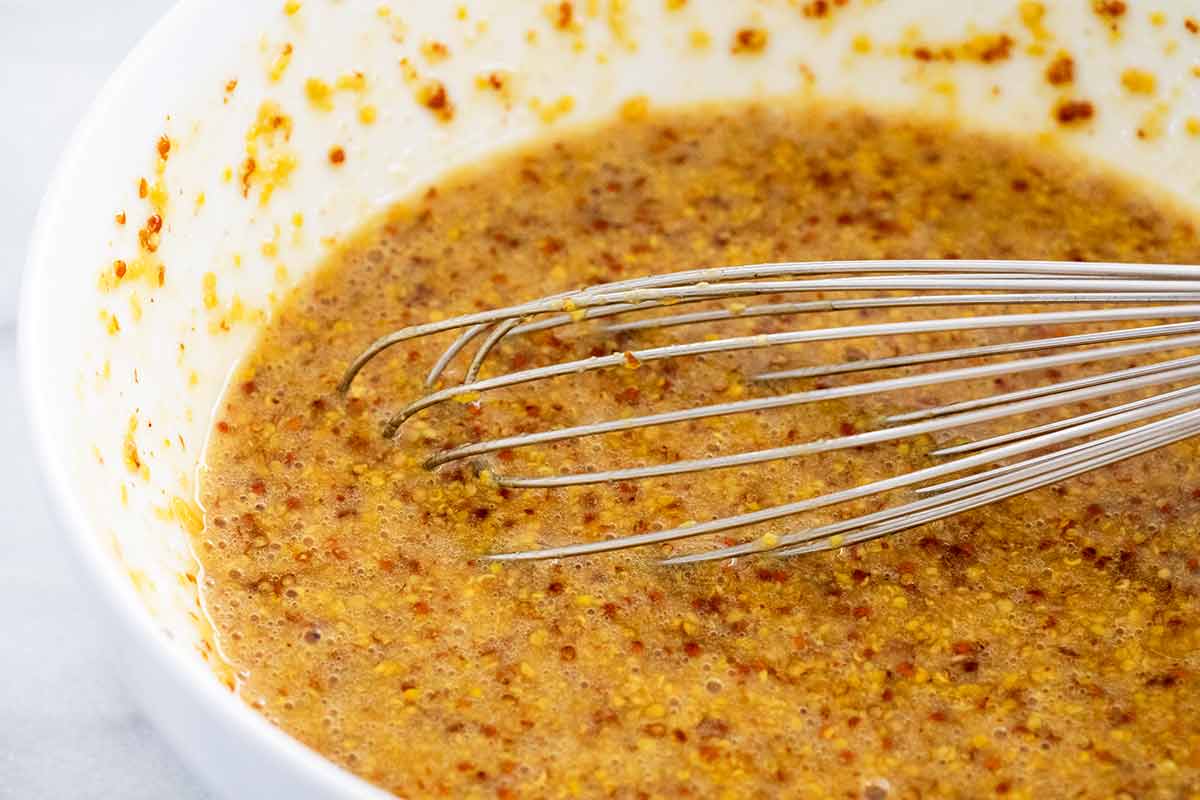
Step 5: Make the Mustard Sauce
For a tangy, sweet sauce with a hint of bitterness, combine coarse-ground mustard, honey, and Guinness or any stout. Cover and store in the refrigerator until ready to use.
Step 6: Check for Doneness
To test for doneness, pierce the thickest part of the beef with a fork. It should slide in and release easily. Slice a piece of meat off and take a bite. Overly chewy pieces indicate the meat is undercooked, whereas stringy beef is overcooked.
The internal temperature should reach at least 160°F (71 °C). Remove the beef from the pot, place it on a cutting board to rest, and trim off any excess fat if desired. Transfer to a foil-lined baking sheet if you plan on broiling the glaze.
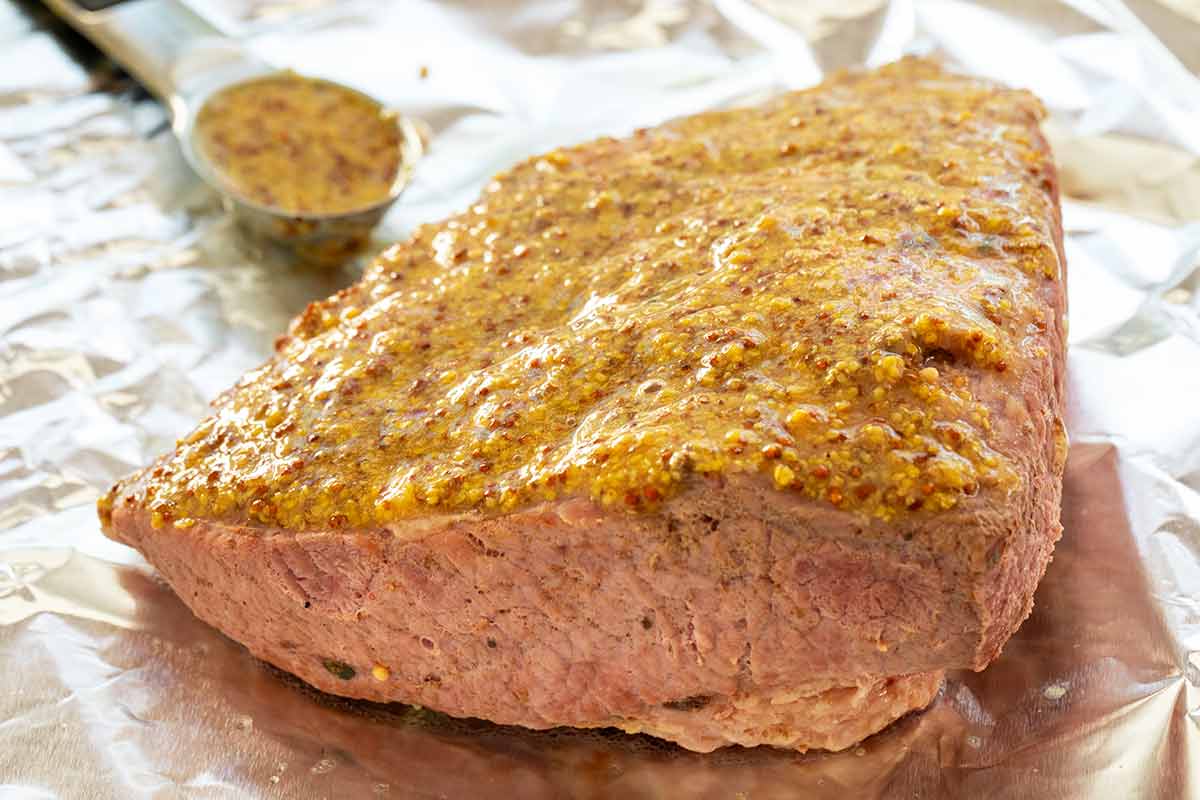
Step 7: Glaze with Sauce
After the Crock-Pot corned beef is done cooking, slather on the mustard sauce and serve. Save the extra sauce to serve on the side for dipping.
Pro Tip: I recommend broiling the roast in the oven for a few minutes to create a nice crust that clings to the surface.
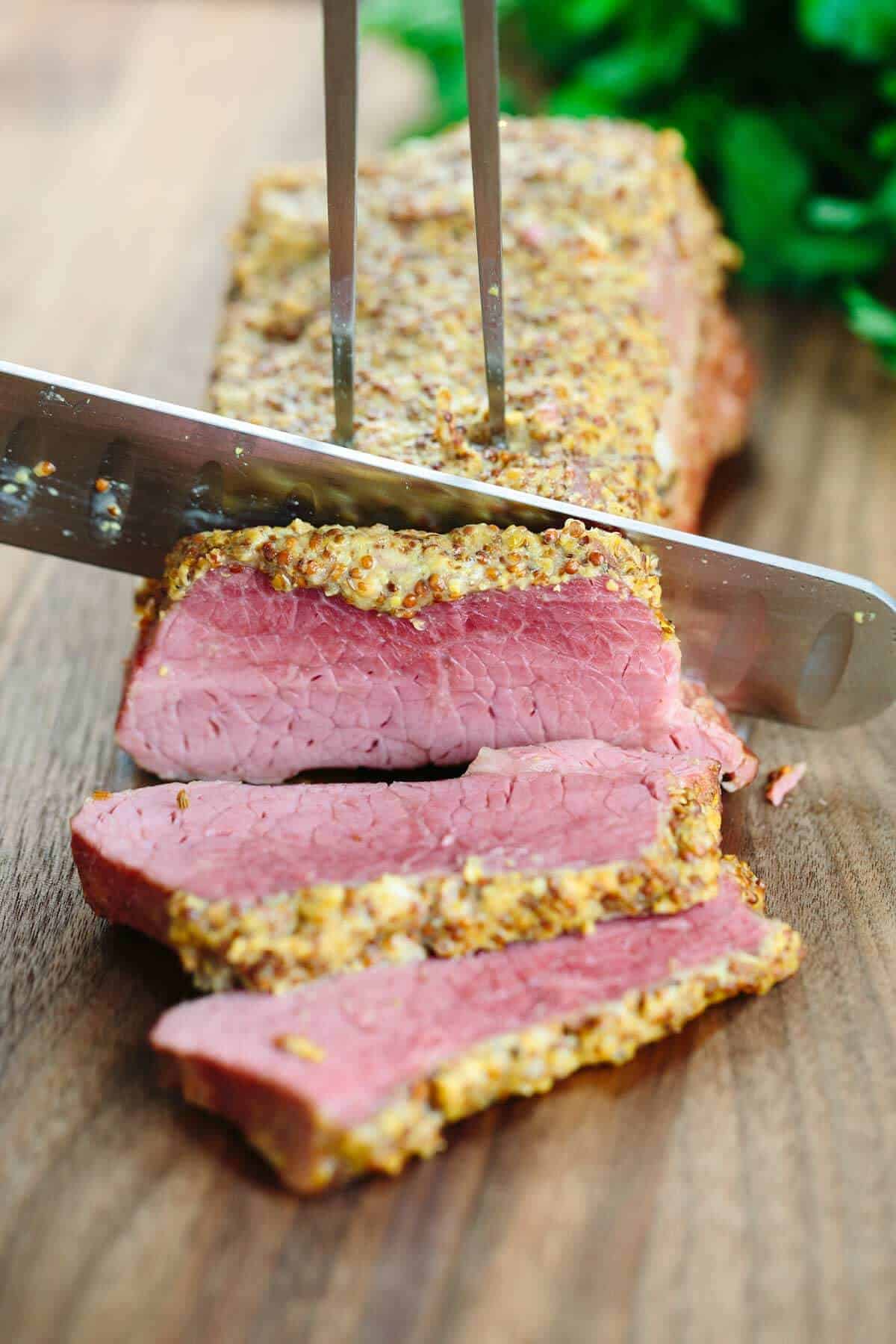
Step 8: To Serve
Slice the corned beef against the grain for the most tender bites. I like to serve the beef on a big platter arranged with the slow-cooked vegetables and extra mustard sauce on the side. I always make a fresh loaf of Irish soda bread, the warm slices slathered with butter are delicious with the feast.
Frequently Asked Questions
Corning is another term for curing meat in a salted brine for some time. The beef brisket comes from the cow’s lower chest area, which is rich in fat and connective tissue. It’s typically brined for about a week so that the salty flavors intensify and the meat is better preserved. The salt-cured beef is sometimes reddish when you buy it from the store due to pink curing salt #1. Sodium nitrite is used to kill harmful bacteria during the curing process. It’s best to braise this tough cut of beef to gelatinize and tenderize the muscles.
The brisket is often portioned into the flat cut and point cut. The flat cut is what’s often prepackaged at the market. It’s leaner and has a more consistent width, which makes it easier to slice. The point cut is thicker, with a tapered end, more marbling, and tends to cook up more tender and juicy. An excellent selection for curing the brisket at home.
Cover and cook until the meat and vegetables are fork-tender. For a 2- to 3-pound corned beef brisket, cook on high for 4 to 5 hours or low for 8 to 9 hours, before adding the cabbage. The brisket will remain pink when fully cooked because of the curing salts used during brining. Brisket is rich in collagen, which gradually converts to gelatin when held between 160 and 180°F (71 to 92°C) for about an hour, giving the meat its tender texture. Cooking time may vary depending on the size and thickness of the roast.
Yes! As you get closer to the end of your cooking time, check visually to see if it looks dried out and taste it for tenderness. Cook until it reaches at least 160ºF (71ºC) for better texture. Avoid slicing before resting, as you want to retain the juices inside the meat.
Serve This With


If you tried this Slow Cooker Corned Beef, please leave a 🌟 star rating and let me know how it went in the 📝 comments below!
Slow Cooker Corned Beef and Cabbage

Ingredients
Corned Beef
- 2 pounds corned beef brisket, plus pickling spice packet
- 1 cup celery, 3" pieces
- 2 cups carrots, 2" pieces
- 1 small yellow onion, 1" wedges
- 1 pound baby red potatoes, halved
- 3 cloves garlic, roughly chopped
- 2 dried bay leaves
- 1 small cabbage, 2" wedges, 8 pieces
- 4 cups beef broth
Mustard Sauce
- ¾ cup coarse ground dijon mustard
- 2 tablespoons guinness beer
- ¼ cup honey
Instructions
- Prepare the Corned Beef – Trim most of the visible fat from the corned beef, leaving about a ⅛ inch layer on top, or remove completely. Place it in a 6-quart slow cooker, fat side up. Sprinkle with pickling spice.
- Add the Vegetables – Add the celery, carrots, onion, potatoes, garlic, and bay leaves along the sides and top. Add beef broth to the pot.
- Slow Cook – Cover and cook until the corned beef and vegetables are tender, 4 to 5 hours on high or 8 to 9 hours on low setting.
- Add the Cabbage – Arrange the cabbage on top of the corned beef, cover, and continue cooking until cabbage is tender, 30 to 60 minutes on high.
- Make the Mustard Sauce – In a small bowl, mix together mustard, beer, and honey. Cover and refrigerate.
- Check for Doneness – The meat is done when a fork can easily pierce it, and the internal temperature reaches at least 160ºF (71ºC). Remove the beef from the pot, and trim off any excess fat if desired.
- Glaze with Sauce – Spread a thin layer of mustard sauce over the corned beef.Optional: For a browned crust, place the meat on a foil-lined baking sheet and broil in the oven about 6 inches away from the top heating element. Cook until the mustard is lightly browned, about 5 to 8 minutes. Check every minute to monitor the browning to prevent burning.
- To Serve – Slice the corned beef against the grain and serve with vegetables and extra mustard sauce.
Notes
- Alcohol Alternative: Substitute apple juice for Guinness beer.
- Storing: Refrigerate in an airtight container for up to 5 days.
- Reheating: Cover and microwave on high setting in 30-second increments until hot.
Nutrition Facts
Percent Daily Values are based on a 2000-calorie diet. All nutritional information is based on estimated third-party calculations. Each recipe and nutritional value will vary depending on the brands you use, measuring methods, and portion sizes per household.


Jay says
This sounds wonderful but I’m being careful on my sugar. For the honey I could use a sugar free pancake syrup but not sure what to substitute for the beer? Any suggestions
Jessica Gavin says
Hi Jay- You can just add more beef broth or stock instead of the beer.
Jodi says
The point tip corned beef I bought comes with the usual seasoning packet, however the package also states that the corned beef is already seasoned. will cooking it with beef broth in the slow cooker result in the meat being too salty? Wondering if I should just use water instead?
analisa says
I had never made corned beef and cabbage before, but I found this recipe and decided to give it a go. It was outstanding. I followed the recipe exactly as Jessica explains on this webpage. The meat was very tender and so flavorful, and the mustard was fantastic. My boyfriend and I both had two helpings last night for dinner…. and we have a little left for lunch today. This will be the only corned beef recipe for me going forward.
Jessica Gavin says
Wow, that’s incredible that this was your first corned beef feast! Great job!
Mary Ann Skibinski says
Can some other liquid besides beef broth be used when cooking in crock pot?
Jessica Gavin says
You can use beef, chicken, or vegetable stock or broth.
Michelle says
This corned beef was fantastic! I used a point tip, 3#, rubbed the seasoning, kosher salt and some pepper. Then added 4 cups beef broth with a tablespoon mango rice vinegar for the acid component. 5 hours on low, internal temp 185. Just perfect! I was unsure if I wanted to do the oven or slow cooker method and am so glad I used the slow cooker! Thank you for the great recipe!
Jessica Gavin says
Wow, I love your modifications to bump up the flavor of the corned beef. Thank you for your feedback Michelle!
Mary says
Is there a gluten free substitute that I can use? Thanks!
Jessica Gavin says
I would just skip the beer in the sauce, it will still taste delicious!
susan troccoli says
I have to ask: In the 2nd picture (with the crockpot) there are 2 red and yellow speckled logs with a solid yellow center, almost like a pretzel w/cheese in the middle. Can’t find anything in the recipe that this could be. What is it?
Jessica Gavin says
Great questions Susan! Those are just purple carrots (heirloom carrots), however, you can use whatever carrots are available.
Nancy says
Hi, looks so good! Will be making this for sure this year. Question, on the nutrition facts, is that based on the recipe serving two people, and the label is for one serving? Thanks!
Jessica Gavin says
Hi Nancy- The nutritional label is one serving, and the recipe makes 4 servings. Thanks!
Danielle D. says
Your recipe sounds amazing! I have an odd question. Does leaving the cabbage in the crock pot for 45 min on high/1.5 hrs on low cause your kitchen to stink? I don’t know how long it can be cooked before it starts to give off that awful smell. Thank you!
Jessica Gavin says
Thank you Danielle! When cabbage is cooked too long it starts to emit a rotten egg smell from hydrogen sulfide, a gas that is released when the cabbage has been overcooked. It’s a challenge since you are slow cooking, so if you want to avoid the smell or at least reduce it, I would cook the cabbage separately in boiling water until tender, right before you serve. great question! For this recipe, I didn’t feel the smell from the cabbage was too strong because of the cured meat and seasonings cooking with the cabbage.
Jaime Schneider says
This recipe is fabulous! So easy & soooo delicious. I will be making this every year.
Jessica Gavin says
Thank you so much Jamie! I’m so happy that you enjoyed the recipe and that it will be a tradition 🙂