
Learn how to mince garlic cloves with this easy step-by-step guide. I’ll show you the simple technique of peeling and breaking them down into a fine consistency for a variety of uses.

Jessica’s Recipe Science
- Mincing garlic into fine, uniform pieces maximizes its surface area, allowing even distribution and flavor infusion in the dish.
- Rupturing garlic cell walls releases an amino acid that reacts with alliinase to produce allicin, which gives garlic its characteristic bite and odor.
- Mince garlic right before adding it to a dish to avoid overpowering flavor and bitterness, using it within an hour for optimal taste.
Why It Works
Fresh minced garlic is a potent, sulfurous ingredient that instantly adds fragrance and depth of flavor to dishes. These papery white bulbs have a permanent home on most countertops, ready to grab, chop, and add to any recipe that calls for it. There’s fascinating science behind how to leverage their potent flavors the right way.
The timing of when to cut and the size of those pieces are important. You’ve probably noticed that uncut cloves have no aroma, but the moment you slice them, a strong, sulfurous aroma appears. We’ll explore what causes that smell and how it impacts your dishes.
Jump To a Section
How to Mince Garlic
Step 1: Loosen the Bulb
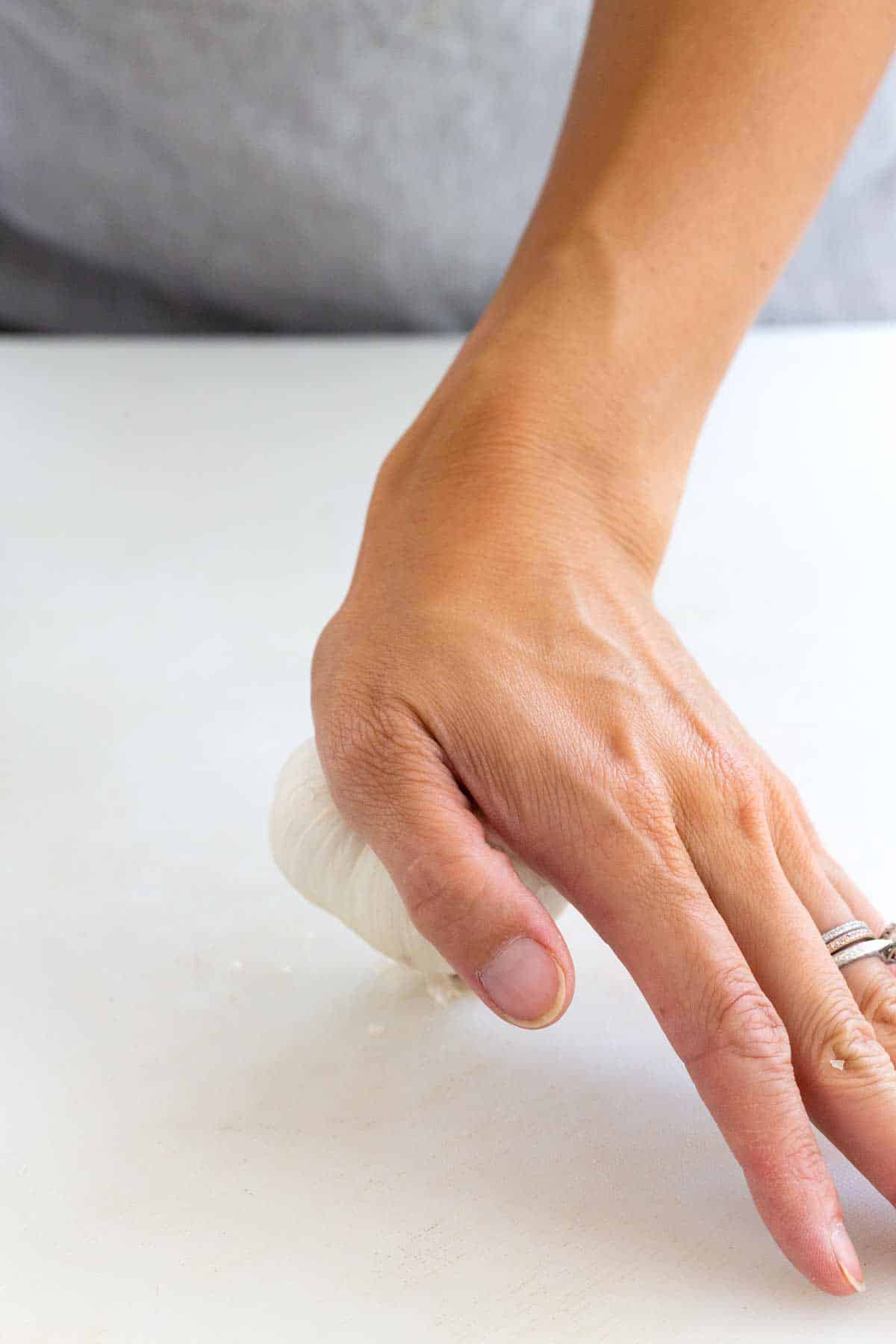
For a small number of cloves, place a whole bulb, also called the head of garlic, on a cutting board with the root side up. Press down on top of the bulb with the heel of your hand to break open the thin, papery skin, loosening the cloves for the root.

Step 2: Separate the Cloves
Use your fingers to open and separate the cloves from the root.

Step 3: Trim the Tips
Now that you have individual cloves, grab as many as you need for the recipe. Use a knife to trim the root end and tip of each garlic clove.

Step 4: Crush the Cloves
Place the flat side of a chef’s knife over a clove, with the blade facing away from you. Use gentle pressure to lightly crush the clove of garlic on the cutting board. Alternatively, you can use a rolling pin or the bottom of a measuring cup to smash the clove.

Step 5: Peel the Skin
The papery skin should peel off easily. Discard the skin before mincing.
Expert Tip: Do you notice any green parts inside the cloves? This is a sign that the garlic has sprouted during storage. It’s safe to eat, but it will add a slightly bitter taste. Check out my guide for how to remove the green inside garlic to prevent an off flavor in your dish.

Step 6: Mince the Garlic
Cut the peeled garlic cloves into thin slices, then mince them using a fan-chop technique. Place your free hand on the top of the blade, near the tip, with fingertips touching the edge to help secure the knife (the tip should stay in the same place as you mince).
Rock the knife up and down, from left to right, back and forth in a fanning motion, until chopped (larger pieces) or minced (finely chopped) to the desired size.
How to Cook with Minced Garlic
- Minced garlic can easily burn and turn bitter. Add it after softening other ingredients like onions, carrots, shallots, and celery.
- If you heat the pan over medium-high to high heat, cook the garlic for only 30 seconds and keep it moving. I use this technique a lot when I make a stir-fry. I add garlic at the end for a punch of flavor and to prevent it from burning.
- If you want to infuse garlic flavor into oil, heat it in a cold pan with the fat over low to medium-low heat. Let it heat gently and infuse its incredible flavor compounds into the oil.
- For a mellow, sweet garlic flavor, roast whole bulbs until the cloves are soft and golden, then mash them into butter or sauces. Here’s how to roast garlic in the oven or on the stovetop.
How to Peel Garlic in Bulk
When a recipe calls for a whole head of garlic or more, peeling cloves one at a time takes forever. Shaking the cloves knocks most of the papery skins loose in a minute or two. Neither method removes every bit of skin, but they come close!

- Shake in a jar: Break the bulbs into cloves and place them in a large glass jar (about 32 ounces). Cover tightly and shake hard for 1 to 2 minutes, until most of the peels are loose. Pick out the cloves and peel off any remaining skin with your fingers.
- Shake in two bowls: Place the cloves in a medium or large bowl and flip a second bowl of the same size on top to make a dome. Holding the rims together, shake for 1 to 2 minutes. Discard the loose skins and shake again if needed.
- Cook’s tip: If bits of papery skin stick to the cloves, rinse them under cold water and pat dry before mincing.
Types of Garlic
Most garlic falls into two groups, softneck and hardneck, and you can use them the same way in recipes.

- Softneck garlic: This is the garlic you’ll find in most grocery stores. The bulbs have several layers of smaller cloves and a soft, flexible stem. Varieties include artichoke, silverskin, creole, Asiatic, and turban.
- Hardneck garlic: Hardneck varieties grow a stiff central stalk and usually have fewer, larger cloves that peel easily. Look for porcelain, purple stripe, and rocambole at farmers’ markets. The curly green stalks, called garlic scapes, are delicious too.
- Elephant garlic: Despite its name, elephant garlic is more closely related to leeks than to true garlic. The bulbs and cloves are very large, and the flavor is much milder.
- Black garlic: Black garlic is regular garlic that’s been held at a low, steady heat for several weeks. The cloves turn black and soft, with a sweet, slightly tangy flavor. It’s already cooked, so leave the cloves whole or roughly chop them instead of mincing.
How to Choose and Store Garlic
- Choose: Look for firm, heavy bulbs with dry, papery skin. Skip any with soft spots, mold, or green shoots poking out of the top.
- Store: Keep whole bulbs at room temperature in a dry, dark spot with good airflow, like a basket or mesh bag in the pantry.
- Keep the bulb whole: Break off cloves only as needed. Once the bulb is opened, or the cloves are peeled, garlic doesn’t keep as long.
- Watch for sprouts: A green shoot in the center means the garlic has started to sprout. It’s safe to eat, but remove it to avoid a bitter taste. Here’s how to deal with sprouted garlic.
How to Get the Garlic Smell Off Your Hands
The same compounds that make garlic so flavorful can leave your fingers smelling like it for hours. Rub your hands with a little baking soda and water, or rinse them with vinegar, then wash with soap and water.
Frequently Asked Questions
It’s best to mince fresh garlic right before adding it to a dish. The longer garlic sits, the more enzymes break down, and the more allicin is produced. More time means more flavor, but the aroma can become overpowering if you leave it sitting too long.
Yes! If you’re lucky enough to own a good garlic press, it can mince garlic into a much finer, consistent-sized mince than hand chopping. Some garlic presses don’t even require removing the skin, which is a nice feature.
If you’re not using it immediately, cover it in a small airtight container in the refrigerator until ready to use. It’s best to use the garlic right away or within an hour of chopping. Once the garlic sits for more than 6 hours, it can become very bitter and overpowering in the dish.
Chopped garlic is coarser, about ⅛ inch or larger, and has more bite than minced garlic. It’s good for flavoring stews, soups, braises, or oil in dishes like pan-seared lamb chops or steaks. Minced garlic is finer, around the size of small grains of couscous, or less than 1/16 inches. Minced garlic is better for sauces, dressings, or dishes you sauté and cook quickly so you don’t have large pieces lingering, like stir-fries.
Garlic cloves vary in size, even within the same bulb. A small clove yields about ½ teaspoon of minced garlic, a medium clove about 1 teaspoon, and a large clove about 2 teaspoons. Three medium cloves make about 1 tablespoon, so chop a few extra cloves if yours are on the small side.
An odorless sulfur-containing amino acid is released from garlic when you rupture the cell walls with a knife. The amino acid interacts with a natural enzyme in the garlic called alliinase, and over time they produce a compound called allicin. This is that familiar “bite” and a characteristic odor that can quickly fill a room or cause garlic breath.
More Garlic Recipes


If you tried this technique for How to Mince Garlic, please leave a 🌟 star rating and let me know how it went in the 📝 comments below!
How to Peel and Mince Garlic

Ingredients
- 1 bulb garlic
Instructions
- Loosen the Bulb – Place the whole bulb on a cutting board with the root side up. Press down on top of the bulb with the heel of your hand, using your weight to break open the papery skin.
- Separate the Cloves – Turn the bulb over and use your fingers to separate the cloves from the root of the bulb.
- Trim the Tips – Use a knife to trim a small amount of the root and tip end of each clove.
- Crush the Cloves – Place the flat side of a chef's knife over the clove with the blade facing away from you. Use gentle pressure to lightly crush the clove between the cutting board. Repeat with the remaining cloves.
- Peel the Skin – Remove and discard the papery skin from the crushed cloves.
- Mince the Garlic – Place the peeled garlic cloves in a pile on the cutting board. Place your fingertips on top of the blade near the tip of the chef's knife. Use an up-and-down motion, moving side to side to chop the garlic into smaller pieces until the desired size is reached. Chopped garlic is larger, about the size of large cooked grains of rice. Minced garlic is finer, about the size of small-grained cooked couscous.
Recipe Video

Notes
- When to Use Garlic: Use the minced garlic immediately or within 1 hour of mincing.
- Storing: If you don’t use minced garlic right away, store it in an airtight container in the refrigerator for no more than 6 hours. The garlic aroma intensifies the longer it sits.
- Minced Garlic Yield: One medium clove yields about ½ to 1 teaspoon, and three to four medium cloves yield about 1 tablespoon.
Nutrition Facts
Percent Daily Values are based on a 2000-calorie diet. All nutritional information is based on estimated third-party calculations. Each recipe and nutritional value will vary depending on the brands you use, measuring methods, and portion sizes per household.




Nick Noel says
What kind of taste does garlic have
I’m new to the culinary world and don’t have much experience
Jessica Gavin says
Raw garlic is pungent, biting, and sulfurous. When cooked, it has an earthy, fragrant aroma that mellows in taste with almost a hint of sweetness when not overcooked.
susie sharp says
Thanks great site
Jessica Gavin says
Thank you, Susie!