
This easy steak marinade recipe is the BEST, and it will quickly add tons of flavor to any cut of beef! The mixture blends soy sauce, Worcestershire sauce, onion, garlic, honey, olive oil, and fresh herbs.

Jessica’s Recipe Science
- The best way to tenderize a steak is to add salt. It functions like a brine; the salty marinade infuses into the meat through osmosis.
- As salt moves into the meat, it alters muscle proteins so they can retain more water during cooking, for a juicier, seasoned steak.
- After cooking, serve the steak with reserved marinade mixed with a small amount of acidic vinegar to boost the flavor even further.
Featured Comment 79
“My family loved this recipe. We used it on flank steak and my son said mom you definitely need to make this again it is the best. Husband also gave it raving reviews.”—Amy
Why It Works
A juicy steak can instantly make your mouth water. It’s a simple meal that cooks in minutes. This steak marinade recipe can add an exciting dimension and enhance the flavor of most cuts of beef. The right combination of key ingredients like salt, oil, acid, sweeteners, and aromatics can take the taste to the next level.
This marinade for steak combines soy sauce, Worcestershire sauce, onion, minced garlic, honey, olive oil, salt, pepper, rosemary, and thyme. Each ingredient makes every bite tastier and more tender! You can cook the steaks by grilling, broiling, or pan-searing for the ultimate experience.
Jump To a Section
Ingredients You’ll Need
Marinades offer two benefits: boosted flavor and tenderness, especially for tougher cuts of beef. To maximize flavor, I selected specific marinade ingredients that boost the flavor.
- Steak: This marinade works well for various types of steak. My top choices are ribeye steak, New York strip, porterhouse, T-bone, sirloin steaks, or leaner cuts like skirt steak, flat iron, and flank steak.
- Fat: Olive oil solubilizes fat-soluble flavor compounds from rosemary, thyme, and black pepper. The oil flavors the surface and helps the ingredients stick.
- Infused Flavors: Water-soluble compounds like salt, soy sauce, onions, and garlic.
- Glutamates: Soy sauce, garlic, and onions provide unique umami flavors.
- Sweetener: A small amount of honey adds sweetness to balance the salt and encourages quicker browning.
- Acid: Worcestershire sauce is a popular condiment made with distilled white vinegar and other umami-inducing flavors. Use a smaller ratio of acid because marinating too long can make the surface of the meat mushy and dry instead of tender.
See the recipe card below for all ingredients and measurements (US and metric).
Ingredient Substitutions
This steak marinade recipe is easy to customize! Try these delicious options:
- Oil Swaps: Use other types of cooking oils with a neutral taste like avocado oil, vegetable oil, peanut oil, or canola oil.
- Seasoning: Add depth of flavor with spices like garlic powder, onion powder, cumin, coriander, curry powder, smoked paprika, or red pepper flakes for spiciness. Add herbs like oregano, tarragon, or basil.
- Flavoring: Add roasted garlic, fresh ginger, lime juice, or orange juice. I add citrus to my skirt steak marinade for big flavor. Try coconut aminos for a sweet umami taste.
- Sweetener Options: Use maple syrup, granulated sugar, or brown sugar.
- Vinegar Swaps: Use other types of vinegar like apple cider vinegar, white vinegar, or balsamic vinegar.
How to Make Steak Marinade
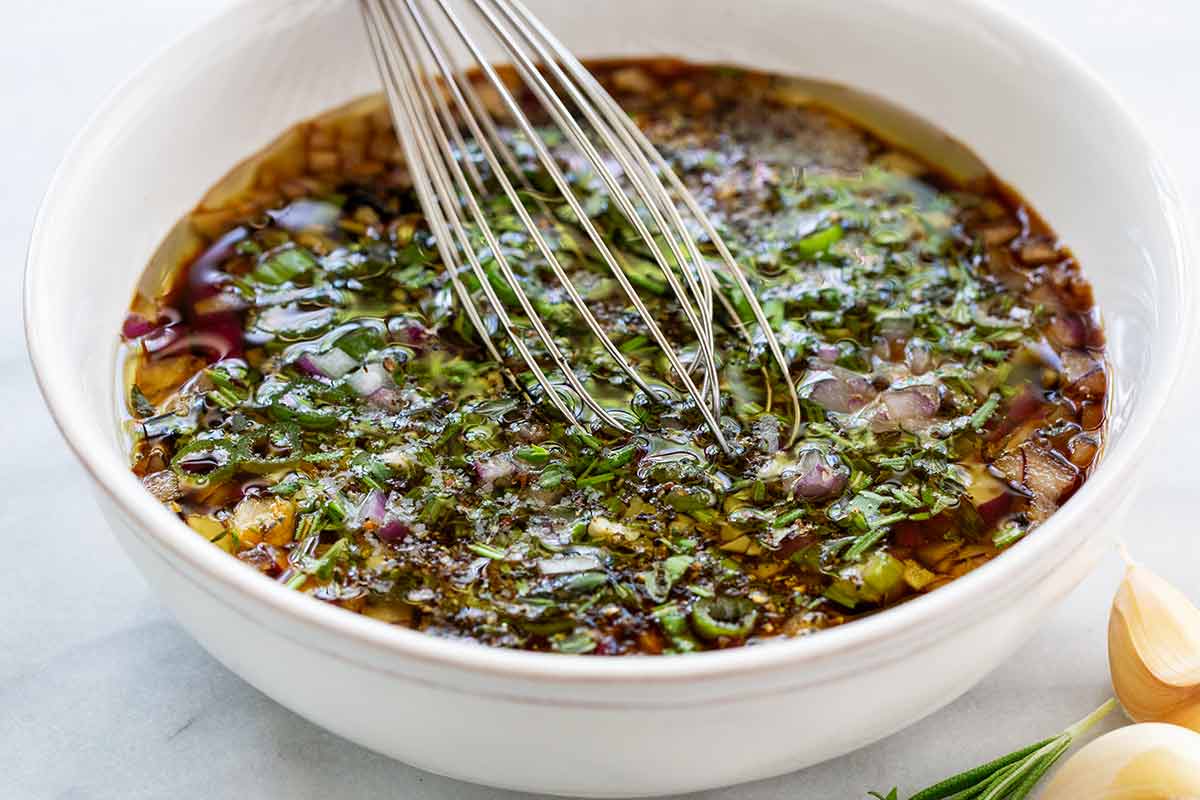
Step 1: Make the Marinade
Whisk together the soy sauce, olive oil, Worcestershire sauce, red onion, honey, green onions, garlic, thyme, rosemary, salt, and pepper. I always set aside ¼ cup of the steak marinade and mix it with red wine vinegar to season the cooked steak later. This way, you don’t serve the marinade that’s mixed with the raw meat.
Pro Tip: Waiting to add the vinegar prevents the meat from drying out as it marinates, but adds bold flavor to the cooked steak.
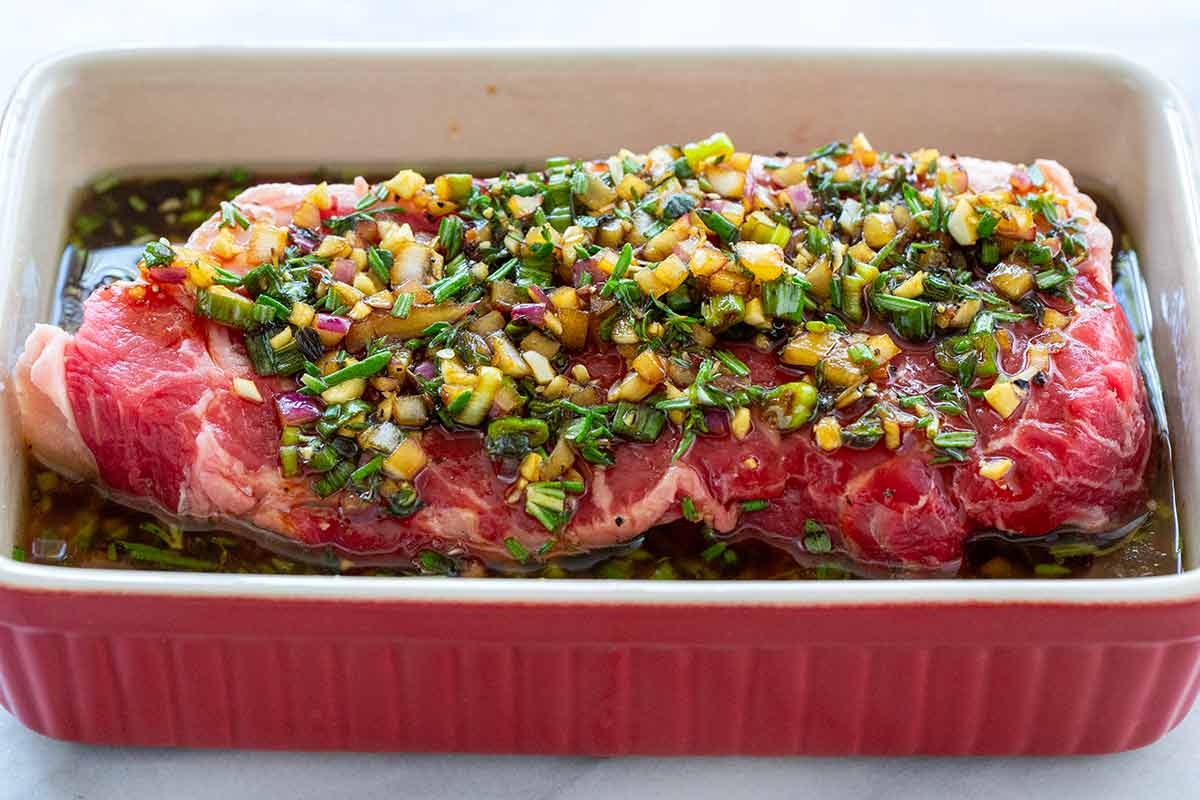
Step 2: Marinate the Steak
This versatile marinade works for any cut of steak, but it’s best for tri-tip, flank, skirt, New York Strip, or ribeye. Transfer the steak to a baking dish or large resealable plastic bag, then pour the marinade on top. Cover with foil or plastic wrap if in a dish, or remove as much air as possible from the Ziploc bag for best contact with the meat and maximum flavor. Marinate in the refrigerator for 60 minutes, flipping the steak halfway through for even soaking.
Food Safety Tip: Don’t leave the steak marinating at room temperature! This could cause harmful bacteria to grow quickly.
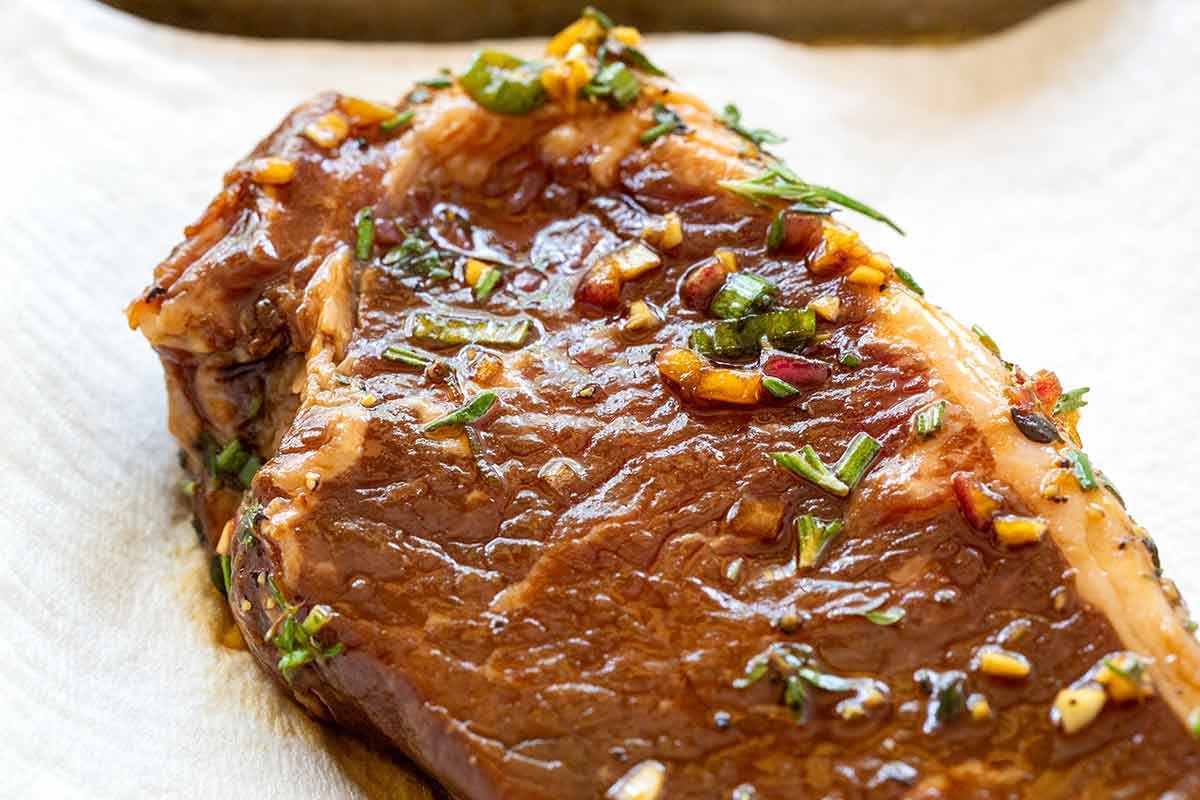
Step 3: Ready to Cook
Before cooking the steak, remove it from the marinade and pat the surface dry with a paper towel. Removing some residual moisture will help the surface brown better.
Grilled steak, pan-searing, or my reverse sear steak are other methods to quickly cook the meat and develop a nice crust through the Maillard browning reaction. Follow my food temperature guide for instructions on the right doneness levels.
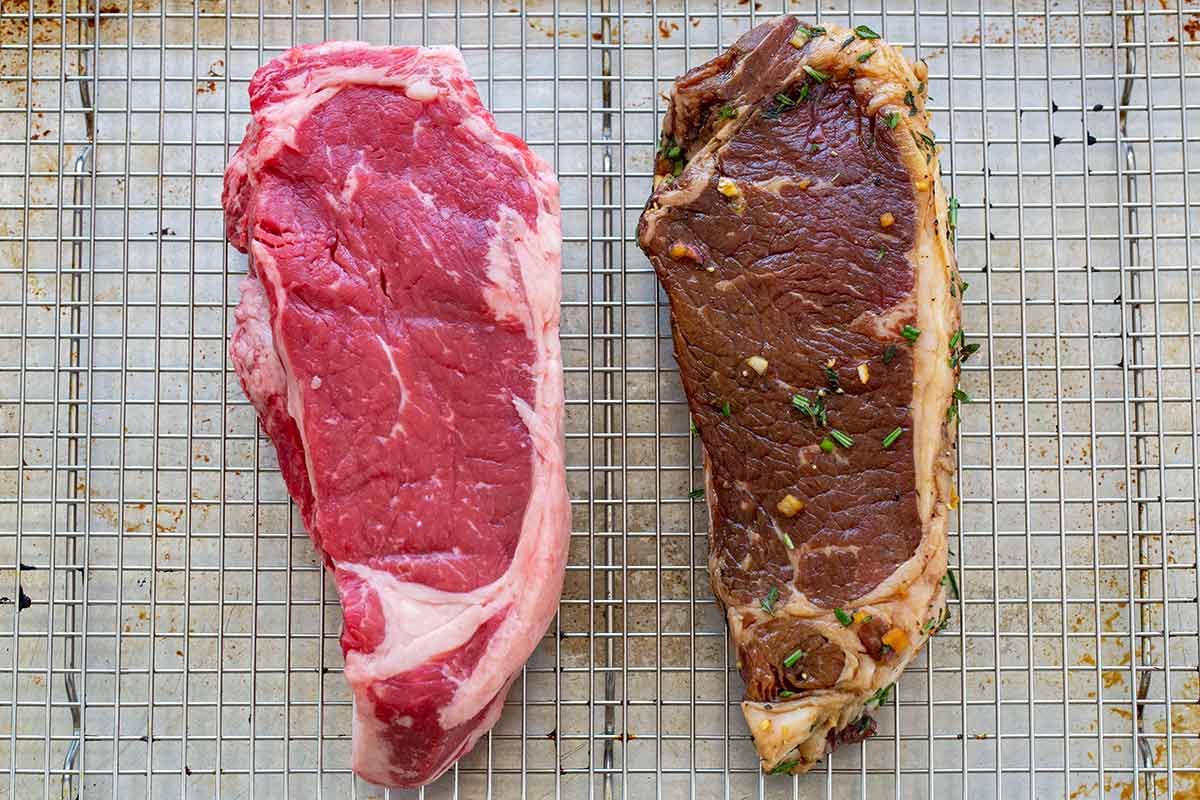
Step 4: Rest the Meat
Resting the steak for 10 minutes allows the heat and juices to redistribute throughout the meat. This helps minimize moisture loss when slicing, keeping the steak juicier and more tender.

Step 5: To Serve
Now you can pour the reserved marinade, mixed with the red wine vinegar, over the steak, or serve it on the side as a dipping sauce. I like to serve the steak with vegetables like creamy mashed potatoes and broiled asparagus. This steak marinade is very versatile! Add chicken, pork, or even lamb.
Frequently Asked Questions
Steaks vary in toughness or texture based on the location and, ultimately, the cut of meat. You rarely see filet mignon marinated because its muscle fibers aren’t as actively used, yielding soft, tender cuts that are easy to eat. On the other hand, marinating tougher cuts like flank steak, with more coarse muscle fibers, has benefits. Also, thicker 1 1/2-inch and more massive steaks like ribeye or New York strip are great candidates for a marinade to tenderize the meat and add layers of flavor.
Salt helps make steak juicier and more flavorful by acting like a brine. As salt moves into the meat, it changes the structure of muscle proteins, allowing them to hold onto more water during cooking. Salt also dissolves some muscle proteins, creating a slightly sponge-like structure that helps retain moisture, while naturally enhancing the beef’s flavor. The result is a better-seasoned, juicier steak.
It often seems that the longer the marination time, the better. Right? Wrong! It’s all about balancing flavor and moisture. And the reality is, marinade flavors can’t reach the center of the meat. However, sodium glutamates and salt go pretty far. I’ve found that a minimum of 30 minutes and, optimally, 1 hour is just enough time to flavor the meat while keeping it moist. If acid is present, like lemon juice or vinegar, marinate overnight (up to 24 hours is the max).
Because the marinade for this recipe is soy-based with vinegar, leaving it too long can make the beef taste more cured, mushy, and dry. Imagine beef jerky. You can use less aggressive marinades longer. However, testing is always the best way to find out.
More Steak Recipes


If you think that this is the best Steak Marinade recipe, please leave a 🌟 star rating and let me know how it went in the 📝 comments below!
The Best Steak Marinade

Ingredients
- ½ cup soy sauce
- ⅓ cup olive oil
- ¼ cup Worcestershire sauce
- ¼ cup minced red onion
- 2 tablespoons honey
- 2 tablespoons sliced green onions
- 1 tablespoon minced garlic
- 2 teaspoons chopped thyme
- 2 teaspoons chopped rosemary
- ½ teaspoon kosher salt
- ½ teaspoon black pepper
- 1 teaspoon red wine vinegar
- 2 steaks, (ribeye, New York strip, porterhouse, T-bone, skirt, sirloin, flank, flat iron)
Instructions
- Make the Marinade – In a medium-sized bowl, whisk together soy sauce, olive oil, Worcestershire sauce, red onion, honey, green onions, garlic, thyme, rosemary, salt, and pepper. In a separate small bowl, add ¼ cup of the steak marinade and red wine vinegar, and set aside.
- Marinate the Steak – Place the meat in a baking dish or large resealable plastic bag. Pour the marinade over, cover, and refrigerate for 30 minutes. Press out the excess air if using a Ziploc bag. Flip and marinate for an additional 30 minutes in the refrigerator.
- Ready to Cook – Remove the steak from the marinade and pat dry with paper towels to remove excess surface moisture. Discard the marinade. Cook using the desired method (see notes below).
- Rest the Meat – Transfer to a cutting board and tent with foil for 10 minutes before slicing.
- To Serve – Pour reserved marinade over the steak or serve on the side.
Notes
- Recipe Yield: 1 cup of marinade. Use 1 cup per 2 pounds of steak. Increase recipe size as needed.
- Cooking the Steak: Adjust cooking time based on the meat’s thickness, desired doneness, and cooking method.
- Grill: Preheat the grill over high heat (400 to 450ºF). Carefully grease the cooking grid with the oil. For steaks ¾ to 1-inch thick: Sear covered for 3 to 5 minutes on each side. Steaks 1 ½ to 2-inches thick: Sear as directed above, then place on the indirect side of the grill, covered, to finish cooking for 8 to 14 minutes.
- Pan Sear: Heat a large cast iron or stainless steel pan over medium-high heat. Once hot, add 1 tablespoon of oil and allow it to heat. Sear for 3 to 5 minutes on each side. This method works best for 3/4- to 1-inch-thick steaks.
- Reverse Sear: Heat the oven to 275°F (135ºC). Place a large cast iron skillet in the oven to warm. Also, place the steaks on a wire rack set on a baking sheet and cook for 15 to 25 minutes, until they reach 90 to 95ºF (32 to 35ºC) for medium-rare or 100 to 105ºF (38 to 41ºC) for medium. Transfer the skillet to the stovetop and heat over high heat. Add 1 tablespoon of oil. Once hot, sear the steaks for 2 minutes, flip and sear for 1 ½ to 2 minutes, then sear the sides for a total of 2 minutes. This method works best for 1 1/2- to 2-inch-thick steaks.
- Aim for an internal temperature: For medium-rare, target 120 to 125ºF (49 to 52ºC). For medium, target 130 to 135ºF (50 to 57ºC). For medium-well, target 140 to 145°F (60 to 63°C).
- Resting Time: Let steaks rest for 10 minutes to account for a temperature increase from carryover cooking.
- Make It Gluten-Free: Use tamari or coconut aminos instead of soy sauce.
Nutrition Facts
Percent Daily Values are based on a 2000-calorie diet. All nutritional information is based on estimated third-party calculations. Each recipe and nutritional value will vary depending on the brands you use, measuring methods, and portion sizes per household.


Janet Fierbach says
This so good.
Do I need to make any adjustments for a small roast?
Jessica Gavin says
You’ll need 1 cup of marinade per 2 pounds of meat, so increase the marinade recipe as needed.
CL says
So delicious, marinated 3 hours & w/o rosemary but still super flavorful and didn’t need to add’l marinade on the side…thank you!!!
Jessica Gavin says
Thrilled to hear that you enjoyed the steak marinade!
Don St John says
Can dried herbs be used instead of fresh? How much? How long can marinade be stored in the refrigerator?
Jessica Gavin says
Yes, you can use dried thyme and rosemary. I would use 2/3-1 teaspoon of each. The max you can marinade the steak is 24 hours. If you aren’t going to cook them within that time, remove the steak from the marinade a continue to refrigerate until ready to cook. I would cook the steak within 2 days.
Amy says
My family loved this recipe. We used it on flank steak and my son said mom you definitely need to make this again it is the best. Husband also gave it raving reviews.
Jessica Gavin says
Whoo-hoo! I’m so happy to hear that the family enjoyed the steak marinade.