

Perfect ribeye steak recipe featuring juicy, tender beef cooked using the reverse-sear method. A delicious red wine reduction sauce ties everything together for a steakhouse-quality meal that’ll bring big smiles to the dinner table.

Jessica’s Recipe Science
- Reverse searing cooks thick ribeye steaks evenly in the oven, then a quick hot sear creates a caramelized crust without overcooking.
- Butter-basting promotes even browning through the Maillard reaction, while butter’s milk solids enhance the golden color.
- Simmering pan drippings with red wine, aromatics, and stock concentrates flavor, while acid brightens and butter adds richness.
Featured Comment 79
“You are a genius! Best easiest and tastiest recipe! I’ve successfully made this twice now and will continue to use this recipe. The wine sauce is delicious. I am now a ribeye steak expert!”—Linda
Why It Works
My local butcher had beautiful 2-inch thick ribeye steaks available, and while we don’t always eat red meat at our house, I declared this day a special occasion. This recipe uses an ingenious method called reverse searing to ensure perfectly cooked meat with a beautiful golden-brown crust. If you haven’t tried the technique, it’s a little culinary insurance, especially with more expensive cuts of protein.
The hallmark of ribeye steaks is the stunning marbling and strong beefy flavor. I made a sauce from the pan drippings to make the most of this cut. In this case, a bold red wine reduction sauce complements the steak. If additional convincing is needed, you can enjoy some Zinfandel as you cook and pair it with the finished dish.
Jump To a Section
Ingredients You’ll Need
- Steak: Buy ribeye steaks at least 1 ½ to 2-inches thick for the best cooking results with the reverse-sear steak method. You can purchase it boneless or bone-in. This size will ensure the proper doneness in the center and prevent overcooking.
- Seasoning: I keep the seasoning simple with kosher salt and freshly cracked black pepper. This will enhance the beef’s savory flavor on the surface.
- Cooking Fat: The steaks are seared in a high-smoke point vegetable oil to develop a nice crust. Then, they are basted with butter to add richness.
- Wine: For a rich, flavorful sauce, reach for a bold, dry red wine, such as a Zinfandel or Cabernet Sauvignon. It should have good structure and smooth, balanced tannins.
- Wine Sauce: The Zinfandel wine sauce is enhanced with minced garlic, shallots, balsamic vinegar, beef stock, butter, and sprigs of rosemary and thyme.
- Herbs: The ribeye steaks are garnished with freshly chopped parsley, rosemary, and thyme.
See the recipe card below for all ingredients and measurements (US and metric).
Ingredient Substitutions
This ribeye steak recipe is easy to customize! Try these delicious options:
- Steak Options: Thicker steaks work well for this cooking technique, like filet mignon, New York strip, or try pan-seared top sirloin.
- Seasoning: Try adding garlic powder, onion powder, smoked paprika, Italian seasoning, or try my Cajun seasoning for a spicy kick!
- Oil Swaps: Use a high-smoke point oil like avocado oil, olive oil, or grapeseed oil for searing the steaks.
- Wine: Cabernet Sauvignon creates a rich, steakhouse-style sauce with strong structure, while Merlot offers softer tannins and a smoother finish. Syrah (Shiraz) adds deep color and savory, peppery notes, and Malbec brings juicy dark fruit that reduces without turning bitter. A dry red blend can also work nicely, as long as it’s not sweet.
How to Cook Ribeye Steak
Step 1: Preheat the Oven
Heating the oven to 275°F (135°C) allows thick ribeye steaks to cook gently and evenly, minimizing moisture loss and preventing a large temperature gradient between the surface and center. Also, warming the cast-iron skillet in the oven at the same time is key to ensuring instant, intense heat when the steak is seared, jump-starting the Maillard reaction for a deeply browned crust without overcooking the interior.
Step 2: Season the Steaks
Ribeye is a thick, tender, and well-marbled steak from the rib section, prized for its rich flavor. Drying the surface with paper towels removes excess moisture, so the meat browns rather than steams, while generous salting enhances flavor and improves juiciness as it absorbs into the steak. Placing the steaks on a wire rack promotes air circulation for even drying and cooking, helping create a better sear and deeper flavor.
Step 3: Cook the Steaks
Cooking the steaks gently in the oven allows heat to penetrate slowly and evenly, reducing overcooking at the surface while bringing the center to the desired doneness. This controlled approach minimizes moisture loss and creates a uniform internal temperature, so the steaks are perfectly primed for a quick, flavorful sear at the end. The process takes 15 to 25 minutes, depending on thickness and desired doneness.
Expert Tip: After baking, use a digital meat thermometer to target an internal temperature of 90 to 95ºF (32 to 35ºC) for medium-rare or 100 to 105ºF (38 to 41ºC) for medium.

Step 4: Sear the Steaks
Searing the steaks in a preheated cast-iron pan over high heat rapidly triggers the Maillard reaction, creating a deep brown crust and complex savory flavors. Cooking for about 2 minutes per side, plus 1 ½ to 2 minutes on the edges to render the fat, builds flavor and richness.
Towards the end of cooking, melted butter is used to briefly baste the steaks. This process helps to distribute aromatic flavors from the garlic and shallots to the surface of the beef. Basting with hot butter also promotes even browning through the Maillard reaction. A bonus is that the milk solids in butter enhance the formation of the meat’s color.
Tips for Perfect Execution: After searing the steaks, use an instant-read thermometer to target 120 to 125ºF (49 to 52ºC) for medium-rare or 130 (50ºC) for medium.
Step 5: Rest the Meat
After about 10 minutes, the meat temperature should increase by about 5 degrees due to carryover cooking while resting. This process allows the juices to redistribute inside the steak.

Step 6: Red Wine Sauce
Tons of flavors are created in the pan as the steak sears. Don’t let it go to waste! A simple red wine reduction can be turned into a delicious sauce by sautéing minced garlic and shallots. The wine is simmered in the cast-iron skillet until all the incredible flavors are concentrated. You can taste the subtle caramel notes, ripe fruits like raspberry, plum, and currants, and exotic spices like clove, allspice, and cinnamon transferred from the wine right into the sauce.
The sauce is further reduced with fresh rosemary, thyme, balsamic vinegar, and some beef stock until thickened. Just a tiny amount of acid from the vinegar brightens and intensifies the wine’s flavors. A swirl of butter whisked in adds more richness to the red wine sauce right before serving.

Step 7: To Serve
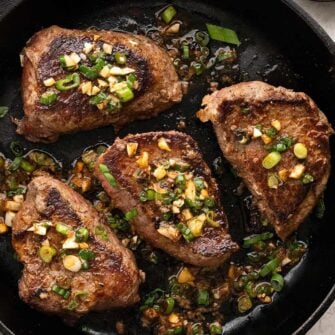
I finish the steaks topped with the red wine sauce and a sprinkle of chopped thyme, rosemary, and parsley. You can plate them up with crispy roasted potatoes, creamy mashed potatoes, sautéed green beans, or roasted asparagus. Don’t forget to pour yourself a glass of red wine; it’s the perfect way to round out this elegant steakhouse-style meal.
Frequently Asked Questions
There are different quality grades of beef; the most commonly found in the market are USDA Prime, Choice, Select, and Standard (store-brand meat). I recommend USDA Prime if the budget allows, as it has the most abundant marbling. Otherwise, the USDA’s choice will have a pleasant taste as well.
The best cooking method for ribeye is reverse searing. While traditional pan-searing ribeye steaks works well, gently cooking the steak in the oven first and then finishing with a quick, high-heat sear gives you more even doneness, a juicier interior, a thinner gray ring, and a beautifully browned crust. This is my preferred method for a high-quality ribeye.
You don’t need to marinate a ribeye if it’s a high-quality, well-marbled cut. The fat already delivers plenty of flavor and juiciness. I usually keep it simple with salt, pepper, and a quick garlic butter-and-herb baste. Marinades can be helpful for leaner or lower-grade steaks, but keep them short (a few hours) and avoid very acidic marinades longer than 24 hours so the meat doesn’t turn mushy. Try my steak marinade for the ultimate, flavorful, juicy steak!
Select a bold, dry red wine, such as Zinfandel or Cabernet Sauvignon, with good structure and smooth tannins.
Serve This With


If you tried this Ribeye Steak Recipe, please leave a 🌟 star rating and let me know how it went in the 📝 comments below!
Ribeye Steaks with Red Wine Sauce

Ingredients
- 2 large ribeye steaks, 1½ to 2-inches thick
- kosher salt, for seasoning
- black pepper, for seasoning
- 1 tablespoon vegetable oil
- 2 tablespoons unsalted butter, divided
- 1 tablespoon minced garlic
- ¼ cup minced shallots
- 1 cup red wine, Zinfandel
- 1 tablespoon balsamic vinegar
- 1 sprig rosemary, more for garnish
- 2 sprigs thyme, more for garnish
- 1 cup beef stock
- ¼ cup parsley leaves, roughly chopped
Instructions
- Preheat the Oven – Adjust the oven rack to the center position and preheat to 275ºF (135ºC). Place a large 12-inch cast iron skillet in the oven to warm.
- Season the Steaks – Line a sheet pan with foil and place a wire rack on top, set aside. Dry the steaks with a paper towel to remove excess surface moisture and transfer them to the wire rack. Generously season the meat with salt and ground black pepper on both sides.
- Cook the Steaks – Place steaks in the oven and cook for about 15 to 25 minutes, depending on the thickness and desired doneness. Check the temperature at 15 minutes, then every 5 minutes until target doneness is reached, 90 to 95ºF (32 to 35ºC) for medium-rare, or 100 to 105ºF (38 to 41ºC) for medium. Remove from the oven and set aside.
- Sear the Steaks – Remove the cast iron pan from the oven and transfer it to the stovetop. Heat the pan over high heat and add the oil. Once the oil is hot and just beginning to smoke, carefully add the steaks to the pan.Sear the first side until a deep brown crust is formed, about 2 minutes. Flip and sear the other side for about 1 ½ to 2 minutes. Use tongs to turn the steaks on their sides to cook and render the remaining fat, about 2 minutes total. Add 1 tablespoon of the butter to the pan, melt and use a spoon to briefly baste the tops of the steaks.Aim for an internal temperature of 120 to 125ºF (49 to 52ºC) for medium-rare or 130 (54ºC) for medium.
- Rest the Meat – Transfer the steaks to a clean plate and allow them to rest at room temperature for 10 minutes.
- Red Wine Sauce – Reserve 1 tablespoon of the steak drippings in the cast iron pan and heat over medium. Once the drippings are warm, add the garlic and shallots. Saute and stir frequently, about 1 minute. Add red wine, balsamic vinegar, rosemary sprig, and thyme sprigs. Bring the mixture to a rapid simmer over high heat. Allow to reduce until thickened, about a ¼ cup, 3 to 5 minutes. Add in beef stock, and rapidly simmer over high heat until the sauce is reduced and thickened to about ½ cup, about 4 to 5 minutes. Remove rosemary and thyme, discard. Turn off the heat and whisk in 1 tablespoon of butter. Taste and season with more salt and pepper as desired.
- To Serve – Garnish the steaks with the red wine sauce, chopped thyme, rosemary, and parsley.
Notes
- Steak Temperature After Cooking in the Oven: I recommend checking the temperature using a meat thermometer at 15 minutes, then every 5 minutes until target doneness is reached, 90 to 95ºF (32 to 35ºC) for medium-rare, or 100 to 105ºF (38 to 41ºC) for medium.
- Steak Temperature After Pan-Searing: Aim for an internal temperature of 120 to 125ºF (49 to 52ºC) for medium-rare or 130 (54ºC) for medium.
- Using A Different Pan: Sear the steak in a stainless steel or nonstick skillet. Simply heat the pan on the stovetop and skip the oven preheating step.
- Storing: Refrigerate leftovers for up to 5 days.
Nutrition Facts
Percent Daily Values are based on a 2000-calorie diet. All nutritional information is based on estimated third-party calculations. Each recipe and nutritional value will vary depending on the brands you use, measuring methods, and portion sizes per household.




Todd says
Followed the recipe exactly. Wine sauce was unbalanced. Not sure balsamic vinegar is a good call. Possibly the thicker balsamic extract. Either way, steaks were great, sauce was dumped.
Robin says
I like sous vide to cook steak to precise internal temp.
Jessica Gavin says
Sous vide is an excellent way to cook steak, Robin!
Kaitlynn Rakstad-Haffener says
Can I use any type of red wine?
Jessica Gavin says
You can use any dry red wine. I prefer Zinfandel or Cabernet for a richer flavor.