
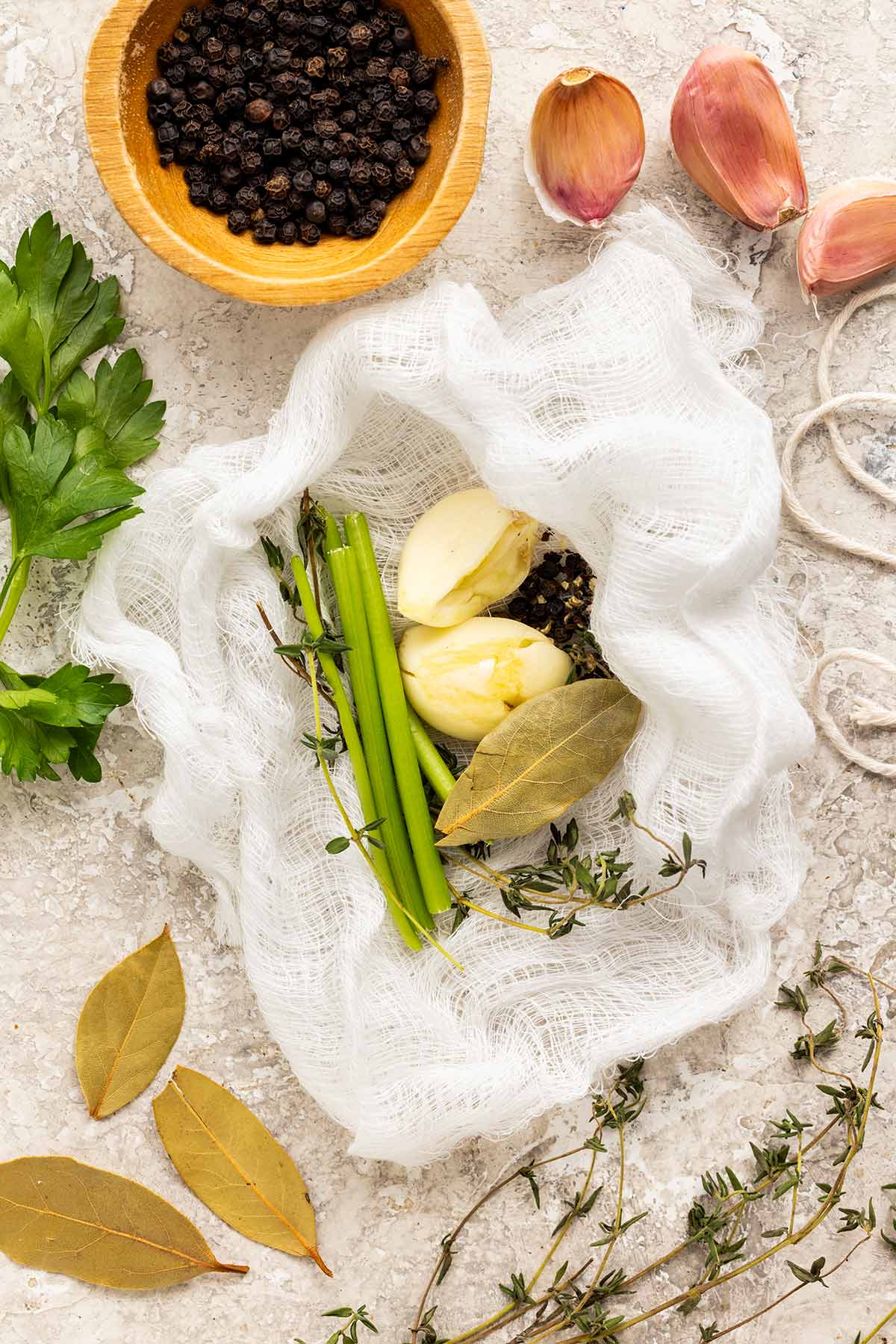
A sachet d’épices is a simple French culinary secret that adds layers of flavor to soups, stocks, and sauces without leaving behind stray herbs or spices. Learn how to make this aromatic spice pouch and elevate your cooking.
Jessica’s Recipe Science
- Using a sachet controls extraction, boosting aroma and complexity without cloudy liquid or gritty herb or spice bits floating around.
- Cheesecloth acts like a filter, allowing flavor compounds to pass through while keeping stems and peppercorns neatly contained.
- Simmering herbs and spices releases essential oils and aromatic compounds, such as thymol, eugenol, and piperine.
Why It Works
I learned to prepare a sachet d’épices while making large batches of chicken stock and chicken broth during culinary school. It was one of the first techniques that showed me how science and simplicity can elevate flavor. As the herbs and spices simmer, their essential oils and aromatic compounds gently flavor the liquid. This controlled extraction builds depth and aroma without leaving behind particles in the liquid.
Making a sachet is quick, mess-free, and ensures you get all the flavor without stray stems or peppercorns floating in your dish. It’s a simple way to bring restaurant-level finesse to your kitchen. It’s perfect for making a flavorful liquid base that can be used in a variety of recipes throughout the week.
Jump To a Section
Ingredients You’ll Need
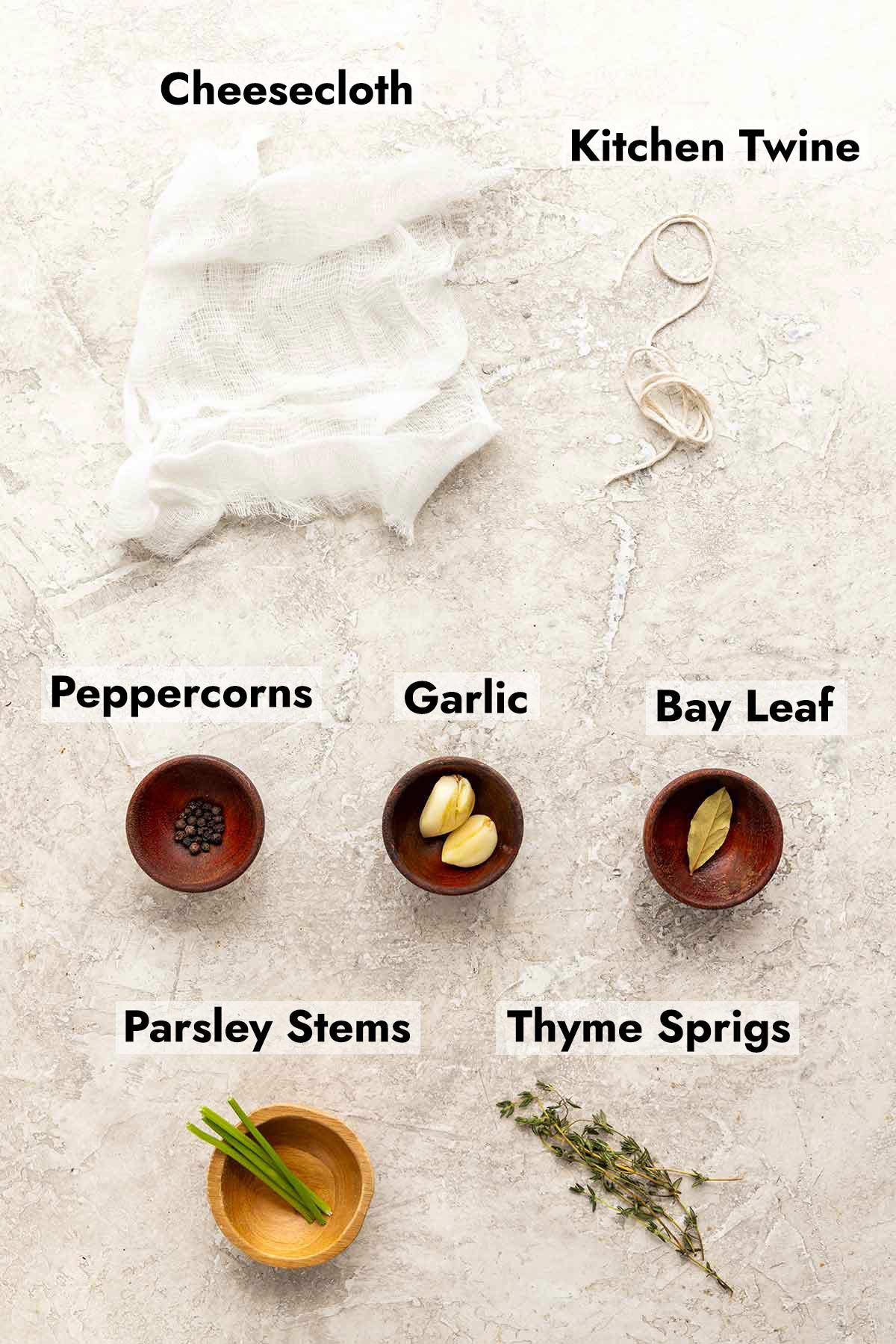
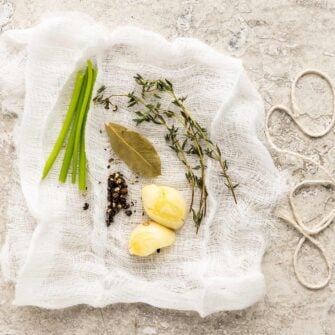
- Thyme sprigs: Contains thymol, an essential oil that adds earthy, slightly minty, and savory notes.
- Parsley stems: Releases a mild, grassy flavor and brightens and balances the stock’s richness. Parsley leaves are not used because chlorophyll compounds can turn the simmering liquid green.
- Garlic cloves: When simmered, the sulfur compounds like allicin transform into mellow, sweet, nutty notes that deepen the liquid’s umami character.
- Bay leaves: Provide eugenol and cineole, aromatic molecules that contribute warm, herbal, and slightly floral undertones.
- Black peppercorns: Contains piperine, which adds subtle heat and sharpness.
- Double-layered cheesecloth: The fine, porous weave allows flavorful oils and aromatic compounds to diffuse into the liquid while trapping small herb particles, keeping the stock clear and smooth.
- Kitchen twine: Made from heat-resistant cotton, it securely seals the sachet so the ingredients stay contained during simmering and can be easily removed without breaking apart.
See the recipe card below for all ingredients and measurements (US and metric).
Ingredient Substitutions
The sachet d’épices is easy to customize! Try these flavorful options:
- Herbs: Add fresh or dried herbs like rosemary sprigs, sage, marjoram, oregano, or tarragon. Use 1 teaspoon of dried herbs, such as Italian seasoning or herbs de Provence.
- Spices: For pungency and warmth, add fresh ginger slices. Star anise, whole cloves, allspice, cardamom pods, or cinnamon sticks can add sweetness and aroma.
- Make a Bouquet Garni: If you don’t have cheesecloth to make a spice sachet, you can make a bundle of herbs and spices instead. Wrap the ingredients between leek leaves or pieces of celery, then tie the twine around to secure.
- Cheesecloth Alternatives: Place the ingredient in a coffee or tea filter. Add them to a metal tea infuser.
How to Make Sachet d’Épices
Step 1: Cut the Cheesecloth and Twine
The double layer of cheesecloth provides enough strength to contain small particles, while its porous weave lets essential oils and aromatic compounds easily diffuse into the simmering liquid. Using a 10-inch piece of kitchen twine creates a tight, heat-safe seal that keeps the pouch intact during cooking.
Step 2: Prepare the Sachet d’Épices
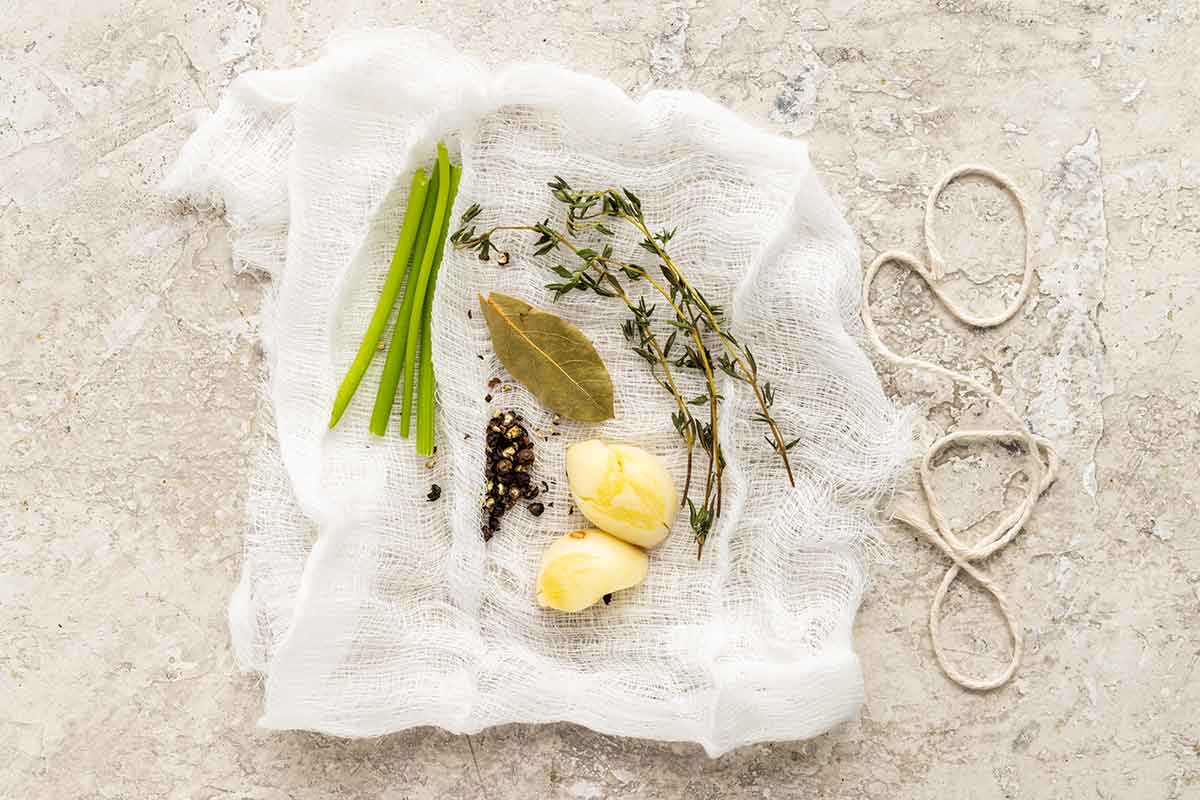
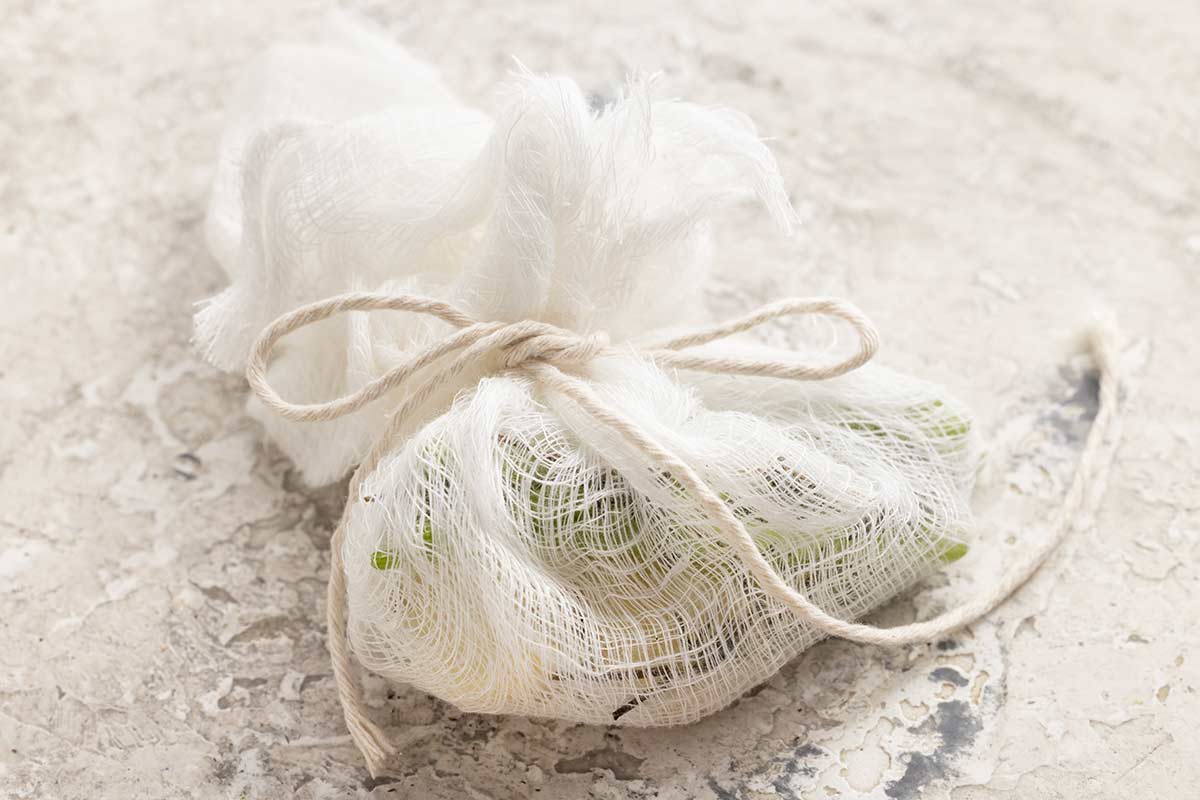
Preparing the sachet d’épices in a pouch keeps the herbs and spices neatly contained. Add the garlic clove, thyme sprigs, parsley stems, crushed peppercorns for a stronger taste, and bay leaf in the center of the cheesecloth. Gather the edges to form a sachet, then tie it securely with twine to prevent the ingredients from falling out.
Pro Tip: You can make the kitchen twine a little longer and tie the end to the pot handle so it’s easy to find and remove.
Step 3: Add the Sachet
Add the sachet to the stock pot, making sure it’s submerged in the liquid. As the herb and spice sachet ingredients simmer, volatile oils and aromatics pass through the porous cheesecloth, enhancing depth and aroma without leaving residue or particles of the seasonings.
Frequently Asked Questions
A sachet d’épices is a small bundle of aromatic herbs and spices traditionally used in French cooking to infuse flavor into soups, stocks, and sauces. I like to include fresh thyme sprigs, parsley stems, garlic cloves, bay leaves, and black peppercorns. Each ingredient adds its own layer of complexity. Wrapped in cheesecloth and tied with twine, the sachet allows these flavors to mingle beautifully in the liquid without leaving behind any bits or stems, creating a clean, well-balanced base for your dish.
A bouquet garni and a sachet d’épices serve the same purpose by infusing flavor to make good stock, broth, and soup, but they differ in form and ingredients. A bouquet garni is a small bundle of fresh herbs, typically thyme, parsley, and bay leaf, tied together with kitchen twine or wrapped in a leek leaf. A sachet d’épices includes both herbs and spices, such as thyme, parsley stems, garlic, bay leaf, and black peppercorns, enclosed in cheesecloth. The cloth acts as a filter, allowing aromatic compounds to diffuse into the liquid while keeping fine particles contained.
A sachet d’épices improves stock making by creating a controlled way to extract flavor from herbs and spices without clouding the liquid. The porous cheesecloth allows volatile oils and aromatic compounds to diffuse evenly into the simmering water, deepening the stock’s aroma and complexity. Because the ingredients are contained, you get all the flavor without stray particles that can make the broth gritty or murky.
Serve This With


If you tried this Sachet d’épices, please leave a 🌟 star rating and let me know how it went in the 📝 comments below!
Sachet d’Épices
Ingredients
- 4 thyme sprigs
- 4 parsley stems
- 2 garlic cloves, crushed or halved
- 1 bay leaf
- ¼ teaspoon black peppercorns
Instructions
- Cut the Cheesecloth and Twine – Cut a double layer of cheesecloth into an 8-inch square, then cut a 10-inch piece of kitchen twine.
- Prepare the Sachet d'Épices – Place the thyme, parsley stems, garlic, bay leaf, and peppercorns in the center of the cheesecloth. Gather the edges and tie securely with kitchen twine to form a pouch. This allows for easy removal after simmering in stock or broth.
- Add the Sachet – Place the sachet on top of the ingredients in the pot so it can soak in the liquid and release its flavors as it simmers. Remove and discard it once cooking is complete.
Recipe Video

Notes
- Alternatives to Cheese Cloth: Place the herbs and spices in a tea or coffee filter or tea infuser. Create a bouquet garni by wrapping the herbs in celery stalks and tying the bundle with kitchen twine. Alternatively, add everything directly to the pot if the stock or broth will be strained before using.
Nutrition Facts
Percent Daily Values are based on a 2000-calorie diet. All nutritional information is based on estimated third-party calculations. Each recipe and nutritional value will vary depending on the brands you use, measuring methods, and portion sizes per household.


Leave a Comment