
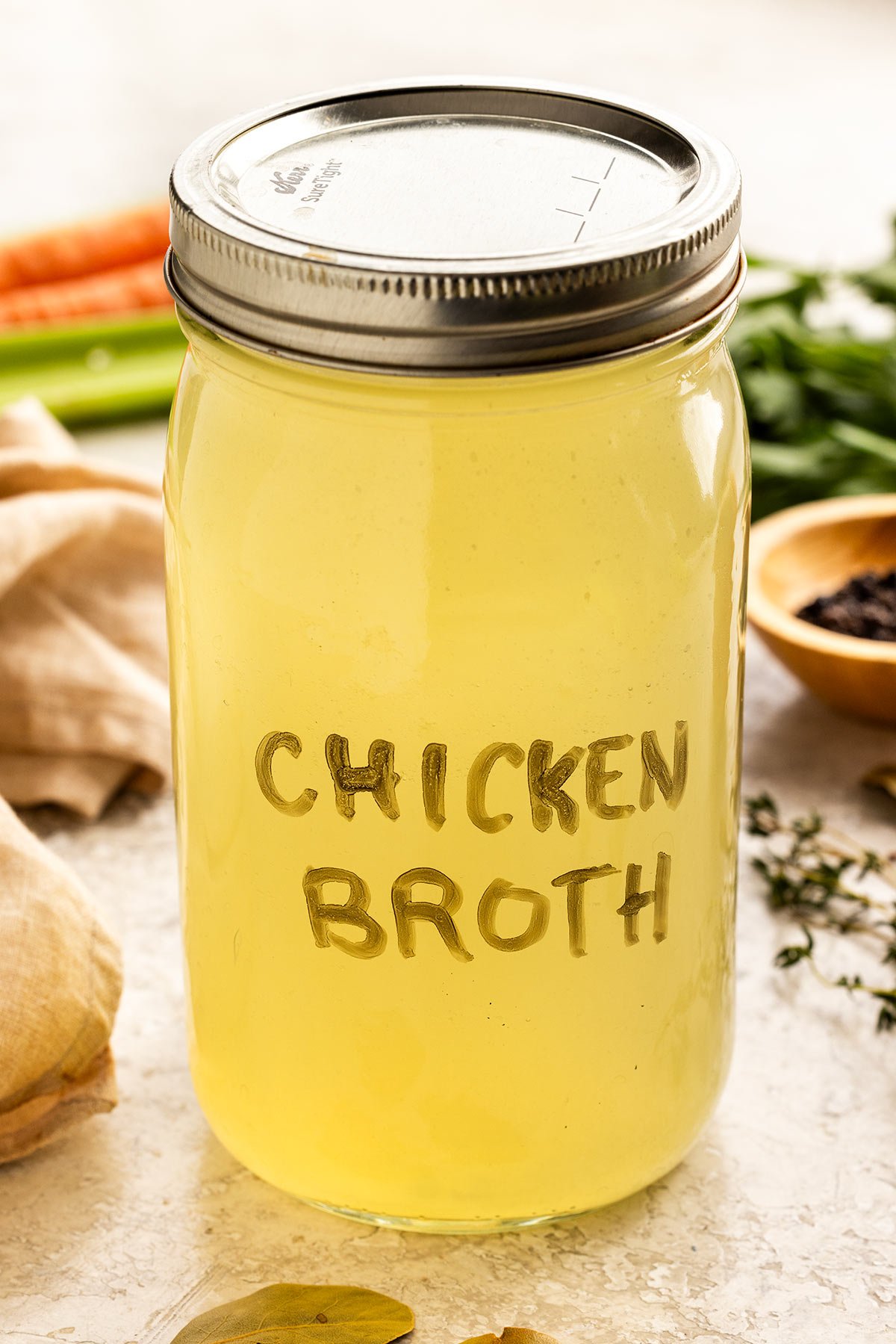
This homemade chicken broth recipe is the secret to delicious soups, flavorful sauces, and comforting meals made from scratch. I have a simple method for simmering chicken pieces and aromatics to create a broth that beats anything from the store.
Jessica’s Recipe Science
- Using a whole chicken adds collagen from the bones and umami-rich proteins from the meat, for a more complex flavor in the broth.
- Starting the broth with cold water allows the proteins to dissolve slowly, producing a clean, golden broth instead of a cloudy one.
- Keeping the simmering temperature around 185ºF ensures efficient flavor extraction while gently cooking the meat.
Why It Works
When I learned how to make homemade chicken stock in culinary school, it completely changed how I cooked. But once I mastered broth, it opened up even more meal possibilities. Simmering a whole chicken with aromatic vegetables, herbs, and spices extracts collagen, amino acids, and minerals that give the broth body and richness. The result is a flavorful, nutrient-dense base that’s both nourishing and versatile.
Make this recipe whenever you want to add rich flavor and nutrition to soups, stews, gravies, or sauces. You can control the seasonings and make good use of leftover vegetables or herbs that might otherwise go to waste. Make a big batch and freeze it in portions so you’ll always have homemade broth ready to use. Once you taste the difference, you’ll never go back to store-bought again.
Jump To a Section
Ingredients You’ll Need
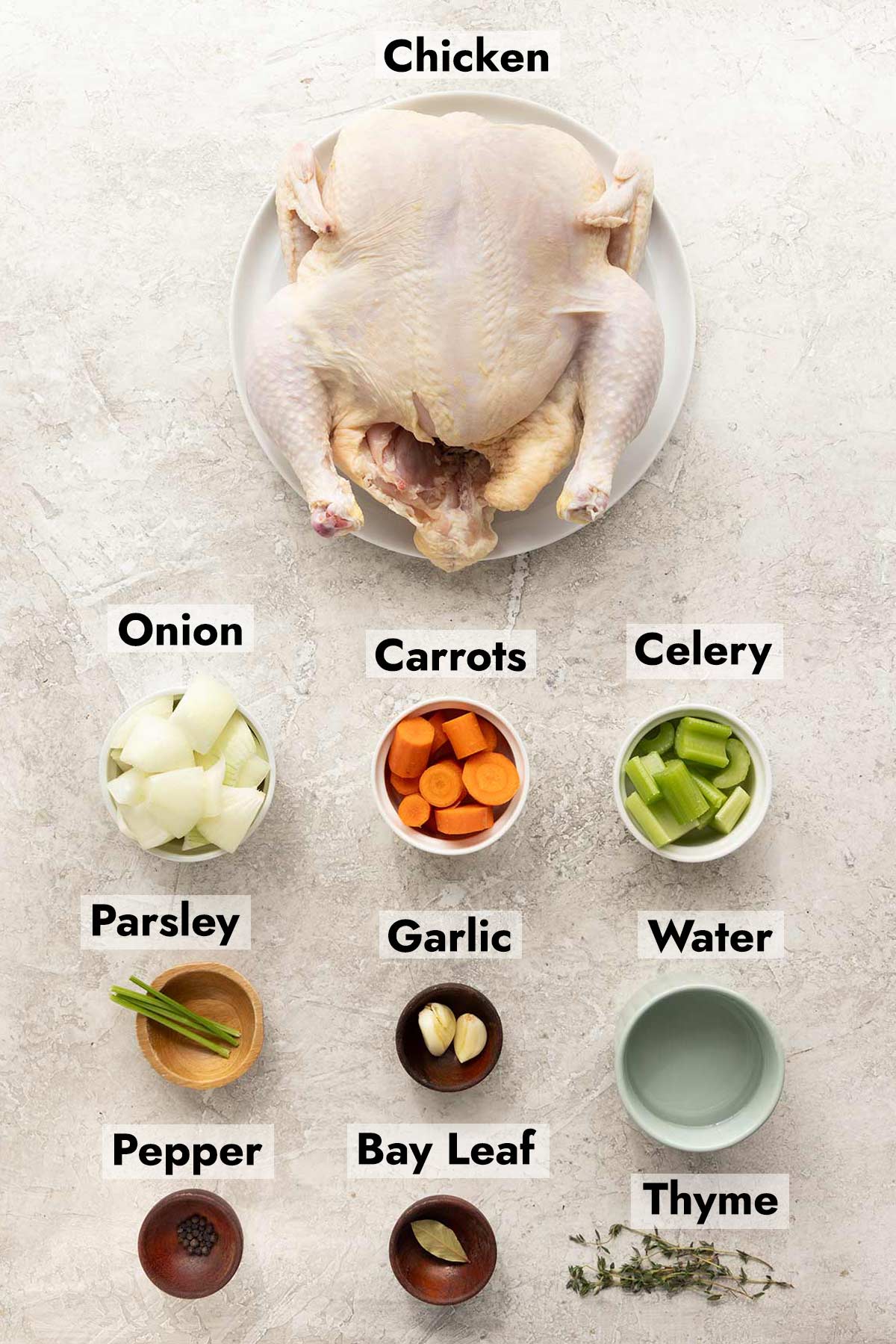
- Chicken: The main difference between stock vs. broth is that broth is made with meat, not just bones. For this recipe, I use a whole chicken weighing about 4 to 5 pounds, cutting it into breasts, thighs, legs, and wings to help release flavor more quickly. This also makes it easy to remove the lean white meat before it overcooks and becomes dry. You can include the carcass and cartilage; the back, in particular, is rich in collagen, which adds body and a rich texture to the broth. The gizzards can add extra flavor, but skip the liver, as it can make the broth taste bitter. Save it for making a flavorful giblet gravy instead.
- Herbs and Spices: I like to use a simple sachet d’épices, a small pouch of herbs and spices that infuses the broth without leaving bits behind. Fresh thyme sprigs, parsley stems, garlic cloves, bay leaves, and black peppercorns slowly release their aromatic oils, adding depth and complexity to the flavor.
- Vegetables: A classic mirepoix, a blend of onions, carrots, and celery, forms the vegetable backbone of the broth. Onions add umami and richness, carrots contribute sweetness and color, and celery brings an earthy balance. It’s also the perfect way to use up leftover vegetable scraps.
- Water: I use 3 quarts of cold water to extract the flavor from the ingredients into the broth, which naturally reduces to around 2 quarts during simmering.
See the recipe card below for all ingredients and measurements (US and metric).
Ingredient Substitutions
This chicken broth recipe is easy to customize! Try these tasty options:
- Chicken: You can use the chicken carcass from a whole roasted chicken for extra body and flavor. Use just one type of chicken part, like the legs or thighs, which have a richer flavor and more fat than chicken breasts. Using all boneless meat will yield a clear broth, whereas bone-in pieces extract additional flavor from the marrow and body from the collagen in connective tissues. Skin-on meat delivers more flavor. This method also works beautifully after the holidays with leftover roast turkey bones from Thanksgiving or Christmas.
- Vegetables: For a lighter, more delicate flavor, try a white mirepoix made with parsnips, leeks, and mushrooms instead of carrots. These vegetables lend subtle sweetness and earthy depth without darkening the broth.
- Herbs: Fresh herbs like rosemary, sage, oregano, or tarragon add bright, fragrant layers to the broth. If using dried herbs, add about 1 teaspoon of Italian seasoning or herbs de Provence for a more pronounced herbal note.
- Spices: To enhance the aroma and add gentle warmth, include slices of fresh ginger. Whole spices such as star anise, cloves, allspice, cardamom pods, or a cinnamon stick can add a hint of natural sweetness and complexity.
- Salt: I hold off on adding salt until the end since the broth is often used in different recipes that each need their own seasoning balance. For a boost of savory depth, you can stir in a chicken bouillon cube or a dash of soy sauce.
How to Make Chicken Broth

Step 1: Prepare the Chicken
Cutting the whole chicken into smaller pieces increases the surface area, allowing water to extract more flavor, fat, and nutrients from both the meat and bones. The exposed joints also help release collagen during simmering, giving the broth a fuller body and deeper, more concentrated taste.
Pro Tip: You can simmer a whole chicken, but the flavor won’t be as concentrated since less surface area is exposed to the water. Use a large stockpot to ensure the chicken is fully submerged, allowing for even cooking and optimal flavor extraction.
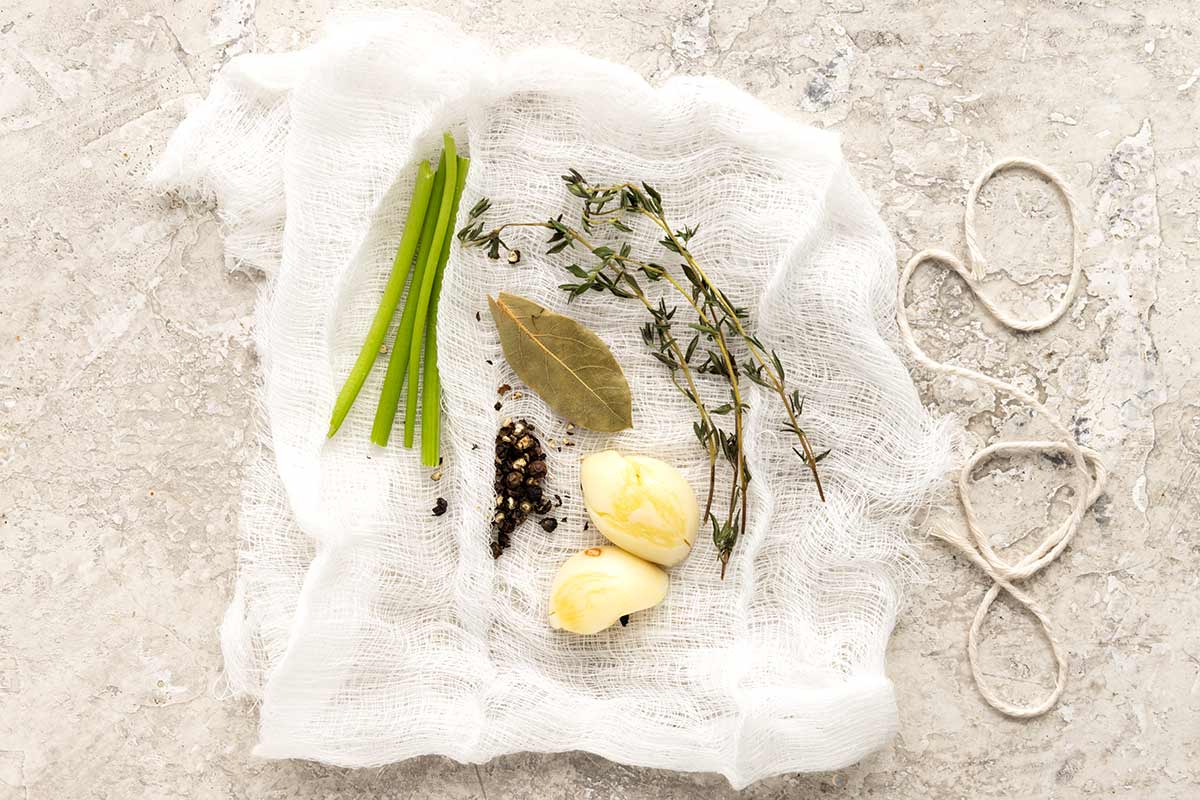
Step 2: Prepare the Sachet d’Épices
Creating a sachet d’épices keeps small herbs and spices contained while they infuse the broth with their essential oils and aromatic compounds. This method ensures clean, balanced flavor extraction without leaving behind particles that can make the broth cloudy or muddy.
Quick Substitution: If you don’t have cheesecloth or twine, use a tea bag, coffee filter, or fine mesh infuser to hold the herbs and spices. You can also create a simple bouquet garni by wrapping the herbs in celery stalks and securing the bundle with kitchen twine. If needed, add the ingredients directly to the pot; everything will be strained out before using the broth.
Step 3: Simmer the Chicken
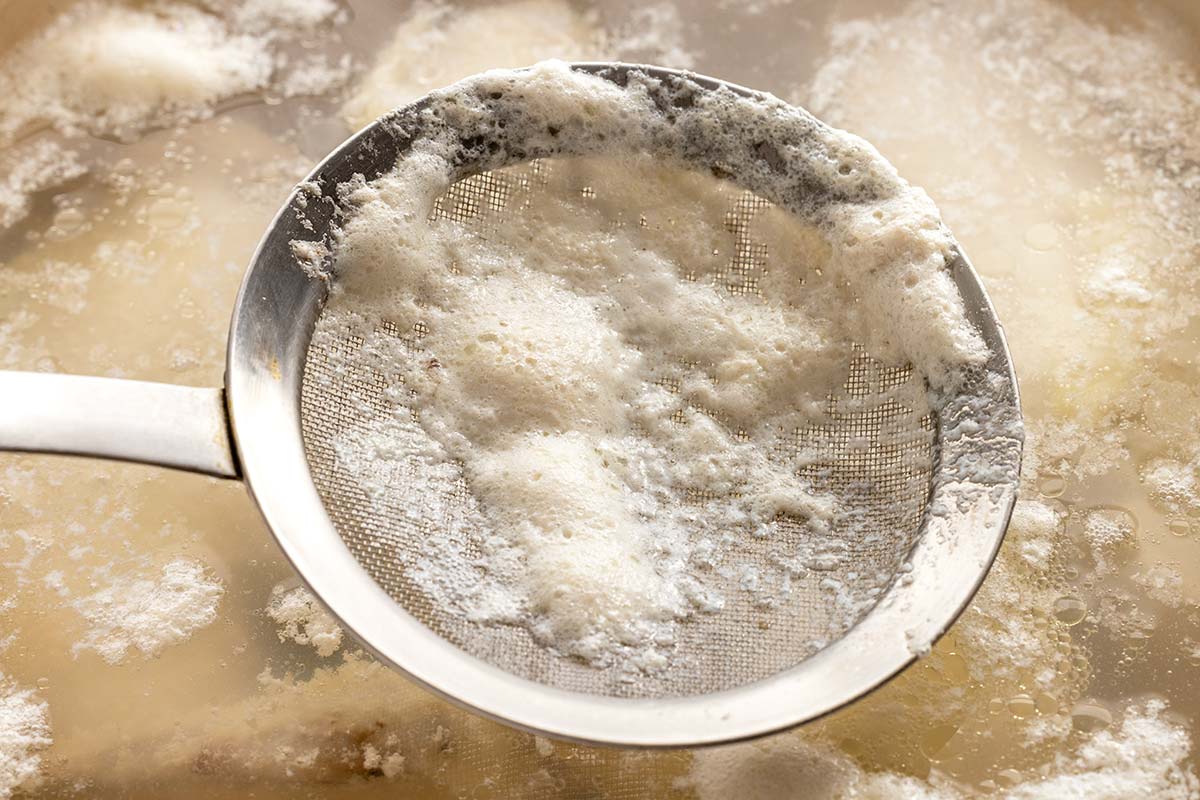
Always start by adding the chicken pieces to cold water, which helps release proteins and impurities gradually as the liquid heats. Once it reaches a gentle boil, immediately reduce to a slow simmer, with just a few bubbles breaking the surface.
After about 10 minutes, you’ll see foam, or scum, rise to the top. Skim it off with a spoon or ladle to remove coagulated proteins, keeping the broth clear and clean-tasting.
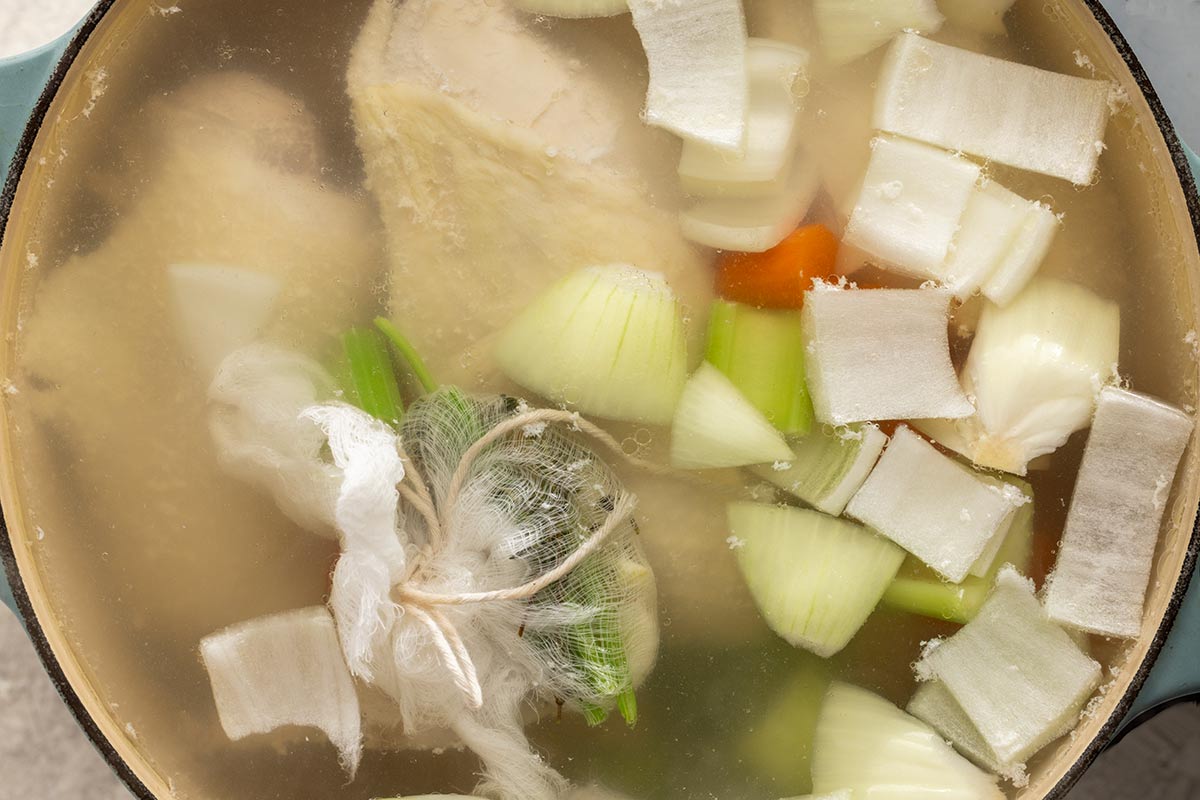
Step 4: Add the Mirepoix and Sachet
Adding the mirepoix and sachet at this stage infuses the broth with aromatic compounds, natural sugars, and sulfur-containing molecules that deepen its flavor and aroma. Simmering gently for an hour allows these flavors to meld without breaking down the vegetables too much, keeping the broth clear and balanced.

Step 5: Remove the Chicken Breast
Removing the chicken breasts after an hour prevents the lean white meat from overcooking and becoming dry. This step ensures the breast meat stays tender and juicy while the remaining bones and darker cuts continue to simmer, enriching the broth with collagen and deeper flavor.
Tips for Perfect Execution: I like to simmer the chicken breast between 160 to 185ºF (71 to 85ºC), so that the meat poaches and stays moist and juicy.
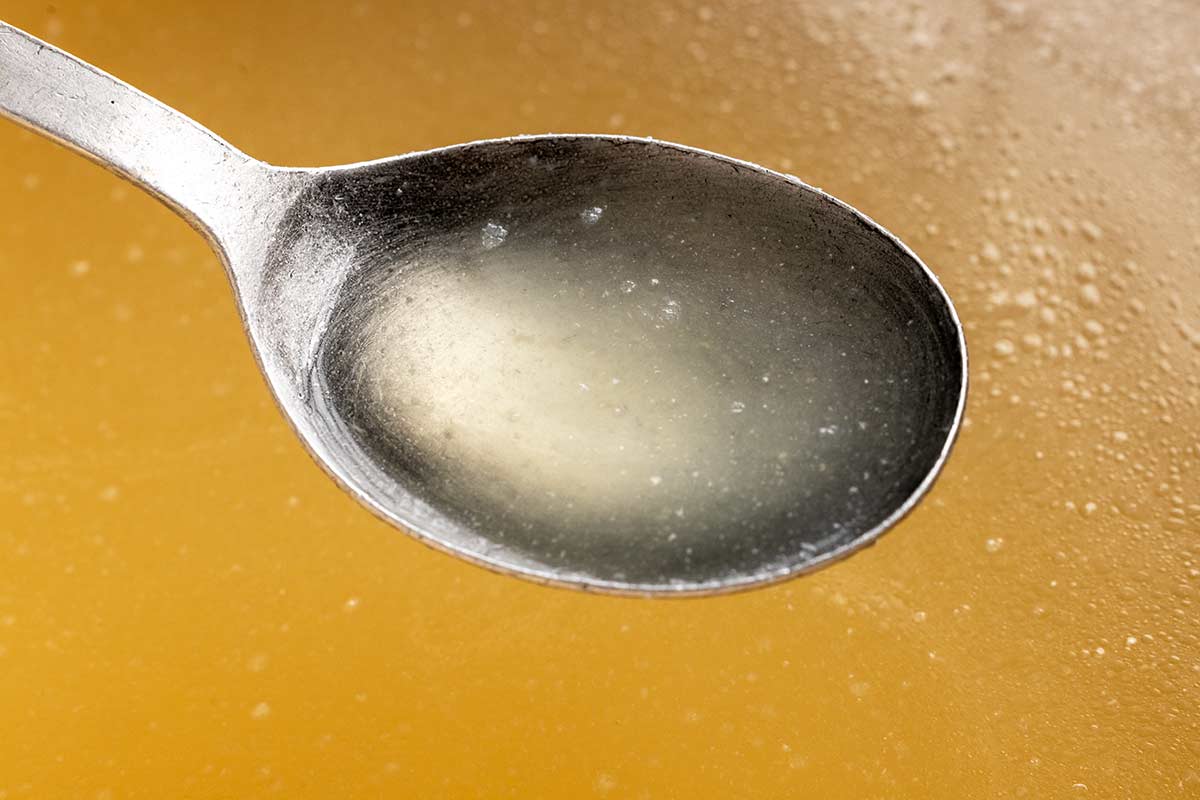
Step 6: Simmer the Broth
Keeping the broth at a gentle simmer on the stovetop around 185°F (85°C) prevents cloudiness and ensures a clean, refined flavor. The slow heat gradually converts collagen into gelatin, adding body and richness, while extracting amino acids, minerals, and fat-soluble compounds that deepen the taste and aroma. Skimming off foam removes impurities, resulting in a clear, golden broth.

Step 7: Strain the Broth
Straining the broth through a fine-mesh sieve removes solid particles that can cloud the liquid. Lining the strainer with cheesecloth captures even the smallest bits of protein, herbs, and the veggies’ fibers, creating a crystal-clear broth. Allowing the liquid to rest allows the fat to naturally rise to the surface, as it’s less dense than water.
Skimming it off not only gives the broth a cleaner appearance but also refines the mouthfeel, preventing greasy or heavy flavors and leaving a smooth, balanced finish.

Step 8: Use or Store
Seasoning with salt at the end allows you to control the salt level based on how you plan to use the broth. I like to use the broth to make chicken noodle soup, then shred the chicken for hearty spoonfuls. A 5-pound chicken yields about 6 cups of meat, which is great for making chicken enchiladas.
Storing Tips: Cool the broth within 2 hours to prevent bacterial growth, then refrigerate or store in the freezer. I store mine in glass jars in the fridge for up to 5 days, removing the solidified fat layer before using. For longer storage, freeze in airtight containers or portioned in ice cube trays for up to 6 months.
Frequently Asked Questions
Not exactly. While water used to boil chicken does extract some flavor and nutrients, true chicken broth is made by gently simmering (not boiling) chicken parts with aromatic vegetables, herbs, and spices. The slow simmer allows collagen, amino acids, and minerals to release from the bones and connective tissue, giving the broth more body, depth, and a savory, umami-rich taste that plain “chicken water” doesn’t have.
The best parts of the chicken for making broth are the wings, thighs, legs, back, and neck, as they provide the ideal balance of meat, fat, and collagen. These cuts contain connective tissue and cartilage that slowly release gelatin during simmering, giving the broth a richer body and fuller mouthfeel. Using the whole carcass, especially from a roasted or rotisserie chicken, adds extra depth from the browned proteins and fat. For the most flavorful broth, combine dark meat pieces with the back and neck, as well as the breast, to create a well-rounded, savory taste.
The main difference is that stock is made with just bones, and broth is made with meat. You can add bones to broth for a richer flavor. Chicken broth typically includes the breast and thigh meat. This is great for cutting or shredding the chicken to include in soups, stews, enchiladas, chili, or rice dishes.
Chicken bone broth is a long-simmered stock, cooked for 12 to 24 hours to extract collagen, marrow, and amino acids from the bones. The result is a rich, flavorful, and nutrient-dense liquid with a silky texture. You can use this recipe to make chicken bone broth. Be sure to remove the breast meat after an hour, and keep the bones covered with water as they simmer.
How to Make


If you tried this Chicken Broth Recipe, please leave a 🌟 star rating and let me know how it went in the 📝 comments below!
Homemade Chicken Broth
Ingredients
- 1 whole chicken, 4 to 5 pounds
- 4 thyme sprigs, or ¼ teaspoon dried thyme
- 4 parsley stems
- 2 garlic cloves , crushed or halved
- 1 bay leaf
- ¼ teaspoon black peppercorns
- 12 cups cold water
- 1 cup yellow onions, 1" dice
- ½ cup carrots, 1" pieces
- ½ cup celery, 1" pieces
Instructions
- Prepare the Chicken – Cut the chicken into breast, thigh, leg, and wing pieces to release more flavor into the soup. The carcass can be added or saved to make chicken stock. The giblets, except the liver, can be added. Set aside.
- Prepare the Sachet d’Épices – Place the thyme, parsley stems, garlic, bay leaf, and peppercorns in the center of a piece of cheesecloth. Gather the edges and tie securely with kitchen twine to form a pouch. This allows for easy removal after simmering. Set aside.If you don’t have cheesecloth, you can later add the herbs and spices directly to the pot, as they’ll be strained out later.
- Simmer the Chicken – In a large stock pot or Dutch oven, add the chicken pieces and cold water. Bring to a boil over medium-high heat, then immediately reduce to low to simmer, not going above 185ºF (85ºC). After about 10 minutes, use a spoon to skim off any fat and foam that rise to the surface of the stock. This prevents the stock from becoming cloudy.
- Add the Mirepoix and Sachet – Carefully add the onions, carrots, celery, and Sachet d'Épices to the pot. Simmer the stock over low heat for 1 hour.
- Remove the Chicken Breast – After the broth has cooked for 1 hour, transfer the chicken breasts to a large bowl. If any bones are attached to the breast meat, add them back to the pot.
- Simmer the Broth – Simmer the chicken bones for another 1 to 4 hours. The longer the simmer, the more concentrated the flavor. If needed, add more water to keep the chicken pieces covered. Continue to skim off any fat or impurities that rise to the surface. This helps keep the broth clear and clean in taste.
- Strain the Stock – Transfer the pieces of chicken to the bowl with the breast meat. Pour the stock through a fine-mesh strainer set over a clean pot or large bowl. For extra clarity, line the strainer with cheesecloth to catch smaller particles. Let the strained stock rest for about 10 minutes so the fat rises to the surface, then skim off any fat or remaining impurities.
- Use or Store – Season the broth with salt to taste if desired. Use immediately for a recipe or let it cool for about 2 hours at room temperature. Refrigerated broth can be used within 5 days, skimming of the solidified fat before use.
Recipe Video

Notes
- Recipe Yield: About 2 quarts
- Serving Size: 1 cup
- Chicken Pieces: Any type of chicken part can be used, like breasts, thighs, drumsticks, wings, back, carcass, or a mixture. Use about 4 to 5 pounds of chicken parts.
- Peppercorns: Lightly crush whole peppercorns for a stronger taste.
- Chicken Meat Yield: About 4 to 6 cups of shredded chicken.
- Storing: Refrigerate in an airtight container for up to 5 days. Freeze for up to 6 months.
Nutrition Facts
Percent Daily Values are based on a 2000-calorie diet. All nutritional information is based on estimated third-party calculations. Each recipe and nutritional value will vary depending on the brands you use, measuring methods, and portion sizes per household.


Leave a Comment