
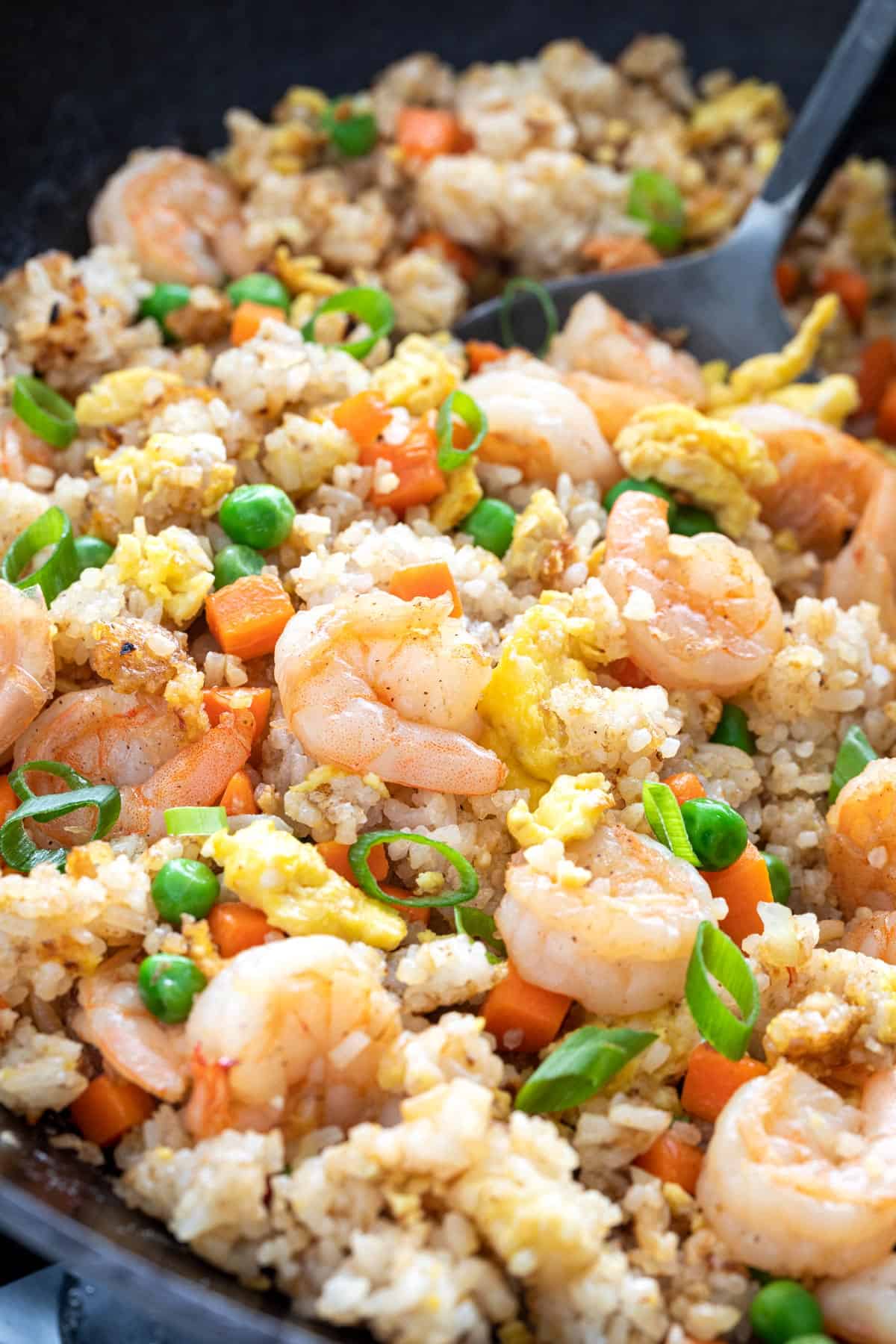
This easy shrimp fried rice recipe is packed with colorful vegetables, various aromatics, and scrambled eggs. The succulent seafood adds extra flavor and protein to this popular Asian dish.

Jessica’s Recipe Science
- If using freshly cooked rice, spread it on a sheet pan and cool it quickly to remove excess steam and surface moisture, helping prevent gummy fried rice.
- Giving the rice direct contact with the hot pan allows moisture to evaporate and creates lightly toasted flavors that add depth.
- Shrimp cooks fast, so removing it early prevents the proteins from tightening and becoming rubbery.
Featured Comment 11
“Made this last night for dinner because I knew my husband would love it. My husband has been missing a similar dish he ordered at a restaurant he frequented that closed several years ago. He was absolutely delighted when I placed the serving dish on the table.”—Maria
Why It Works
I’ve adapted my classic fried rice recipe to incorporate flavorful bites of shrimp. It only takes a few extra minutes to prepare and cook. I season the briny crustaceans with savory ingredients to transform this popular Chinese restaurant menu item into a heartier meal.
I’ll show you how to make steamed rice from scratch, with quick cooling tips to prevent it from sticking in the pan. However, leftover rice is ideal if you have some handy. The seafood, chopped vegetables, and tender eggs cook quickly using the stir-fry method.
Jump To a Section
Ingredients You’ll Need
- Rice: Long-grain rice stays separate better than sticky, shorter grains. This makes it easier to maneuver in the pan when stir-frying. I prefer Jasmine rice because it has a lovely floral aroma and is less sticky and drier in texture.
- Shrimp: Use small shrimp, about 51 to 60 count. The count size represents the number of pieces per pound. This size yields one-bite pieces. You want the protein to complement the rice, not overwhelm it. It’s marinated in soy sauce, sesame oil, salt, and pepper.
- Oil: Nutty sesame oil seasons the shrimp and eggs. Vegetable oil is used to stir-fry the chicken, cooked rice, and vegetables.
- Vegetables: I use a combination of minced white onion, fresh garlic, ginger, diced carrots, frozen peas, and sliced green onions for garnish.
- Eggs: Scrambled eggs add a protein boost. The soft, fluffy curds add a nice texture contrast.
See the recipe card below for all ingredients and measurements (US and metric).
Ingredient Substitutions
This shrimp fried rice recipe is easy to customize! Try these delicious options:
- Rice Options: Other types of rice can be used, like brown rice or basmati rice. However, if you add a medium grain like Calrose, it will clump more. Day-old rice is actually the preferred option because the grains are a bit stiffer and easier to stir-fry. You can even try quinoa, broccoli rice, or cauliflower rice.
- Shrimp Swaps: Try adding other types of shrimp like white, brown, or pink shrimp, or larger pieces for heartier bites. Scallop, crab, or lobster are delicious alternatives—tofu for a vegetarian option.
- Veggies: Add bean sprouts, yellow onion, bell peppers, peas, carrots, corn, edamame, or green beans using fresh, frozen, or canned options.
- Oil Swaps: Use a neutral-tasting, high-smoke-point oil like peanut oil, rice bran oil, canola oil, avocado oil, or light olive oil.
- Soy Sauce Substitute: Use gluten-free soy sauce, tamari, or coconut aminos. Use low-sodium soy sauce for a less salty taste.
How to Make Shrimp Fried Rice
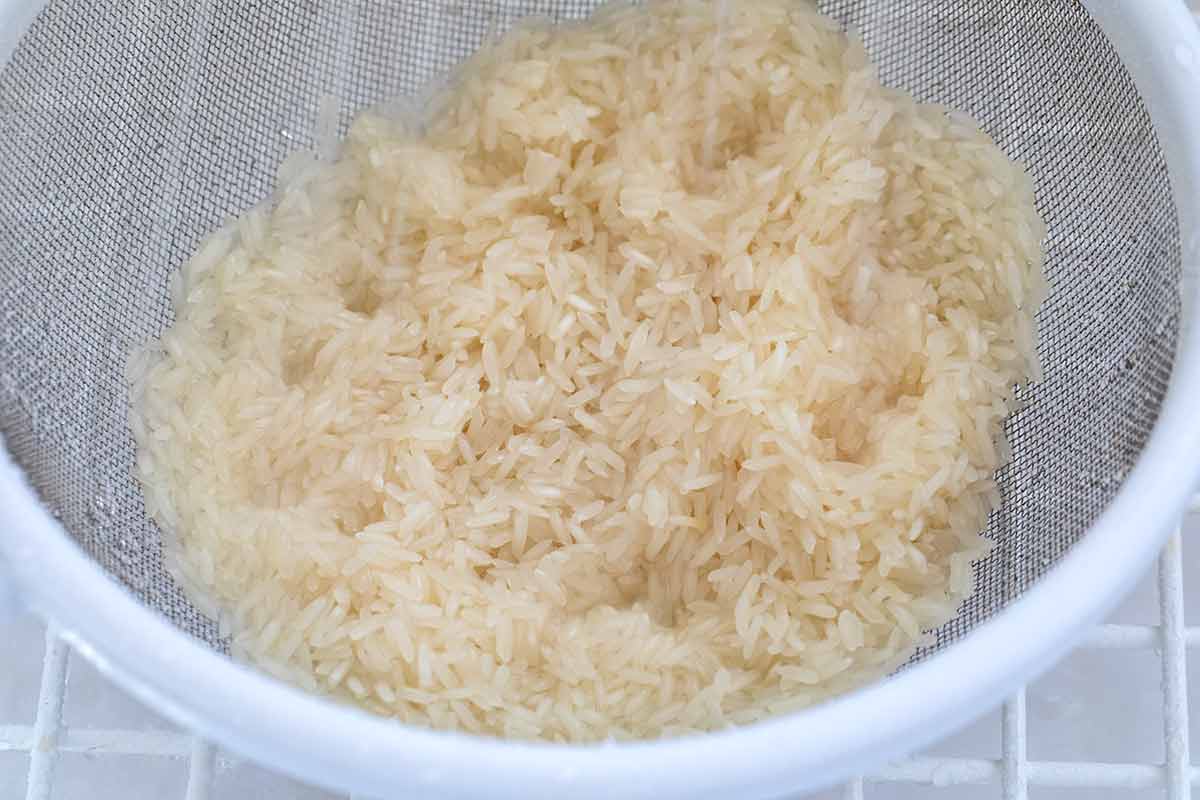
Step 1: Wash the Rice
It’s easier to stir-fry rice the less clumpy it is. Uncooked rice contains lots of starches, both inside the grain and particles that coat the surface. To reduce the number of grains that stick together after cooking rice, rinse off the starches with cool water. You’ll see the water go from cloudy to clear in about a minute. If you leave those starches on, they swell and promote sticking.
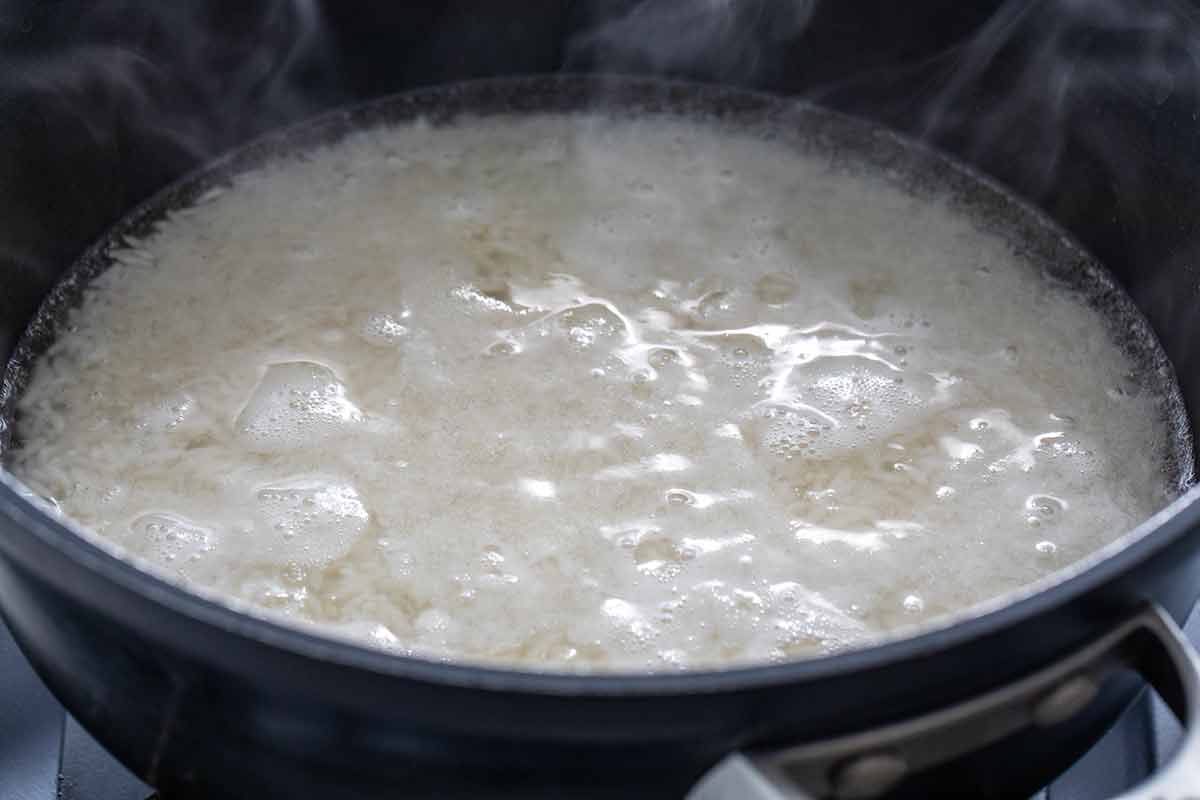
Step 2: Cook the Rice
Simmering the rice gently lets the grains absorb water evenly and fully gelatinize the starches for a tender texture. Letting the rice rest off the heat gives the remaining moisture time to redistribute throughout the grains, preventing wet spots and helping the rice cook evenly before it’s cooled and stir-fried.
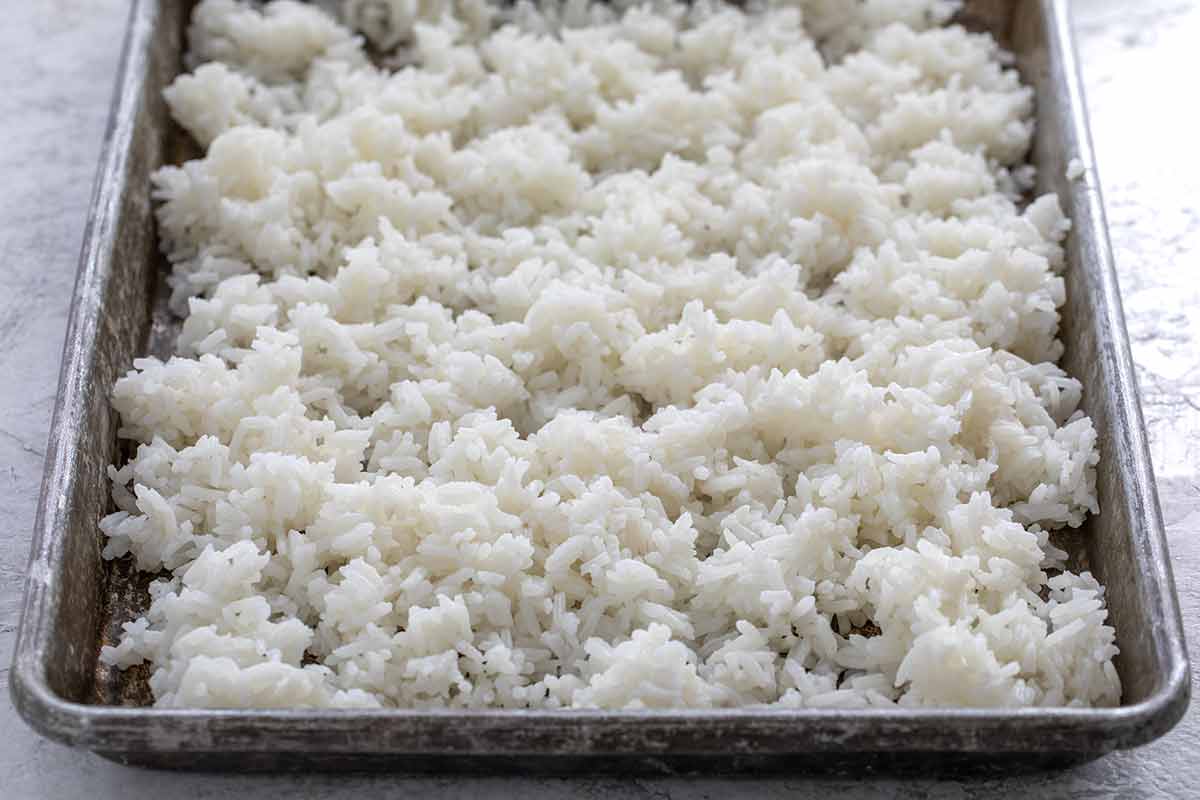
Step 3: Cool the Rice
Cooling the rice in the fridge lets excess moisture evaporate and the starches firm up, helping the grains stay separate during stir-frying. This refrigeration step prevents clumping and creates the light, fluffy texture that makes great fried rice.
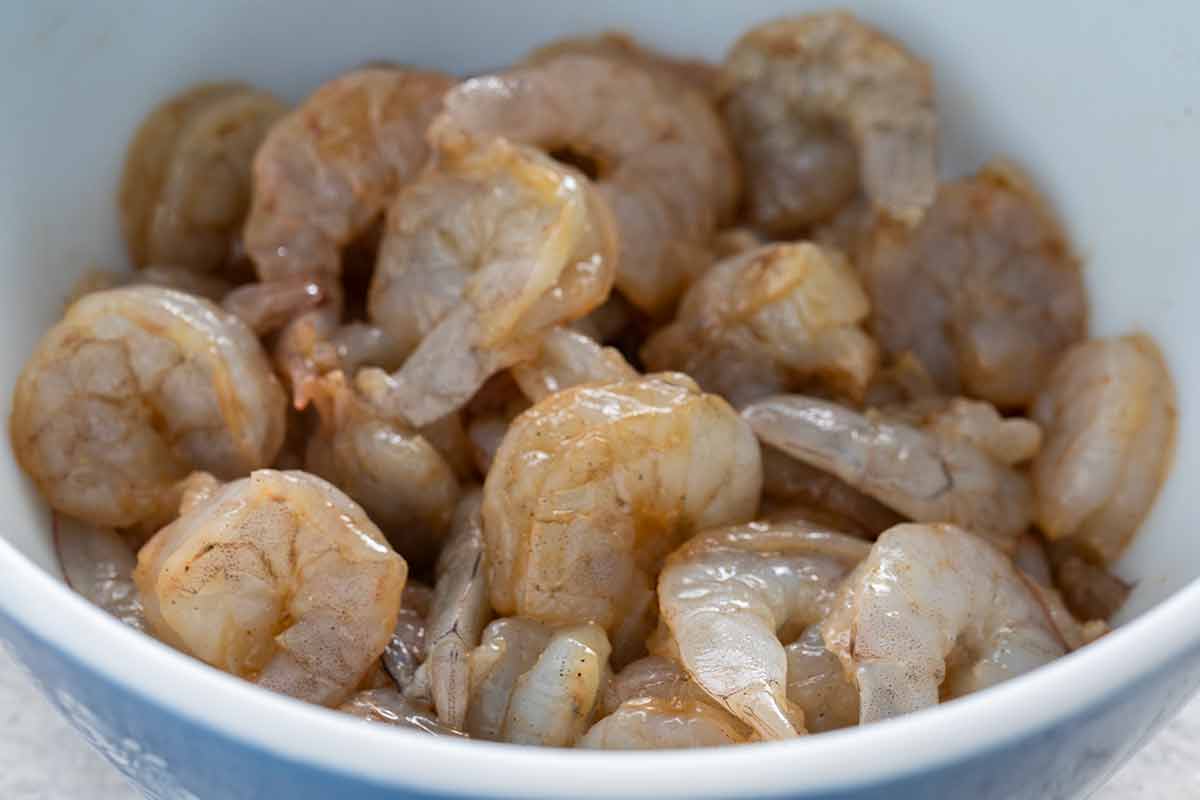
Step 4: Season the Shrimp
I use raw, peeled and deveined shrimp, which makes it easier to eat. The seafood flavor is pleasantly sweet and salty. Tossing the shrimp with soy sauce, sesame oil, salt, and pepper is all the extra seasoning you need.
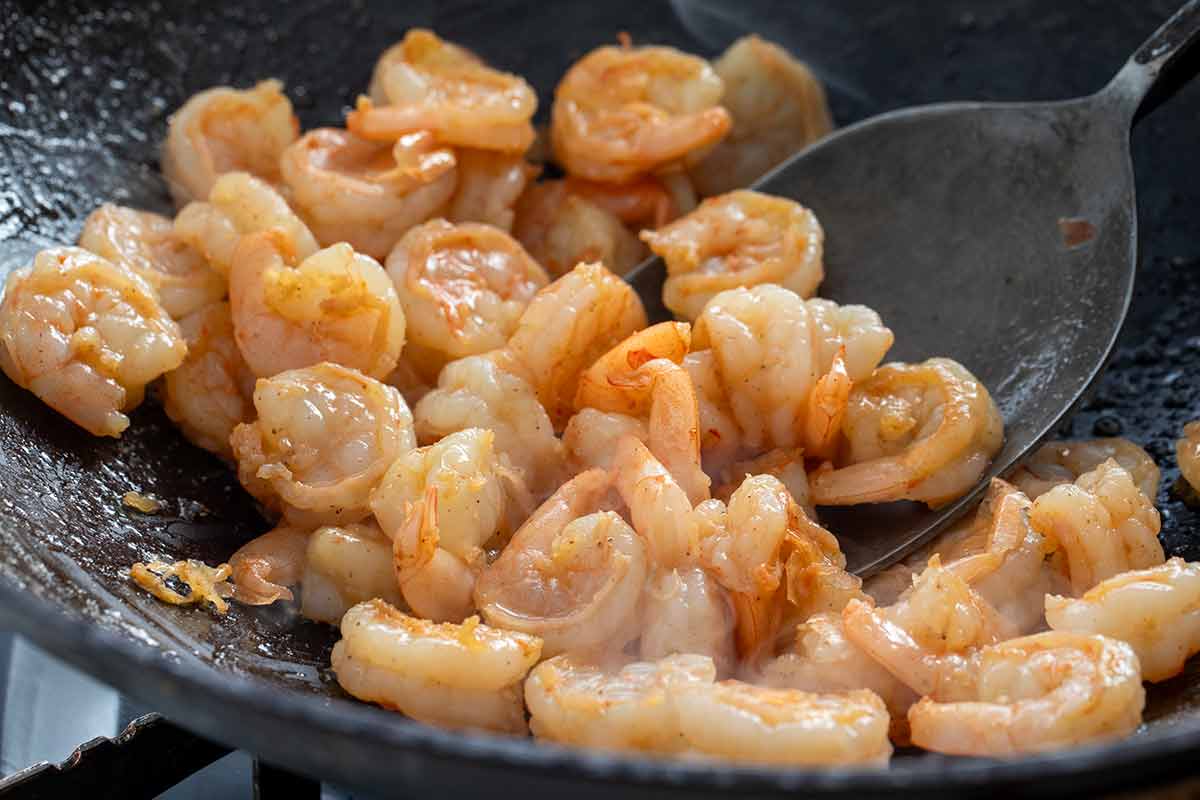
Step 5: Cook the Shrimp
Shrimp cooks very quickly and only requires a few minutes of stir-frying. Cook in a single layer, and watch for the shrimp to change from translucent to opaque and curl into a loose C shape. Afterward, transfer the cooked shrimp to a clean bowl so you can cook the remaining ingredients.
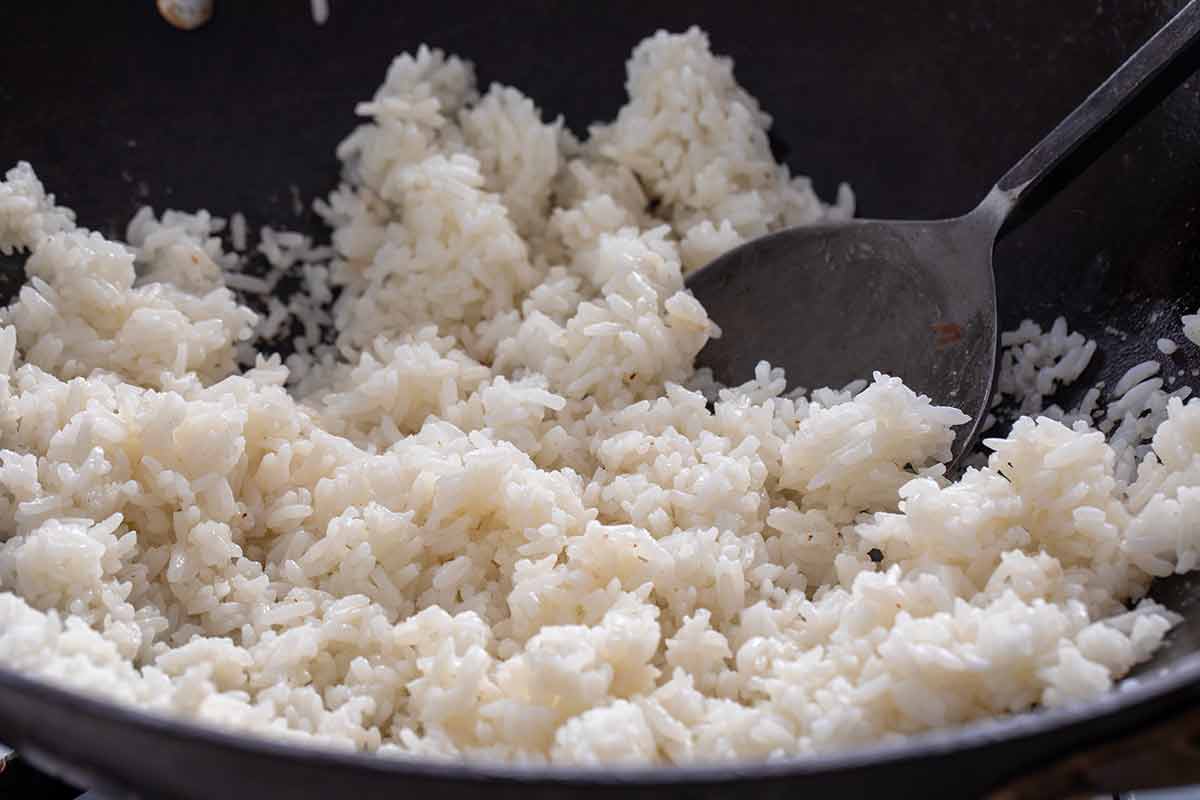
Step 6: Fry the Rice
To add more flavor and texture, add the rice to the wok or large non-stick skillet and stir-fry in hot oil. I recommend tossing the rice in fat to coat the grains and reduce sticking. Then spread it in an even layer and let the pan heat the grains for about 30 seconds.
Tips for Perfect Execution: Repeat this sitting-and-stirring process for about 5 minutes, until the rice slightly browns. Make sure to scrape the bottom of the pan in between to prevent excess sticking.
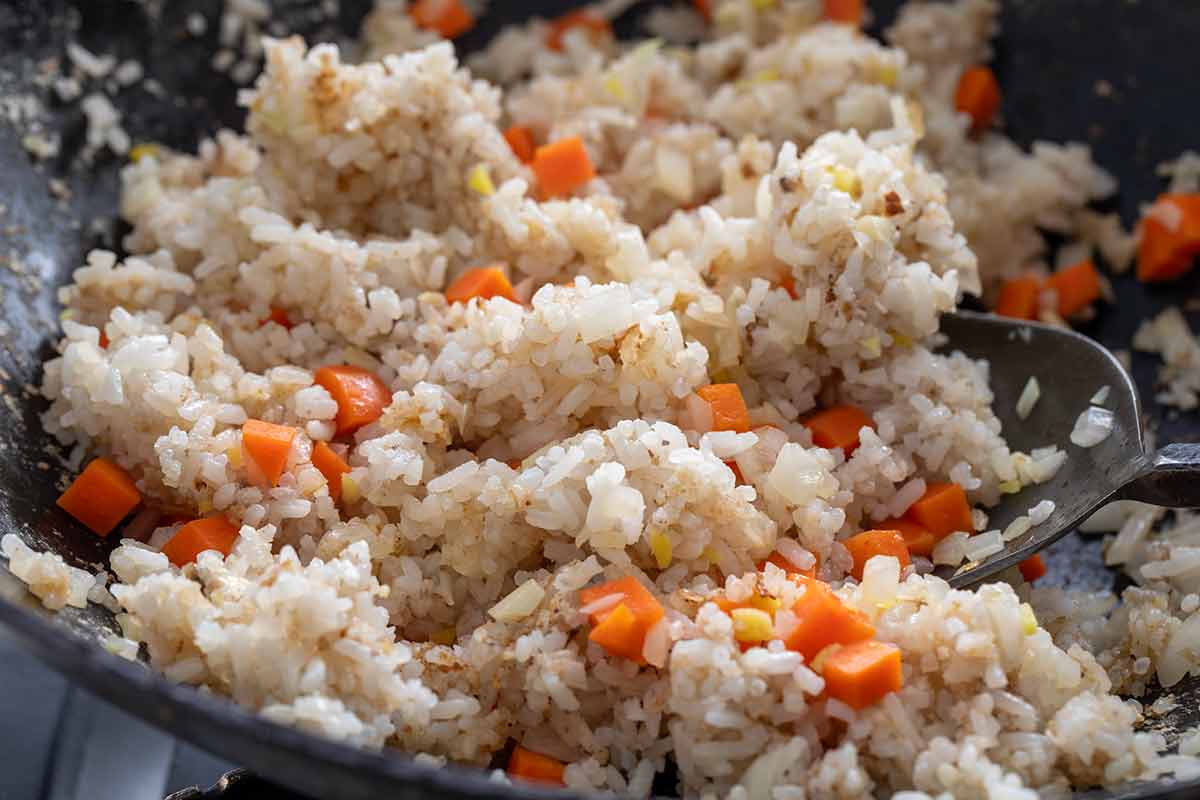
Step 7: Sauté the Vegetables
After you fry the rice, make a large well in the center to cook the remaining ingredients. I use minced ginger, garlic, chopped white onions, and diced carrots. Cook them in hot oil to flavor the dish.
Step 8: Scramble the Eggs
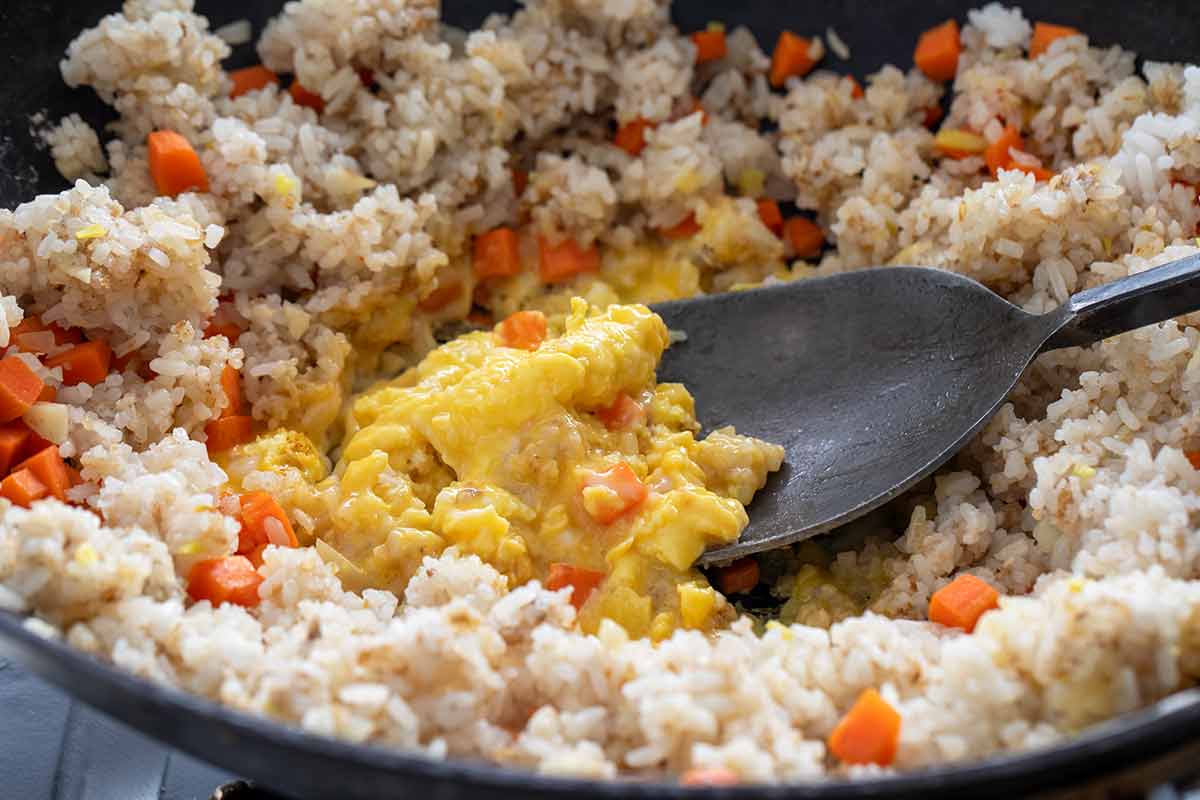
Fluffy scrambled eggs add richness to the rice. Make another big well in the center of the pan and fry the beaten eggs in vegetable oil and sesame oil. Let it sit briefly so that the egg proteins start to curdle and create clumps when stirred. Break them into smaller pieces, then mix them with the rice. Add a little soy sauce to enhance the dish’s savory, umami taste.
Step 9: Combine the Peas and Shrimp
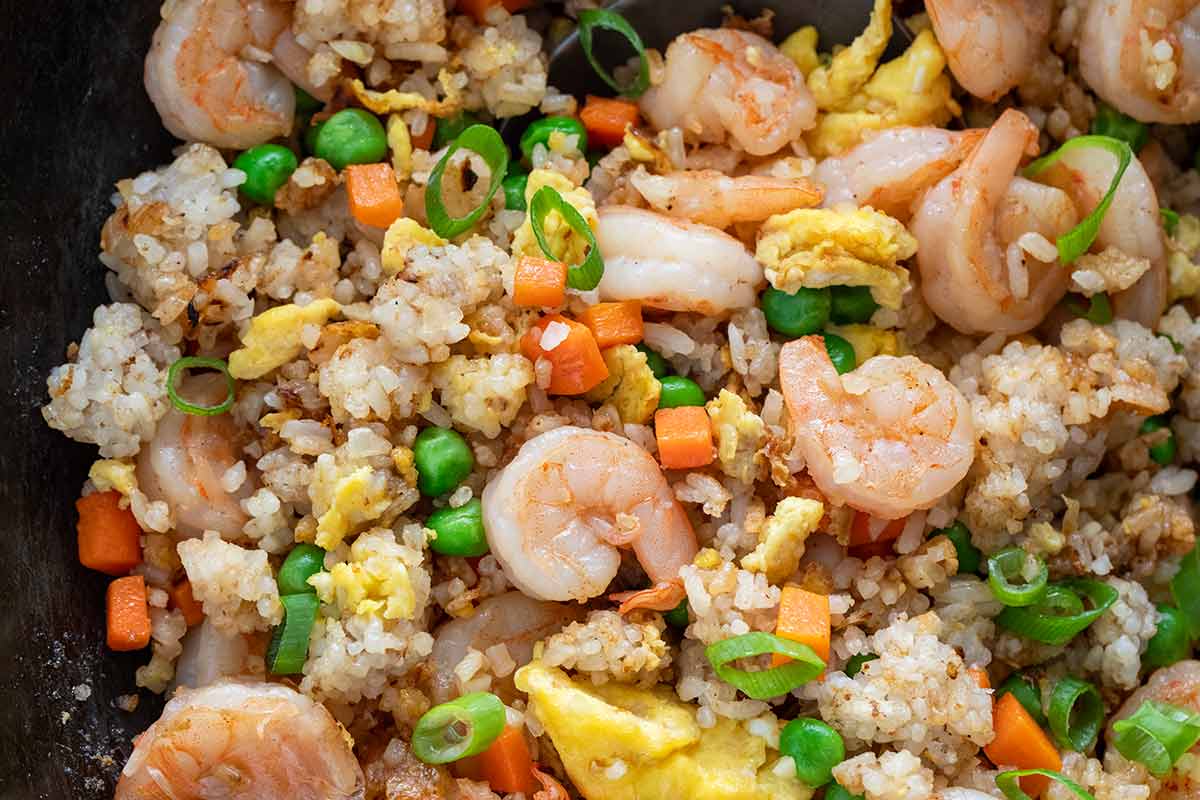
At the end of cooking, stir in the shrimp to rewarm, but don’t overcook them. Otherwise, the texture will turn rubbery. I also add defrosted frozen peas, as they are a delicate ingredient. Garnish with freshly sliced green onions to add an onion aroma that intensifies as it warms in the hot rice.
Frequently Asked Questions
Long-grain rice is the best choice, as the elongated grain cooks into less sticky pieces and stays separated compared to short- and medium-grain rice, which clumps together. Jasmine is my go-to choice because it has a fragrant floral aroma, and the grains are drier, perfect for moving in the pan. Make sure to rinse first, drain well, then let it chill in the refrigerator after cooking. This process adds about 30 minutes to steaming and cooling. Brown rice also works well because the bran on the outside prevents sticky grains.
This homemade shrimp fried rice recipe is a great way to repurpose any leftover cooked rice in the refrigerator. Most recipes call for day-old rice because the cool conditions firm up the starchy grains, making it easier to stir-fry in a skillet or wok. If you have some, use it. You need about 3 cups.
Excess moisture is usually the culprit. Using warm rice, overcrowding the pan, or adding too much sauce can trap steam and make the grains soft instead of lightly crisp and separate.
High heat quickly evaporates moisture, “frying” the rice, and promotes browning reactions that create deeper, more complex flavors. It also helps keep the rice grains separate while developing the signature lightly toasted taste associated with great fried rice.
More Chinese Recipes


If you tried this Shrimp Fried Rice Recipe, please leave a 🌟 star rating and let me know how it went in the 📝 comments below!
Shrimp Fried Rice

Ingredients
- 1 cup uncooked jasmine rice, or long-grain white rice
- 1 ½ cups water
- 1 pound raw shrimp, peeled and deveined, 51 to 60 count
- 2 tablespoons soy sauce, divided
- 2 teaspoons sesame oil, divided
- ¼ teaspoon kosher salt
- ¼ teaspoon white pepper or black pepper
- 3 tablespoons vegetable oil, divided
- ¼ cup minced white onion
- 1 tablespoon minced garlic
- 1 teaspoon minced ginger
- ½ cup diced carrots, ¼" dice
- 2 large eggs, whisked
- ½ cup frozen peas, defrosted
- 2 tablespoons thinly sliced green onions
Instructions
- Wash the Rice – Add rice to a fine-meshed strainer. Rinse and wash under cool running water until it's clear, scrubbing them with your fingers, about 1 minute. Shake and press with your hand to drain thoroughly.Alternatively, add rice to the saucepan, cover with cool water and scrub with hands, drain and repeat 2 to 3 times until the water runs clear. Drain off excess water very well.
- Cook the Rice – In a 3-quart saucepan, add washed rice and water. Bring to a boil over high heat, then turn down to a simmer over low heat. Cover with a lid. Simmer until all of the water is absorbed and the rice is tender, about 15 minutes. Turn off the heat and let it sit covered, off the heat, for 10 minutes.
- Cool the Rice – Fluff the rice with a fork, then evenly spread it on a baking sheet. Transfer to the refrigerator to cool completely for about 15 to 20 minutes. Meanwhile, prepare the shrimp.
- Season the Shrimp – In a medium bowl, combine shrimp, 1 tablespoon soy sauce, 1 teaspoon sesame oil, ¼ teaspoon salt, and ¼ teaspoon pepper.
- Cook the Shrimp – Heat a wok or large skillet over high heat. Add 1 tablespoon of vegetable oil. Once hot, add the shrimp. Stir-fry until fully cooked, about 2 minutes. Transfer to a clean bowl. Carefully wipe the wok with a paper towel to remove any moisture.
- Fry the Rice – Add 1 tablespoon of vegetable oil. Once hot, add the rice. Stir-fry until evenly coated with oil, then spread and lightly press it around the pan. Cook for 30 seconds, then stir. Repeat the spreading and stirring every 30 seconds for 5 minutes total. You want light browning on the rice.
- Saute the Vegetables – Push the rice to the wok's sides to make a large well, and add 2 teaspoons of vegetable oil. Add onion, garlic, ginger, and carrots; stir-fry in the pan's center for 1 minute, then mix with rice to combine.
- Scramble the Eggs – Make another large well in the center and add 1 teaspoon vegetable oil and 1 teaspoon sesame oil. Pour in the whisked eggs and allow them to sit for 30 seconds, then gradually stir to scramble. Stir to combine with the rice.
- Combine the Peas and Shrimp – Add soy sauce and stir to combine. Add the peas and shrimp and stir to combine, then cook until warm, about 1 to 2 minutes. Season to taste with salt, pepper, and more soy sauce as desired. Garnish with green onions and serve immediately.
Recipe Video

Notes
- Recipe Yield: 5 cups
- Serving Size: 1 cup
- Using Leftover Rice: Substitute 3 cups of cold cooked rice for 1 cup of uncooked long-grain rice. If clumpy, break rice into pieces with your fingers before adding it to the pot.
- For Larger Egg Pieces: Cook before adding the shrimp in 1 tablespoon of oil. Break into the desired size, transfer to a plate, and reserve, then add to the pan at the end of cooking, right before serving.
- Make it Gluten-Free: Use gluten-free tamari or coconut aminos instead of soy sauce.
Nutrition Facts
Percent Daily Values are based on a 2000-calorie diet. All nutritional information is based on estimated third-party calculations. Each recipe and nutritional value will vary depending on the brands you use, measuring methods, and portion sizes per household.


Maria T. says
Made this last night for dinner because I knew my husband would love it. The shrimp I had on hand was 13/15 so I decided to cut them into thirds rather than buy more. It worked. Served with crispy vegetable egg rolls. My husband has been missing a similar dish he ordered at a restaurant he frequented that closed several years ago. He was absolutely delighted when I placed the serving dish on the table. It was delicious and easy to prepare. Every time I use my carbon steel wok I’m even happier I bought it. I’m getting better at using it because of your step by step instruction. I’m no longer afraid.
Jessica Gavin says
I’m so proud of you, Maria! And you dod a great job improvising with the large pieces of shrimp. Sounds like you had and amazing lunar new year feast!
Gilbert Aldrete says
Jessica, Why are you so lovely?
Frank Rabusin says
Jessica, I’ll make this tonight. I have everything except fresh ginger…however I do have some ground/powder ginger…how much should I use as a substitute?
Jessica Gavin says
I would add 1/8 to 1/4 teaspoon of the ground ginger, depending on how strong you like the taste.
Rita Delgadillo says
Can i substitute the large eggs for egg whites? If so, how much egg whites is equivalent to 2 large eggs?
Jessica Gavin says
Yes, you can substitute egg whites for whole eggs. I would add 3 egg whites for the loss of volume for the egg yolks.
Dollye says
Does anyone know what Chinese 5 spice is ?
Jessica Gavin says
Hi Dollye- It’s typically a combination of Chinese cinnamon, fennel seed, star anise, and cloves. I hope that helps!
mcdak says
Every time I see a recipe with sesame oil I wonder whether it calls for toasted sesame oil which to me has a pretty strong flavor. Or, is that untoasted sesame oil which has almost no flavor for me.
In your fried rice recipe, I think I w ould like just a little of the toasted oil and neutral oil for the rest of the frying.
Please straighten me out!
Jessica Gavin says
Great question! I use sesame oil that isn’t toasted. However, if you like a stronger nutty, sesame taste, you could definitely add toasted. I use 2 teaspoons in the recipe, so I would use 1 teaspoon toasted and 1 teaspoon untoasted if you have both so it’s not overpowering.