
A wok can look intimidating. It’s big, it’s round, and it seems like one more tool to learn. But once you understand how its shape and high heat work together, it becomes the fastest way to get a takeout-style stir-fry on the table at home.

As a culinary scientist, I love the wok because its design does so much of the work for you: the sloped sides keep food moving over intense heat, so it sears quickly instead of steaming. Here’s how a wok works, the types to choose from, and how to cook with, season, and clean one. For the full technique, see my stir frying guide.
Jump To a Section
Wok at a Glance
| Factor | Details |
|---|---|
| What it is | A round, deep pan with sloped sides, traditionally used for Chinese stir-frying |
| Best for | Stir-frying, fried rice, noodles, and steaming with a lid |
| Why it works | Sloped sides make it easy to toss food and keep it moving over high heat, so it sears instead of steaming |
| Heat | Preheat over medium-high to high heat until a few drops of water sizzle and evaporate in a second or two |
| Materials | Carbon steel, cast iron, or nonstick (often hard-anodized aluminum) |
| Care | Carbon steel and cast iron need seasoning; wash by hand, dry over heat, and wipe with a thin layer of oil |
Why Cook with a Wok?
A wok is built for fast, high-heat cooking. Its round shape lets you toss and turn food in a rolling motion, so ingredients keep moving without flying over the sides the way they might in a skillet.
How a Wok Works
- Sloped sides keep food moving: The curved shape makes it easy to scoop, toss, and push food up the sides, so every piece gets time on the hottest part of the pan.
- High heat sears instead of steaming: Cooking in small batches keeps the wok hot, so moisture evaporates quickly and the food sears instead of steaming in its own juices.
- That smoky “wok hei” flavor: Wok hei means “breath of the wok.” It’s the slightly smoky, not burnt, flavor that comes from very hot, fast wok cooking.

A wok is more versatile than you might think. Beyond stir-fries and fried rice, you can use it with a lid for steaming fish and vegetables, and it’s handy for fajitas, scrambled eggs, and paella.
Types of Woks
Carbon Steel
Carbon steel is the classic wok material. It heats quickly, handles very high heat without warping, and is relatively lightweight, so it’s easy to toss food. Like cast iron, it needs to be seasoned before use, and it builds up a slicker surface over time. Carbon steel woks also work on induction cooktops.
Cast Iron
Cast iron holds heat well, which gives you even browning, and most come pre-seasoned. The tradeoff is weight: a 14-inch cast iron wok can weigh more than 12 pounds, so it’s harder to toss and needs care on a glass cooktop. It’s cared for just like a cast iron skillet.
Nonstick and Hard-Anodized
A nonstick wok doesn’t need seasoning and cleans up easily. My go-to is a Calphalon nonstick wok (affiliate link) with a hard-anodized body. I’ve used it for 18 years, and its glass lid makes it easy to steam, too. Like any nonstick pan, avoid abrasive scrubbers, and check the manufacturer’s heat guidance.
Round vs. Flat Bottom
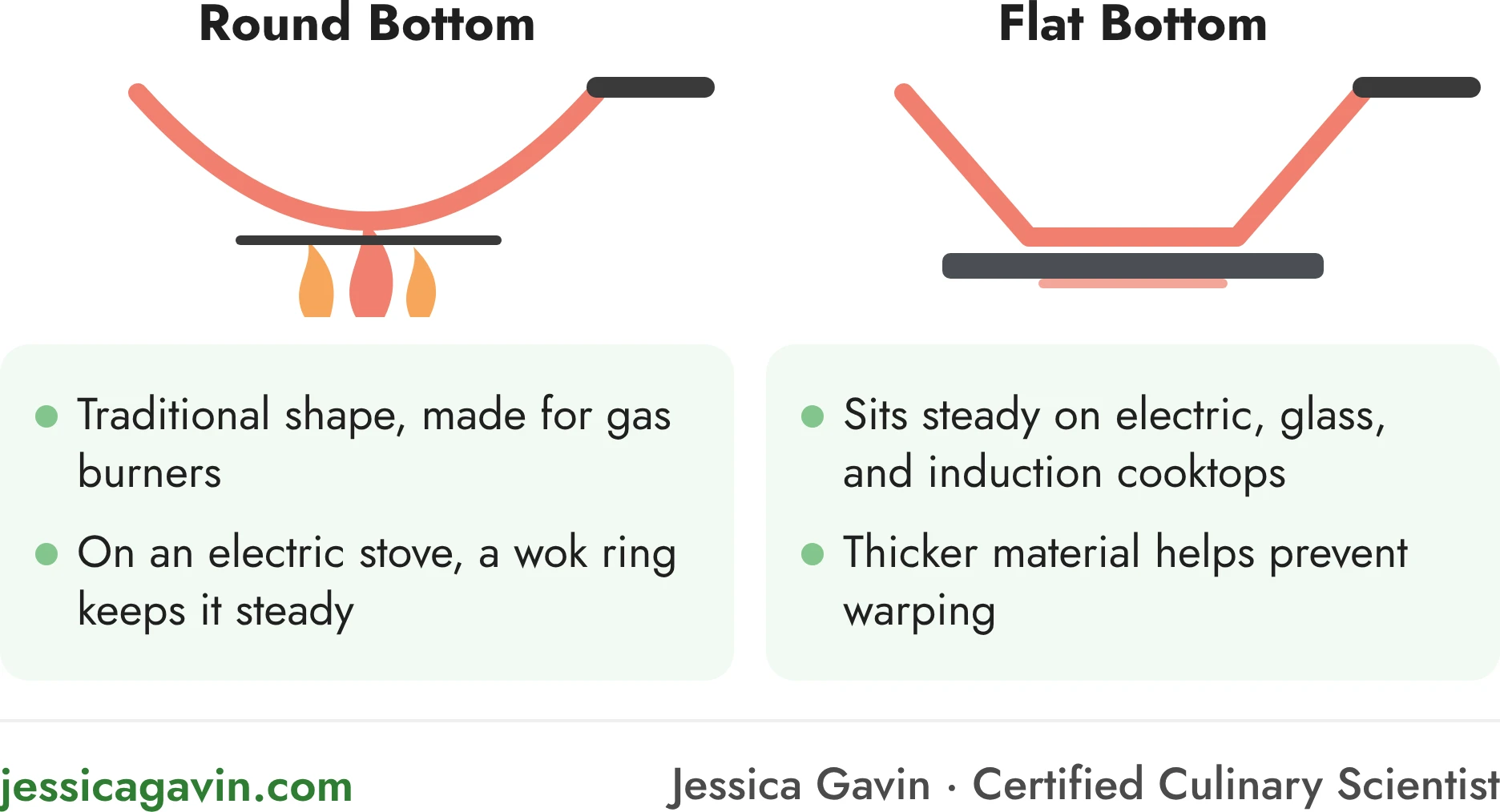
Round-bottom woks are traditional and designed for gas burners. Flat-bottom woks sit steady on electric coil, glass, and induction cooktops. If you have a round-bottom wok and an electric stove, a wok ring helps keep it stable.
Northern vs. Cantonese Style
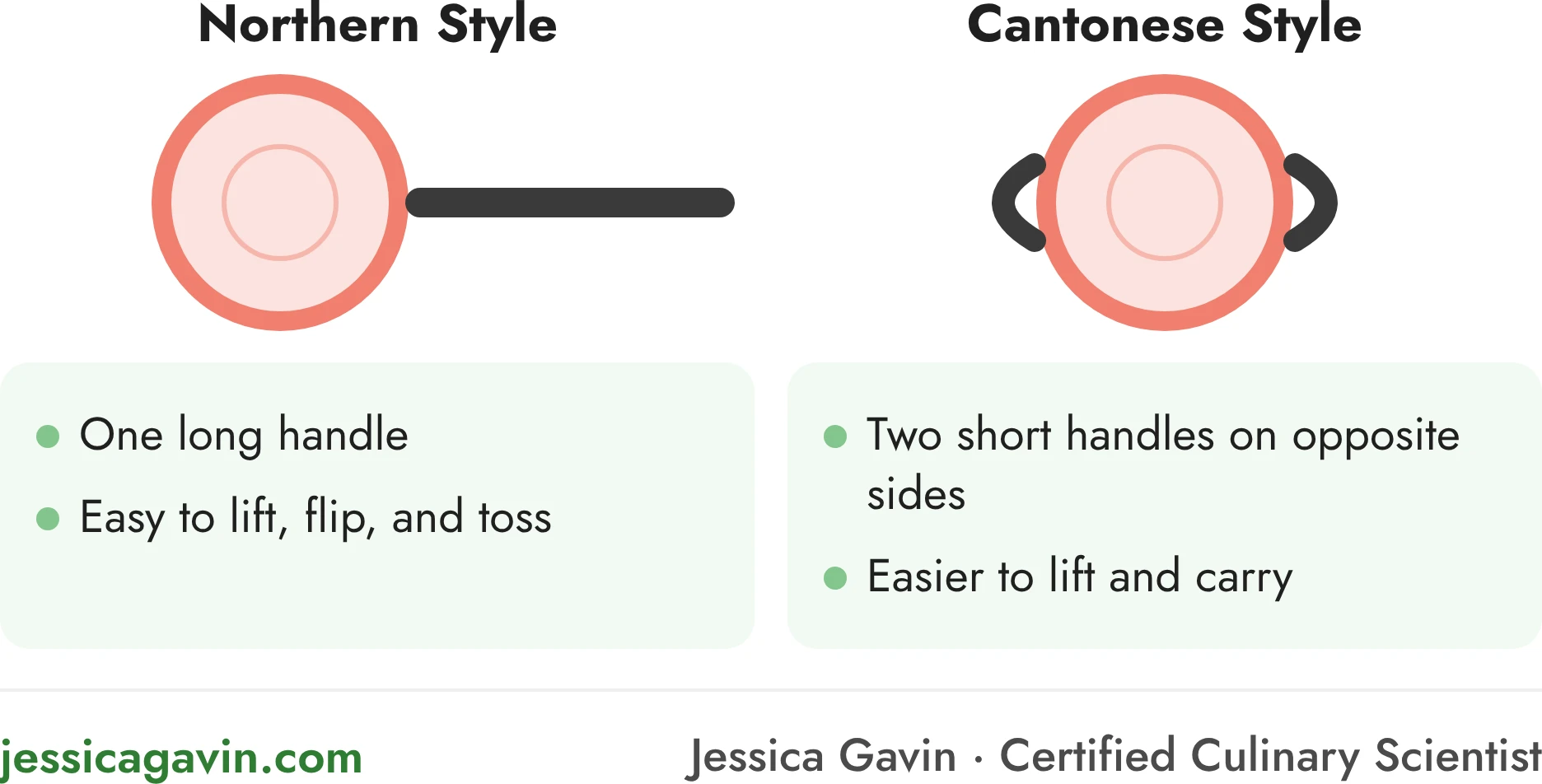
Northern-style woks have one long handle, making them easy to lift, flip, and toss. Cantonese-style woks have two short handles on opposite sides, making them easier to lift and carry.
How to Choose a Wok
- Match it to your stove: A flat bottom for electric, glass, and induction cooktops; round or flat for gas.
- Pick a material: Carbon steel for classic high-heat cooking, cast iron for heat retention, or nonstick for easy cleanup with no seasoning.
- Choose a size: Most woks are about 14 inches across. A 12-inch wok is easier to handle and store and still big enough for family dinners.
- Get a lid: A lid turns your wok into a steamer.
- Look for thickness in a flat-bottom wok: Thicker material helps prevent warping and wobbling.
For my top picks for every type of stove, see my guide to the best woks for electric stoves.
How to Cook with a Wok
- Prep everything first: Wok cooking moves fast, so cut and measure every ingredient and mix the sauce before you turn on the heat.
- Pat ingredients dry: Excess water cools the wok and steams the food instead of searing it.
- Preheat, then add oil: Heat the wok over medium-high to high heat until a few drops of water sizzle and evaporate in a second or two. Then swirl in about 1 tablespoon of oil to coat.
- Use a high smoke point oil: Peanut, avocado, canola, or vegetable oil can handle the heat. Save toasted sesame oil for flavor in the sauce, since it has a lower smoke point.
- Cook in small batches: Crowding the wok drops the temperature, so the food steams. Sear the protein first and set it aside, then cook the vegetables.
- Keep it moving: Use a wok spatula or ladle to toss and turn the food along the curved sides.

Watch how fast it all comes together in my beef stir-fry video:

Wok Tools
You don’t need much to get started. These are the tools I reach for:
- Wok: My Calphalon nonstick wok (affiliate link) has a long handle that stays cool on the stovetop and a glass lid for steaming.
- Wok spatula: A wok spatula (affiliate link) has a curved edge that follows the sides of the wok, and its long handle keeps your fingers away from the heat.
- Steamer basket: Set a steamer basket (affiliate link) inside the wok over a little simmering water and cover it to steam.
Find all of my favorite kitchen tools on my Shop page.
Recipes to Make in a Wok
Start with a classic chicken broccoli stir-fry, shrimp stir-fry, or cashew chicken. Vegetables like bok choy stir-fry in minutes, and a wok is perfect for noodles like shrimp lo mein. Find more ideas in my Chinese recipes.
How to Season and Clean a Wok
Seasoning Carbon Steel and Cast Iron
- Lightly scrub a new wok with warm, soapy water, then dry it well.
- Heat it over high heat, tilting it so every part of the surface heats, until the metal darkens.
- Rub a thin layer of high smoke point oil, like peanut oil, over the inside with a paper towel and keep heating until it starts to smoke and turns a dark, matte finish.
- Let it cool. The surface keeps building a darker, slicker layer every time you cook with it.
Pre-seasoned cast iron woks are ready to use, and nonstick woks don’t need seasoning.
Cleaning
- Wash by hand: Use hot water and a soft sponge. A little soap is fine for loosening stuck-on food and won’t ruin a well-seasoned wok.
- Dry over heat: Towel dry, then set the wok over medium-high heat until any remaining water evaporates.
- Oil it: Wipe a thin layer of oil over the inside to keep carbon steel and cast iron from rusting.
- Skip the dishwasher: It strips seasoning and can wear down nonstick coatings.
Wok vs. Skillet
You don’t need a wok to stir-fry. A large, heavy skillet works well, too. Just cook in smaller batches so the food sears instead of steaming. A wok’s sloped sides make tossing easier and give you more room to move the food, while a flat cast iron skillet gives you more flat surface for searing.
Recipes to Make in a Wok


Frequently Asked Questions
A wok is mainly used for stir-frying, but it’s also great for fried rice, noodles, and steaming with a lid. You can even use it for fajitas, scrambled eggs, and paella.
Carbon steel is the classic choice: it heats quickly and handles high heat. Cast iron holds heat well but is heavy, and a nonstick wok is the easiest to care for since it doesn’t need seasoning.
Yes. A flat-bottom wok sits steady on electric coil, glass, and induction cooktops. A round-bottom wok works better on gas, or with a wok ring on an electric stove.
Carbon steel and cast iron woks need seasoning to build a slick, protective surface. Pre-seasoned cast iron is ready to use, and nonstick woks don’t need seasoning.
Yes. A little soap helps loosen stuck-on food and won’t ruin a well-seasoned wok. Dry it over heat afterward and wipe it with a thin layer of oil.
Wok hei means “breath of the wok.” It’s the slightly smoky, not burnt, flavor that comes from cooking food very quickly over very high heat in a wok.
Once you get the hang of a hot wok and a quick toss, takeout-style dinners at home are just minutes away!


Cheryl says
Hi, Jessica. You make this look so easy! I have a Joyce Chen carbon steel wok that I’ve had for years – but never used! The problem? I’m actually afraid of cooking on really high heat. (I’m not fearless in the kitchen.) I absolutely love Chinese-style meals and would love to be able to do this because I’m confident I could make the meals healthier at home than restaurant fair – who knows how many times they’ve reused that oil – and no MSG! Would setting the electric burner on the 6 to 7 heat range (just a little better than medium) be hot enough for a wok-prepared meal? I would love to try your fried rice recipe.
Jessica Gavin says
Hi Cheryl- I KNOW you can do it! I think if you start with the medium setting but just make sure that the wok gets nice and hot before you add the oil and stir fry ingredients, you can have success. You may just see a little less browning on the meats and may take a few minutes longer. As you build up the confidence, start to turn up the heat!
Cheryl says
Thanks, Jessica! I will try this.
Dave says
Awesome site and awesome recipes. Good job!I love my 14″ ridged WOK. I use it for everything from stir fry to deep frying. The deep sloped sides really help control the spatter. I just heat it over my propane camp stove burner. Being made of thin steel it heats fast and hot. I had an expensive non-stick Wok but remember that most cooking temperatures will destroy the non-stick coating. NO thanks. I seasoned it like you season cast iron only over the flame because it has high-temperature resistant handles.
I also have a huge 24″ Mexican tortilla comal that’s great for all sorts of frying too. Can’t have too many kitchen toys.
Jessica Gavin says
Thanks for all of your great tips on using a wok Dave, sounds like your a pro!
Ben says
hello, good day to you mam
i would like to learn some of your wok tossing technique
can you please make a video of it, so i can apply it in my work here at the chinese restaurant.
newbie ben
Ron says
I have cooked with a wok for a very long time over a gas flame. I now live in an area where there is no gas, so I have to cook over an electric burner, using a flat bottom wok. I noticed you are using a portable (alcohol or propane?) stove with the wok. Does that provide adequate heat for cooking wok style? I am used to cooking over a blazing hot gas burner, restaurant style. BTW, I am an amateur cook, not a restaurant chef.
Jessica Gavin says
Hi Ron- The burner is small but mighty! It uses propane and can actually really turn up the heat!
Dennis Murphy says
Love your info about stir fry cooking especially the need for prep before cooking. Absolutely, spot on!
However not sure about recommendation for wok vs. fry pan. Cook’s Illustrated indicates that a 12″ fry pan is better that a flat or round bottom wok. I have a wok and have used on several occasions, but prefer my flat bottom cast iron or non stick fry pans. Just more surface area for cooking.
Jessica Gavin says
Thank you for your feedback, Dennis! I think it comes down to personal preference. For me, I like how I can maneuver the ingredients using the high sides of the wok, making it easier to make the ingredients literally jump in the pan. It’s fun too! I also like that the wok takes on the seasonings, similar to cast iron. I agree that the stainless steel and cast iron will have more surface area with efficient browning and cooking as well. However I usually use a carbon steel wok which can handle the high heat, sometimes the stainless steel pans get discolored since they usually aren’t supposed to be used with the flame turned all the way up. Either way, I’m happy that you are stir-frying!