

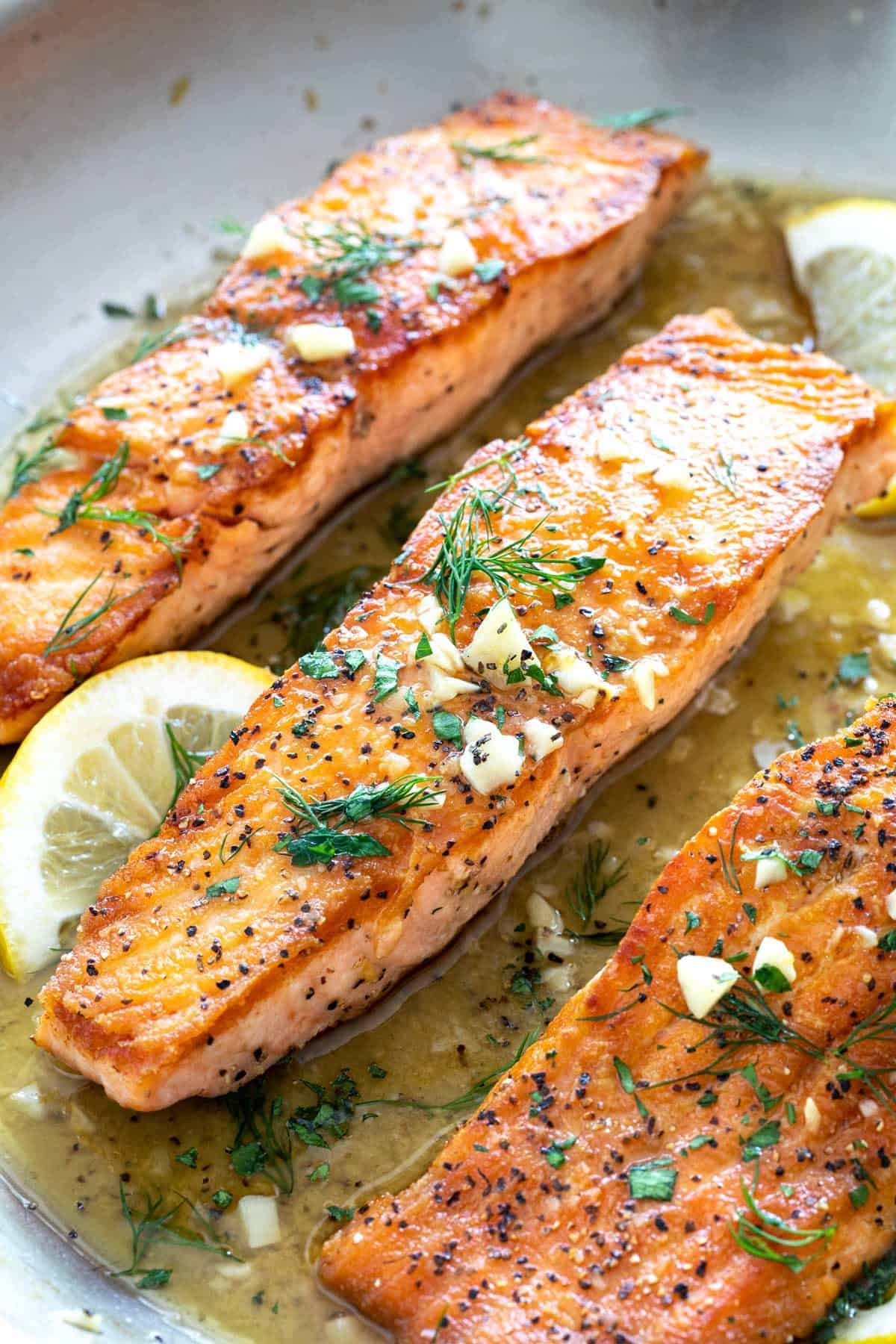
Learn to make restaurant-quality pan-seared salmon at home with these simple techniques. Finish it with an easy lemon-garlic butter sauce for a quick gourmet meal.
Jessica’s Recipe Science
- Removing surface moisture helps the fish brown more efficiently and reduces splattering when the moisture hits the hot oil.
- Pressing the salmon against the hot pan prevents curling as the collagen contracts, for an evenly cooked, crisp texture.
- Whisking cold butter into the warm lemon garlic mixture helps form an emulsion, creating a smooth sauce that clings to the salmon.
Featured Comment 41
“The best I have made! Your explicit instructions are key. I NEVER eat a whole serving of salmon but devoured this. Loved the outside crunch and med/rare inside. I love your recipes and guidance in the preps!”—KC
Why It Works
Pan-searing is hands down my preferred method for cooking salmon fillets. It yields irresistible textures- a crispy surface along with tender and flaky pieces underneath. A few tricks will achieve this: dry the fish well before frying, press the flesh down in the hot oil, and let a crust form.
When the fat renders in the hot pan, it bastes the flesh and keeps it moist and flavorful. Serve the rich, flaky fish with a simple lemon-garlic butter sauce for a quick weeknight meal, or make it fancy enough for special occasions.
Jump To a Section
Ingredients You’ll Need
- Salmon: You can use any types of salmon; however, I prefer Scottish or Atlantic. The fillets tend to be at least 1 inch thick, which is better for crust formation because it takes longer to heat through. They are also rich in fat and healthy omega 3-fatty acids.
- Seasoning: I keep the seasoning simple with a generous sprinkle of coarse kosher salt and freshly cracked black pepper.
- Oil: Use a frying oil with a smoke point of at least 375ºF (191ºC). The fish will cook at around 350ºF (177ºC), so it’s good to have a heat buffer. Grapeseed, canola, vegetable, avocado, regular, or light olive oil (not extra-virgin) work well. I prefer olive oil or avocado for its neutral flavor, especially since I use it in the sauce.
- Sauce: You only need a handful of ingredients to make the pan sauce. I add minced garlic, lemon zest and juice, salt, pepper, and cold unsalted butter to create an emulsion.
- Herbs: Garnish the salmon with fresh parsley and dill.
See the recipe card below for all ingredients and measurements (US and metric).
Ingredient Substitutions
This pan-seared salmon recipe is easy to customize! Try these delicious options:
- Salmon Options: Try different varieties of salmon like Chinook (or king salmon), Coho, Wild Alaskan, or Sockeye. Wild salmon and Sockeye tend to be leaner, with a slightly drier texture.
- Seasoning: Use sea salt, garlic powder, or onion powder. Add chili powder for a hint of spice.
- Sauce Swaps: Instead of lemon, add orange zest and juice. You can serve the fish instead with basil pesto, green goddess dressing, chimichurri sauce, or aji verde sauce.
- Herb Options: Add more flavor with freshly chopped tarragon, oregano, chives, or basil.
How to Pan Sear Salmon
Step 1: Prepare the Salmon
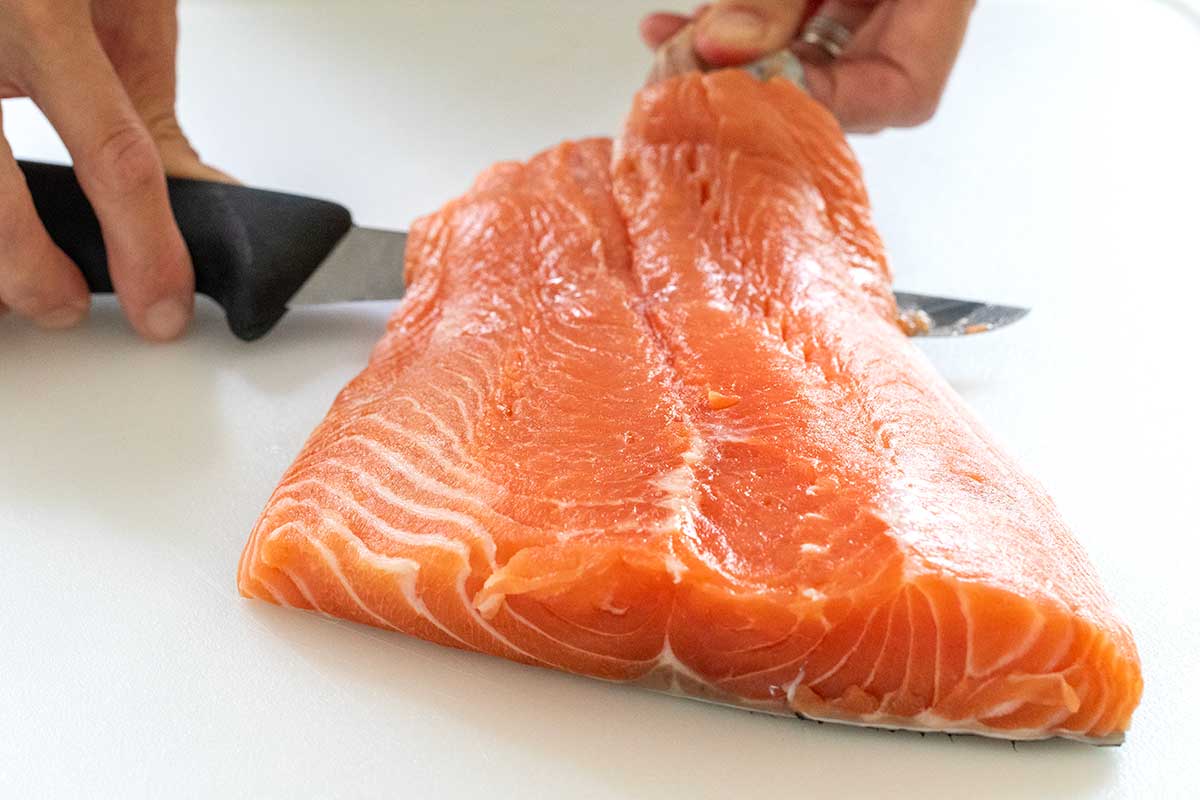
Learning how to remove salmon skin is simple. Place a cutting board near the edge of the counter. Place the salmon, skin-side down near the edge. This makes it easier to run the knife down the length of the board without hitting your knuckles.
Hold the knife at a slight downward angle to prevent cutting into the flesh. Starting at the tail end or corner of a center-cut fillet, use a long boning knife, utility knife, or chef’s knife to slice as close as possible between the flesh and skin. With your other hand, hold the tip of the skin as you use slow sawing motions.
Skin Optional: Cooked scales are safe to eat if you decide to leave the skin on, although I prefer to remove as much as possible. Check by running the dull spine of a knife or the edge of a spoon in both directions. This will help determine the direction of the scales. Hold the dull spine edge crosswise at a 45-degree angle against the skin. Scrape the blade across the skin until the scales pop off.
Step 2: Cut Into Portions
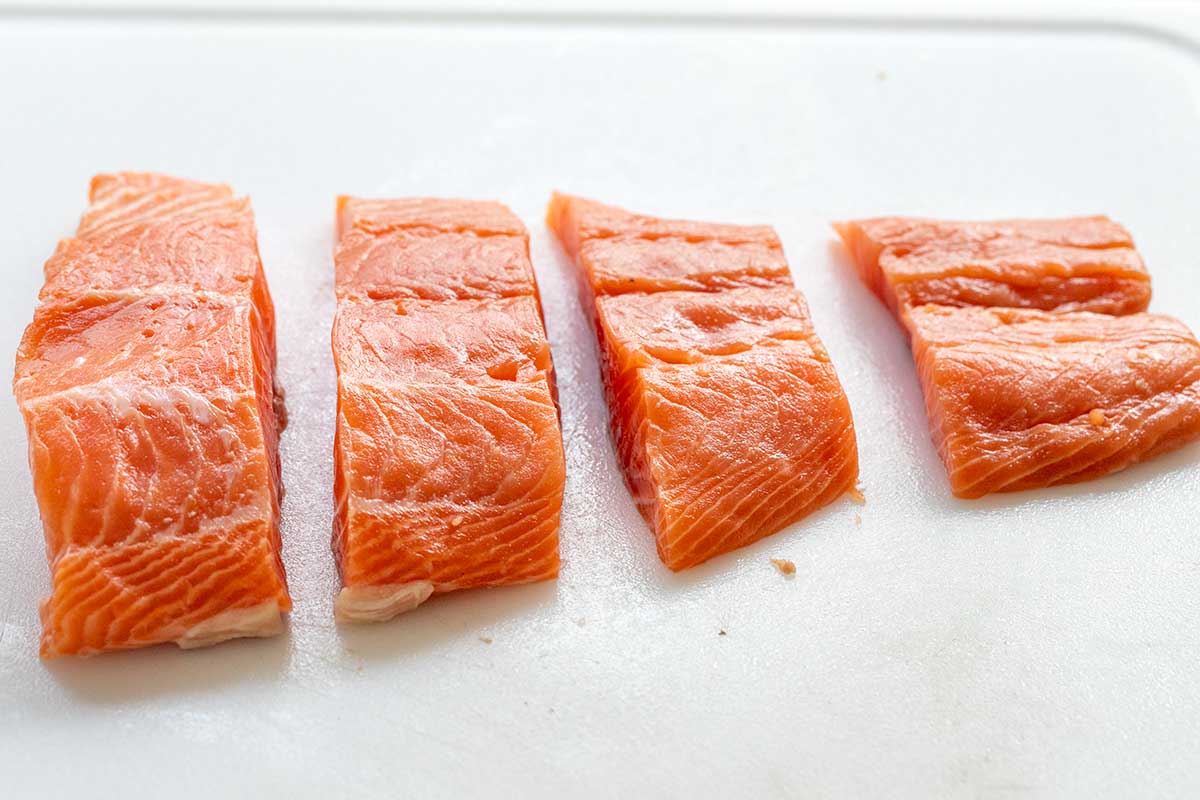
Cut the salmon into even-sized fillets, about 2-inches wide. If the fish is really long, trim off the thinner side and discard it. However, that part gets extremely crispy, so keep it attached if you like.
Expert Tip: If possible, purchase a center-cut salmon fillet from the fishmonger. This gives the thickest pieces, consistent in size, and allows for even cooking.
Step 3: Season the Fillets
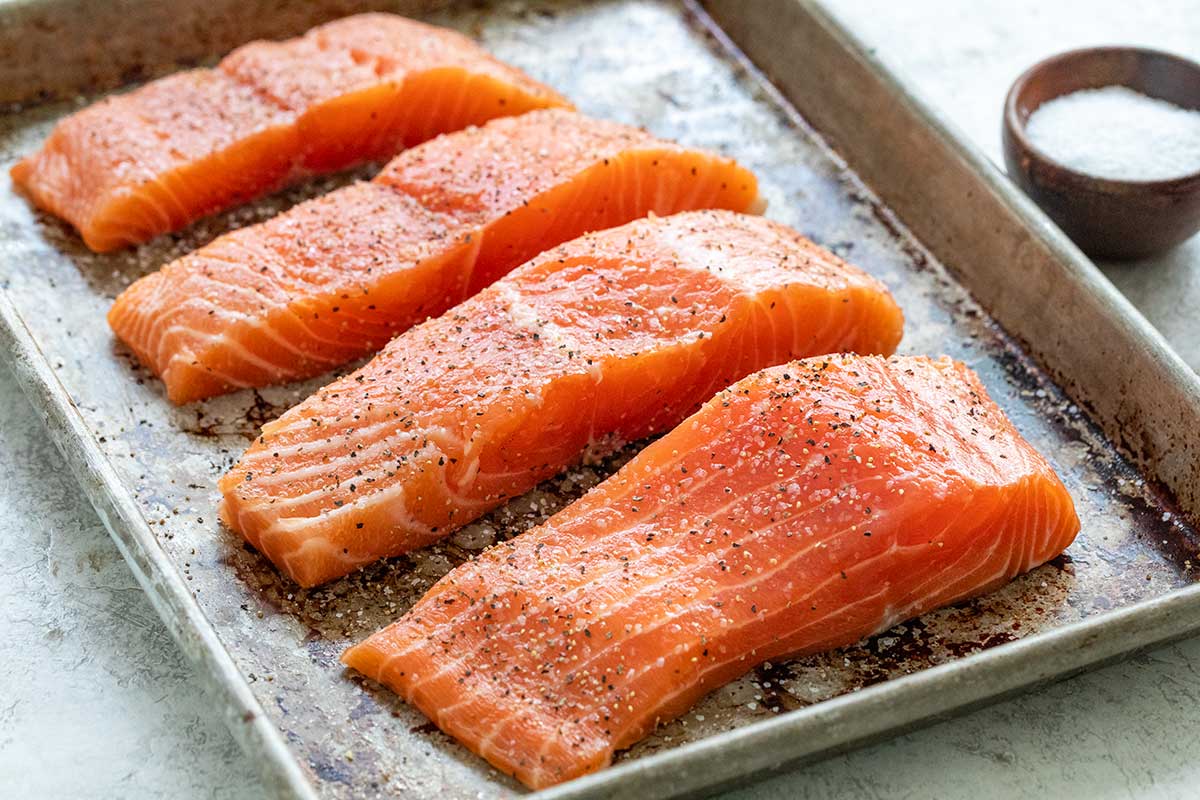
Drying the surface of the fish with paper towels is critical to crispiness and safety. The more moisture you remove, the faster the flesh or skin will turn golden brown. Water will steam, which makes it take longer to crisp. Also, if any water drops into the hot oil, it will pop and splatter. So be careful when adding the fish to the pan.
Generously sprinkle both sides of the salmon with salt and pepper. This enhances the savory taste of the neutral-tasting flesh. I do this right before searing because the salt draws moisture to the surface. If needed, dry it one more time if you won’t be cooking within 10 minutes.
Step 4: Pan-Sear the Salmon
I use a large 12-inch stainless steel pan for cooking the salmon. Preheat the pan on the stove before adding the oil. You can’t see it, but the surface is actually porous, and when heated, those pores shrink. This only takes a few minutes over medium heat. To check, add a few water droplets; it’s ready when they stay intact and slip across the surface without bubbling or evaporating. Then wipe out the water and add in the oil.
Using Nonstick Pan: Alternatively, nonstick is a great choice for first-timers; it eliminates the sticking factor, so you can focus on color and hitting the right doneness. Heat the oil over medium heat until it shimmers but doesn’t smoke. That’s a sign it’s too hot and breaking down. Increase to medium-high heat right before adding the salmon.
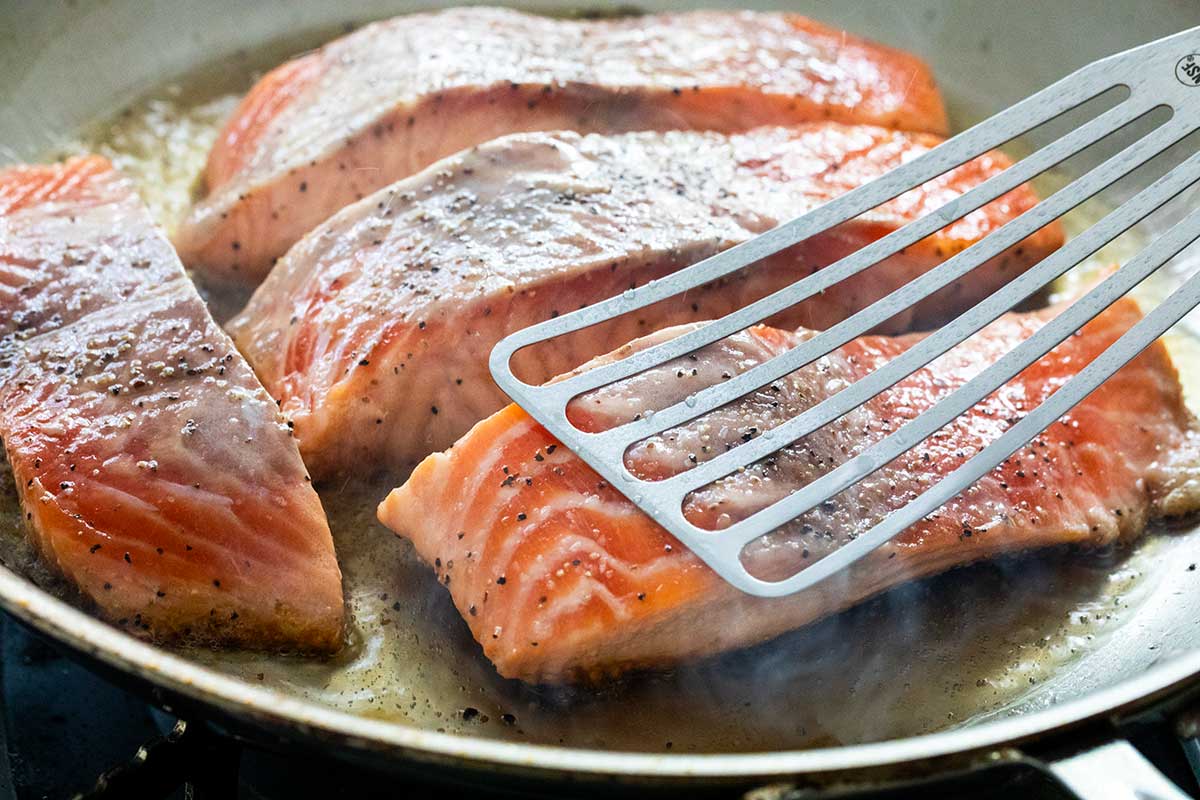
Sear the skinless fillets flesh-side down (the presentation side) to create a golden, crisp surface. My culinary school chef instructor shared the secrets to cooking salmon. Cook the fish until about 75 to 80% done in the thickest part, then flip. Depending on the fillet thickness, the process takes about 4 to 5 minutes.
The neat thing is you can actually see the fish turn from translucent to opaque on the edges, so pay close attention. This provides ample time for a thick, golden crust to form on the surface. Turn it over, then cook until the fillet reaches medium-rare (slightly translucent in the center) to medium doneness (mostly opaque and flaky) for a moist interior.
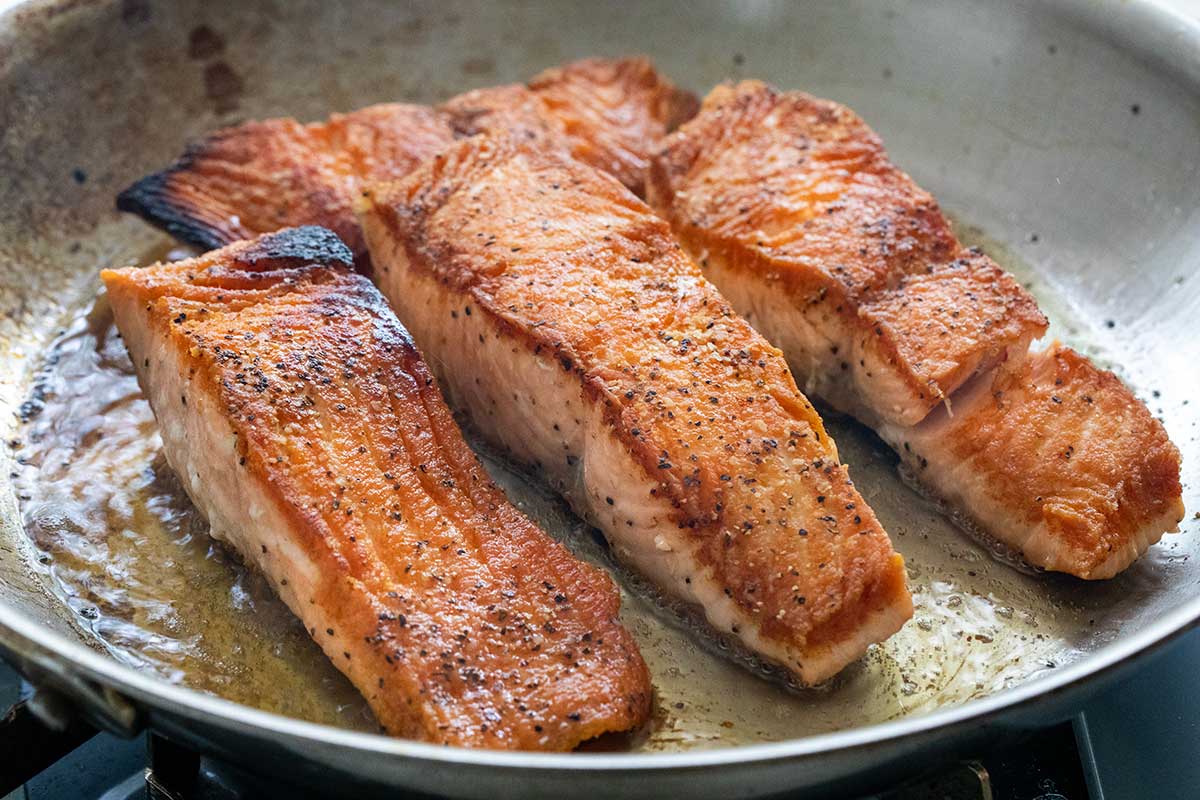
Tips for Perfect Pan-Searing: Don’t add cold salmon to the pan! Adding cold food directly from the refrigerator to the pan will make it stick more. It dramatically lowers the temperature and causes the pan’s pores to open instead of staying tight. Let the salmon sit at room temperature for at least 10 minutes before cooking.
Notes for Searing Salmon with Skin On:
The key to nailing a crispy texture is to cook the salmon skin side down first so it fries in the oil longer. You’ll notice the skin starts to shrink the moment it hits the pan. Pressing it down with a fish spatula right away reduces buckling or curling. This will keep it flat and evenly fried. The skin is full of collagen and omega-3 fatty acids, so it needs a little more time to change the exterior texture than the flesh. This process will take about 5 to 6 minutes. You should be able to easily cut through the skin with a fork. I serve this type of fillet skin-side up on a platter, which keeps the skin from getting soggy while it sits in the sauce.
Step 5: Make Lemon Garlic Butter Sauce
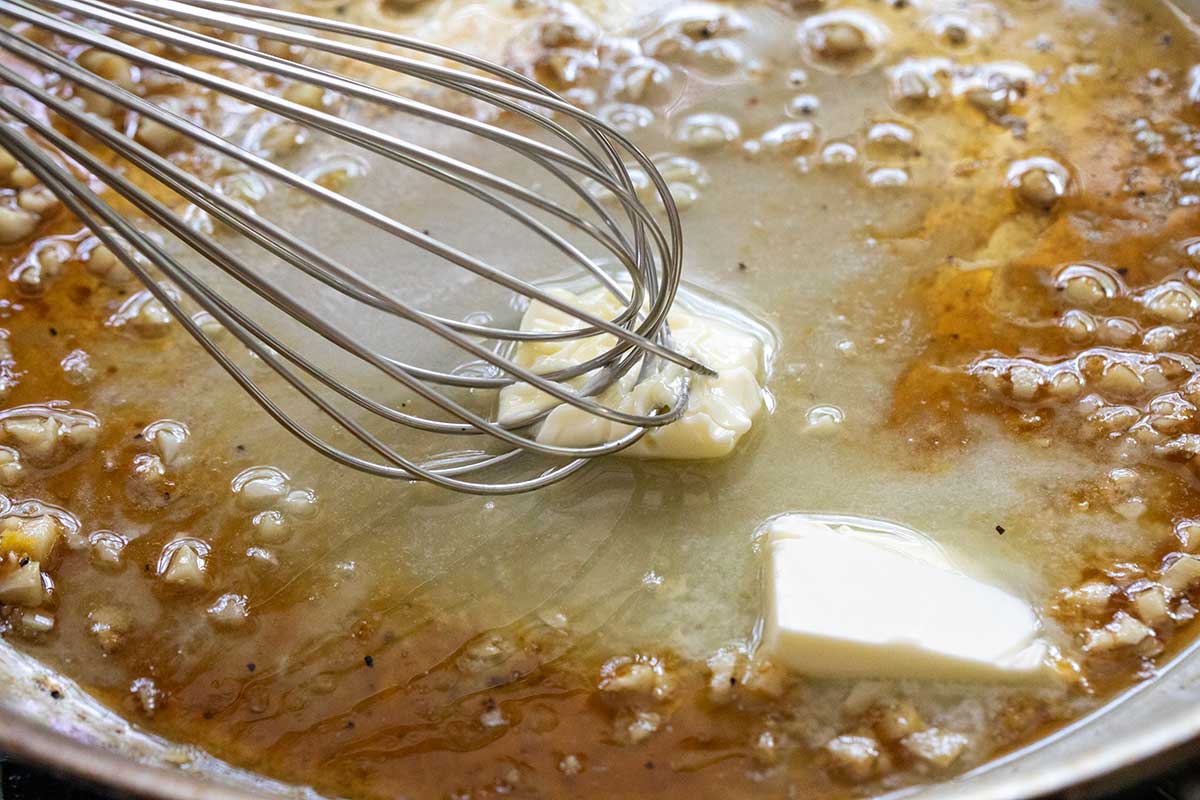
After pan-frying the fish, you’ll have fat rendered from the salmon and flavorful fond from browning the protein. Don’t ditch the pan; use those wonderful drippings to make a sauce. I sauté minced garlic, lemon zest, and fresh lemon juice until fragrant. To thicken the consistency, turn off the heat and whisk in cold butter. This keeps the sauce emulsified so that it clings to the fish.
Step 6: To Serve
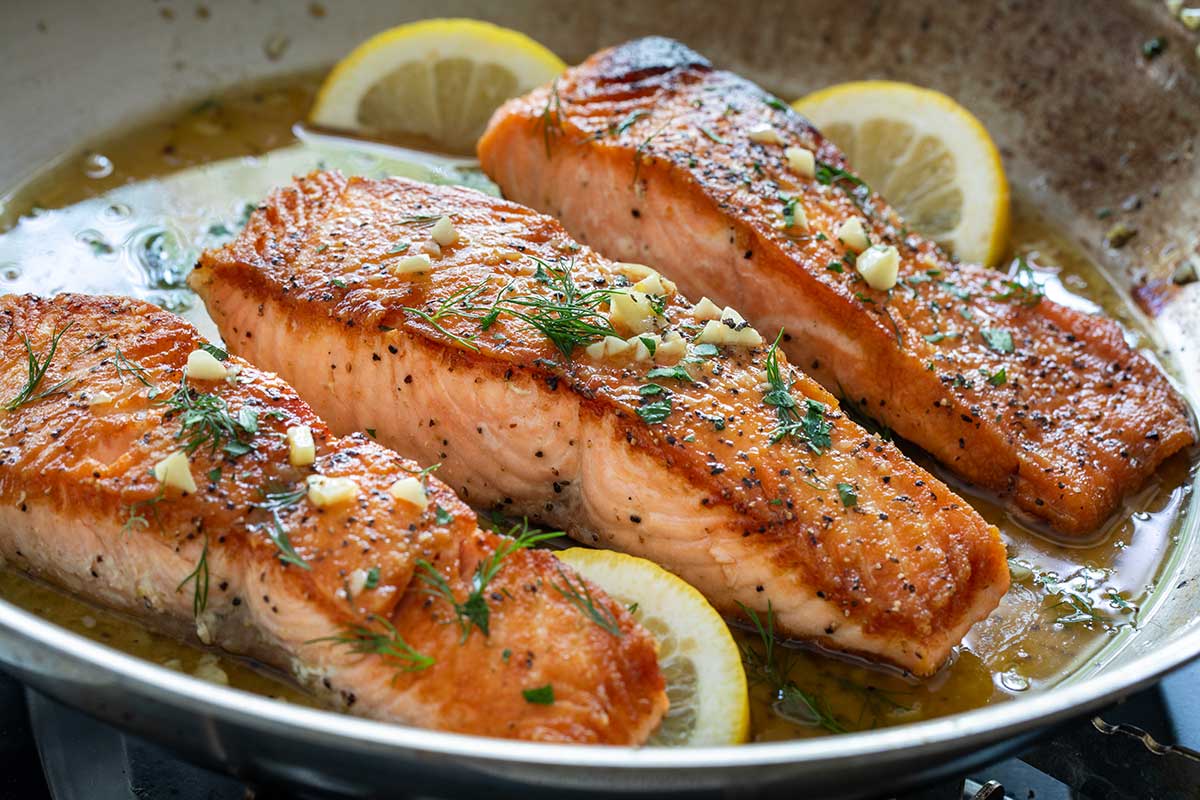
Add the cooked salmon back to the pan to warm in the lemon sauce. Chopped dill and parsley add a fresh herb aroma and taste to the dish. I like to serve the gorgeous salmon with steamed rice, quinoa, Mediterranean couscous salad, or mashed potatoes.
Frequently Asked Questions
Pan-seared salmon is salmon cooked in a hot skillet with a small amount of oil, creating a golden-brown, flavorful crust on the outside while keeping the center tender and moist. The high heat promotes browning through the Maillard reaction, which develops deeper savory flavors and an appealing texture.
Different pans, like a thick stainless steel pan, cast-iron skillet, or nonstick skillet, work well for pan-searing salmon. However, a stainless steel skillet is my top choice and is often used in restaurants because it distributes heat quickly and evenly. High-quality versions have three layers: aluminum, a fast heat conductor and distributor, bonded between stainless steel, which retains heat and releases it slowly and steadily.
Oil is best for pan-searing salmon because it has a higher smoke point and can withstand the relatively high heat needed to develop a golden-brown crust. Butter contains milk solids that can burn at higher temperatures, creating a bitter flavor and dark residue in the pan. For buttery flavor, you can use clarified butter, which removes the milk solids and has a higher smoke point, or add regular butter toward the end of cooking when the heat is lower.
If the salmon has skin, place the fillets skin side down first. The skin protects the delicate flesh from the direct heat while becoming crisp and golden. For skinless salmon, place the fleshy, presentation side down first. This is the rounded side rather than the flat side that was against the skin, allowing you to develop an attractive golden-brown crust on the side that will face up when served.
Do not move the fillet once it hits the pan! The cool piece of fish will immediately change the surface temperature of a stainless skillet. This causes the pan’s pores to expand and grab onto the food, making it stick. Don’t worry, after a few minutes the heat increases, and the pan gets back up to temperature. Tiny bits might stick (creating tasty fond), but the larger pieces of protein will naturally release.
Serve This With



If you tried this Pan-Seared Salmon Recipe, please leave a 🌟 star rating and let me know how it went in the 📝 comments below!
Pan-Seared Salmon with Lemon Garlic Sauce

Ingredients
Pan-Seared Salmon
- 1 ½ pound whole salmon fillet, skin on or skin off, center-cut if possible
- kosher salt, as needed for seasoning
- black pepper, as needed for seasoning
- 2 tablespoons olive oil, light olive oil, grapeseed, avocado oil, or vegetable oil
Lemon Garlic Butter Sauce
- 1 tablespoon minced garlic
- 1 teaspoon lemon zest
- ¼ cup lemon juice
- ½ teaspoon kosher salt
- ¼ teaspoon black pepper
- 3 tablespoons unsalted butter
- 1 tablespoon roughly chopped dill leaves
- 1 tablespoon minced parsley
- 4 lemon wedges
Instructions
- Prepare the Salmon – Remove the skin by carefully sliding a boning knife between the flesh and skin, keeping the blade angled slightly downward toward the skin.Alternatively, if leaving the skin on, use the spine of a knife to remove any remaining scales. Hold the knife at a 45-degree angle against the skin and scrape firmly to loosen the scales. Discard the scales and wipe the fillet clean.
- Cut into Portions – Cut the salmon into 4 even-sized fillets, about 2 inches wide and 6 ounces each.
- Season the Fillets – Thoroughly dry both sides of the salmon and skin with paper towels. Right before cooking, season both sides with salt and pepper.
- Pan-Sear the Salmon – Heat a 12-inch stainless steel, cast iron, or nonstick pan over medium heat for about 2 minutes, until hot. Add the olive oil, then increase the heat to medium-high. Once the oil begins to shimmer (about 1-2 minutes), carefully add the salmon to the pan, skin-side down if the skin is on or flesh-side down if the skin has been removed. Add one fillet at a time, immediately using the back of a fish spatula to gently press each fillet against the pan for about 10 seconds to promote even contact. Add the remaining fillets, pressing each one down before adding the next. Reduce the heat to medium. For skin-on salmon, cook until the skin is browned, crispy, and easily releases from the pan, about 5 to 6 minutes. For skinless salmon, cook until the surface is golden brown and easily releases from the pan, about 4 to 5 minutes. The salmon should be about 75 to 80% cooked through.Use tongs to carefully flip the salmon. Gently press each fillet against the pan to ensure direct contact, then leave it undisturbed. Cook until the edges are opaque and the center is slightly translucent, about 1 to 2 minutes. The internal temperature should reach 120°F (49°C) for medium rare or 130°F (54°C) for medium. Transfer the salmon to a paper towel-lined plate to drain excess oil. Do not discard the pan.
- Make Lemon Garlic Butter Sauce – Heat the same pan used to cook the salmon over medium heat. Add the garlic and lemon zest; saute for 30 seconds, until fragrant. Add the lemon juice, ½ teaspoon salt, and ¼ teaspoon black pepper. Stir and cook for 1 minute. Turn off the heat. Whisk in the butter until it forms a lightly thickened emulsion.
- To Serve – Return the salmon to the pan, garnish with dill leaves and parsley, and then drizzle with the lemon-garlic sauce. Serve the salmon with lemon wedges.
Recipe Video

Notes
- Using Portioned Fillets: You can use four 6-ounce fillets instead of a whole salmon fillet. Grocery stores often sell cleaned, portioned fillets.
- Using Thicker Fillets: If salmon fillets are thicker than 1 inch, adjust the cook time as needed to hit the desired doneness.
Nutrition Facts
Percent Daily Values are based on a 2000-calorie diet. All nutritional information is based on estimated third-party calculations. Each recipe and nutritional value will vary depending on the brands you use, measuring methods, and portion sizes per household.




Lexi says
So surprised by how quick and delicious this was! Good skills taught in this article.
Jessica Gavin says
I’m thrilled to hear that you learned how to pan-sear salmon like a pro, Lexi! Great job!
Angela says
OMG, delicious & fast! I made this with mashed potatoes & fresh green beans. I used dill & parsley from my garden. Restaurant quality dinner!
Jessica Gavin says
Thank you for making the pan-seared salmon recipe, Angela! I love the pairing with mashed potatoes and green beans.
Ryan says
It is a pleasure to comment on Jessica’s pan seared salmon recipe. Having cooked salmon for guests professionally, this recipe ranks at the very top. Excellent presentation and details for cooks at all skill levels. Thank you Jessica!
Jessica Gavin says
You’re welcome, Ryan! It’s an honor to have your prepare the salmon recipe for your guests!
Suha S. says
I just made this on my brand new stainless steel 12” pan. This was the best salmon I’ve ever made! Absolutely delicious and crispy. 100/100
Jessica Gavin says
Whoo hoo! Great job with the crispy salmon. It’s always fun using new pans!
Tom says
This turned out great!! Amazing recipe!!
My pan was too hot, so I had some splatter to clean up and I overcooked the salmon just a tad – all my own fault (and won’t happen next time). Easy to prepare – Easy to cook – Great flavor!! A winner in my book!!
Jessica Gavin says
Thanks for you feedback, Tom!
Kara says
Love the lemon garlic butter at the end!!! This was an amazing recipe, thank you for sharing ??
Jessica Gavin says
You’re welcome, Kara!
Angie says
Thank you! This was a hit with the whole family. I followed your recipe exactly, and I absolutely enjoyed the lemon butter sauce! Thanks for sharing :).
Jessica Gavin says
You’re welcome, Angie!
Maria T. says
I made salmon tonight following these cooking instructions except I used your Steak Fajita marinade. OMG Jessica, it was delicious. I didn’t sauté the marinade as much as spoon it over the cooked salmon. So good. I’ve used this marinade on beef, chicken and fish and it’s good on all of them.
Jessica Gavin says
Using the steak fajita marinade with the salmon sounds divine!
KP says
I’ve tried several different several recipes to make pan-fried salmon. This was the easiest to follow with the most helpful tips. Almost got it right the first time. Next time I will cook for 3 minutes each side only.
Jessica Gavin says
Whoo-hoo! Great job! Let me know how your next batch of salmon goes. I know you got this!
Denise Frick says
Jessica thank you so much . Had my Daughter for dinner and this salmon recipe was perfect
Added Fresh steamed Cauliflower
Jessica Gavin says
What a lovely dinner to make for your family! Love the pairing of the salmon with cauliflower.