
This easy Spam musubi recipe features layers of soy-glazed Spam, fluffy sticky rice, and a strip of nori, all combined into one irresistible handheld Hawaiian snack.

Jessica’s Recipe Science
- Spam crisps up on the outside while staying tender inside, creating a savory-sweet contrast that pairs perfectly with the soft rice.
- Short-grain rice is rich in amylopectin, which gives it a naturally sticky, chewy texture that helps the musubi maintain its shape.
- A teriyaki-style glaze, made with soy sauce, brown sugar, mirin, and sesame oil, adds umami depth and a caramelized coating.
Why It Works
My mom always kept a few cans of Spam in the pantry. It was her secret weapon for quick meals, especially tossed into fried rice with leftovers. But it wasn’t until my first trip to Hawaii as a teenager that I tasted Spam musubi at a bistro by Waikiki Beach. Savory Spam, warm rice, and a hint of nori—was pure comfort. It’s an easy, satisfying snack that’s fun to customize with things like scrambled eggs for extra protein or grilled pineapple for a touch of sweetness.
Even though Spam musubi only uses a few basic ingredients, how you prepare and assemble them makes all the difference. I use short-grain rice because its higher starch content gives it that ideal fluffy yet sticky texture, which holds everything together. Searing the Spam in a hot pan caramelizes the surface for extra flavor, and simmering it in a soy glaze adds a savory-sweet finish that pairs perfectly with the rice. A strip of nori wraps everything up.
Jump To a Section
Ingredients You’ll Need
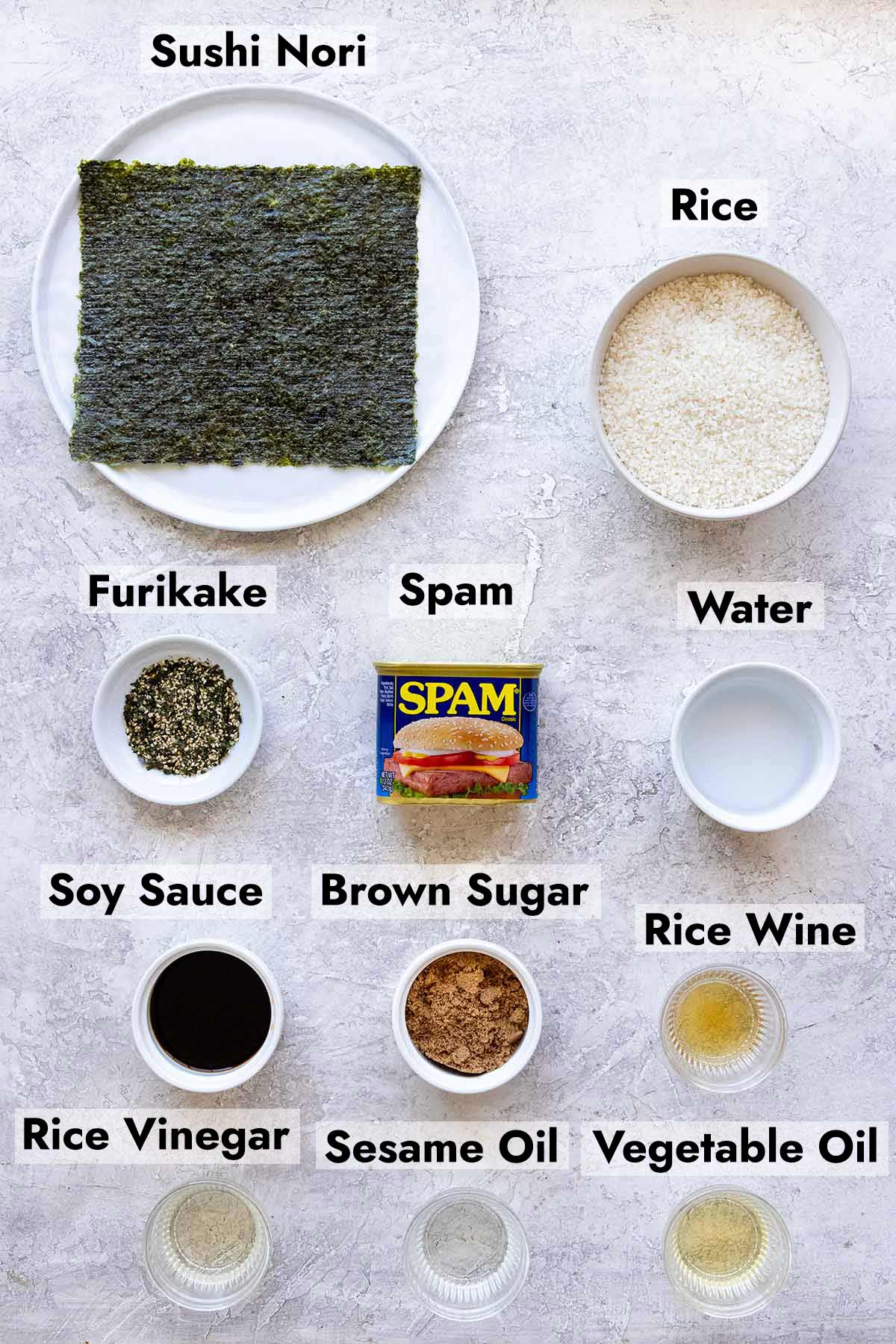
- Spam: When cooked, it becomes slightly crispy on the outside while staying tender inside, with a savory, salty, and slightly sweet taste that balances perfectly with the fluffy rice and briny nori.
- Rice: I use short-grain rice for Spam musubi. Its higher starch content, especially amylopectin, makes it naturally sticky and slightly chewy, which is essential for holding the musubi together without falling apart.
- Glaze: I make a sweet and savory glaze inspired by my homemade teriyaki sauce to coat the pieces of Spam. I use a combination of soy sauce, dark brown sugar for a molasses taste, Mirin (rice cooking wine) that is sweetened for depth, seasoned rice vinegar for pungency, and sesame oil for a nutty roasted taste.
- Nori: Sheets of sushi nori (roasted seaweed) add a crisp and chewy texture to the musubi. The sheets can be cut into the desired size to wrap up the rice and meat. I use sheets about 8-inch by 7-½ inches in size.
- Seasoning: To add extra flavor to the musubi, sprinkle on furikake. The rice seasoning typically contains sesame seed, sugar, seaweed, and salt. Japanese markets offer various blends to try, which incorporate additional umami ingredients such as bonito or soy sauce.
See the recipe card below for all ingredients and measurements (US and metric).
Ingredient Substitutions
This Spam musubi recipe is easy to customize! Try these delicious options:
- Spam Swaps: If you prefer a less salty taste, use the less-sodium or lite version. Slices of Canadian bacon or ham steak would work well. For a vegetarian version, slice up firm tofu.
- Rice Options: Use medium-grain rice, such as Calrose. This will still give a sticky texture, but the grains won’t be as compact.
- Glaze Options: Add freshly minced garlic, ginger, or a splash of rice wine vinegar to the glaze for pungency. Substitute half of the soy sauce with oyster sauce for a deeper umami flavor. Try brushing thicker teriyaki sauce on the pan-fried meat.
- Sweetener Swaps: Instead of dark brown sugar, use light brown or granulated sugar. Honey or maple syrup would also work well.
- Season the Rice: Traditionally, musubi does not have seasoned rice vinegar like sushi rice. However, if you want to add a sweet and tangy taste, start with 1 tablespoon to the hot rice, then adjust to your desired level.
- Sauces: Drizzling sriracha, mayonnaise, or Japanese mayo over the rice before wrapping it with Spam can add a creamy and spicy kick.
- Vegetables: Layering the musubi with thinly sliced cucumbers, avocado, green onion, or pickled radishes can add freshness and crunch to the dish.
- Pineapple: Adding a slice of grilled pineapple on top of the Spam can give the musubi a tropical twist!
How to Make Spam Musubi

Step 1: Cook the Rice
Rinsing the rice is a crucial step because it removes excess surface starch, which can cause the grains to become overly sticky or gummy after cooking. Washing until the water runs clear helps the rice cook up with a cleaner texture that’s still sticky enough to hold together, but not mushy. There are different ways for how to cook rice. Using a rice cooker is a popular method, or the stove top in a pot is my go-to technique. Simmering the rice gently and allowing it to steam after cooking ensures even moisture distribution, giving you fluffy, cohesive grains that are perfect for shaping musubi.
Tips for Perfect Execution: I use equal parts uncooked rice to water. This is less than the package directions. This will give tender, fluffy grains of rice that stick together but aren’t too wet and mushy. If you prefer a softer texture, increase the water to 2 ½ cups.
Step 2: Cut the Spam
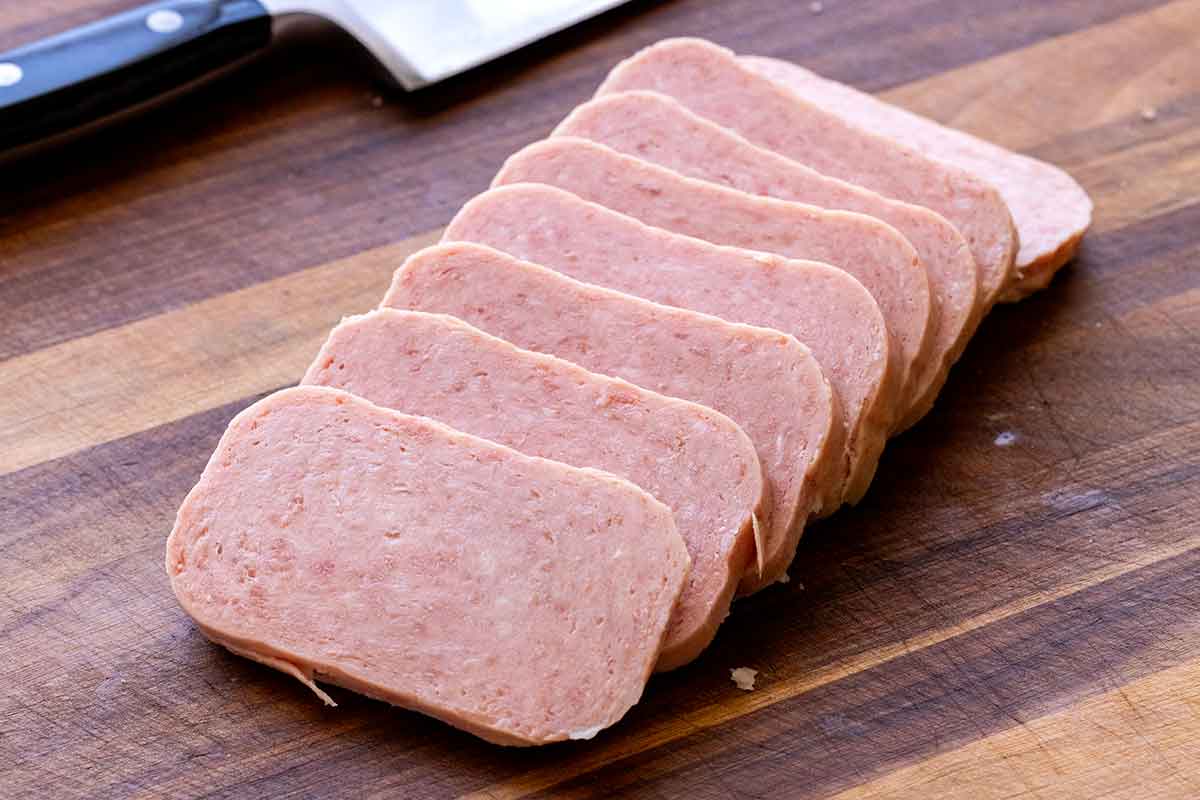
Spam’s iconic, rounded rectangular shape makes it easy to slice into perfect portions straight from the can. Since it’s very salty, I like to cut it into 8 slices per 12-ounce can. This yields about 3/8-inch thick slices. It provides a satisfying bite without overwhelming the musubi with excessive sodium.

Step 3: Make the Glaze
I use a simple glaze of soy sauce, brown sugar, mirin, and sesame oil to balance flavor and enhance caramelization. The soy sauce adds umami and saltiness, while brown sugar contributes sweetness and helps create a glossy, caramelized coating. Mirin adds a mild acidity and depth, and sesame oil brings a hint of nuttiness.
Experimentation Encouraged: You can marinate the slices for 15 to 60 minutes before frying for a stronger flavor.

Step 4: Sear the Spam
Searing the Spam first in a large skillet is key because its texture straight from the can is soft and uniform. Pan-frying adds contrast by creating a golden, crispy surface through the Maillard reaction, which not only improves texture but also builds rich, savory flavor.

Step 5: Add the Glaze
Simmering the Spam in the soy glaze adds a sweet and savory layer that soaks into the crispy edges without making the slices soggy. Reducing the sauce allows it to thicken and cling to the surface, creating a glossy, caramelized coating.
Step 6: Cut the Nori
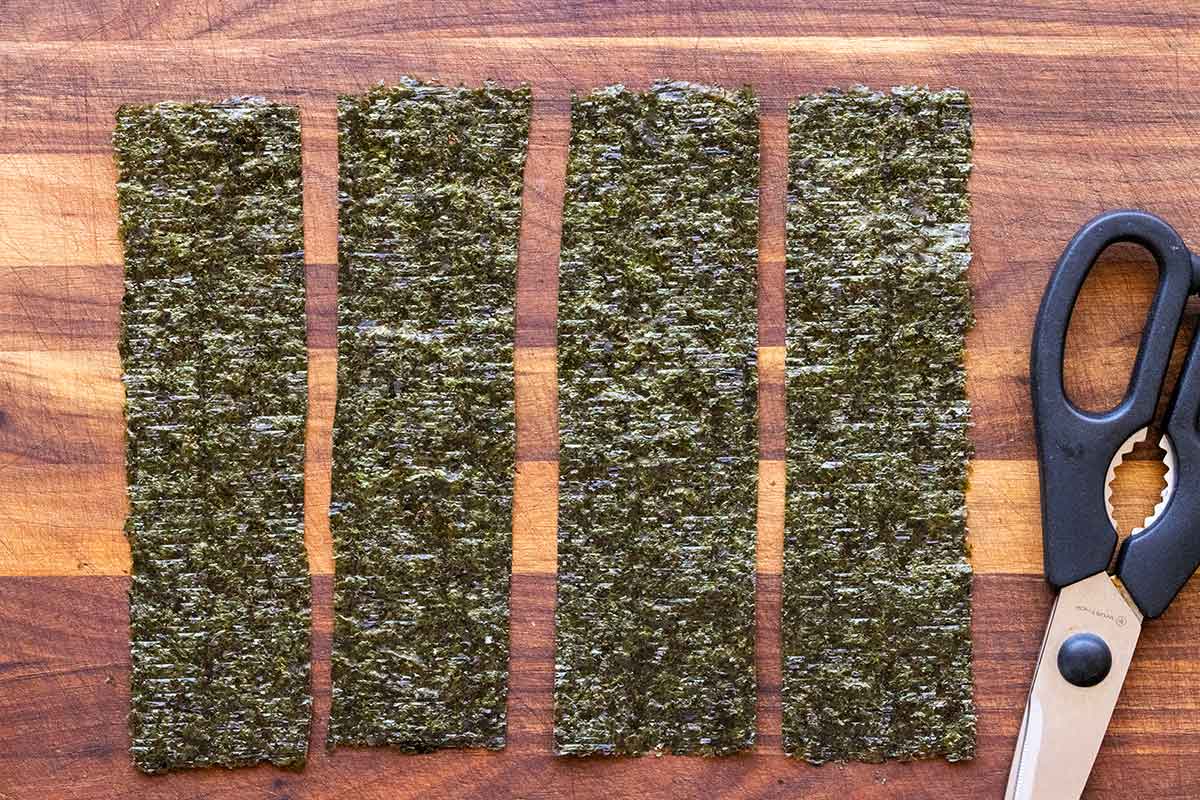
The size of the nori strip is totally up to you! For parties, I use narrow strips to show off the rice and meat at the ends. An 8-inch nori sheet makes four strips about 2 inches wide.
Pro Tip: If I’m making a quick snack for my family, I cut the nori to match the length of the Spam. It wraps neatly and makes it easy to hold!
Step 7: Build the Musubi
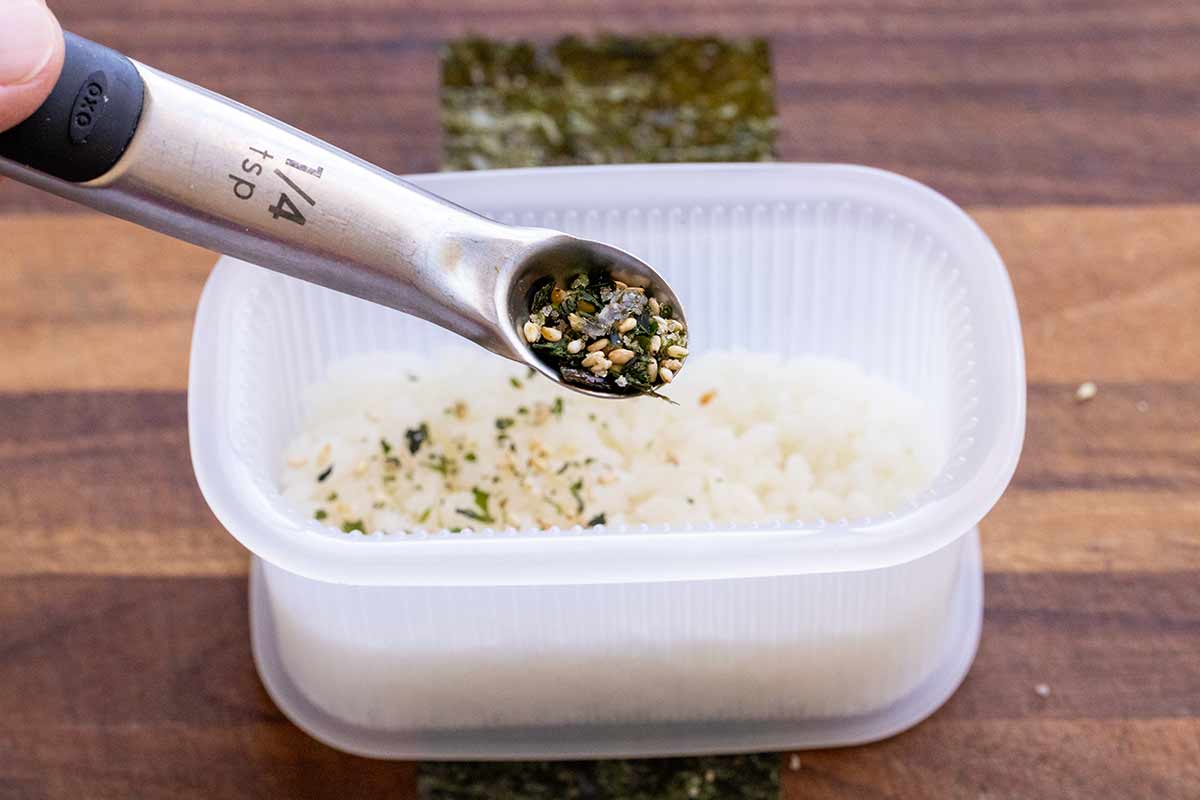
There are a few ways to layer Spam musubi, but I like to keep it simple and mess-free. I place the musubi mold directly on the nori, then add about ½ cup on top. Press it down until it’s ¾ to 1 inch thick—firm enough to hold together, but not too dense.
Sprinkle some furikake on top, then unmold the rice. Add the glazed Spam on top; this keeps the work area clean since the glaze is sticky. You can reverse the layering with the Spam on the bottom if you prefer the seam on the bottom of the musubi.
Quick Substitution: If you don’t have a single-serving musubi maker, you can form the rice into the shape of the Spam. Alternatively, use a Spam can lined with plastic wrap to shape the rice and lift it out for easy removal.

Step 8: Wrap the Musubi
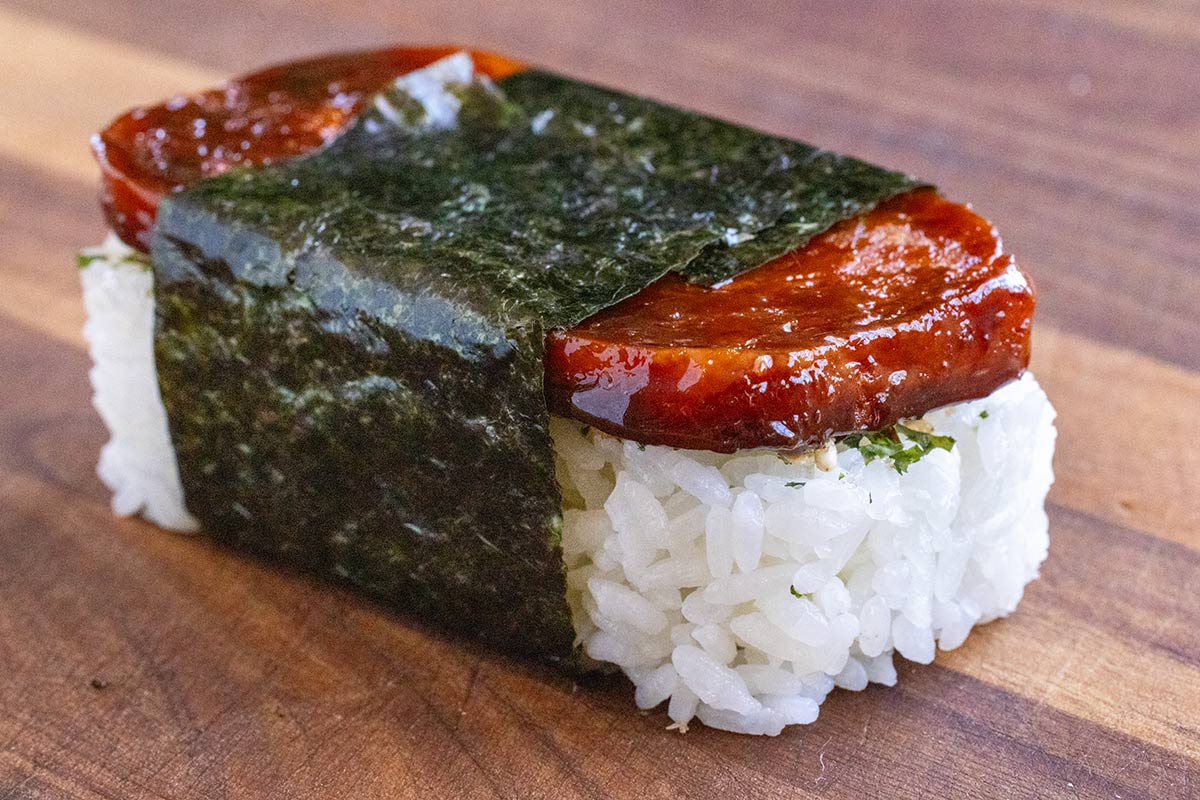
Fold the nori right over the Spam without flipping or moving anything around—it’s quicker, cleaner, and easier to wrap. A little bit of water brushed on one end of the nori helps seal it together. You could also use some rice to help seal the pieces of nori together.
Step 9: To Serve
Spam musubi is best enjoyed warm right after making—it’s when the flavors and textures shine. However, if I’m packing it for later, I wrap each one in plastic wrap and store it at room temperature, so it stays fresh and is easy to grab on the go.
Frequently Asked Questions
After World War II, Spam became a staple on the Hawaiian islands, introduced by the U.S. military and quickly embraced by local communities. Inspired by Japanese onigiri (rice balls), home cooks began pairing slices of pan-fried Spam with warm rice and wrapping it in nori to create a simple, satisfying, and portable snack. Today, you’ll find Spam musubi everywhere in Hawaii, from restaurants and convenience shops like ABC stores for a quick and affordable snack.
Spam is a shelf-stable canned meat made from pork, ham, salt, sugar, water, and potato starch to hold everything together, as well as sodium nitrite for preservation. It was introduced by Hormel in the late 1930s and gained popularity during World War II due to its ease of storage and quick preparation. It has a savory, salty flavor and a soft texture that crisps up beautifully when pan-fried. In Hawaii, you’ll find it in fried rice, saimin, and Spam musubi.
You only need a handful of simple ingredients: a can of Spam, short-grain white rice, soy sauce, sugar, and nori (dried seaweed). I like to pan-fry the Spam until golden, then simmer it in a sweet and savory soy glaze for extra flavor. You can sprinkle in some furikake for added umami, and I always recommend using warm, freshly cooked rice for the best texture. It’s easy to customize too!
For extra flavor, the slices of Spam can be marinated in the soy mixture for 15 to 60 minutes before pan-frying and glazing.
Serve This With




If you tried this Spam Musubi Recipe, please leave a 🌟 star rating and let me know how it went in the 📝 comments below!
Spam Musubi
Ingredients
- 2 cups uncooked short-grain white rice
- 2 cups water
- 12 ounces Spam
- ¼ cup soy sauce
- ¼ cup dark brown sugar, packed
- 1 tablespoon Mirin rice wine, or water
- 1 teaspoon seasoned rice vinegar, optional
- ½ teaspoon sesame oil, optional
- 1 teaspoon vegetable oil
- 2 sheets sushi nori, about 8" pieces
- 2 teaspoons furikake, optional
Instructions
- Cook the Rice – Rinse the rice in a fine-mesh strainer under cool running water, scrubbing with your fingers until the water runs clear, about 1 minute. Drain well, then add the rice and water to a medium saucepan. Bring to a boil over medium-high heat. Cover, reduce the heat to low, and simmer until the water is absorbed, about 15 minutes. Turn off the heat and keep covered to steam. Meanwhile, prepare the Spam.
- Cut the Spam – Slice the Spam lengthwise into 8 pieces to create rounded rectangular pieces, about ⅜" thick.
- Make the Glaze – In a small bowl, whisk together the soy sauce, brown sugar, mirin, rice vinegar, and sesame oil. Set aside.
- Sear the Spam – Heat the vegetable oil in a large nonstick pan or frying pan over medium heat. Add the slices to the pan in a single layer and fry until golden brown, about 2 to 3 minutes per side.
- Add the Glaze – Reduce the heat to low and pour the glaze into the pan. Flip the Spam slices to evenly coat both sides, then simmer until the sauce slightly thickens and clings to the meat, about 1 to 2 minutes per side. Do not overheat the sauce or it will burn. Transfer the pieces to a plate.
- Cut the Nori – Cut the nori sheets into 4 strips, about 2-inches wide to expose the meat and rice for a nice presentation. You can also cut them wider for a fully wrapped the musubi, especially if you enjoy more seaweed flavor.
- Build the Misubu – Make one musubi at a time. Lay a strip of nori, rough side up, on a clean cutting board. Place the musubi mold in the center, positioned perpendicular to the nori. Gently fluff the rice, then add about ½ cup into the mold. Use the musubi lid to gently but firmly press the rice down until it’s ¾ to 1 inch thick. It should hold together but not feel dense. Sprinkle a ¼ teaspoon of furikake evenly over the surface. Carefully unmold the rice, then add a slice of glazed Spam on top.
- Wrap the Musubi – Fold one end of the nori over the Spam and rice stack. Lightly brush the edge of the opposite nori with water to help it stick, fold over, then press to seal where the ends overlap.
- To Serve – The musubi tastes best served warm right away, or you can individually plastic wrap to enjoy on the go.
Recipe Video

Notes
- Musubi Mold Alternatives: Shape the rice by hand to match the size of the Spam. Alternatively, use the empty Spam can. Rinse, dry, and line it with plastic wrap. Press rice inside with a spoon, sprinkle with furikake, then lift it out. Place on the nori, add Spam, wrap, and seal.
- Rice Alternatives: Medium-grain rice, like Calrose, can be used instead of short-grain rice. Increase the water to 2 ½ cups. Do not use long-grain rice.
- Seasoning the Rice: For a tangy sushi rice taste, add seasoned rice vinegar to the hot steamed rice. Start with 1 tablespoon, increasing to taste, up to ¼ cup of vinegar.
- Storing: Individually wrapped musubi can be stored in an air-tight container and refrigerated for up to 3 days.
- Reheating: Microwave in 30-second increments until warm. Musubi does not taste good when eaten cold because the rice becomes hard.
Nutrition Facts
Percent Daily Values are based on a 2000-calorie diet. All nutritional information is based on estimated third-party calculations. Each recipe and nutritional value will vary depending on the brands you use, measuring methods, and portion sizes per household.


Pay glasko says
Only two cups of water for rice?
Jessica Gavin says
I use equal parts uncooked rice to water. This will give tender, fluffy grains of rice that stick together but aren’t too wet and mushy. If you prefer a softer texture, increase the water to 2 ½ cups.
Cari Han says
My husband and son loved the spam musubi! The taste was good with umami flavor but I must have seared the spam a little too long. I did 2 min on each side. The spam was crispy and not juicy anymore in the middle. Next time I’ll try to cook it with medium heat. But great recipe thank you!
Jessica Gavin says
Thank you so much for making my spam misubi recipe, your feedback is greatly appreciated! You can definitely adjust the level of crispness for the spam to your liking. Mahalo!