
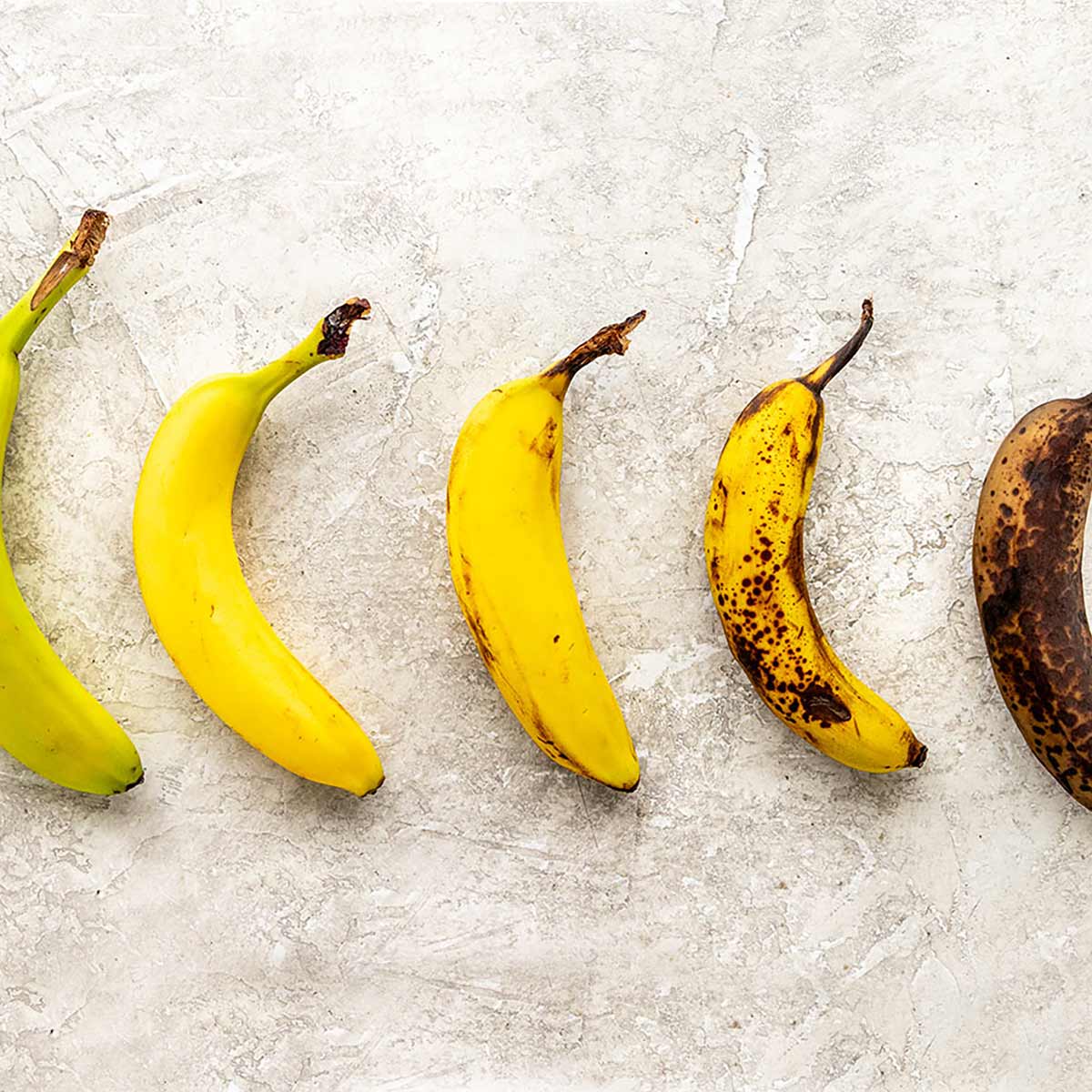
Do you know how to tell if a banana is ripe? This simple banana ripeness scale shows exactly when your fruit is at its sweetest and most flavorful stage for eating as a snack, or in a recipe for muffins, bread, and more!
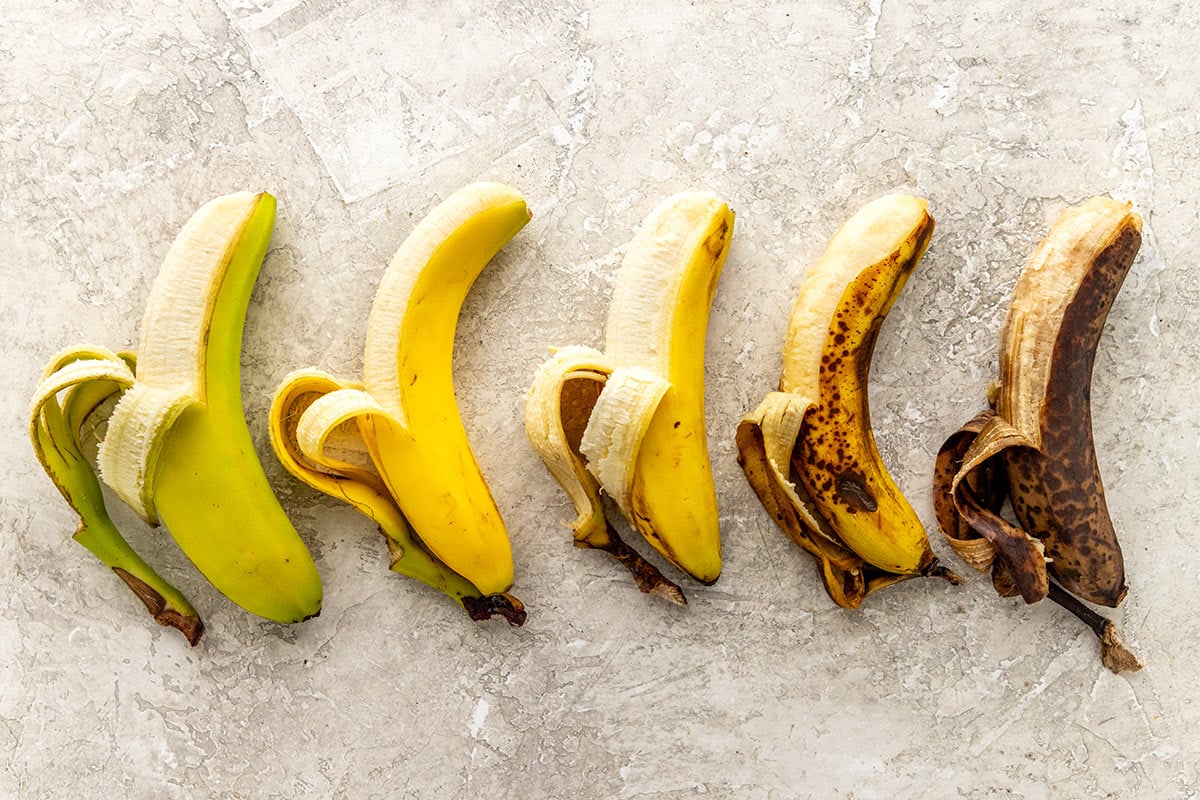
Whether you keep bananas on the counter for a quick, healthy snack or have a few turning brown and ready for baking, this guide will help you visually identify the best stage of ripeness for your needs. Understanding how color and texture change over time makes it easier to decide when to eat a banana fresh or when it’s perfectly sweet and soft enough for baking.
Bananas naturally contain sucrose, fructose, and glucose, the same types of sugars found in many fruits. As they ripen, the starch inside slowly turns into these natural sugars, which is why a ripe banana tastes so much sweeter than a green one. A medium ripe banana contains about 14 grams of sugar. Use very ripe to overripe bananas for a loaf of banana bread, peanut butter banana cookies, or a strawberry banana smoothie to make the most of their natural sweetness.
Stages of Banana Ripeness
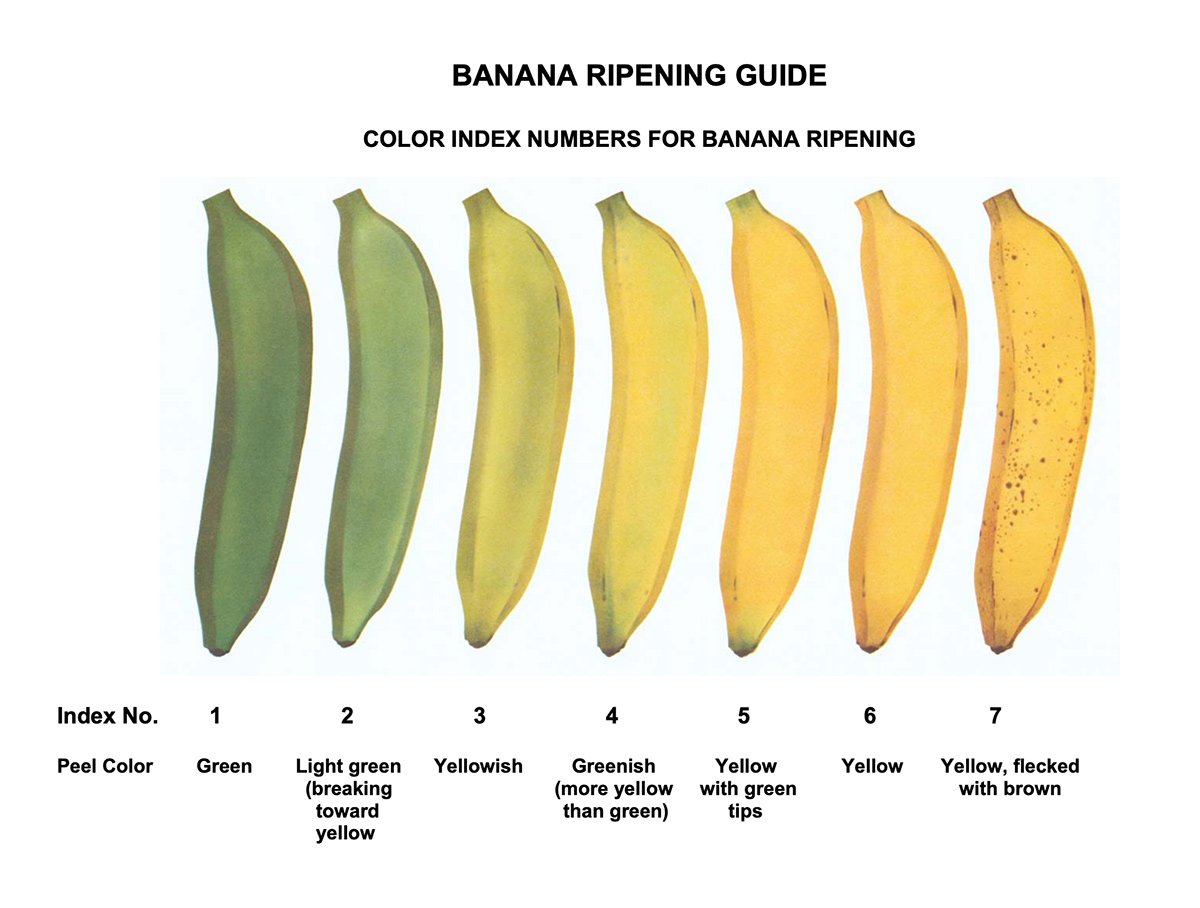
There are seven stages of banana ripeness based on color index numbers:
- Green (Index 1): Fully unripe, firm, and starchy.
- Light Green Breaking Toward Yellow (Index 2): Beginning to ripen but still firm.
- Yellowish (Index 3): Less green, slightly softer, and mildly sweet.
- Greenish More Yellow Than Green (Index 4): Mostly yellow with some green; starches are converting to sugars.
- Yellow with Green Tips (Index 5): Ideal for eating fresh, firm, sweet, and balanced.
- Yellow (Index 6): Fully ripe, sweet, and aromatic.
- Yellow Flecked with Brown (Index 7): Very ripe, soft, and rich in natural sugars.
Bananas are harvested while still green and kept cool during transport to slow ripening. Once they reach wholesalers, the fruit is ripened to specific stages before delivery, typically when the banana peel is yellow with green tips (Index 5). At this point, the texture is firm yet sweet, making it ideal for eating fresh.
As bananas progress through these stages, their starches break down into sugars, making them softer, sweeter, and more flavorful. Chlorophyll also breaks down, turning the green peel progressively more yellow, then brown.
Banana Ripeness Scale
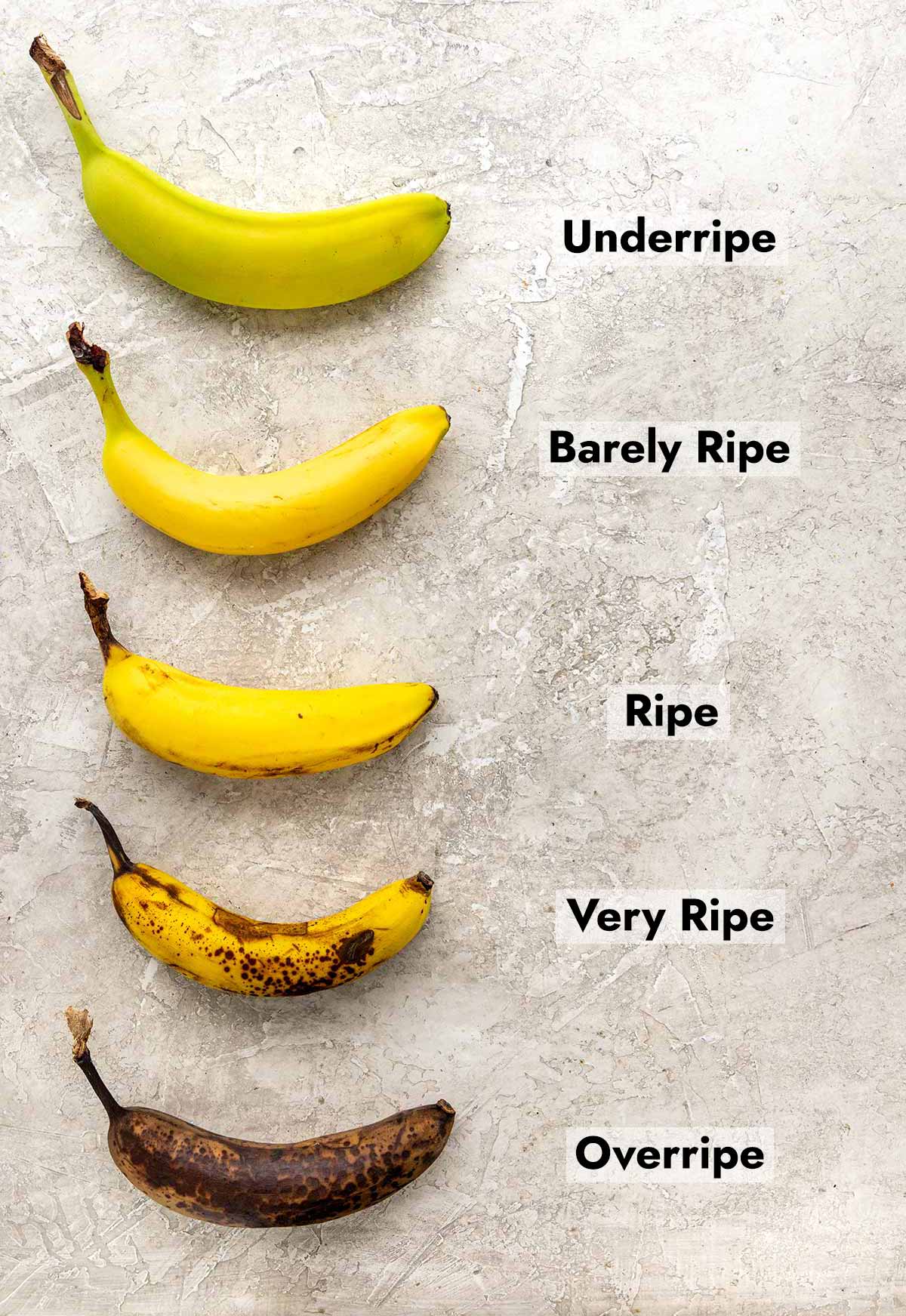
After studying how bananas change color and texture as they ripen, I created an easy-to-follow visual banana ripeness scale to help you identify each stage you’re likely to see at home after bringing them home from the store. Each stage takes about 1 to 4 days to show visible changes. This will help you know when the perfect time is to eat them as a nutritious snack or add to a recipe.
- Underripe: Dark to medium green peel and very firm in texture. Very vegetal, acidic, starchy, and astringent in flavor. Green bananas are rich in resistant starch, which supports gut health and helps manage blood sugar levels.
- Barely Ripe: Pale yellow peel and light green near the stem, and firm in texture. Green notes, not very sweet. It’s high in fiber, lower in digestible carbs, and can help support steady blood sugar levels.
- Ripe: Medium-yellow color and little to no brown spots, easy to peel, and firm in texture but soft to chew. Characteristic banana flavor, moderate sweetness. It offers peak nutrition, providing maximum levels of potassium, vitamin B6, vitamin C, and other essential micronutrients.
- Very Ripe: Yellow peel speckled with brown spots, soft texture, can taste slightly grainy, but not mushy. Fragrant banana aroma and strong flavor, very sweet taste. It’s easier to digest and perfect for eating on its own or adding to nutritious recipes like smoothies, yogurt, or oatmeal.
- Overripe: Heavily spotted or completely brown with a very soft and mushy texture. The skin gets thinner, the banana aroma is strong, and the taste is very sweet. Its natural sweetness and moisture make it ideal for baking.
The Best Bananas for Baking
As bananas ripen, their starch naturally turns into sugar, especially fructose, the sweetest type of sugar found in fruit. According to tests from America’s Test Kitchen, heavily speckled bananas have about 5.3% fructose, nearly three times more than lightly spotted ones at 1.8%. That extra sugar makes them taste sweeter.
Sugar doesn’t just make your baked goods taste better; it also acts like a liquid, binding water, adding moisture and tenderness. That’s why I always recommend using very ripe or overripe bananas for baking. They create the softest, most flavorful baked goods, pancakes, cookies, and oatmeal.
How to Store Bananas
To keep your bananas tasting their best, it’s all about storing them in the right conditions. Avoid extreme heat or cold; temperature swings can make the fruit ripen unevenly or turn mushy. The ideal range is between 56 to 65°F (13 to 18ºC). Once ripe, bananas usually stay fresh for about 3 to 7 days, depending on the temperature and humidity in your kitchen. Handle them gently, since bananas bruise easily! Learn how to freeze bananas for long-term storage.
How to Slow Ripening of Bananas
If you want to slow the ripening, wrap the stems in a little plastic wrap. Grocery stores actually use this trick too, wrapping plastic around the crown of the banana cluster. This helps trap ethylene gas emitted by the stem, which is what causes bananas to ripen. Containing that gas keeps the fruit fresh longer, so you can enjoy it before it turns too brown. Don’t store the fruit inside plastic grocery bags; this will condense the ethylene gas that ripens the fruit!
How to Ripen Bananas Fast
- Paper Bag: The most reliable method is to place the bananas in a paper bag and fold it closed. The process takes about 1 to 3 days, depending on the banana ripeness stage. The bag traps ethylene gas, the natural compound bananas release as they ripen, helping them turn yellow faster.
- Paper Bag plus Ethylene-Producing Fruit: To speed up the process, add an apple or ripe banana to the bag to boost ethylene levels. Keep the bag at room temperature; warmth accelerates the process, while refrigeration will slow it down.
- Egg Yolk: To ripen bananas quickly, Serious Eats suggests combining an egg yolk with 4 ounces of mashed bananas, then waiting 30 minutes. Egg yolks contain amylase enzymes that break down starches into sugars, resulting in a sweeter-tasting mash. It’s best to use yellow-green to yellow bananas. This method is great if you are planning to use the bananas in a cooking or baking recipe.
Ways to Use Ripe Bananas
- Chocolate Covered Bananas
- Bananas Foster
- Bananas Foster French Toast
- Banana Cream Pie
- Tropical Fruit Salad
Ways to Use Overripe Bananas
- Banana Baked Oatmeal
- Pumpkin Banana Bread
- Banana Mug Cake
- Banana Muffins
- Peanut Butter Banana Cookies
Frequently Asked Questions
There are seven stages of banana ripeness based on color index: green (index 1), light green breaking toward yellow (index 2), yellowish (index 3), greenish more yellow than green (index 4), yellow with green tips (index 5), yellow (index 6), and yellow flecked with brown (index 7). As bananas continue to ripen, their starches convert to sugars, creating a softer texture and a sweeter flavor. (Source: U.S. Department of Agriculture)
Yellow bananas offer a balanced mix of natural sugars, fiber, potassium, and antioxidants with a pleasant eating experience. Green bananas contain high levels of resistant starch, a carbohydrate that is fermented in the large intestine instead of the small intestine. This prebiotic fiber supports gut health and helps regulate blood sugar spikes, but is less palatable.
A green banana usually takes about 1 to 5 days to turn yellow, depending on the temperature and how ripe it was when you bought it. To help them ripen faster, keep them in a warm area or place them in a paper bag. This traps ethylene gas, the natural compound bananas release as they ripen, and can shorten the process to just 1 to 3 days.
The ideal ripeness to eat a banana depends on your specific health goals and personal taste. Green bananas are higher in resistant starch, which supports a healthy gut microbiome and blood sugar control for those with diabetes. They also help lower insulin sensitivity but have a very astringent and starchy taste. Yellow bananas or ones with a few brown spots are rich in potassium, easy to digest, and provide a balanced mix of natural sugars and nutrients. As bananas develop more brown spots, they become softer, sweeter, and higher in antioxidants, which help fight inflammation. Once fully overripe and blackened, they have a high sugar content and are at peak ripeness for mashing for a baking recipe or breakfast dish.
Baking unpeeled bananas at 175ºF for 3 hours or 300°F for 30 minutes softens the fruit and darkens the peels but doesn’t make them much sweeter. Lower heat allows enzymes to stay active longer, converting a bit more starch to sugar, while higher heat breaks down cells too quickly, deactivating those enzymes and leaving the bananas tangy and starchy. I would not suggest this method for green bananas.
You can microwave bananas to soften them, but it won’t make them sweeter. After about 2 minutes, the peels blacken and the fruit turns mushy, yet it stays tangy because the starch hasn’t converted to sugar. It works in a pinch for mashing, but it’s not a true ripening method.


Leave a Comment