
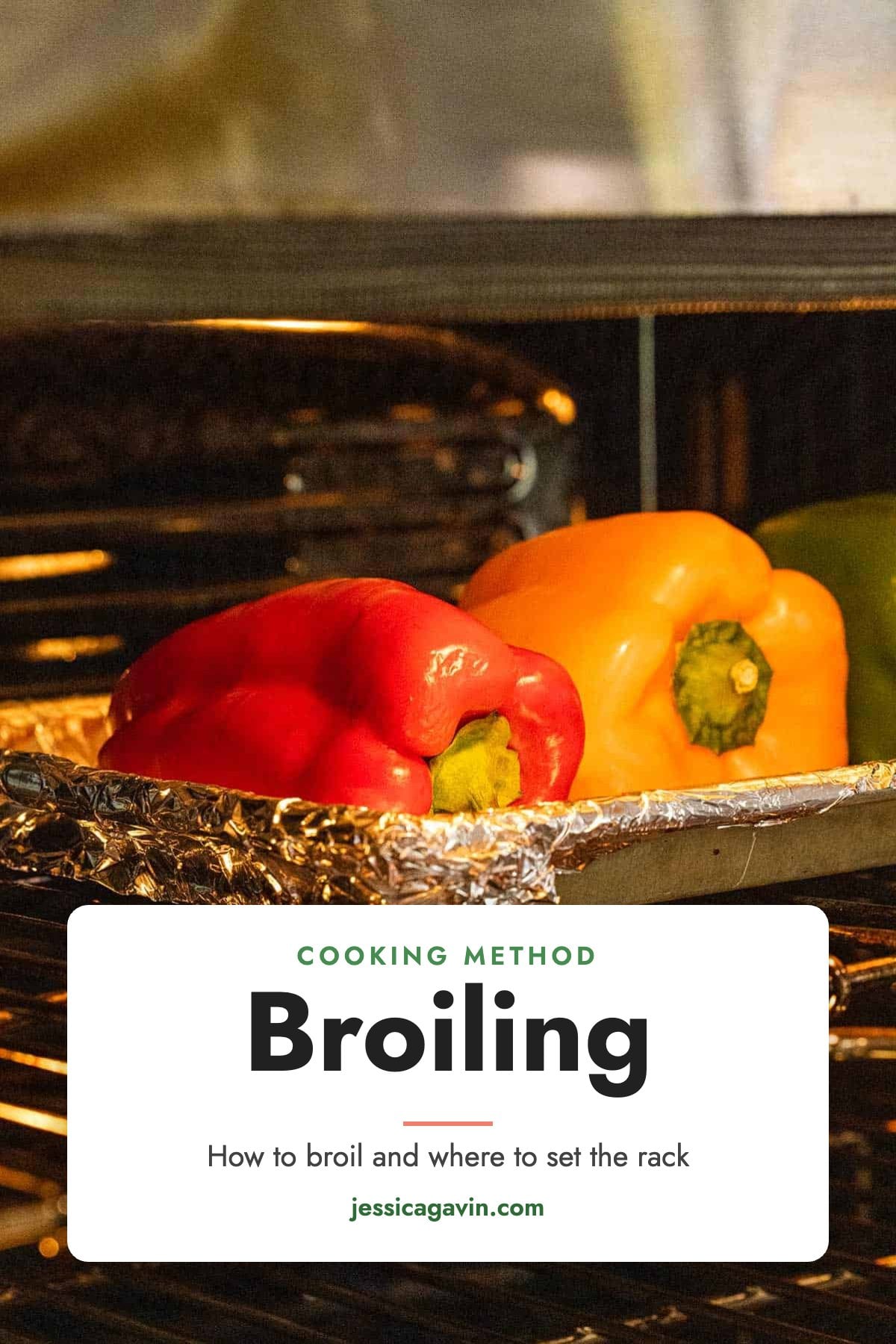
When it’s cold and rainy outside, your oven’s broiler is the closest thing to a grill in your kitchen. The broiling cooking method cooks food with intense, direct heat from above, browning and caramelizing the surface in minutes. Here’s how broiling works, where to set the oven rack, which pan to use, and the steps for golden, never-burnt results.
Jessica’s Recipe Science
- The broiler’s heating element sends out intense radiant heat that browns the surface of food quickly through the Maillard reaction.
- Radiant heat gets weaker with distance, so moving the rack closer to or farther from the broiler controls how fast food browns.
- Sugars in glazes and marinades caramelize and then burn quickly under direct heat, so watch sweet foods closely.
Jump To a Section
What is Broiling?
Broiling is a dry-heat cooking method that cooks food with intense, direct radiant heat from a heating element or gas flame at the top of the oven. Because the heat comes from one direction, the top of the food browns quickly, and thicker foods are flipped halfway through so both sides cook.
Broiling is like an upside-down version of grilling, where the heat comes from below. It’s different from baking and roasting, which surround food with hot air, so they cook more gently and evenly. The broiler is also a great finishing tool for browning the top of a casserole or melting cheese on soup.
Broiling at a Glance
| Factor | Details |
|---|---|
| Heat type | Dry heat (direct radiant heat from above) |
| Heat level | The oven’s broil setting, usually high, which is hotter than most baking temperatures |
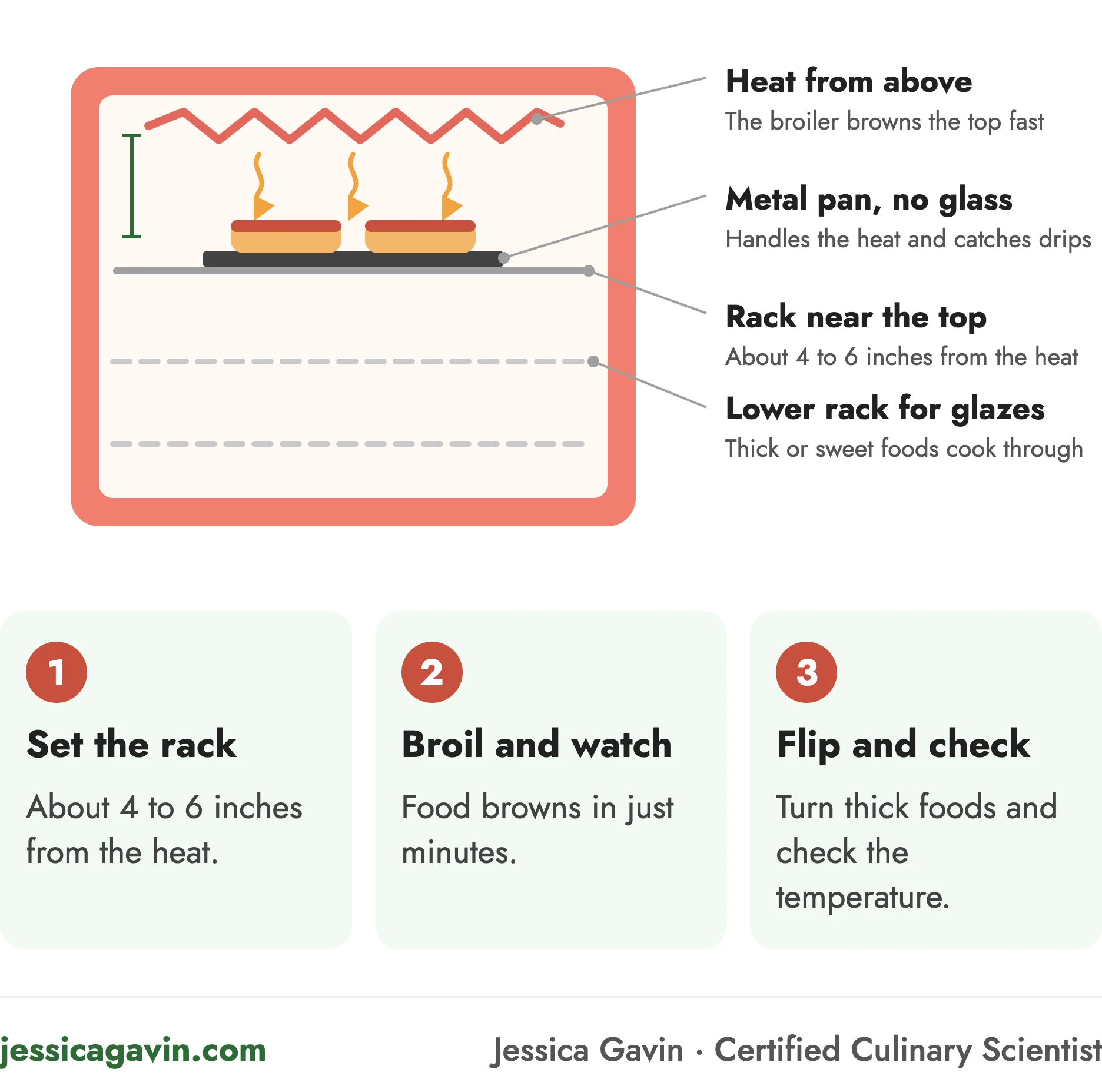
| Rack position | About 4 to 6 inches from the heat for thin foods, and lower for thicker foods or sugary glazes |
| What happens | The surface browns, caramelizes, and chars quickly while the inside cooks through |
| Best foods | Salmon and seafood, meatballs, thin steaks and chops, tender vegetables, and cheesy toppings |
| Typical time | A few minutes for toppings and thin vegetables, and about 5 to 15 minutes for fish and meat |
| Equipment | A metal broiler pan, rimmed baking sheet, or cast iron skillet, plus tongs and oven mitts |
How to Broil
These steps work for most broiled meats, seafood, and vegetables. Check your recipe for the rack position and timing.
Set the Oven Rack
Because the heat comes from the top of the oven, the rack position controls how fast food browns. For thin foods that should brown quickly, set the rack about 4 to 6 inches from the heat. For thicker foods, or anything with a sugary glaze, move the rack lower so the inside can cook before the outside burns. My broiled lobster tails cook about 10 inches from the broiler for this reason.
Heat the Broiler
Turn the oven to broil, using the high setting if your oven has one, and let it heat while you prep the food. Most ovens broil with the door closed, but some electric ovens are designed to broil with the door slightly open so the heating element stays on. Check your oven’s manual.
Use a Broiler-Safe Pan

Use a metal broiler pan, a rimmed baking sheet, or a cast iron skillet. A broiler pan lets fat drip away from the food, which helps prevent smoke and flare-ups. Line the pan with foil for easier cleanup. Don’t use glass baking dishes under the broiler, since the intense, direct heat can make them shatter.
Prep the Food
Cut food to an even thickness so it cooks at the same rate, then pat it dry and brush it lightly with oil. Trim excess fat from meat and avoid very oily marinades to cut down on smoke. If you’re using wooden skewers, soak them in water for at least 20 minutes so they don’t burn.
Broil and Watch Closely

Place the pan under the broiler and stay nearby. Food can go from golden to burnt in less than a minute, especially anything with sugar in it. Flip steaks, chops, and other thicker foods halfway through so both sides brown. If food starts to brown too fast, move the rack lower. If food ever catches fire, turn off the oven and keep the door closed.
Check the Temperature
Use an instant-read thermometer in the thickest part. The USDA recommends 145ºF (63ºC) for fish and for beef, pork, and lamb steaks and chops (with a 3-minute rest), 160ºF (71ºC) for ground meat like meatballs, and 165ºF (74ºC) for chicken.
Best Foods for Broiling
Broiling works best for foods that are fairly thin or quick-cooking, so the inside is done by the time the outside is beautifully browned.
Fish and Seafood
Salmon is perfect for the broiler, since its natural fat keeps it moist while the top browns. Lobster tails and bacon-wrapped shrimp cook in minutes. Try my Miso Salmon, Broiled Salmon with Molasses Glaze, Sesame Salmon, Spinach Stuffed Salmon, broiled lobster tails, or Bacon Wrapped Shrimp.
Meatballs and Meat

The broiler browns meatballs on the outside without frying, and it works well for thin steaks, chops, and kabobs. Flip thicker cuts halfway through. My Italian Meatballs are browned under the broiler before simmering in sauce.
Vegetables

Tender vegetables like asparagus, bell peppers, zucchini, and mushrooms char quickly under the broiler. Spread them in a single layer and shake the pan or turn them as they brown. Try my Broiled Asparagus or broiled bell peppers.
Cheesy Toppings and Bread
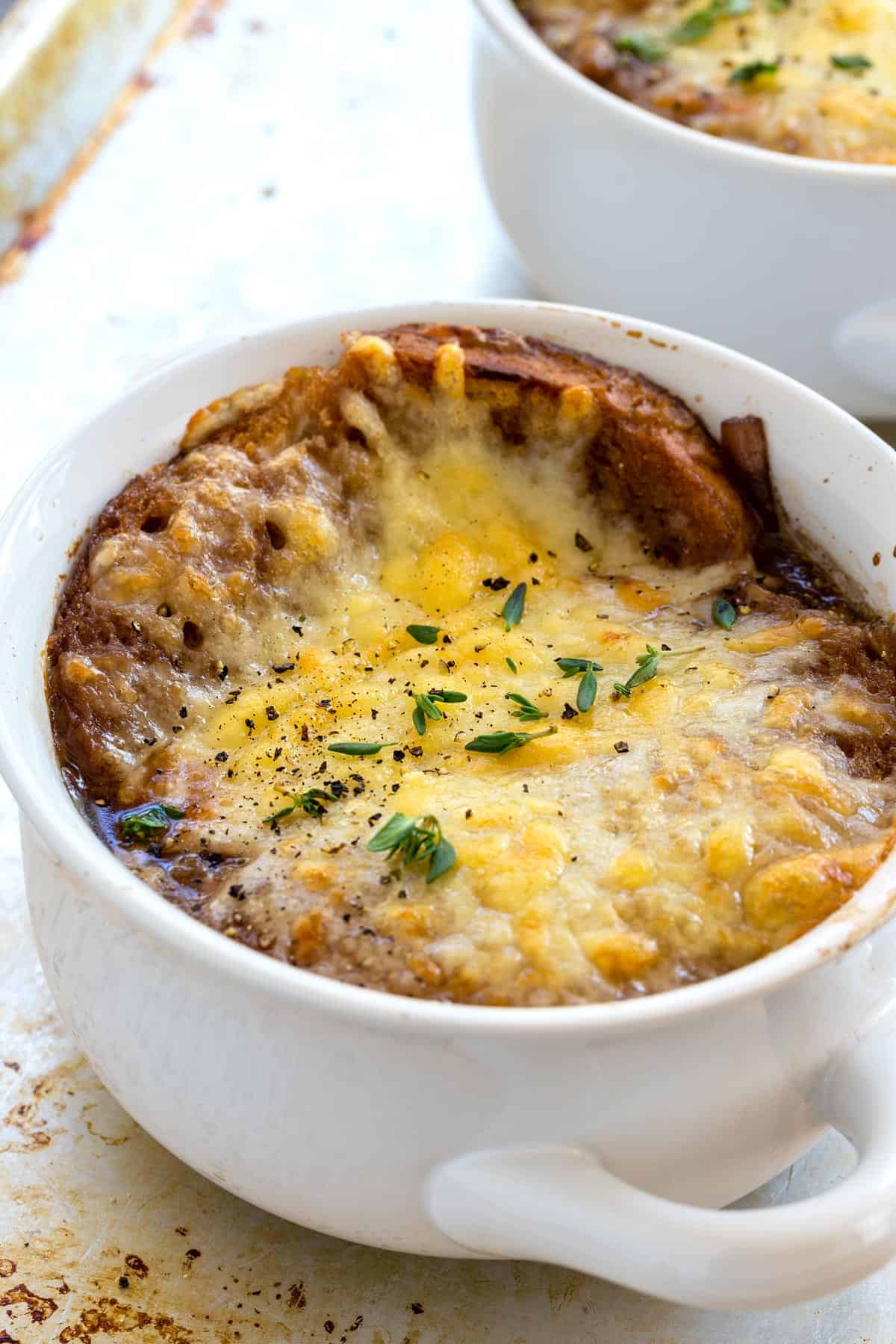
A minute or two under the broiler melts and browns cheese on soups and casseroles and toasts bread until crisp. Try my French Onion Soup.
Advantages and Disadvantages of Broiling
Advantages
- Fast: Thin foods cook in minutes.
- Great browning: Intense heat gives food a caramelized, slightly charred top.
- Little fat: Most foods need only a light brush of oil.
- Grill-like results indoors: A good option when the weather keeps you inside.
Disadvantages
- Easy to burn: Food can go from browned to burnt in less than a minute.
- Smoke: Fatty foods and drippings can smoke up the kitchen.
- Uneven cooking: Heat comes from one direction, so thicker foods need flipping.
- Not for thick cuts: Large roasts brown on the outside before the inside is done.
Recipes That Use Broiling


Try broiling with these reader favorites, or slide my Garlic Bread under the broiler for extra crunch.
Frequently Asked Questions
Broiling is a dry-heat cooking method that cooks food with intense, direct heat from above, usually from the top element of an oven. It browns and caramelizes the surface of food quickly.
Baking surrounds food with hot air, so it cooks gently and evenly. Broiling uses intense, direct heat from above, so it browns the top of the food quickly.
Both cook food with intense, direct heat. When broiling, the heat comes from above the food. When grilling, the heat comes from below.
For thin foods that should brown quickly, set the rack about 4 to 6 inches from the heat. Move the rack lower for thicker foods or sugary glazes so they cook through before the outside burns.
Most ovens broil with the door closed. Some electric ovens are designed to broil with the door slightly open, so check your oven’s manual.
No. Glass baking dishes can shatter under the broiler’s intense, direct heat. Use a metal broiler pan, a rimmed baking sheet, or a cast iron skillet instead.
Tools for Broiling
- Rimmed baking sheet: A heavy metal pan that holds up to broiler heat and catches drips.
- Cast iron skillet: Goes from the stovetop to the broiler for browning and finishing.
- Tongs: Turn food safely without reaching too close to the heat.
- Instant-read thermometer: Checks that meat and fish are cooked through.
Find all of my favorite kitchen tools on my Shop page.
Some of the links above are affiliate links, which pay me a small commission for my referral at no extra cost to you! Thank you for supporting my website.
Sources: USDA Food Safety (safe cooking temperatures).
More Cooking Method Guides
Learn how each technique works and when to use it, or start with the types of cooking methods overview:
Moist heat: Poaching · Simmering · Boiling · Steaming · Blanching
Combination heat: Braising · Stewing
Dry heat: Roasting · Baking · Sautéing · Pan Frying · Stir Frying · Deep Frying · Grilling · Broiling · Searing




Leave a Comment