
Knowing the main types of cooking methods is the fastest way to become a more confident cook. Every recipe uses one or a combination of three kinds of heat: dry heat, moist heat, or both. Once you understand how each one works, you can choose the right method for any ingredient, fix what went wrong, and cook without a recipe.
Jessica’s Recipe Science
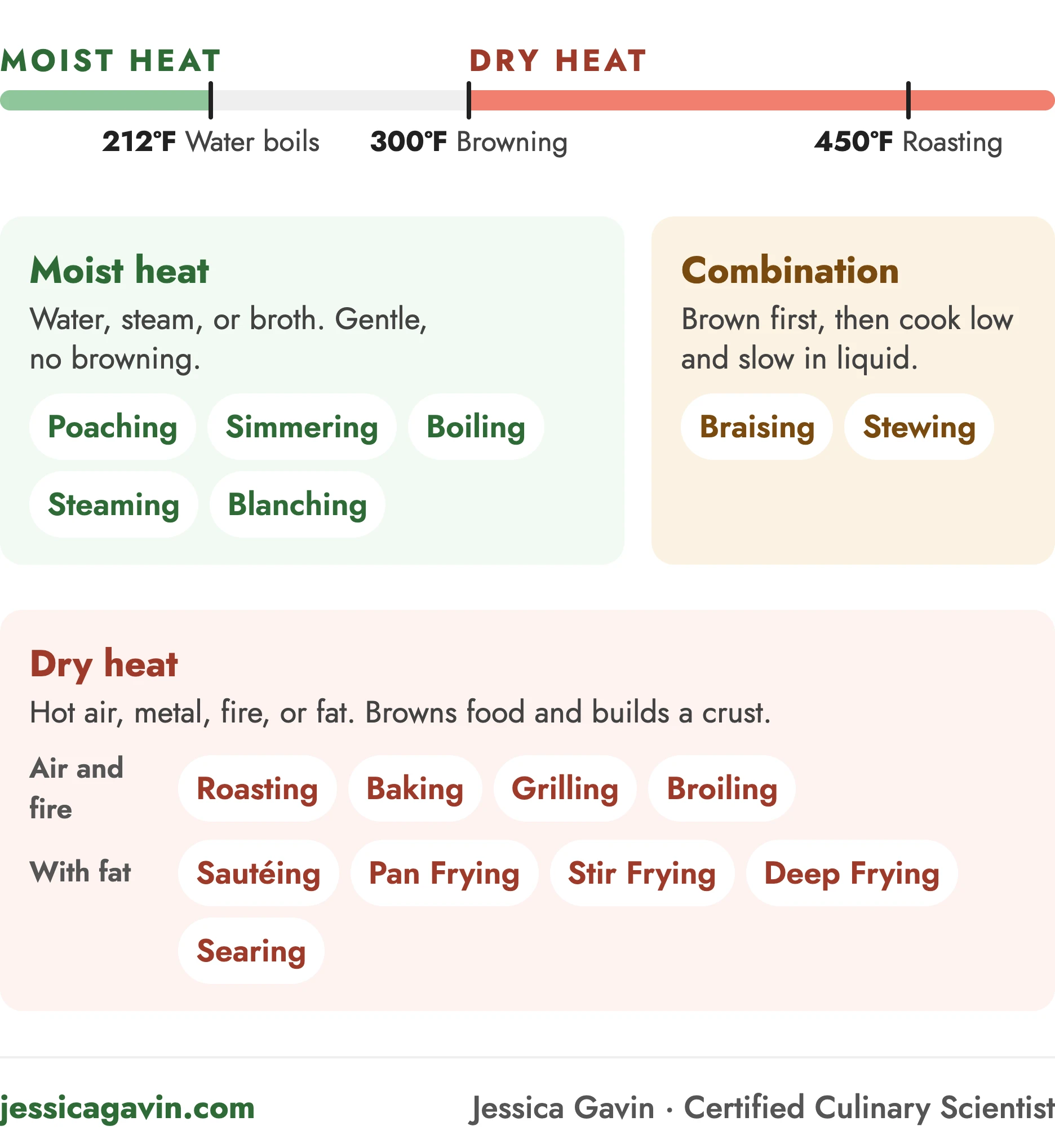
- Water can’t get hotter than 212ºF (100ºC) at sea level, so moist-heat methods cook food gently but can’t brown it.
- Dry-heat methods brown food because the surface gets hot enough, around 300ºF (149ºC), for the Maillard reaction to create a flavorful crust.
- Combination methods sear food first for flavor, then cook it slowly in liquid so the collagen in tough cuts melts into gelatin.
Jump To a Section
What Are Cooking Methods?
A cooking method is the way heat is transferred into food to cook it. Cooking methods fall into three groups: dry-heat methods, which cook with hot air, hot metal, radiant heat, or fat; moist-heat methods, which cook with water, steam, or another liquid; and combination methods, which use both.
The biggest difference between them is temperature. Water tops out at 212ºF (100ºC) at sea level, while an oven, grill, or pan of hot oil can get much hotter. That’s why dry heat browns food and builds a crust, and moist heat cooks it gently without browning.
Cooking Methods at a Glance
| Method | Typical temperature |
|---|---|
| Poaching Moist heat | 160 to 180ºF (71 to 82ºC) liquid |
| Simmering Moist heat | 180 to 205ºF (82 to 96ºC) liquid |
| Boiling Moist heat | 212ºF (100ºC) at sea level |
| Steaming Moist heat | About 212ºF (100ºC) steam at sea level |
| Blanching Moist heat | 212ºF (100ºC) boiling water, then ice water |
| Braising Combination | Sear, then 250 to 325ºF (121 to 163ºC) oven or a gentle simmer |
| Stewing Combination | Brown, then a gentle simmer or 250 to 325ºF (121 to 163ºC) oven |
| Roasting Dry heat | 400 to 450ºF (204 to 232ºC) for vegetables; 250 to 350ºF (121 to 177ºC) for large roasts |
| Baking Dry heat | 325 to 375ºF (163 to 191ºC) for most baking |
| Sautéing Dry heat with fat | Medium-high heat |
| Pan Frying Dry heat with fat | About 350ºF (177ºC) oil |
| Stir Frying Dry heat with fat | Medium-high to high heat |
| Deep Frying Dry heat with fat | 325 to 375ºF (163 to 191ºC) oil |
| Grilling Dry heat | About 350 to 500ºF (177 to 260ºC) |
| Broiling Dry heat | The broil setting, with heat from above |
| Searing Dry heat with fat | Medium-high to high heat |
How Heat Moves Into Food
Every cooking method moves heat into food in one or more of three ways. Most methods use more than one.
Conduction
Heat passes directly from something hot into the food it touches, like a skillet into a steak or boiling water into pasta. Searing, sautéing, and pan frying rely mostly on conduction, which is why good contact with the pan matters.
Convection
Moving hot air or liquid carries heat around the food. A hot oven, a pot of boiling water, and a pot of frying oil all cook by convection. A convection oven adds a fan, so food cooks and browns faster.
Radiation
Heat travels as energy from a very hot source, like the glowing element of a broiler or the coals of a grill, straight to the food’s surface. That’s why broiling and grilling brown food so quickly.
Moist-Heat Cooking Methods
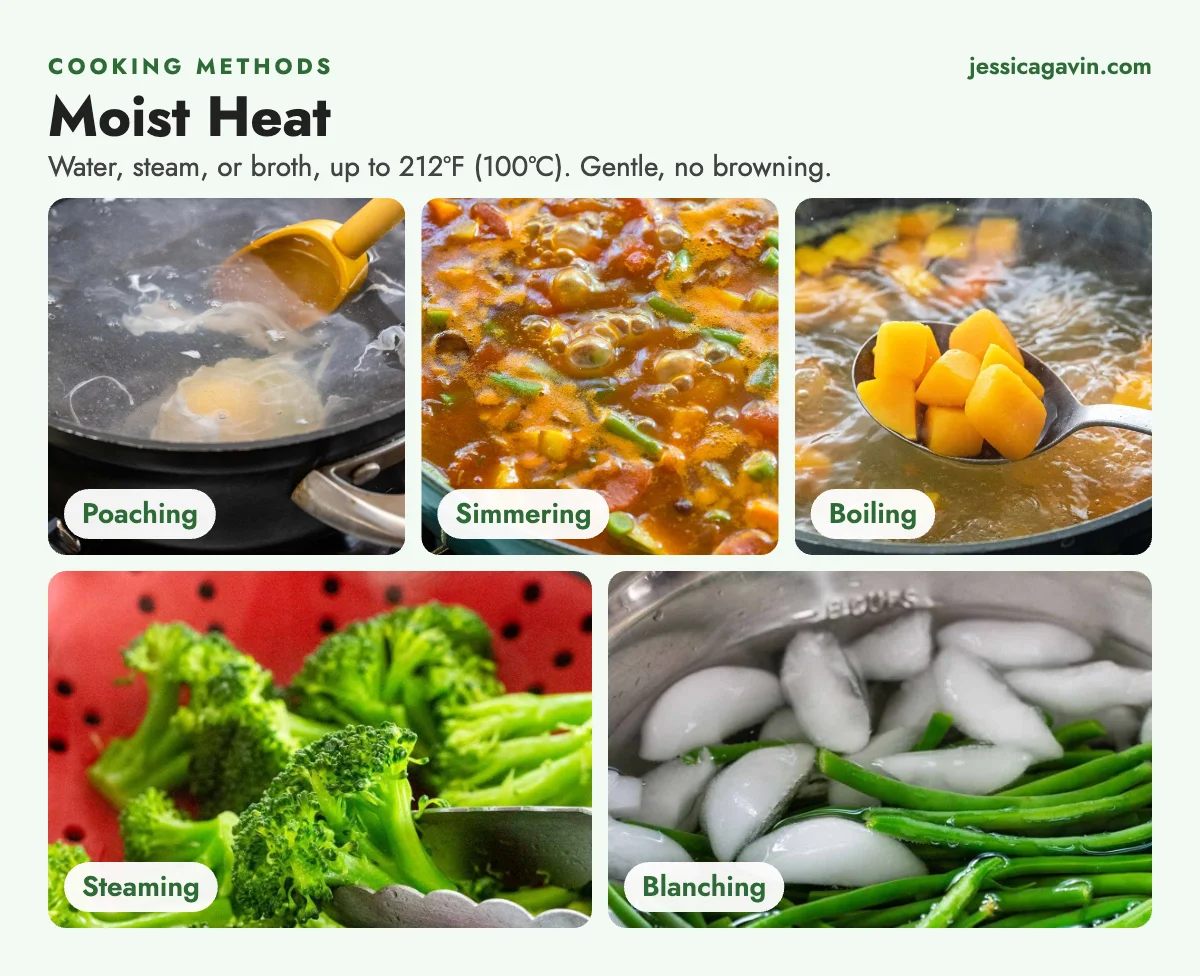
Moist-heat methods cook food in water, broth, or steam. Because the liquid can’t get hotter than its boiling point, food cooks gently and evenly, stays tender, and doesn’t brown.
Poaching
Food cooks fully or partly submerged in liquid held below a simmer, so the surface barely moves. Best for: eggs, chicken breasts, fish fillets, shrimp, and pears. See my guide to poaching.
Simmering
Food cooks in liquid just below a boil, with small bubbles breaking the surface now and then. Best for: soups, sauces, stocks, beans, and grains. See my guide to simmering.
Boiling
Food cooks in water at a rolling boil, with large bubbles across the entire surface. Best for: pasta, potatoes, eggs, and rice. See my guide to boiling.
Steaming
Food cooks above boiling water in a covered pot, heated by the steam that condenses on it. Best for: vegetables, fish, dumplings, and buns. See my guide to steaming.
Blanching
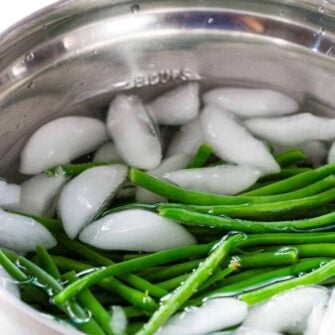
Food cooks briefly in boiling water, then goes into an ice bath to stop the cooking. Best for: green vegetables, peeling tomatoes and peaches, and prepping vegetables for freezing. See my guide to blanching.
Dry-Heat Cooking Methods
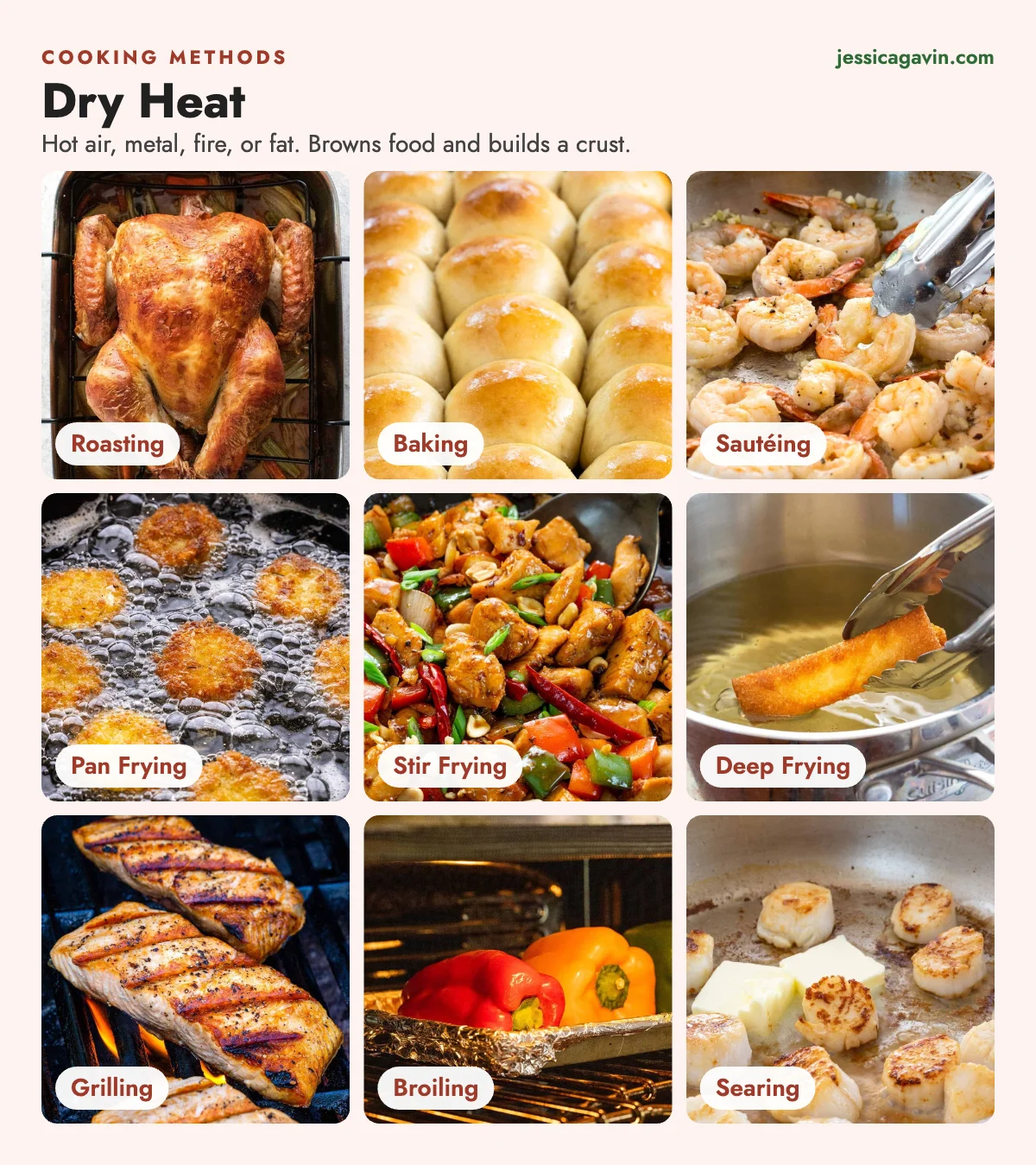
Dry-heat methods cook with hot air, hot metal, radiant heat, or hot fat, with no water involved. The surface gets hot enough for the Maillard reaction and caramelization, which create a golden-brown crust and deeper flavor. Sautéing, pan frying, stir frying, deep frying, and searing are dry-heat methods that use fat, because oil gets much hotter than water.
Roasting
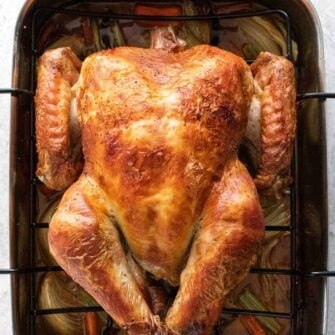
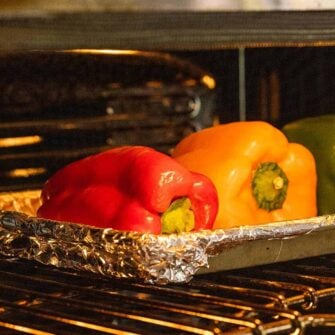
Food cooks uncovered in hot oven air, browning on the outside while the inside cooks evenly. Best for: whole chicken and turkey, large cuts of meat, and vegetables. See my guide to roasting.
Baking
Food cooks in an enclosed oven, where batters and doughs rise, set, and brown. Best for: cookies, cakes, breads, pies, and casseroles. See my guide to baking.
Sautéing
Small pieces cook quickly in a thin film of hot fat in a wide pan, tossed or stirred so they brown evenly. Best for: tender vegetables, mushrooms, shrimp, and thin cuts of meat. See my guide to sautéing.
Pan Frying
Food cooks in a shallow layer of hot oil that comes partway up the sides, then gets flipped. Best for: breaded cutlets, fish fillets, crab cakes, and fritters. See my guide to pan frying.
Stir Frying
Small, evenly cut pieces cook over high heat in a wok while you stir and toss them constantly. Best for: thinly sliced meat, shrimp, crisp vegetables, noodles, and fried rice. See my guide to stir frying.
Deep Frying
Food cooks fully submerged in hot oil, turning crisp and golden on the outside. Best for: battered chicken and shrimp, egg rolls, and doughnuts and churros. See my guide to deep frying.
Grilling
Food cooks on a hot grate over a gas flame, charcoal, or wood fire for smoky char and grill marks. Best for: steaks, burgers, chicken, fish, and vegetables. See my guide to grilling.
Broiling
Food cooks under intense heat from the top of the oven, like an upside-down grill. Best for: salmon, meatballs, thin steaks, and melting cheesy toppings. See my guide to broiling.
Searing
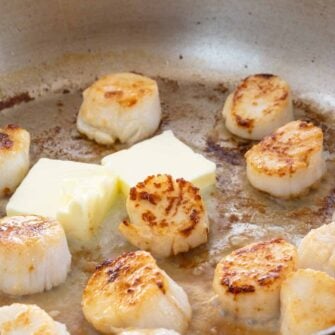
Food browns in a very hot pan to build a flavorful crust, then often finishes in the oven or a braise. Best for: steaks, chops, chicken, salmon, and scallops. See my guide to searing.
Combination Cooking Methods
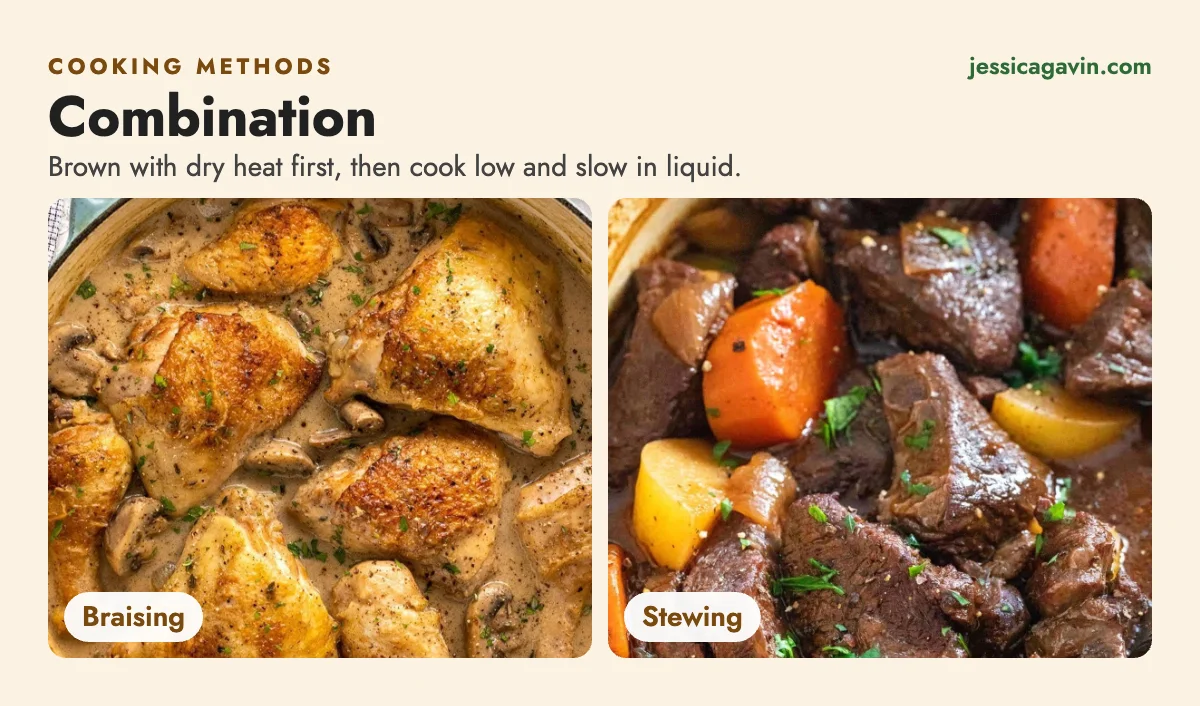
Combination methods use dry heat first to brown the food, then moist heat to cook it low and slow in a covered pot. They’re the best way to turn tough, inexpensive cuts into tender, fall-apart meat.
Braising
Large pieces are seared, then partly covered with liquid and cooked slowly in a covered pot. Best for: chuck roast, short ribs, pork shoulder, lamb shanks, and chicken thighs. See my guide to braising.
Stewing
Small, evenly cut pieces are browned, then fully covered with liquid and simmered until tender, and served in their sauce. Best for: beef stew, chili, curries, and bean stews. See my guide to stewing.
How to Choose a Cooking Method
Start with the food and the result you want. These guidelines cover most situations:
- For a browned crust: Use dry heat, like roasting, searing, grilling, or broiling.
- For tough cuts of meat: Use a combination method, like braising or stewing, so the collagen has time to break down.
- For tender, delicate proteins: Use gentle moist heat, like poaching or steaming, so eggs and fish stay moist.
- For quick weeknight meals: Use fast dry heat, like sautéing or stir frying, for small pieces that cook in minutes.
- For a crisp coating: Use pan frying for thin cutlets and fillets, or deep frying for battered foods.
- For bright, crisp-tender vegetables: Use blanching or steaming, then finish with a quick sauté if you like.
Most Popular Cooking Method Guides
Food Science
Stewing Cooking Method
Food Science
Baking Cooking Method
Food Science
Boiling Cooking Method
Food Science
Roasting Cooking Method
Ready to cook? Browse my recipes by method, like roasting, grilling, braising and stewing, and stir frying.
Frequently Asked Questions
The three main types are dry-heat, moist-heat, and combination cooking methods. Dry heat cooks with hot air, metal, radiant heat, or fat; moist heat cooks with water, steam, or broth; and combination methods use both.
Moist-heat cooking can’t get hotter than water’s boiling point, 212ºF (100ºC) at sea level, so food cooks gently without browning. Dry-heat cooking reaches higher temperatures, so the surface browns and develops a flavorful crust.
Roasting, baking, sautéing, pan frying, stir frying, deep frying, grilling, broiling, and searing are all dry-heat cooking methods.
Poaching, simmering, boiling, steaming, and blanching are moist-heat cooking methods.
Frying is a dry-heat cooking method. Oil contains no water and can get much hotter than boiling water, so fried foods brown and turn crisp.
A combination method like braising or stewing works best. Browning builds flavor, then long, slow cooking in liquid melts the collagen in tough cuts into gelatin, so the meat turns tender.
Essential Tools for Every Cooking Method
- Instant-read thermometer: The most reliable way to know when food is done, whatever method you use.
- Cast iron skillet: Holds heat well for searing, sautéing, pan frying, and going from stovetop to oven.
- Rimmed sheet pan: For roasting vegetables, baking, and broiling.
- Large stock pot: For boiling, blanching, simmering stocks, and steaming with a basket.
Find all of my favorite kitchen tools on my Shop page.
Some of the links above are affiliate links, which pay me a small commission for my referral at no extra cost to you! Thank you for supporting my website.
Sources: USDA Food Safety (boiling point and altitude); America’s Test Kitchen (boil vs. simmer).
More Cooking Method Guides
Learn how each technique works and when to use it, or start with the types of cooking methods overview:
Moist heat: Poaching · Simmering · Boiling · Steaming · Blanching
Combination heat: Braising · Stewing
Dry heat: Roasting · Baking · Sautéing · Pan Frying · Stir Frying · Deep Frying · Grilling · Broiling · Searing




Leave a Comment