
Bright green beans, crisp-tender broccoli, and tomatoes that slip right out of their skins all start with blanching. The blanching cooking method briefly cooks food in boiling water, then plunges it into ice water to stop the cooking. Here’s how blanching works, how long to blanch common vegetables, and when to use it for salads, peeling, and freezing.
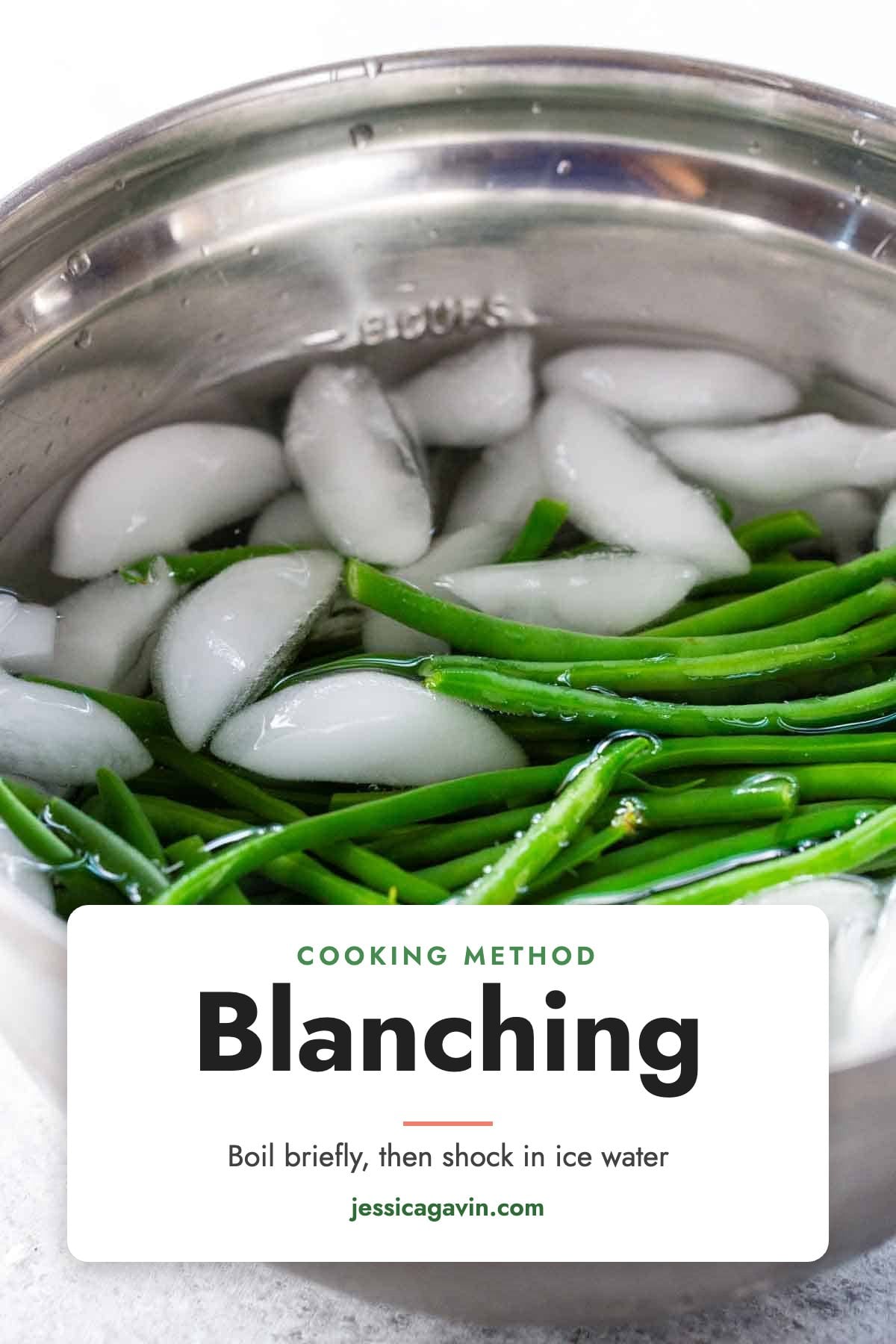
Jessica’s Recipe Science
- Blanching softens cell walls and releases trapped air, so the chlorophyll in green vegetables looks brighter.
- An ice bath stops the cooking right away, keeping vegetables crisp-tender and vibrant instead of soft and dull.
- Blanching before freezing stops enzymes that would otherwise cause vegetables to lose flavor, color, and texture in the freezer.
Jump To a Section
What is Blanching?
Blanching is a moist-heat cooking method that briefly cooks food in boiling, salted water, usually for 10 seconds to a few minutes, then quickly cools it in an ice bath, a step often called shocking. It partially cooks vegetables, loosens the skins of tomatoes and peaches, and prepares vegetables for freezing.
Blanching is a short version of boiling. Unlike simmering or steaming a vegetable until it’s fully tender, blanching cooks food only briefly and cools it right away, so it’s often the first step before sautéing, roasting, or tossing into a salad.
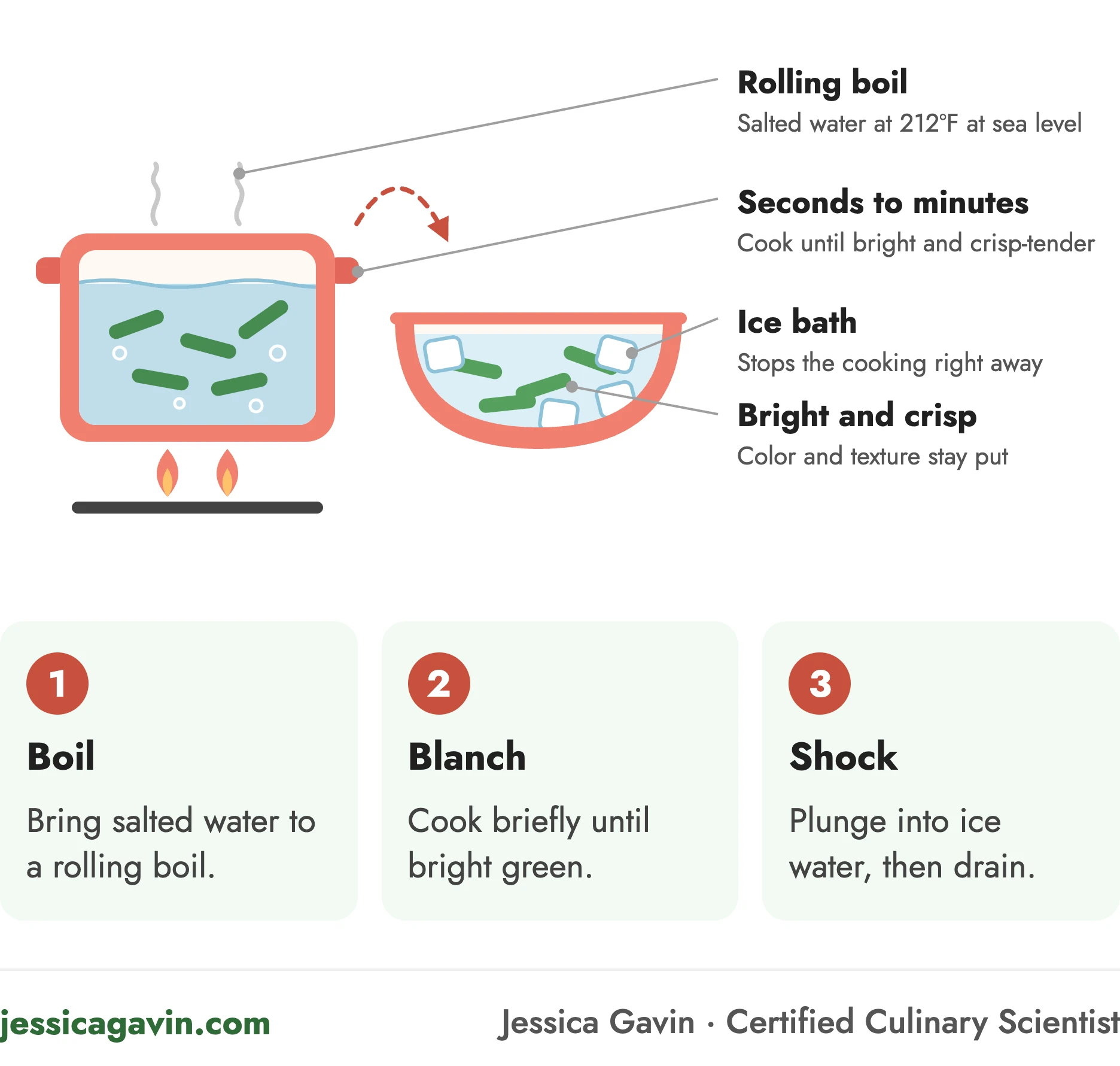
Blanching at a Glance
| Factor | Details |
|---|---|
| Heat type | Moist heat (boiling water), followed by an ice water bath |
| Water temperature | A rolling boil, 212ºF (100ºC) at sea level, then ice water to cool |
| Typical time | About 10 to 30 seconds to loosen skins, and about 1 to 4 minutes for most vegetables |
| What happens | Color brightens, texture softens slightly, and skins loosen, while the ice bath stops the cooking |
| Best foods | Green beans, broccoli, asparagus, spinach and other greens, peas, fava beans, tomatoes, and peaches |
| Equipment | A large pot, a slotted spoon or spider strainer, a large bowl of ice water, and a colander |
How to Blanch
These steps work for most vegetables and for peeling tomatoes and peaches. Check your recipe for specific times.
Bring Salted Water to a Boil
Fill a large pot with plenty of water, about 1 gallon per pound of vegetables, so it comes back to a boil quickly once you add them. Bring the water to a rolling boil and salt it to season the vegetables as they cook.
Prepare an Ice Bath
While the water heats, fill a large bowl with equal parts ice and cold water. Have it right next to the stove so you can move the food over the moment it’s done.
Blanch in Small Batches

Add the food in batches so the water stays at a boil, and start timing once it returns to a boil. Cook until the vegetables turn bright green and crisp-tender, or until the tomato and peach skins start to loosen.
Shock in Ice Water

Use a slotted spoon, spider strainer, or tongs to transfer the food straight into the ice bath. This “shock” stops the cooking right away and sets the bright color. Leave it in the ice water until completely cold, about as long as it blanched.
Drain and Dry
Drain the food well and pat it dry so excess water doesn’t dilute dressings or make it soggy. Use it right away, refrigerate it to finish cooking later, or freeze it.
How Long to Blanch Vegetables
These blanching times for freezing come from the National Center for Home Food Preservation. Start timing when the water returns to a boil. For vegetables you’ll eat right away, you can often blanch for less time, like the 30 seconds I use for spinach.
| Vegetable | Blanching time for freezing |
|---|---|
| Asparagus | 2 to 4 minutes, depending on thickness |
| Broccoli florets | 3 minutes |
| Brussels sprouts | 3 to 5 minutes, depending on size |
| Carrots, sliced or diced | 2 minutes (5 minutes for small whole carrots) |
| Cauliflower florets | 3 minutes |
| Corn on the cob | 7 to 11 minutes, depending on size |
| Green beans | 3 minutes |
| Peas | 1 ½ minutes |
| Spinach and other greens | 2 minutes (3 minutes for collards) |
| Summer squash | 3 minutes |
Some vegetables, like bell peppers, can be frozen without blanching.
Best Foods for Blanching
Blanching works best for foods that need only a quick cook, a brighter color, or loose skins.
Green Vegetables
Green beans, broccoli, asparagus, peas, and leafy greens are the classic choices. A quick blanch brightens their color and softens them just enough, so they’re ready for salads, crudité platters, or a quick sauté later. Try it in How to Cook Green Beans, How to Cook Broccoli, Broccoli Salad, Green Bean Casserole, and How to Cook Fava Beans. For tender greens, see my guide on how to cook spinach, which includes a quick blanch.
Tomatoes and Peaches for Peeling
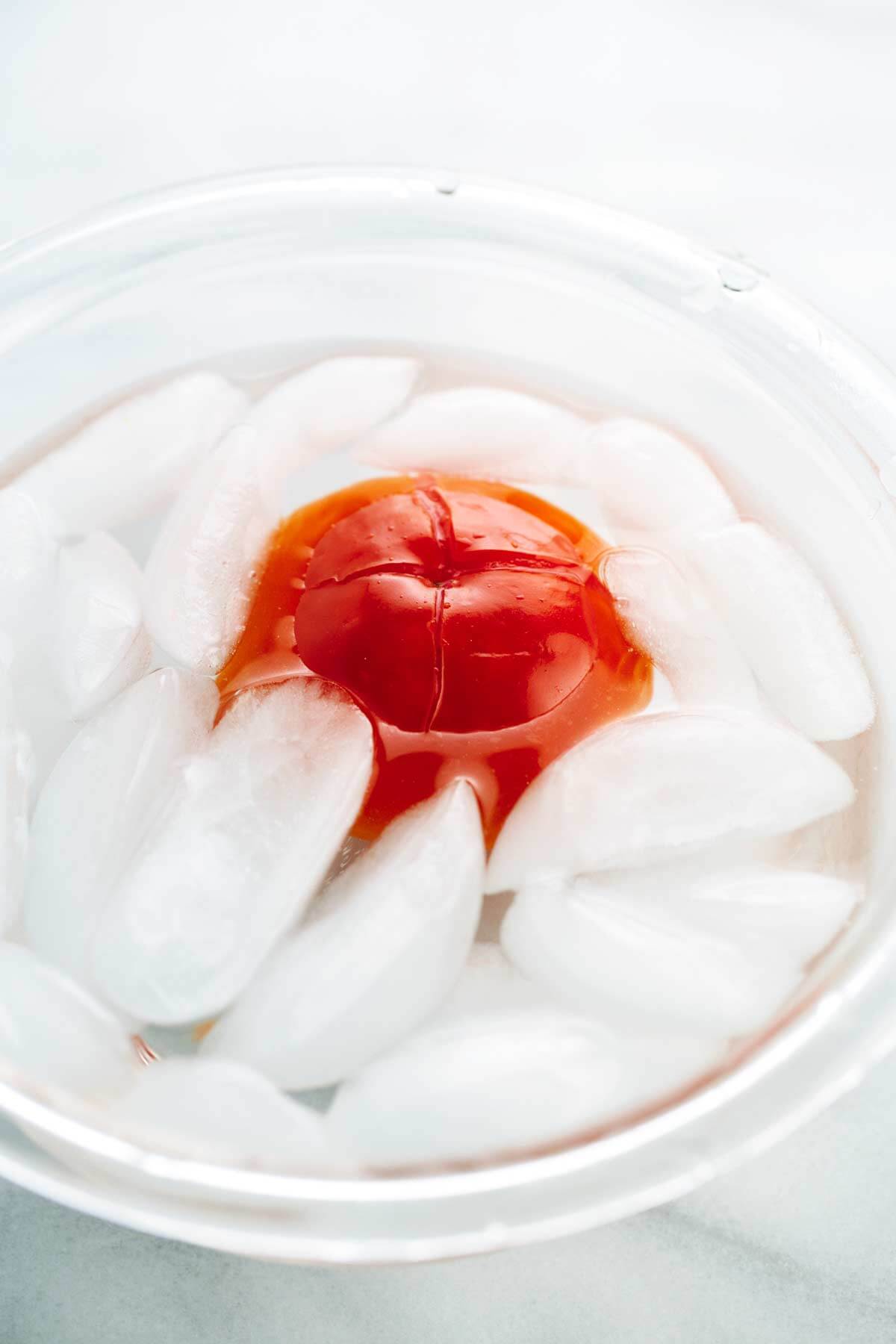
A short dip in boiling water loosens the skin of tomatoes and peaches, so it slips right off after the ice bath. Score an X in the bottom first. See How to Peel a Tomato (about 20 to 30 seconds) and How to Peel Peaches (about 10 seconds).
Vegetables for Freezing
Blanching is the first step for freezing most vegetables. It stops the enzymes that would otherwise make frozen vegetables lose flavor, color, and texture over time. Cool them completely, dry them well, and freeze in airtight bags.
Advantages and Disadvantages of Blanching
Advantages
- Brightens the color of green vegetables.
- Keeps vegetables crisp-tender for salads and platters.
- Loosens skins on tomatoes and peaches for easy peeling.
- Helps frozen vegetables keep their flavor, color, and texture.
- Lets you prep vegetables ahead, then finish them quickly in a pan or oven.
Disadvantages
- Needs a big pot of boiling water and a bowl of ice, so there’s extra setup and cleanup.
- Timing matters: a minute too long and vegetables turn soft and dull.
- Soft, watery vegetables like zucchini can turn mushy, so they’re often better roasted or sautéed.
- Vegetables need to be dried well, or they can turn soggy or form ice crystals in the freezer.
Recipes That Use Blanching


For a side dish that starts with a quick blanch, try my Boiled Asparagus.
Frequently Asked Questions
Blanching is briefly cooking food in boiling water, usually for 10 seconds to a few minutes, then plunging it into ice water to stop the cooking. It brightens vegetables, loosens skins, and prepares vegetables for freezing.
The ice bath, also called shocking, stops the cooking right away. Without it, leftover heat keeps cooking the vegetables, so they turn soft and lose their bright color.
Most vegetables blanch in about 1 to 4 minutes, depending on the type and size. Green beans and broccoli take about 3 minutes for freezing, peas about 1 ½ minutes, and corn on the cob 7 to 11 minutes. Start timing when the water returns to a boil.
For most vegetables, yes. Blanching stops the enzymes that cause frozen vegetables to lose flavor, color, and texture. A few, like bell peppers and onions, can be frozen without blanching.
Boiling cooks food in boiling water until it’s fully tender. Blanching cooks it only briefly in boiling water, then cools it in ice water, so the food stays crisp-tender and is often finished another way later.
Yes, for vegetables you plan to eat. Salt seasons the vegetables as they cook. You can skip it when blanching tomatoes or peaches just to peel them.
Tools for Blanching
- Large stock pot: Plenty of water comes back to a boil quickly after you add the vegetables.
- Spider strainer: Lifts a whole batch out of the boiling water and into the ice bath in one scoop.
- Slotted spoon: Handy for smaller batches or for moving tomatoes and peaches one at a time.
Find all of my favorite kitchen tools on my Shop page.
Some of the links above are affiliate links, which pay me a small commission for my referral at no extra cost to you! Thank you for supporting my website.
Sources: National Center for Home Food Preservation (blanching times and water ratio).
More Cooking Method Guides
Learn how each technique works and when to use it, or start with the types of cooking methods overview:
Moist heat: Poaching · Simmering · Boiling · Steaming · Blanching
Combination heat: Braising · Stewing
Dry heat: Roasting · Baking · Sautéing · Pan Frying · Stir Frying · Deep Frying · Grilling · Broiling · Searing




Leave a Comment