

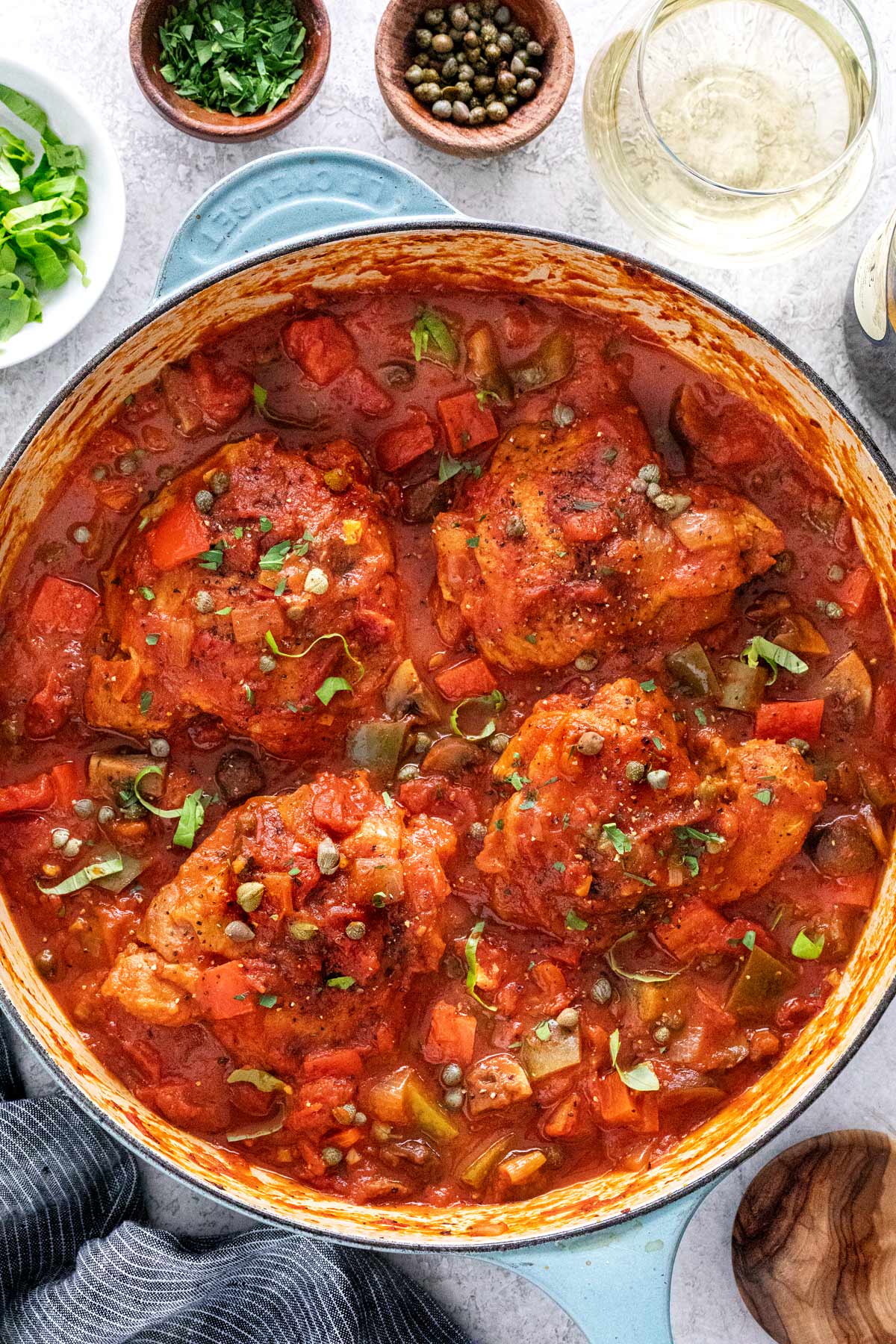
Looking for a delicious Italian meal to feed the family? Try this chicken cacciatore recipe! Sear chicken thighs until golden brown, then braise them in a rustic tomato sauce. For a complete dinner, serve with tender pasta, rice, sautéed vegetables, or a fresh salad.
Jessica’s Recipe Science
- Searing the chicken before simmering triggers the Maillard reaction, creating hundreds of flavorful compounds.
- Slowly simmering the chicken in tomatoes helps collagen in the connective tissue dissolve into gelatin, tenderizing the meat.
- Tomatoes, wine, and aromatics work together to build layers of flavor, while their acidity balances the chicken’s richness.
Featured Comment 6
“Your explanation of various types of ingredients such as herbs and flavorings is very helpful. For example using capers in your chicken cacciatore & your suggestion of substituting olives if I don’t like capers. Keep educating us! I love it!”—Mary B.
Why It Works
Chicken cacciatore is a classic Italian dish prepared hunter-style using fresh vegetables and dark meat that simmer in flavorful tomato sauce. The robust thigh pieces are ideal for braising until tender and falling off the bone. The natural acidity in the tomatoes helps to tenderize the proteins quickly.
For maximum flavor, sear the bone-in chicken thighs until the skin is crispy, then finish with a gentle cooking method. Simply submerge the meat under the sauce, cover it, and place it in the oven. This process lets the flavors distribute and infuse. It’s a hearty meal that I like to serve with pasta and a nice bottle of wine.
Jump To a Section
Ingredients You’ll Need
- Chicken: The best cut for braising is bone-in chicken thighs. There’s more connective tissue and fat throughout, which creates a barrier that prevents moisture loss. The braising liquid helps to transform the collagen into rich gelatin, softening the meat and making the sauce richer. The bone itself adds flavor and depth to the sauce. You can also add drumsticks along with the thighs.
- Seasoning: Salt enhances the natural flavors of the chicken and vegetables while helping the meat retain moisture, and black pepper adds subtle heat and aromatic complexity.
- Oil: Extra-virgin olive oil promotes even browning of the chicken and vegetables, helping develop deeper flavors through the Maillard reaction.
- Alliums: Onions and garlic contain natural sugars and sulfur compounds that become sweeter and more complex as they cook, creating a flavorful foundation for the sauce.
- Peppers: Bell peppers add natural sweetness, color, and moisture, balancing the tomatoes’ acidity and enriching the overall flavor profile.
- Wine: A buttery Chardonnay or citrusy Pinot Grigio works well.
- Tomatoes: I use three canned tomato products for a quick sauce with a balanced sweet and acidic fruit flavor: paste, crushed, and diced. Tomato paste is more concentrated in flavor, adding a hint of sweetness and helping thicken the sauce. Crushed tomatoes are more pureed. Some brands have a chunkier style, creating a stirrable base. I like larger tomato pieces for a rustic look and bursts of flavor. Diced tomatoes do the trick.
- Broth: Chicken broth or chicken stock provides a flavorful cooking liquid that helps tenderize the chicken as it simmers.
- Capers: Capers add a salty and tangy taste to the tomato sauce. These small spheres are packed with intense flavor, so you don’t need a lot.
- Mushrooms: Brown mushrooms are rich in natural glutamates, which boost umami and create a deeper, more savory flavor in the finished dish.
- Herbs: Italian seasoning and fresh parsley add aromatic compounds that infuse the sauce with earthy, herbaceous notes and brighten the finished dish.
See the recipe card below for all ingredients and measurements (US and metric).
Ingredient Substitutions
This chicken cacciatore recipe is easy to customize! Try these delicious options:
- Chicken Options: For a lean protein option, use chicken breast. Although it lacks a bit of flavor, it cooks much faster. Bone-in chicken works best for braising.
- Veggies: Add diced celery, carrots, zucchini, or potatoes.
- Wine Swaps: For a spicier, oaky, tannic taste, use a dry red wine like Chianti or Pinot Noir. Deeper in flavor but still light compared to more full-bodied wines like Cabernet Sauvignon.
- Caper Substitutes: If you don’t like capers, olives make an excellent substitute, like Kalamata, green, or black. Add two tablespoons of sliced olives and a few whole ones for garnish. You can even add anchovies.
How to Make Chicken Cacciatore
Step 1: Heat the Oven
A 350ºF oven creates the ideal environment for braising, allowing the chicken to become tender while the sauce slowly develops rich, concentrated flavor.
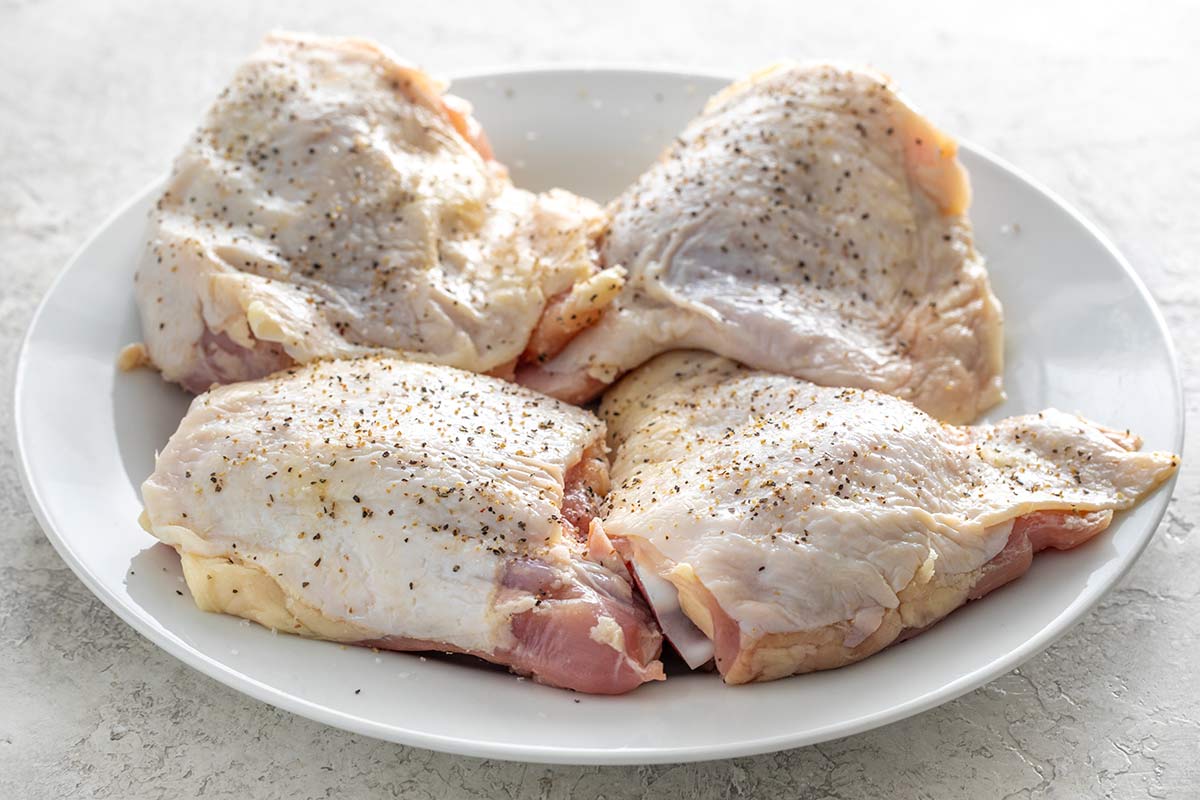
Step 2: Prepare the Chicken
Chicken thighs have a lot of fat, so trim off the excess portions. Otherwise, the meal will be too greasy. I prefer to keep the skin on, as searing it adds more flavor to the dish.
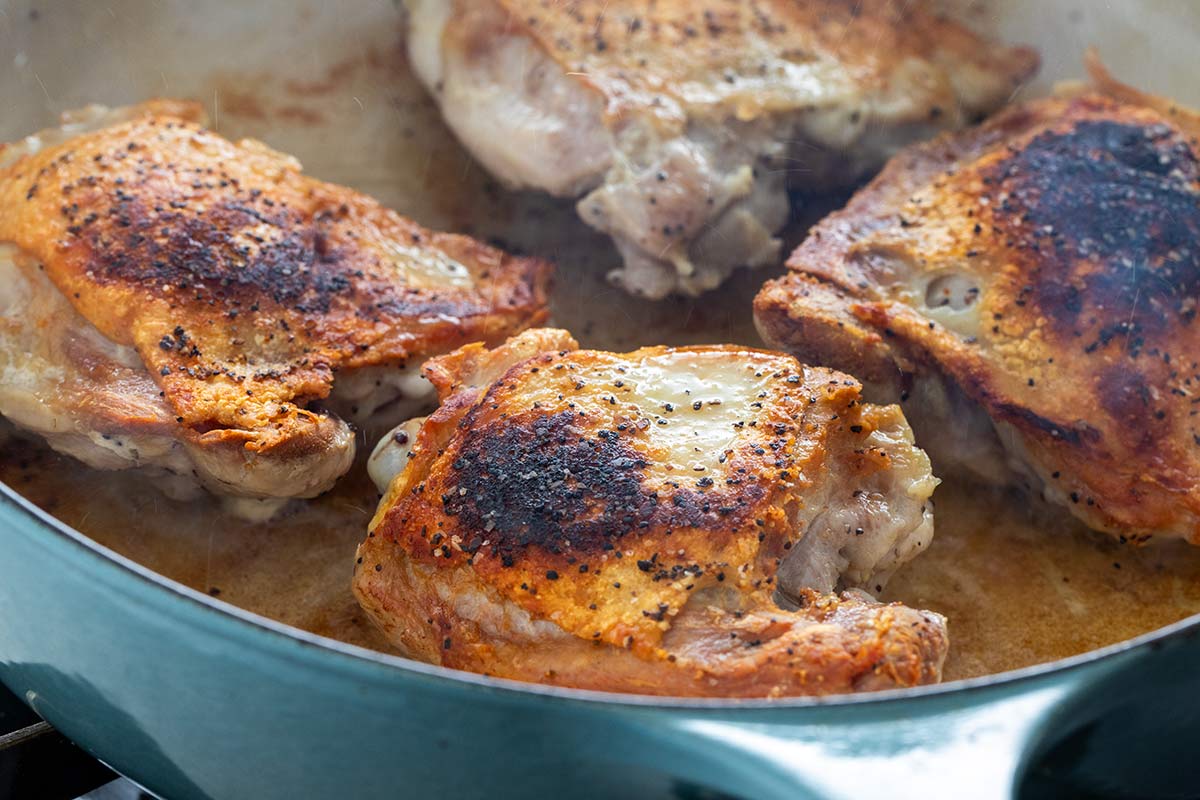
Step 3: Sear the Chicken
Cook both sides of the chicken pieces while the fat renders in the pan. Save a few tablespoons of fat to sauté the vegetables. It’s delicious!
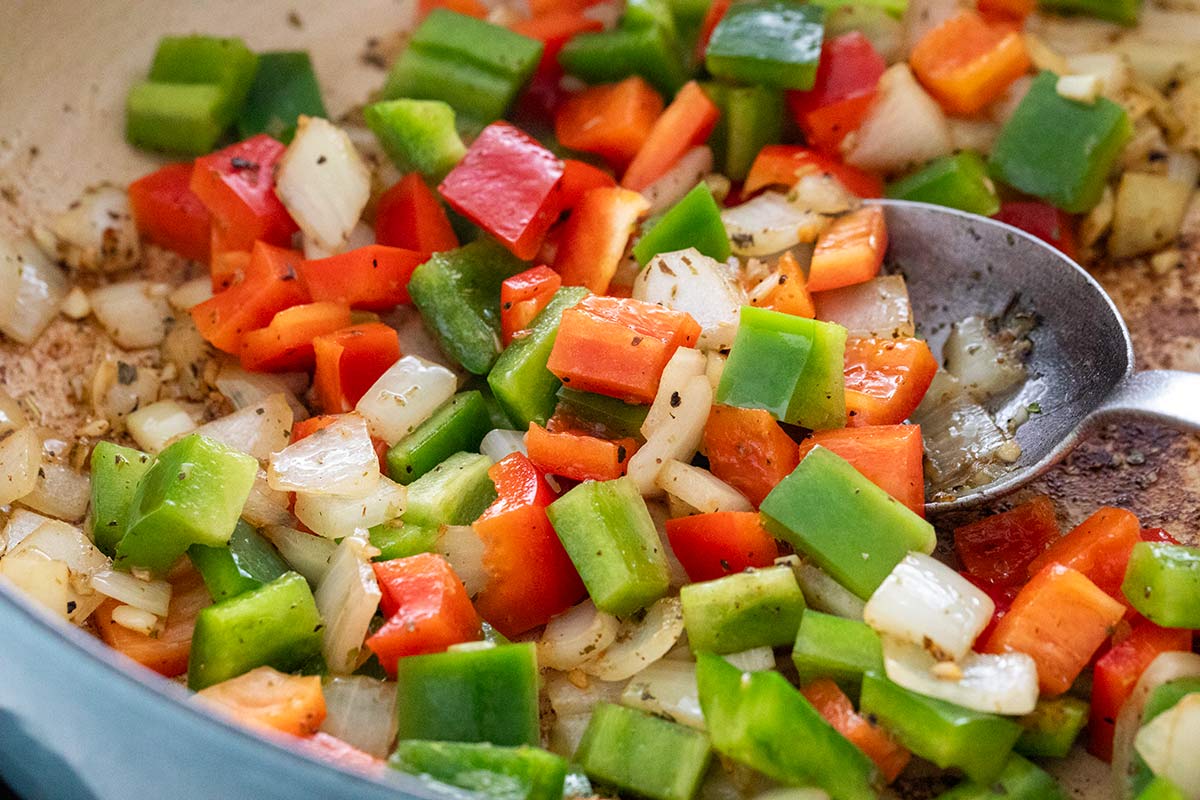
Step 4: Cook the Vegetables
The base of a traditional cacciatore recipe includes minced garlic, onions, bell peppers, and herbs. I sauté the aromatics and dried Italian seasoning in the chicken fat, which helps draw out the fat-soluble flavors in the oregano, basil, marjoram, rosemary, and thyme. Briefly cook the chopped red and green peppers until crisp-tender for texture.
Experimentation Encouraged: If you like a spicier sauce, add ⅛ to ¼ teaspoon red pepper flakes when sautéing the herbs.
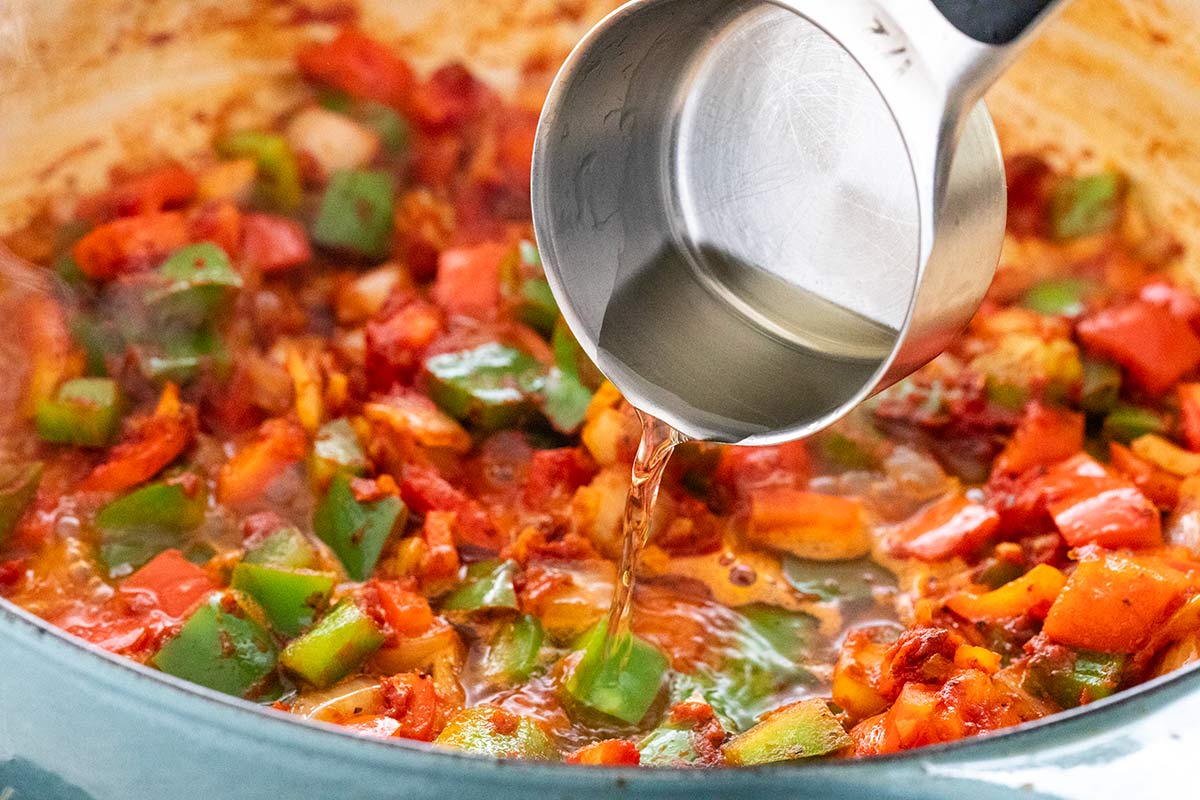
Step 5: Add the Wine
Adding ½ cup dry white wine adds acidity and brightness to the braise. Reduce until almost completely evaporated.
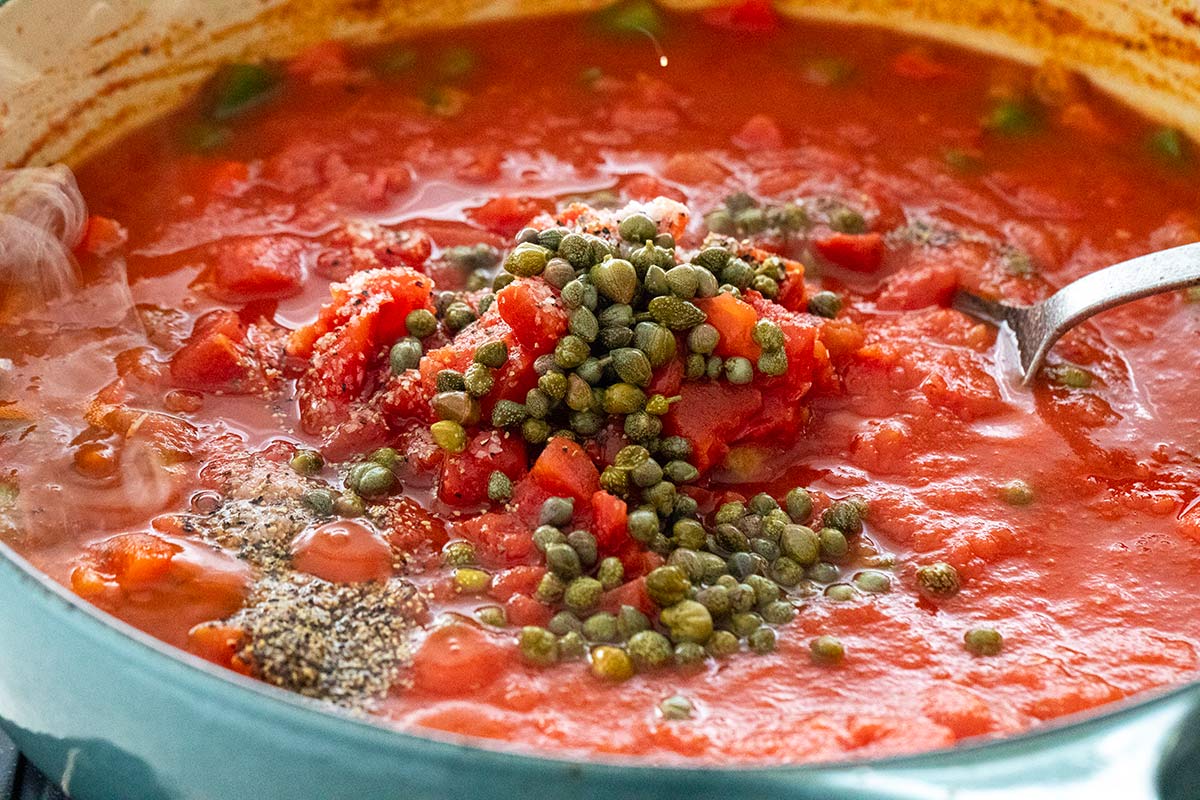
Step 6: Add Tomatoes, Capers, and Mushrooms
To make the sauce, stir all the tomato products, along with chicken broth and capers. After infusing with the braising liquid, the capers taste salty and vinegary when you bite into them. I add the mushrooms last because they shrink down during braising.
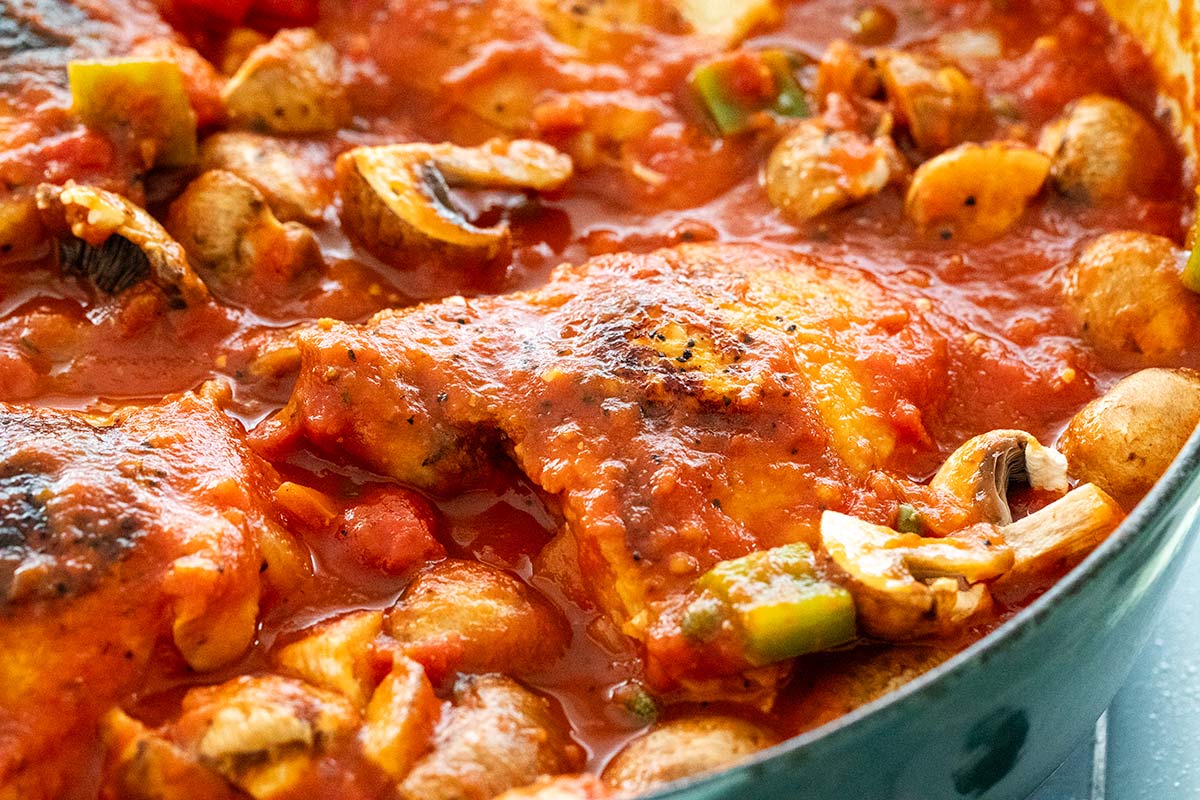
Step 7: Cook the Chicken
After making the tomato sauce, add the seared chicken back to the pan. I like to use a heavy Dutch oven or braiser. Submerge the pieces so they can cook thoroughly in the sauce. Briefly simmer the pot for 5 minutes to warm the sauce. Then, transfer the pot to the oven. A 350-degree oven offers a consistent environment for gentle braising. Cover the pan and cook until the chicken is tender. This process will take about an hour.
Chicken thighs are more tender when cooked at a higher temperature since they contain more connective tissue. It needs to reach at least 175 degrees to cook safely. This recipe will cook it closer to 195 degrees after about 1 hour in the 210-degree braising liquid. This range allows the collagen to convert into soft gelatin.
Alternative Stovetop Method: You can braise the chicken on the stovetop. However, it requires a little more oversight. The burners create hot spots in the pan, making heating less consistent. Just make sure to monitor and stir the sauce every 10 minutes to redistribute the heat. Keep the burner on a low simmer, since the enclosed pot heats quickly.
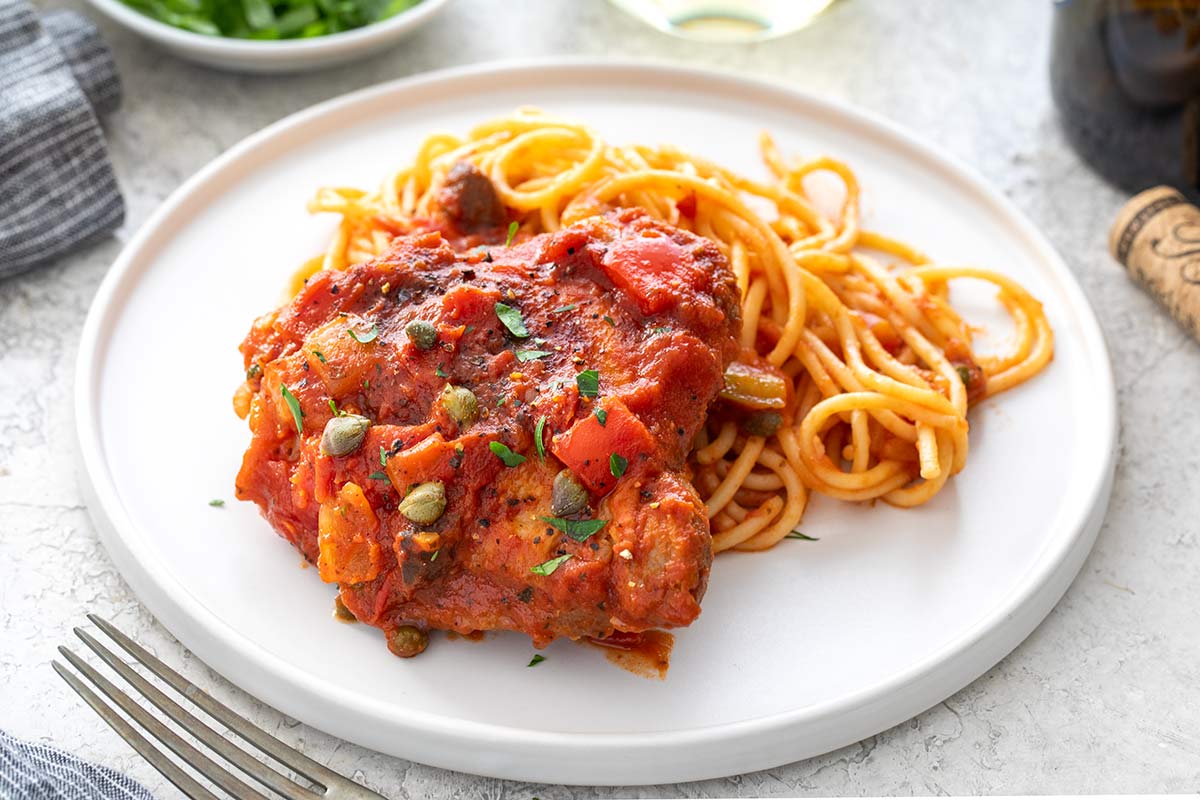
Step 8: To Serve
Garnish the chicken cacciatore with fresh parsley and basil. I love pairing it with crusty bread or rosemary focaccia to soak up every last spoonful of the rich, flavorful sauce.
Frequently Asked Questions
Cacciatore means “hunter-style” in Italian. Traditionally, this rustic cooking method featured meat simmered with ingredients that were readily available in the countryside, such as tomatoes, onions, garlic, herbs, wine, and vegetables. While recipes vary by region, chicken cacciatore has become one of the dish’s most popular versions.
My braised chicken cacciatore recipe starts with bone-in, skin-on chicken thighs, which are seared until golden brown for maximum flavor. Then simmer the chicken in a rustic tomato sauce made with olive oil, onions, bell peppers, mushrooms, garlic, crushed tomatoes, and chicken stock. Italian seasoning, salt, and black pepper add classic herbaceous flavor, while fresh parsley is sprinkled on top before serving for a bright finish. The combination of tender chicken, vegetables, and rich tomato sauce creates a comforting one-pan Italian meal.
Chicken cacciatore pairs beautifully with sides that soak up the rich tomato sauce. For a classic Italian-inspired meal, serve it over pasta like spaghetti, pappardelle, or angel hair. For a lighter or gluten-free option, spaghetti squash makes an excellent substitute.
Serve This With


If you tried this Chicken Cacciatore Recipe, please leave a 🌟 star rating and let me know how it went in the 📝 comments below!
Chicken Cacciatore

Ingredients
- 4 bone-in, skin-on chicken thighs, or 6 smaller pieces
- 2 teaspoons kosher salt, divided
- 1 teaspoon black pepper, divided
- 1 tablespoon olive oil
- 1 cup yellow onion, ½" dice
- 1 tablespoon minced garlic
- 1 teaspoon dried Italian seasonings
- 1 cup red bell pepper, ½" dice
- 1 cup green bell pepper, ½" dice
- ½ cup dry white wine, Chardonnay or Pinot Grigio
- ¼ cup tomato paste
- 28 ounces canned crushed tomatoes
- 14.5 ounces canned diced tomatoes, do not drain
- ½ cup chicken broth, or stock
- 2 tablespoons capers, drained
- 8 ounces brown mushrooms, quartered
- 2 teaspoons chopped parsley
- 1 tablespoon chopped basil
Instructions
- Heat the Oven – Set the oven rack to the lower third position. Preheat to 350ºF (177ºC).
- Prepare the Chicken – Trim any excess fat or skin from the chicken thighs. In a small bowl, combine 1 teaspoon salt and ½ teaspoon pepper. Season both sides of the chicken generously.
- Sear the Chicken – Heat a large 12-inch oven-proof skillet or Dutch oven over medium-high heat. Add 1 tablespoon olive oil. Once hot, carefully add in the chicken thighs, skin-side down. Sear for 5 minutes until crispy and browned. Flip and cook for 2 minutes, turn off the heat. Transfer to a clean plate; leave 2 tablespoons of the fat drippings in the pan. Alternatively, drain the drippings and add 2 tablespoons of olive oil to the pan.
- Cook the Vegetables – Heat the skillet over medium heat. Add the onions, garlic, and Italian seasonings. Sauté for 2 minutes until the onions are crisp-tender. Add the red and green bell peppers; sauté for 1 minute. Add the tomato paste and sauté for 1 minute.
- Add the Wine – Add the wine, stir, and simmer until almost completely evaporated, about 1 to 2 minutes.
- Add Tomatoes, Capers, and Mushrooms – Stir in the crushed tomatoes, diced tomatoes with the juice, chicken broth, and capers. Stir in the mushrooms.
- Cook the Chicken – Add the chicken back to the pan, turn to coat in the sauce, and leave it skin-side facing up; simmer for 5 minutes. Cover the skillet with a lid and carefully transfer the pot to the oven. Cook until the meat is very tender, about 60 minutes. Season the sauce with salt and pepper to taste.
- To Serve – Garnish the chicken cacciatore with parsley and basil, and serve hot.
Notes
- Using Chicken Breasts: Check the chicken after 10 minutes of braising, and then every 5 minutes after, until the internal temperature reaches 160 to 165ºF (71 to 74ºF).
- Using Red Wine: Use a dry red wine like Chianti or Pinot Noir.
- Stovetop Braising: After simmering the sauce for 5 minutes, cover and reduce heat to low. Stir the sauce every 10 minutes to prevent burning on the bottom of the pan. Cook until the meat reaches 170ºF (77ºC).
- For a Thicker Sauce: Transfer the chicken to a serving platter, cover with foil to keep warm. Heat the sauce over medium-high heat, stir, and cook until the sauce reduces to the desired consistency.
- For a Spicy Sauce: Add ⅛ to ¼ teaspoon of red pepper flakes when sautéing the Italian seasonings in the fat.
- Storing: Store in an airtight container for up to 5 days in the refrigerator.
Nutrition Facts
Percent Daily Values are based on a 2000-calorie diet. All nutritional information is based on estimated third-party calculations. Each recipe and nutritional value will vary depending on the brands you use, measuring methods, and portion sizes per household.


Jean says
We Italians make it this way we used very small pieces of the chicken which the butcher chops up. I use a pressure cooker I heat some olive oil add garlic I braise the chicken take it out when it’s brown, deglaze the pan with balsamic vinegar, adding a bay leaf, add the chicken, add the tomatoes, fresh basil, and parsley, 2 carrots it sweetens the sauce. Season to choice Pepper, salt, rosemary. Never put garlic and onion together. Capers are too salty and bitter and never put oregano, tastes too much like Pizza. That said, Close Presser cooker takes 20 minutes to cook. Side of rice or macaroni (pasta) your recipe is more Sicilian. The rest of Italy uses less ingredients. Both taste good. I hope I have not insulted you. Liked your details.
Jessica Gavin says
I appreciate your feedback, Jean! I love learning about different ways a dish can be prepared, especially how each region is special.
Ann Seipel says
Thank you for the Chicken Cacciatore recipe. Over the years, I’ve kind of thrown it together but now I’m going to try the real thing! Now, a request. I got a Ninja Foodie Air Fryer/Grill for Christmas, and now I’m in a learning curve for a new cooking method. There is lots of info on Facebook, etc., but since you are so good at this, can you start including recipes and techniques for the Air Fryers? Mine air fries, grills, roasts and bakes. Since you are one of my kitchen staples — thank you!!
Jessica Gavin says
I can’t wait to hear what you think about the chicken cacciatore recipe, Ann! I will definitely take your air fryer request into consideration. Happy cooking!
Mary B. BOYD says
Jessica, I look forward to your recipes. Some I follow to the letter & some I adapt to my own recipes. I especially like your explanation of various cooking methods & why one is better than the other. Also, your explanation of various types of ingredients such as herbs, flours, and flavorings is very helpful. For example using capers in your chicken cacciatore & your suggestion of substituting olives if I don’t like capers.I look forward to your e-mails. Keep educating us! I love it!
Mary B.
Jessica Gavin says
I’m happy to hear that you are enjoying the culinary pointers, Mary! Happy cooking!