
This classic pineapple upside-down cake recipe is easy to make from scratch. A tender vanilla cake is topped with caramelized brown sugar, maraschino cherries, walnuts, and pineapple rings. Impress your loved ones with this stunning dessert!

Jessica’s Recipe Science
- Creaming the butter and sugar creates tiny air pockets that help the cake rise evenly and bake into a light, tender crumb.
- As the cake bakes, the brown sugar and butter topping melts and caramelizes, creating a rich golden syrup that coats the pineapple and cherries with deep caramel flavor.
- Cooling for 45 to 60 minutes before inverting sets the cake crumb, while the caramel topping stays soft enough to release cleanly from the pan.
Featured Comment 24
“I haven’t made a cake in 30 years….and there is a reason for that! I made this, and it turned out great! Why? Because you explained it perfectly! I appreciated the discussion on the temperature of the butter and the reasoning behind the cake flour. Thank you so much! My 92-year-old mother, Joan, also says thank you. She said the cake made her day!”—Katie
Why It Works
Pineapple upside-down cake is nostalgic and full of flair. This timeless sweet treat needs no frosting. Fruit and nuts are baked right into a stunning, shiny caramel topping. The cake has three components: a brown sugar schmear, a pineapple and cherry decoration, and a thick, buttery vanilla batter. It’s a trifecta of flavors that don’t go out of style.
It’s our family tradition to make this cake for birthday celebrations. My husband’s grandma Rose used to whip this together as a special treat. A big warm slice always puts a smile on his face. I made sure to include it in my cookbook, Easy Culinary Science for Better Cooking, so our children can master the recipe and make it for us someday!
Jump To a Section
Ingredients You’ll Need
- Butter and Sugar Topping: Butter melts with the brown sugar to create a rich caramel topping. It also helps prevent the fruit from sticking to the pan. Dark brown sugar provides deep molasses flavor and caramelizes as the cake bakes. Honey helps create a smooth, glossy syrup, while vanilla enhances the warm caramel notes.
- Pineapple: Pineapple rings add a sweet-tart flavor and release juices that mingle with the caramel topping.
- Cherries: Cherries with their stems removed add pops of color and sweetness for the classic presentation.
- Walnuts: Chopped walnuts add a subtle crunch and caramelize as the cake bakes. This is our family’s favorite addition, and Grandma Rose never skipped it!
- Cake Flour: Cake flour is used because of its lower protein content. It reduces gluten formation for a tender crumb and prevents a rubbery texture.
- Baking Powder: Baking powder provides lift, helping the cake rise evenly.
- Unsalted Butter and Granulated Sugar: Creaming the butter and sugar incorporates air into the batter, creating a light and tender texture.
- Vanilla Extract: Vanilla adds warmth and rounds out the cake and caramelized fruit flavors.
- Eggs: Eggs provide structure, richness, and emulsification, helping create a smooth batter and stable cake crumb.
- Whole Milk: Milk hydrates the flour and helps create a moist, tender texture while adding richness.
See the recipe card below for all ingredients and measurements (US and metric).
Ingredient Substitutions
This pineapple upside-down cake recipe is easy to customize! Try these delicious options:
- Fruit: Substitute other fruits like peaches, pears, apples, strawberries, or mango.
- Nuts: Try pecans, pistachios, cashews, macadamia nuts, almonds, or peanuts. You can omit the nuts completely, but they give a nice crunchy contrast.
- Cherries: Substitute fresh cherries (make sure to pit the cherries), amarena cherries, halved strawberries, raspberries, or omit them altogether.
- Dark Brown Sugar: Use light brown sugar for a milder caramel flavor.
- Honey Swap: Substitute maple syrup or light corn syrup to help create a smooth caramel topping.
- Cake Flour Substitute: Use all-purpose flour in a pinch, but the cake will be slightly less tender. For every 1 cup of cake flour, replace with 1 cup all-purpose flour minus 2 tablespoons, then add 2 tablespoons cornstarch.
- Whole Milk: You can use reduced-fat milk, half-and-half, coconut milk, sour cream, Greek yogurt, or pineapple juice.
- Vanilla Extract: Use almond extract or coconut extract for a different flavor profile; start with half the amount since they are more potent.
- Homemade Cake Batter: If you’re short on time, use a yellow cake mix and replace the water with pineapple juice.
How to Make Pineapple Upside Down Cake
Step 1: Heat the Oven
Preheating the oven to 350°F (177°C) ensures the cake begins baking immediately with moderate heat, allowing the leavening agents to produce gas at the right rate for a light, tender crumb and a moist cake. Lightly greasing the pan creates a barrier between the cake and the metal surface, helping the pineapple topping and cake release cleanly when inverted.
Pro Tip: I use a tall 8½ x 2½-inch pan or a 9-inch round cake pan that’s at least 2 inches deep. The size lets the fruit and batter rise and expand. The cake bakes up tall but shrinks a little once flipped over because of the topping’s weight. You can use a nonstick pan, but if it’s dark, check for doneness sooner.
Step 2: Make the Butter and Sugar Topping
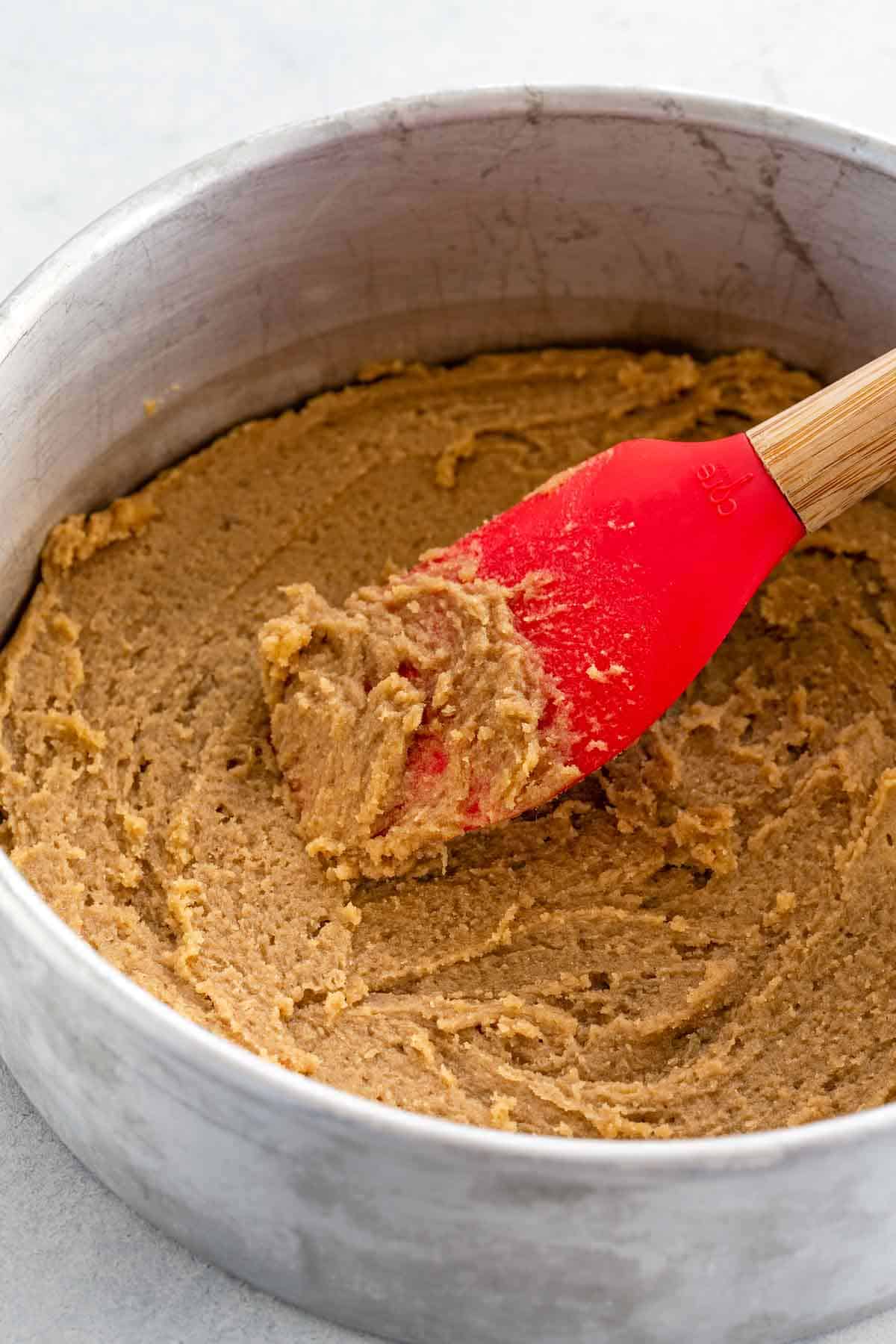
Layer the bottom of the pan with a buttery brown sugar and vanilla schmear. If you like, add ½ teaspoon of rum to the topping. Most recipes call for melted butter and sugar, but I find that whipping sugar with softened butter makes it easier to spread, and it has a more even coating when baked. As the cake bakes, the sugar melts and caramelizes into a glossy syrup.
Step 3: Add the Fruit and Nuts
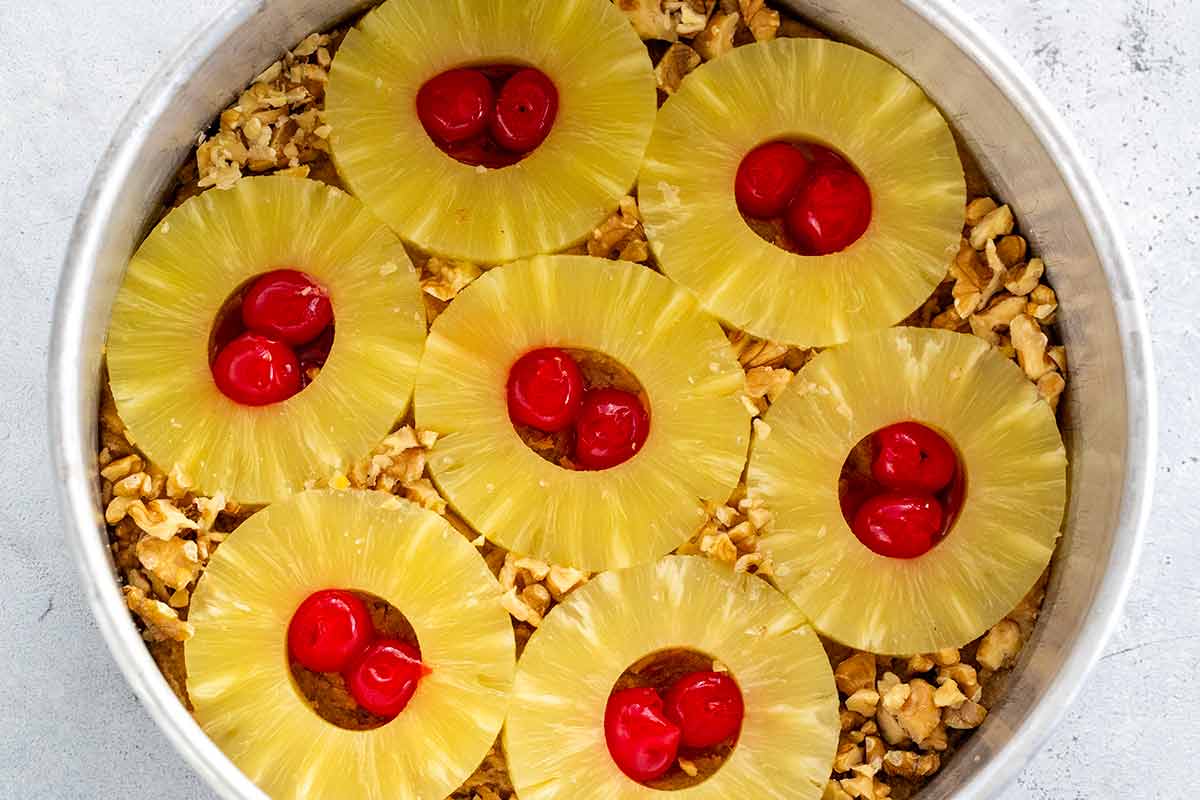
Use canned pineapple rings for the top of the cake. Typically, seven pieces can fit on top. Place two drained maraschino cherries in the center of each ring. Add chopped walnuts into all of the nooks and crannies not occupied by fruit, around the perimeter and in between.
Quick Substitution: You can also use fresh ripe pineapple slices. They can be easily cut and cored with a round cutter.
Step 4: Mix the Dry Ingredients
Sifting the flour and baking powder breaks up lumps and evenly distributes the leavening agent, helping the cake rise uniformly. Whisking further blends the ingredients, ensuring a consistent texture and tender crumb throughout the cake.
Step 5: Cream the Butter and Sugar for the Cake
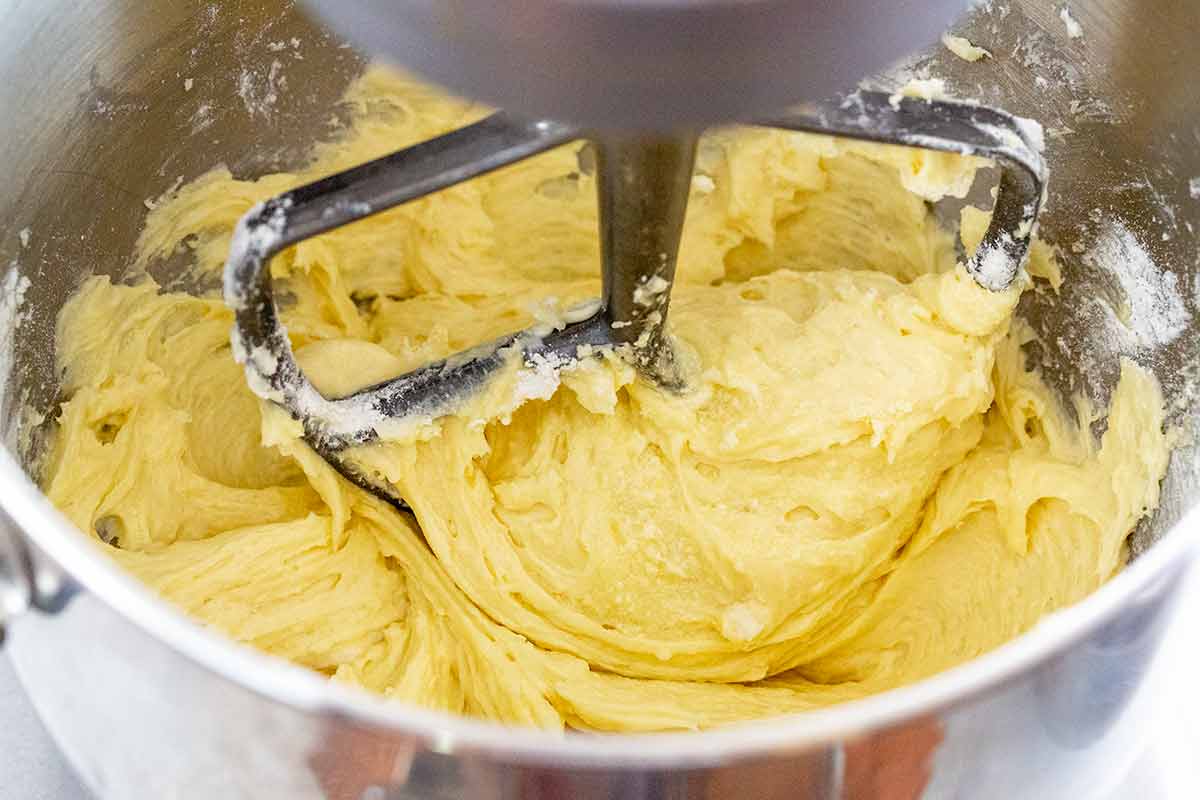
The classic creaming technique works the best. It creates a strong, nicely risen cake that can hold the weight of the topping. Creaming cool butter and sugar helps with the rise because the sugar creates mini pockets of air in the butter, which fill with carbon dioxide as the baking powder reacts with the milk. Science! The gas expands in size to make the cake rise and gets trapped by the fat and gluten protein network in the batter as it cooks.
Step 6: Add the Eggs and Milk
Adding the eggs one at a time helps them emulsify into the butter mixture, creating a smooth batter that traps air for a lighter texture. The milk hydrates the flour proteins and starches, helping the ingredients blend evenly and creating a moist, tender cake crumb.
Step 7: Make the Cake Batter
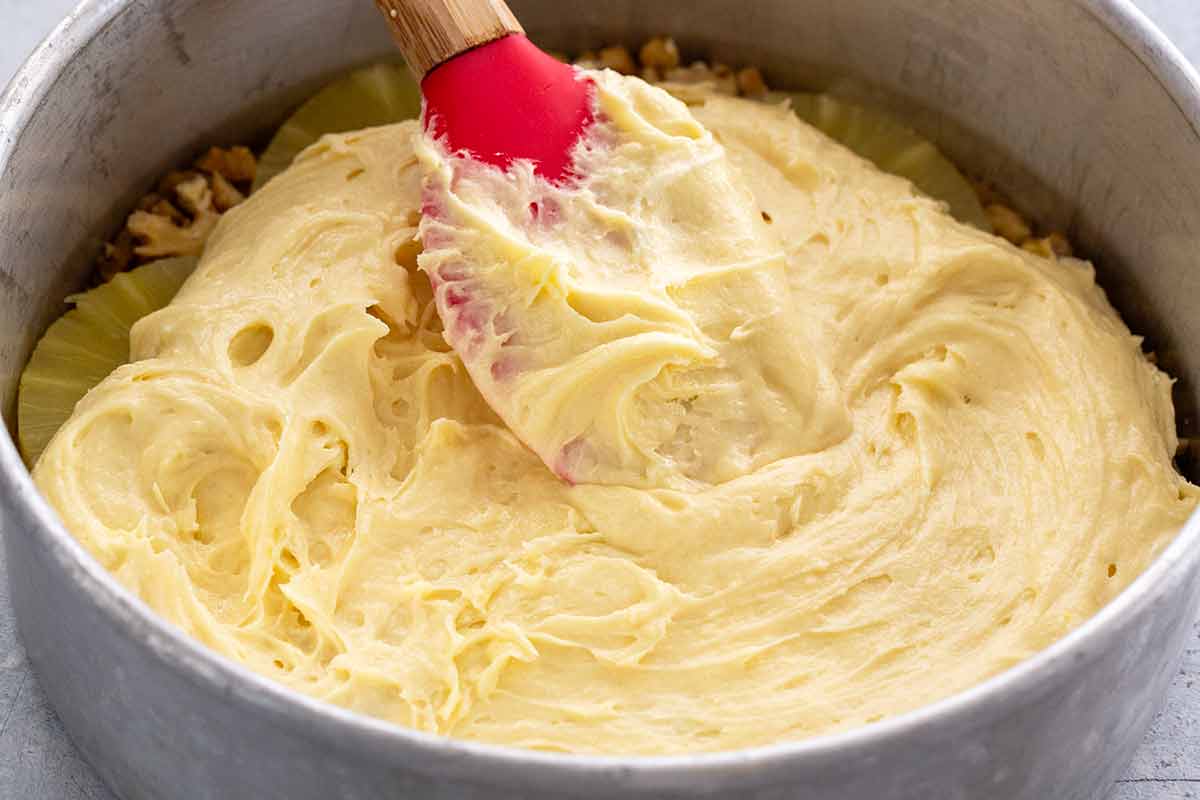
Adding the flour in batches to the wet ingredients helps prevent overmixing, which can develop too much gluten and make the cake tough. Mix just until combined for a tender crumb, and spread the thick batter evenly so the cake bakes uniformly under the pineapple topping.
Step 8: Bake
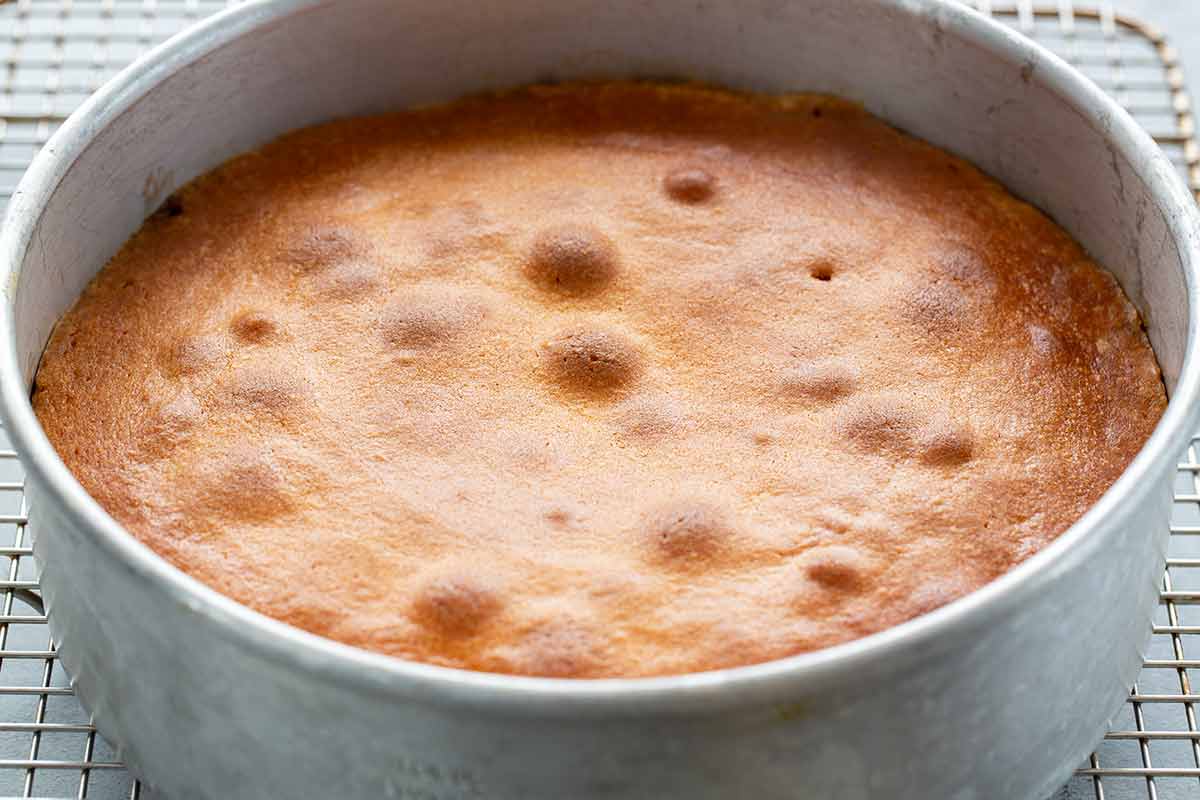
Bake for 30 to 40 minutes, until the cake reaches 185 to 190°F, to ensure the starches have fully gelatinized and the proteins have set, creating a stable yet tender crumb. The golden surface, springy texture, and a few moist crumbs on a toothpick show the cake is properly baked without drying out.
Step 9: Cool
The 45- to 60-minute cooling period allows the cake structure to set as the starches and proteins firm up, making it easier to handle. At the same time, the caramel topping remains soft enough to release from the pan, helping the pineapple and cherries stay intact when inverted.
Step 10: To Serve
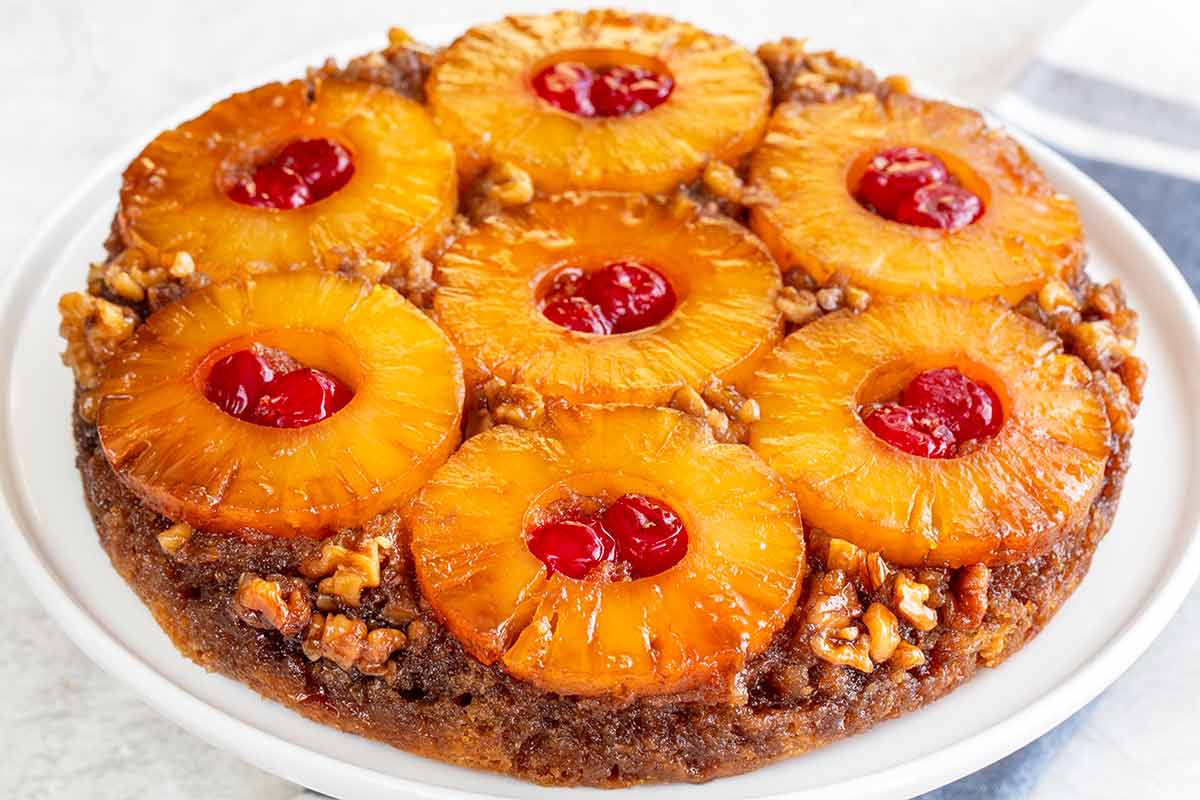
For easy unmolding, let the cake cool until warm but not hot, then run a knife around the edges to loosen it. Place a serving plate over the pan, then quickly flip over. Let the cake sit for about 5 minutes before lifting up the pan. This allows any stuck bits to gradually release onto the surface.
See that caramel ring on the edges and tender baked fruit that’s just snuggling with the cake? Yep, the perfect marriage of sweet, fruity, and tender pieces of heaven. This classic dessert is a showstopper that even beginners can bake!
Tips for Perfect Execution: Unmold while the cake is still warm so the caramel holds the fruit together and stays fluid enough to release cleanly. If you wait until the cake is completely cool, the caramel can harden and cause the topping to stick to the pan.
Frequently Asked Questions
One of the key differences in types of flour is the amount of protein. More protein means higher gluten-forming potential, which contributes to volume, texture, structure, and appearance. Cake flour contains between 6-8% protein, whereas all-purpose flour has 10-13%. This can make a big difference in the texture of the baked cake.
Yes! To maximize cake rise, it’s important to soften the butter. Use cool butter between 60-65°F (16-18°C) for creaming with the sugar. Fat crystals in this range can trap air and hold it in the batter. Too cold and air cannot get whipped in; too warm and the butter will not hold the air. An instant-read thermometer works best to check the temperature, or it should feel cool to the touch and slightly dent when pressed. It will take 30 to 60 minutes to soften on the counter after coming out of the refrigerator.
If you don’t have all the pantry staples to make the cake from scratch or are looking for an easy shortcut, a boxed cake mix works well. My husband’s grandma Rose always made pineapple upside-down cake with Duncan Hines Signature Pineapple Supreme Cake Mix, but it’s hard to find in stores these days. Instead, use any yellow cake mix and substitute the water called for on the package with pineapple juice for extra pineapple flavor that pairs perfectly with the caramelized fruit topping.
Common pineapple upside-down cake mistakes include not draining the pineapple well enough, as excess liquid can make the topping watery and soggy. However, don’t pat the fruit completely dry with paper towels—some moisture is needed to dissolve the brown sugar and create a rich caramel syrup as the cake bakes. Other mistakes include overmixing the batter, which creates a dense cake, and under- or overbaking, which affects the texture. For the best results, use room-temperature ingredients, lightly grease the bottom and sides of the cake pan, and arrange the fruit in an even layer. Most importantly, invert the cake after cooling for 45 to 60 minutes while it’s still warm, as waiting too long can cause the caramelized topping to stick to the pan.
Pineapple upside-down cake tastes best when served fresh and still warm. If you have leftovers, store them in an airtight container at room temperature for up to 1 day or in the fridge for up to 5 days. To bring back the soft texture and gooey caramel topping, reheat individual slices in the microwave for a few seconds before serving.
More Dessert Recipes


If you tried this Pineapple Upside Down Cake Recipe, please leave a 🌟 star rating and let me know how it went in the 📝 comments below!
Classic Pineapple Upside-Down Cake

Ingredients
Topping
- ½ cup unsalted butter, softened to room temperature
- 4 ½ teaspoons honey
- 1 cup dark brown sugar, packed
- ¼ teaspoon pure vanilla extract
- 7 pieces pineapple rings, canned, 3-inches wide
- 14 maraschino cherries, drained
- ¼ cup walnuts, chopped
Cake
- 1 ⅓ cups cake flour
- 2 teaspoons double-acting baking powder
- ½ cup unsalted butter, softened, 60 to 65°F (16 to 18°C)
- ½ cup granulated sugar, plus 2 more tablespoons
- ½ teaspoon pure vanilla extract
- 2 large eggs, room temperature
- 4 teaspoons whole milk, room temperature
Instructions
- Heat the Oven – Adjust the oven rack to the middle position and preheat to 350°F (177°C). Lightly grease the bottom and sides of an 8 1⁄2 x 2 1⁄2-inch or 9 x 2-inch round cake pan with vegetable oil.
- Make the Butter and Sugar Topping – In a bowl, use a handheld mixer or a stand mixer fitted with a paddle to combine the butter, honey, brown sugar, and vanilla on medium speed, 30 seconds. Evenly spread the brown sugar mixture over the bottom of the pan.
- Add the Fruit and Nuts – Place one of the pineapple rings in the middle and 6 around the edges. Add two cherries in the center of each pineapple ring. Add walnuts to the edges where the brown sugar mixture is exposed and add small broken pieces in the center between the rings.
- Mix the Dry Ingredients – Sift the flour and baking powder into a medium bowl. Whisk to combine. Set aside.
- Cream the Butter and Sugar for the Cake – In a separate medium-sized bowl, add softened butter and granulated sugar. Using the paddle attachment, mix on low speed until just combined, 20 seconds. Increase speed to medium and mix for 3 minutes until the mixture is light and creamy. Scrape down the sides as needed. Add vanilla and mix on medium speed for 10 seconds.
- Add the Eggs and Milk – Add one egg and mix on medium speed until creamy, 30 seconds. Scrape the bowl and repeat with the second egg. Add the milk and mix on medium speed, 15 seconds.
- Make the Cake Batter – On low speed, add flour mixture in 3 batches to the egg mixture, mixing until just combined, 10 seconds each interval. Scrape sides as needed. Pour batter into the pan over the pineapples; it will be thick. Use a spatula to spread evenly.
- Bake – Bake until the cake is golden brown, springs back when touched and a toothpick inserted in the center comes out clean with a few crumbs attached, or the center of the cake registers about 185 to 190°F (85 to 88°C) on an instant-read thermometer, about 30 to 40 minutes. The bake time will depend on the size of your pan.
- Cool – Allow the cake to cool in the pan on a cooling rack for 45 to 60 minutes. The cake will still be slightly warm but will set as it continues to cook in the pan. Do not cool completely or the topping will stick to the bottom!
- To Serve – Run a knife around the edges of the cake, invert onto a serving platter, and then wait 5 minutes before lifting off the pan. Serve warm.
Notes
- Storing: Leftover cake can be stored at room temperature in an airtight container for 1 day. Refrigerate for up to 5 days.
- Optional: Add ½ teaspoon of rum to the brown sugar and butter topping for extra flavor!
Nutrition Facts
Percent Daily Values are based on a 2000-calorie diet. All nutritional information is based on estimated third-party calculations. Each recipe and nutritional value will vary depending on the brands you use, measuring methods, and portion sizes per household.


Larry Otter says
Jessica, I love your recipes and appreciate all the time and effort you put into explaining the science behind what you do. I have texted you a couple of times, to let you know how much I’ve enjoyed your recipes, but wanted you to hear it again! Thank you so much!!
Jessica Gavin says
Thank you for your support, Larry!
Katie Kruse says
Jessica,
I haven’t made a cake in 30 years….and there is a reason for that! I made this and it turned out great! Why, because you explained it perfectly! I appreciated the discussion on the temperature of the butter and the reasoning behind the cake flour. Thank you so much! My 92 year old mother, Joan, also says thank you. She lives in an elderly community with no visitation allowed. So she said the cake made her day when it was delivered!
Jessica Gavin says
Awww, this made my day! I love it when others get to enjoy your hard work in the kitchen. Happy baking!
Michelle Bellemare says
I tried your Chicken Yakatori skewers as my first recipe and was hooked. This has always been my favorite cake and is made for my birthday each year in December.
I am going to pass the recipe around, lol. One question…will this recipe be in your cookbook? I just bought the book and am hoping to find lots of your current recipes in it. Thanks for these no-fail recipes!
Jessica Gavin says
Hi Michelle- Thank you for making the recipes! The pineapple upside-down cake is what I make for my husband’s birthday too! Yes, the cake recipe is in the cookbook too. Yay!
Beverly Griffith says
There is no salt in this batter?
Jessica Gavin says
Hi Beverly- No, there is no salt in the cake batter.
Michael Kane says
I’ve made this recipe a couple of times. Both times it came out perfect, delicious and quite attractive. The first time was my first attempt at an upside down cake. I used a 9” round metal nonstick cake pan and was so happy when the cake slid right out!
Dawn C. says
I have made this type of cake for decades. And I Love of Jessica’s recipes. I did something really wrong but can not figure out what. It was too sweet and WAY too much butter for me to eat it. I followed it to a T, so I do not know why it turned out disappointingly. Sorry, Jessica. I am stumped. ( I took a picture of it)
Jessica Gavin says
Hi Dawn- Will you email me the pic? This cake is definitely for those with a sweet tooth. Do you think the topping was too sweet and buttery, or the cake itself?
AldiAllYear says
The caramel topping on this is soooo good! My cake batter looked more like a quick bread, so I added more liquid. It turned out kind of dense, but still tasted amazing. Next time, I’m going to do better about following the advice on the temperature of the ingredients, using cake flour instead of all purpose, etc.
Brenda says
If this was a true classic Pineapple Upside Down Cake you would know that actually it is just butter and brown sugar melted in a cast iron skillet, and then the rest of your ingredients.
Zofia says
Classic recipes can be reinvented, thank god for that.
Utamu says
Delicious and easy to make! Everyone loved it!! Thank you.
Jerel says
Hi Jessica! We don’t have a stand mixer. Any suggestions or changes for a hand mixer for the cake part?
Jessica Gavin says
I would follow the same directions, just use the thicker paddle blades vs. the whisk the texture should be thick like the photo.
Judy Caywood says
Jessica, Hi. My husband would be so happy to have me make this for him for Father’s Day. Since I am on Keto and would not be eating any I’m wondering if this cake would freeze well. I’m sure he could not eat it all himself. Or I could make him a smaller version of it and perhaps cut the recipe in half. Thanks always for your great spirit and wonderful recipes. Judy
Jessica Gavin says
Hi Judy! I think this cake would freeze ok, but in my opinion, it tastes best fresh. A smaller cake would work 🙂
Marilynne Wilson says
Jessica, you read my mind! I was going to make this recipe this weekend! One question: can I use a cast iron skillet? That is what I usually use.
Jessica Gavin says
Yes, you can use a cast iron skillet, what size do you have? I would bake the skillet placed on top of a sheet pan just in case any batter flows over.
Marilynne Wilson says
Jessica, I made it in a Pyrex dish and it came out beautiful and delicious!!!! This is a keeper! Thank you so much for your wonderful recipes. I had another thought….could I use the recipe and bake in a muffin pan for individual cakes?
Jasmin says
Excellent recipe – easy to follow, delicious and not too high in calories. Highly recommend it!
Jessica Gavin says
Whoo hoo! How was the lucky recipient? So happy that you made the recipe!