
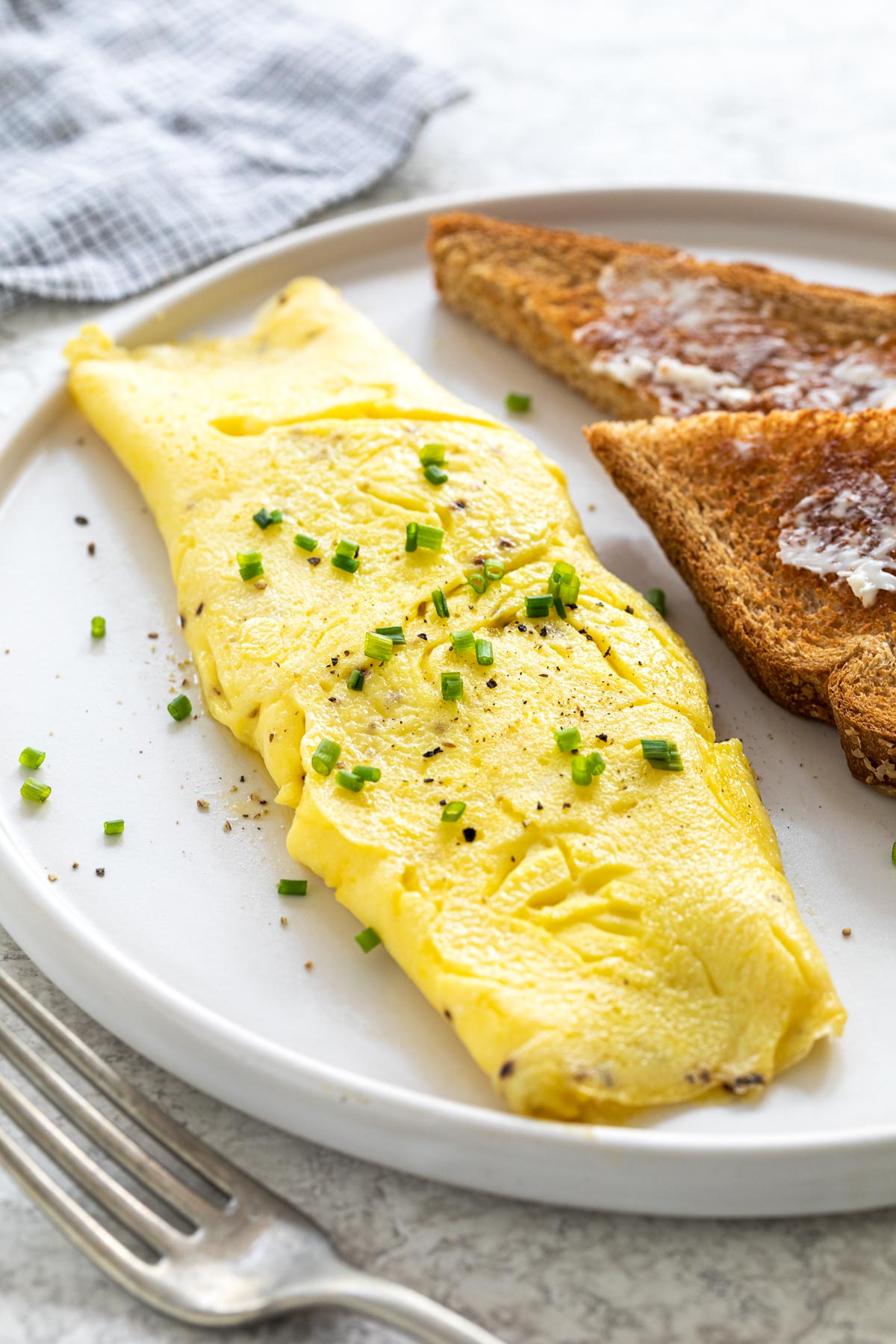
Learn how to make this French omelette using simple ingredients and proper cooking techniques to achieve a silky, delicate texture every time. Impress your loved one by mastering this classic French dish right in your own kitchen.
Jessica’s Recipe Science
- Cooking beaten eggs over medium-low heat slowly coagulates the egg proteins, resulting in a soft and creamy omelette.
- Using butter adds richness and flavor to the omelette and helps prevent sticking when cooking the curds and shaping.
- Pulling the eggs from the side of the pan toward the center creates the soft curds of a classic French omelette.
Featured Comment 2
A perfectly made French omelette is such a beautiful thing! Getting that creamy, custard-like interior with no browning is definitely a skill worth mastering. Your technique looks flawless. Great detailed tutorial! —Mike D.
Why It Works
A classic French omelette proves that great cooking doesn’t require complicated ingredients—just thoughtful technique. With eggs, butter, and a splash of milk, you can create a dish that feels elegant enough for company yet quick enough for everyday cooking. The goal is a pale exterior and a smooth, delicate interior filled with soft, custardy yolks.
Understanding the science behind eggs makes all the difference. As eggs heat, their proteins gently coagulate, forming a delicate network that traps moisture. Controlling the heat and movement during cooking ensures the omelette stays creamy rather than dry. Once you learn these simple tricks, achieving omelette perfection becomes second nature.
Jump To a Section
Ingredients You’ll Need
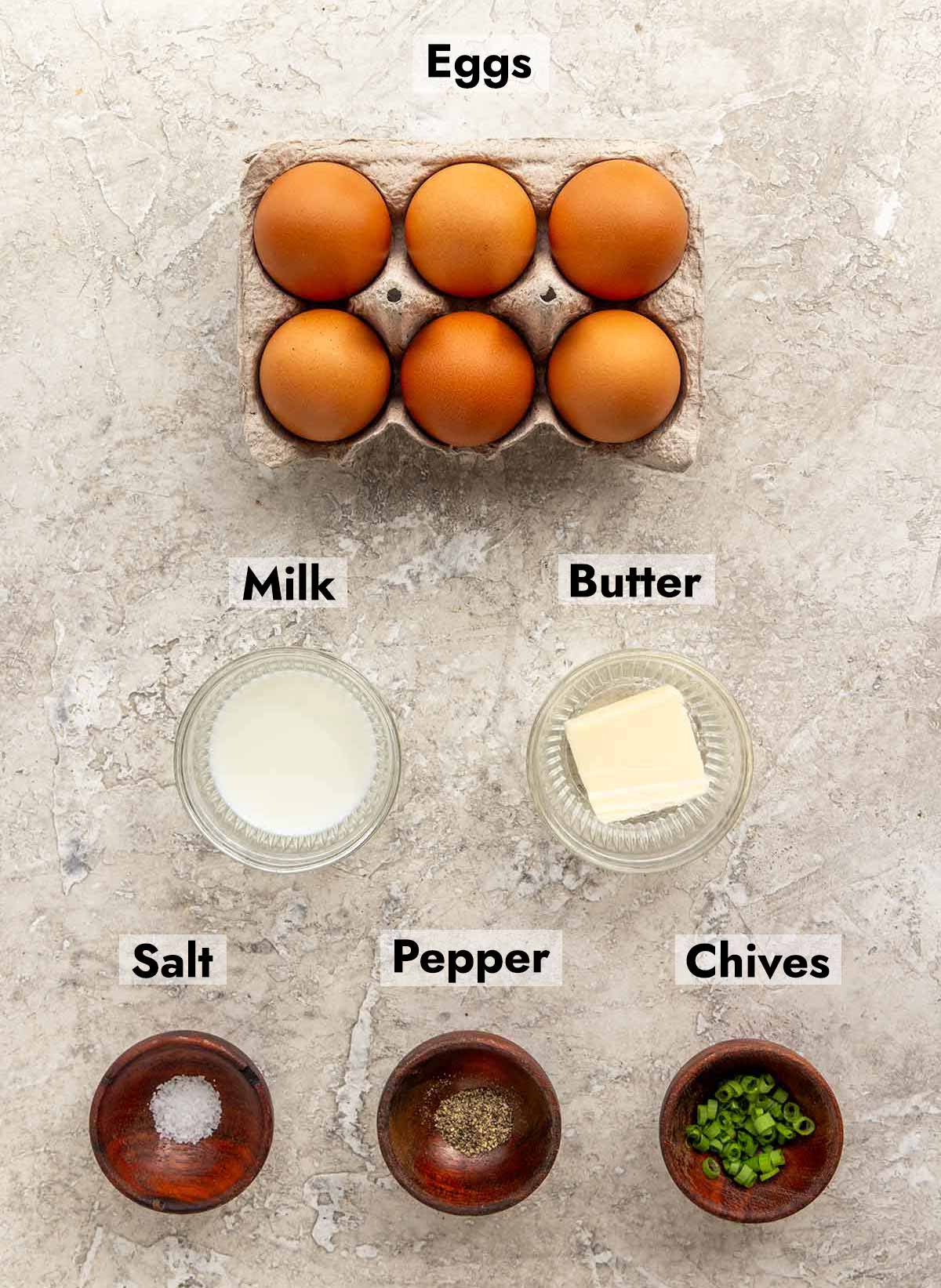
- Eggs: The proteins in the whites and yolks coagulate when heated, forming the delicate structure that gives the omelette its silky texture.
- Liquid: A small splash of milk, cream, or water reduces the tightness of the protein network in the eggs, helping create a softer curd and a slightly lighter interior.
- Seasoning: Salt seasons the eggs and helps break down proteins slightly during whisking, improving tenderness. Black pepper adds a mild heat.
- Butter: Butter provides fat for gentle cooking and helps the omelette release smoothly from the pan. You can use unsalted or salted butter for a stronger savory taste.
- Fresh Herbs: I like to add chives as a garnish to add brightness and aromatic complexity. You can even add some to the whisked eggs before cooking to enhance the omelette’s flavor.
See the recipe card below for all ingredients and measurements (US and metric).
Ingredient Substitutions
This French omelette recipe is easy to customize! Try these delicious variations:
- Herb Swaps: Swap with tarragon, chervil, parsley, or a blend. Tarragon and chervil are especially traditional in French cooking.
- Butter: Clarified butter or ghee works well if you prefer to cook at a slightly higher heat. Use plant-based butter, margarine, coconut oil, olive oil, or avocado oil for dairy-free options.
- Cheese Add-ins: For extra indulgence, add a small amount of cheese like Gruyère, Comté, Brie, Cheddar, or goat cheese. Typically, the omelette is slit lengthwise down the center, and then the cheese is added to the pocket.
How to Make a French Omelette
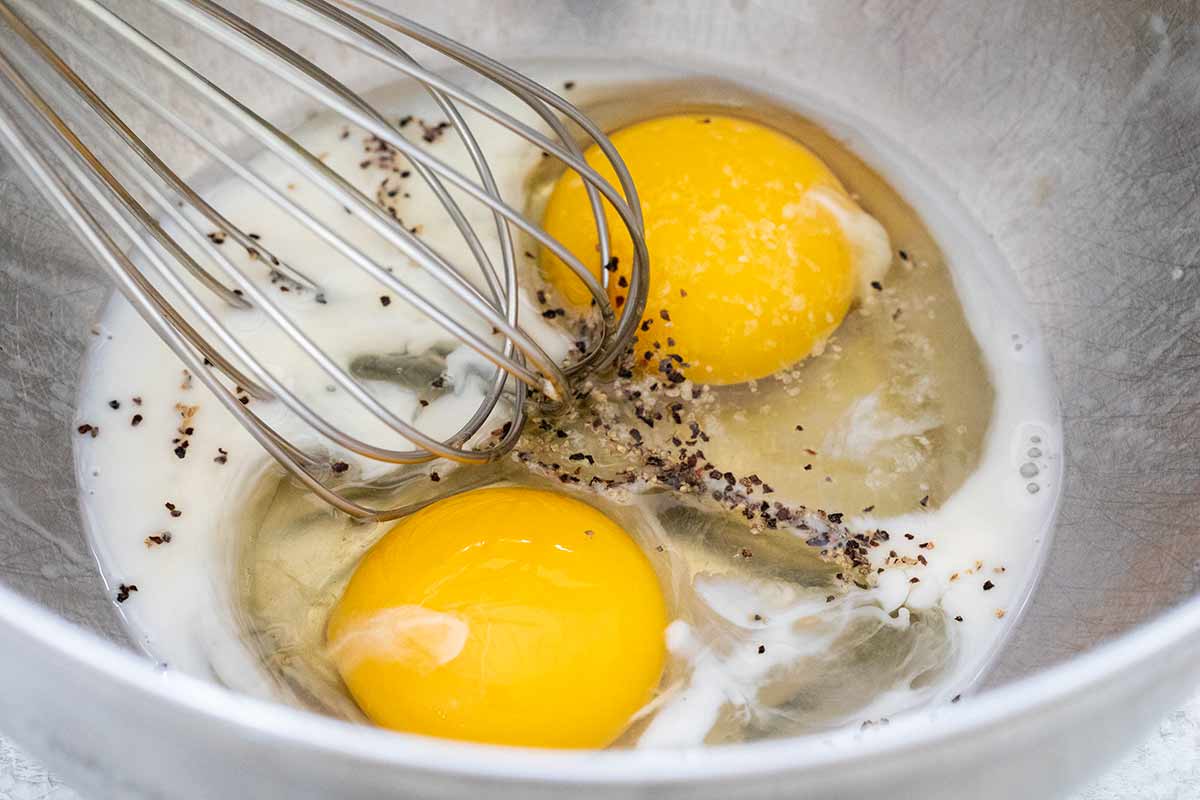
Step 1: Whisk the Eggs
Whisking the eggs in a bowl breaks up the whites and yolks into a uniform mixture. A quick side-to-side motion, similar to how some chefs use a fork, creates even dispersion of proteins so the omelette cooks smoothly without streaks.
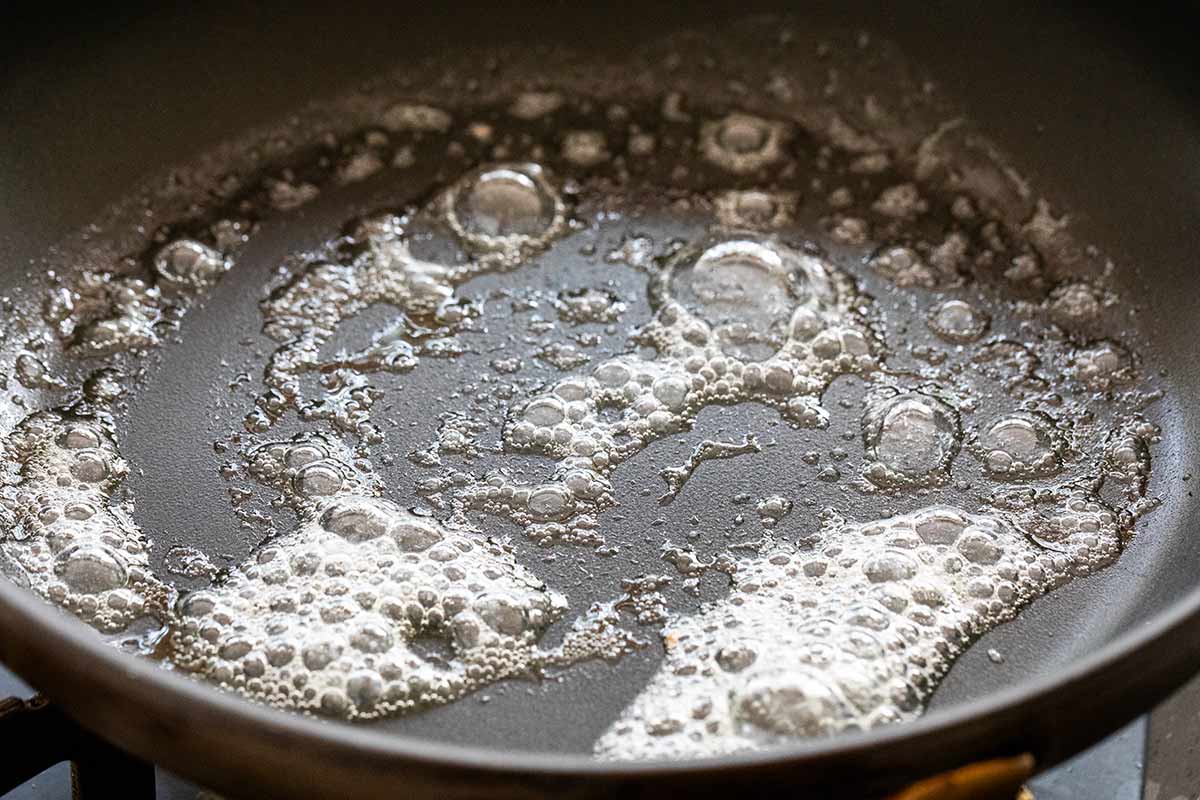
Step 2: Heat the Butter
I use an 8-inch nonstick pan to make cooking the eggs easy. Melting the butter over medium heat (or slightly lower) allows the milk solids to foam without browning. This creates a flavorful cooking surface while keeping the omelette pale, which is essential for a perfect French omelette.
Experimentation Encouraged: A 10-inch skillet can be used; the omelette will be thinner. You can use three eggs for a heartier, thicker omelette; adjust the cooking time as needed.
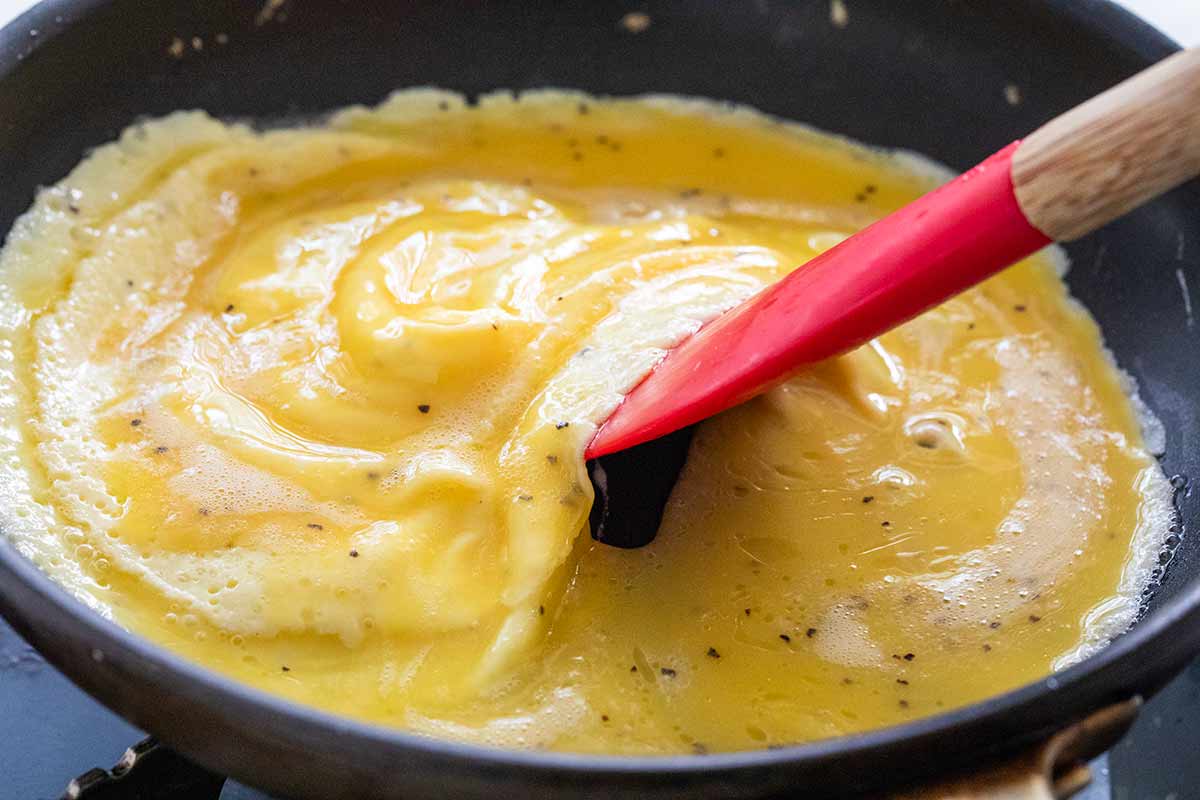
Step 3: Form the Curds
Letting the tender eggs sit briefly allows the bottom layer to begin setting. Pulling the eggs from the side of the pan toward the center with a rubber spatula creates soft curds while uncooked egg flows underneath, producing a creamy interior.
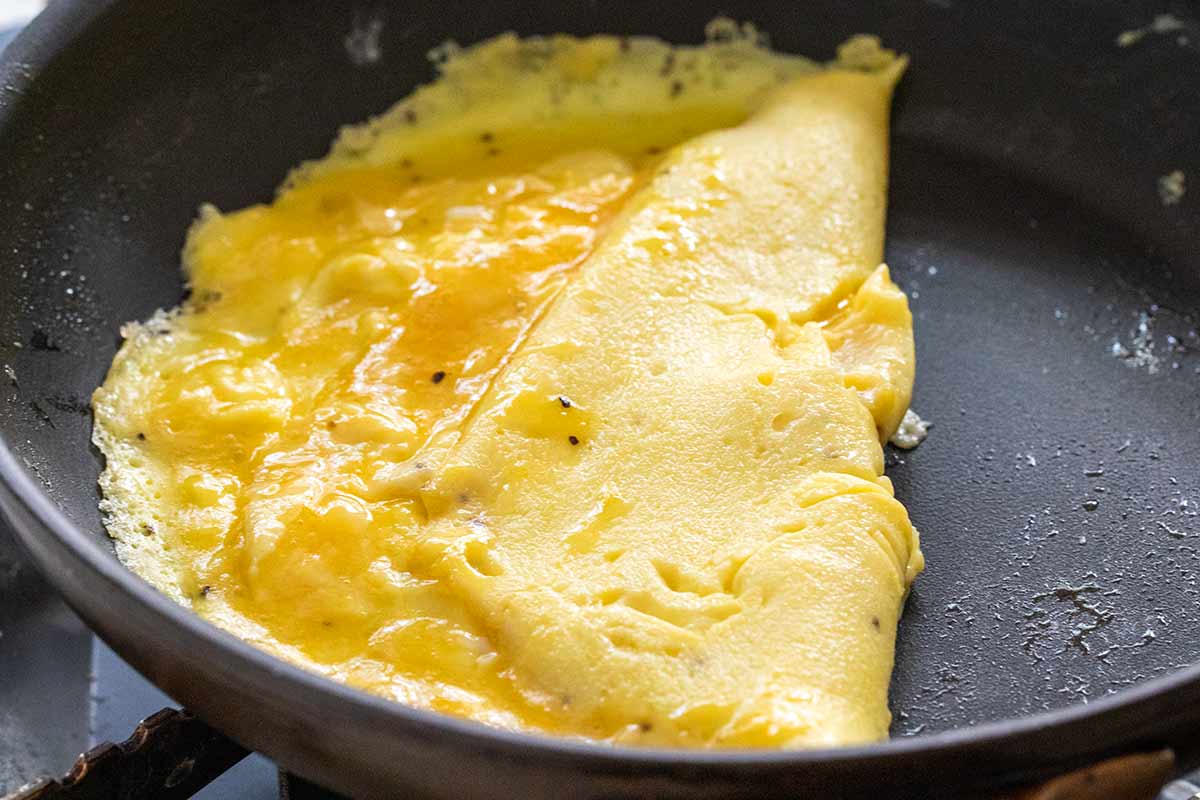
Step 4: Fold and Shape
Once the eggs are mostly set but still glossy, fold them into a tight roll to create the traditional cigar shape. The residual heat gently finishes cooking the eggs, preserving their delicate texture.
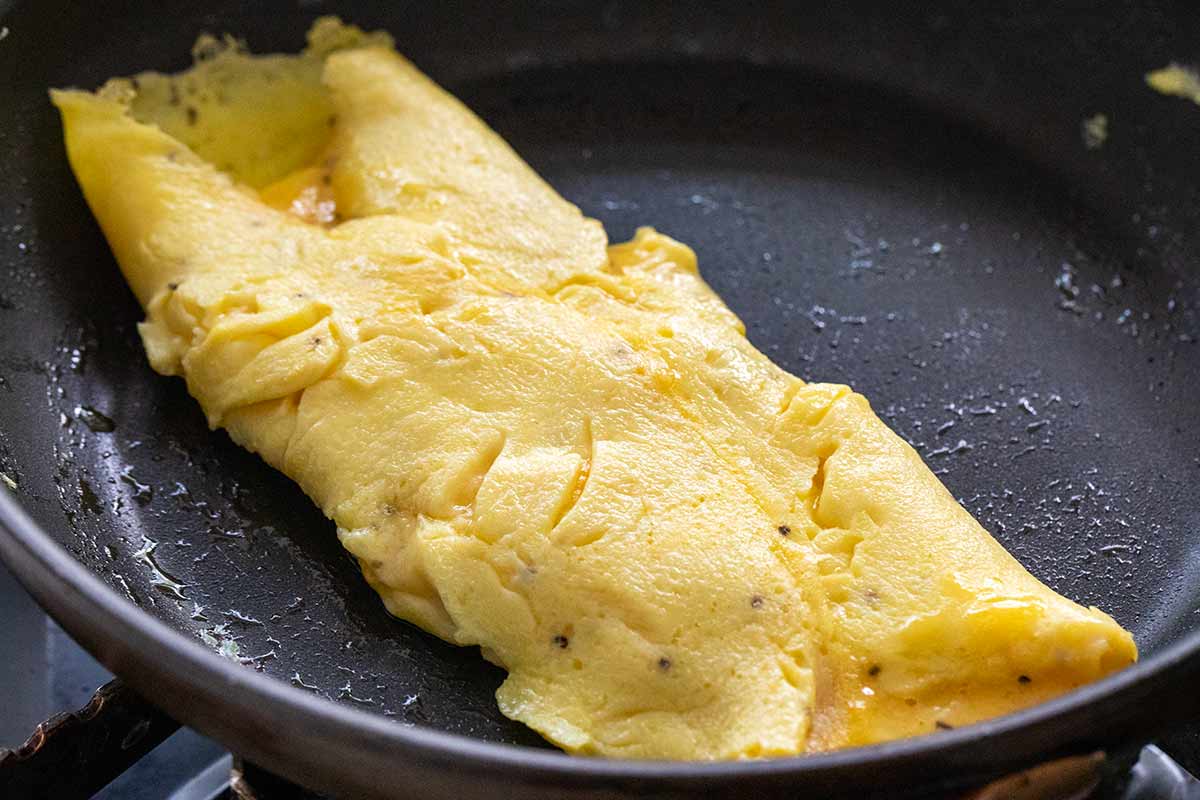
Step 5: To Serve
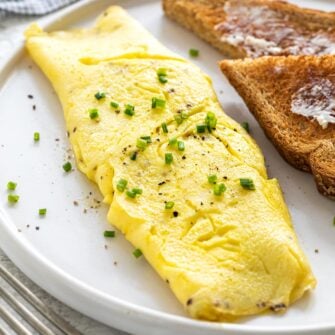
Serving the omelette seam-side down helps keep its shape and highlights its smooth exterior. Garnish with fresh herbs and enjoy immediately while the eggs are still soft and tender. I often make this French omelette for brunch, served with a light green salad and crispy home fries. It pairs well with a glass of wine like Chablis or Champagne.
Frequently Asked Questions
A French omelette is pale, softly set, and rolled into a smooth, cigar-shaped omelette with no browning. Unlike an American omelet cooked over high heat with lots of fillings, this style focuses on a delicate texture and simple ingredients.
Gentle heat and constant movement are essential. Cooking the eggs slowly and pulling them from the side of the pan toward the center creates small, soft curds that keep the interior creamy.
The most traditional versions contain eggs, butter, salt, and fresh herbs like tarragon or chervil. Some chefs may add a little cheese, but the focus is usually on the flavor of perfectly cooked eggs for the best French omelette.
More Breakfast Recipes



If you tried this French Omelette Recipe, please leave a 🌟 star rating and let me know how it went in the 📝 comments below!
French Omelette
Ingredients
- 2 large eggs
- 2 teaspoons milk, cream, or water, optional
- ⅛ teaspoon kosher salt
- ⅛ teaspoon black pepper
- 1 teaspoon unsalted butter
- 1 teaspoon chopped chives, optional
Instructions
- Whisk the Eggs – In a medium bowl, whisk together the eggs, milk (if using), and salt. Whisk using a side-to-side motion until uniform in appearance; do not overmix.
- Heat the Butter – In an 8-inch nonstick skillet, heat the butter over medium-low heat until it begins to bubble and foam but does not brown.
- Form the Curds – Add the eggs and let them sit undisturbed for about 10 seconds, until the edges just begin to set. Using a spatula, gently pull the cooked eggs from the edges toward the center, tilting the pan so the uncooked egg flows underneath. Continue this motion around the pan to form soft curds, cooking for about 2 to 2½ minutes until the eggs are mostly set but still glossy. Turn off the heat once the omelette is nearly cooked through and still pale with no browning.
- Fold and Shape – Use a spatula to fold one side toward the center, then fold the other side over to create a tight, rolled cigar shape.
- To Serve – Invert the omelette onto a plate, seam-side down. Garnish with freshly cracked black pepper and chopped chives.
Notes
- Adding Liquid: This makes the egg softer and more tender but lessens the egg flavor. Dairy also adds extra richness.
- Saltier Eggs: Use ¼ teaspoon of kosher salt.
Nutrition Facts
Percent Daily Values are based on a 2000-calorie diet. All nutritional information is based on estimated third-party calculations. Each recipe and nutritional value will vary depending on the brands you use, measuring methods, and portion sizes per household.


Mike Davis says
A perfectly made French omelette is such a beautiful thing! Getting that creamy, custard-like interior with no browning is definitely a skill worth mastering. Your technique looks flawless. Great detailed tutorial!
Jessica Gavin says
Thank you for your feedback, Mike!