
This kung pao chicken recipe is a quick stir-fry made in less than 30 minutes! My dish rivals any Chinese takeout, with lean white meat and crisp vegetables tossed in a spicy sauce.

Jessica’s Recipe Science
- Cutting chicken into uniform pieces increases surface area for browning and reduces cooking time to keep the meat juicy.
- Split dried red chilies to release capsaicin from the inner membrane, adding spiciness to the kung pao sauce.
- Mix cornstarch with cold water to make a slurry, then simmer the sauce until the starch granules swell and create a glossy, thick coating.
Featured Comment 43
“Wow! This dish was amazing. The ginger and sesame oil really give this dish the most wonderful touch. This is the first Asian-inspired recipe that I’ve tried that has turned out better than takeout.”—Amanda
Why It Works
My homemade kung pao chicken recipe will have you ditching the takeout menu for good. This dish is for those who enjoy a spicy kick to their Chinese food. To achieve restaurant-quality results, it’s about getting organized for fast cooking in a fiery hot wok or large pan.
The savory sauce simmers with dried red chili peppers for the characteristic hot taste. The result is layers of heat that leave a lingering spice while boosting the flavor. Combined with tender pieces of seared meat and fresh vegetables, it’s a tasty dish that you can make even when you’re short on time. If you love the heat from dried red chilis, try my sweet and spicy General Tso’s chicken next.
Jump To a Section
Ingredients You’ll Need
- Chicken: Boneless, skinless chicken breast cooks quickly and evenly when cut into bite-sized pieces.
- Cornstarch: Cornstarch serves two purposes in this recipe. It’s tossed with the chicken to protect the surface from drying out, creating a tender texture, and thickens the sauce into a glossy coating.
- Soy Sauce: Soy sauce adds savory, salty umami flavor to both the chicken marinade and stir-fry sauce.
- Sesame Oil: Sesame oil adds a rich, nutty aroma that complements the savory sauce. Using it in the marinade and sauce distributes its flavor throughout the chicken and vegetables.
- Black Pepper: Adds a mild, earthy spice to the chicken and enhances its savory flavor. For a tingling, numbing sensation, use Sichuan peppercorns instead, or try white pepper.
- Vinegar: Rice vinegar provides bright acidity that balances the sweetness of the honey and the salty soy sauce.
- Sweetener: Honey adds sweetness to balance the vinegar and soy sauce.
- Oil: Vegetable oil has a neutral flavor and a high enough smoke point for stir-frying over high heat.
- Vegetables: Red and green bell peppers bring natural sweetness and vibrant color to the dish. White onion adds a mild sweetness and savory flavor.
- Garlic: Fresh garlic adds a pungent, savory aroma that builds the flavor of the stir fry.
- Ginger: Fresh ginger adds warm, peppery notes and a bright flavor that complements the garlic and soy sauce.
- Chilies: Dried red chilies provide the signature heat in kung pao chicken. Removing the seeds helps moderate the spice level, or leave them in for a hotter sauce! Cutting the chilies in half allows their flavor to infuse the oil and sauce.
- Peanuts: Roasted peanuts add a nutty flavor and crunchy texture that contrast with the tender chicken and vegetables.
- Green Onions: Sliced green onions or scallions add a fresh, mild onion flavor and a pop of color as a finishing garnish.
See the recipe card below for all ingredients and measurements (US and metric).
Ingredient Substitutions
This kung pao chicken recipe is easy to customize! Try these tasty options:
- Chicken Swaps: Use chicken thighs for a juicier texture and richer flavor.
- Soy Sauce Options: Replace some soy sauce with dark soy sauce, oyster sauce, or hoisin sauce for a richer and sweeter taste. Replace the soy sauce with tamari for a similar savory flavor. Choose a gluten-free variety if needed. Use coconut aminos instead of soy sauce for a milder, slightly sweeter alternative.
- Vinegar: Substitute apple cider vinegar for rice vinegar if needed. It has a stronger flavor, so start with a little less and adjust to taste.
- Sweetener Substitutes: Replace the honey with brown sugar or maple syrup for a deeper caramel-like sweetness. Granulated sugar adds a clean sweetness.
- Oil: Use avocado oil, canola oil, or peanut oil instead of vegetable oil for a neutral flavored cooking oil suitable for high heat.
- Onions: Try other types of onions like yellow or red onion. Both work well in a stir fry and add slightly different levels of sweetness.
- Other Veggies: Use orange or yellow bell peppers in place of the green or red peppers for a sweeter flavor. Add in crisp celery, bok choy, or green beans.
- Fresh Chili Peppers: Replace the dried chilies with other types of peppers like fresh Fresno red chiles for a different type of heat. Adjust the quantity to suit your spice preference.
- Nuts: Swap the roasted peanuts for cashews, almonds, or walnuts for a similarly crunchy texture and buttery, nutty flavor.
How to Make Kung Pao Chicken
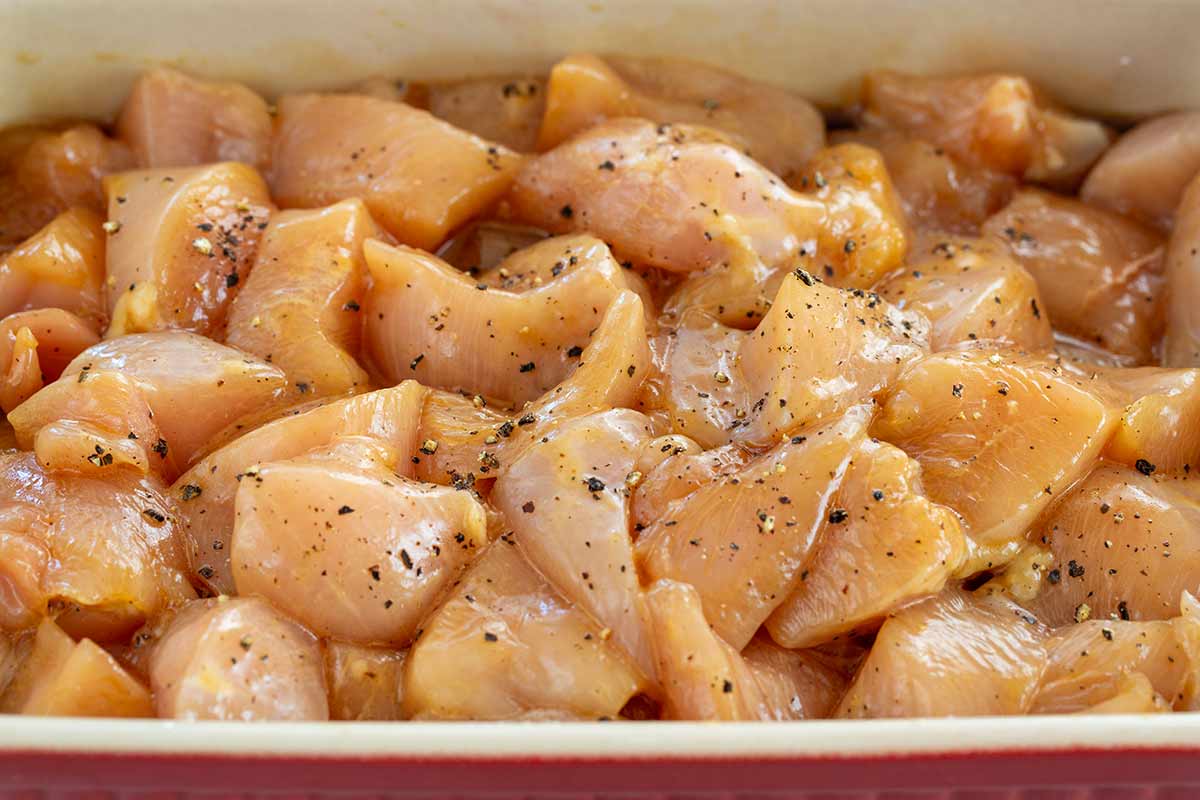
Step 1: Marinate the Chicken
Cut the chicken breast into uniform 1-inch pieces for even cooking and more surface area for flavorful browning in the hot wok. In a bowl, combine the chicken with soy sauce, sesame oil, black pepper, and cornstarch. The soy sauce adds savory umami, while sesame oil enhances the flavor.
Cornstarch coats the chicken, helping it develop a velvety texture and allowing the sauce to cling to the surface. Let the chicken marinate for 10 minutes, which is plenty of time for the flavors to season the small pieces.
Step 2: Make the Stir-Fry Sauce
The base of this sauce is a combination of soy sauce, water, and sesame oil for umami-flavored notes. Equal parts of honey and rice vinegar give a balanced sweet and tangy flavor.
Step 3: Make the Cornstarch Slurry
To thicken the stir-fry sauce, combine cornstarch and water in a small bowl. Reserve the cornstarch slurry mixture to add later in the cooking process.
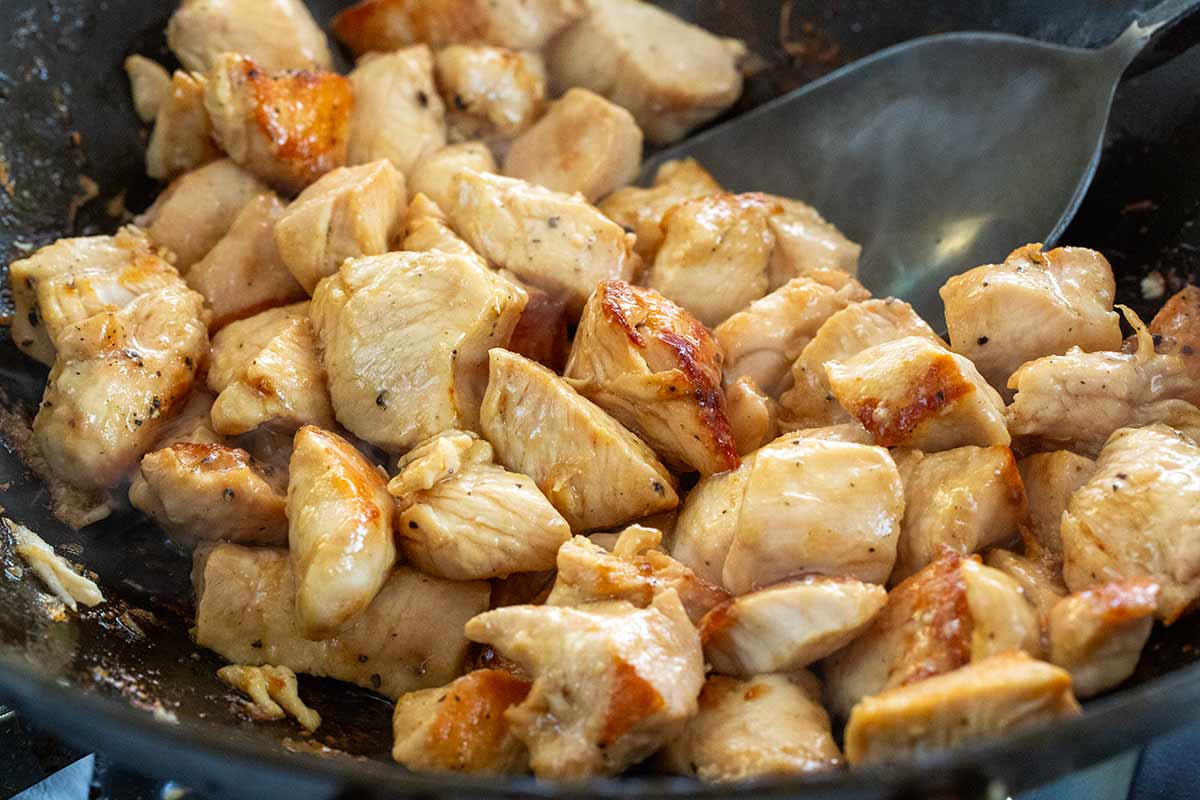
Step 4: Cook the Chicken
A wok with a circular base efficiently heats the bottom and sides of the pan, giving more area for searing the ingredients. Alternatively, you can use a sauté pan with sloped sides to make it easier to toss and stir the meat, vegetables, and sauce. The wok and oil must be very hot to get a good sear on the chicken and retain the vegetables’ crispness.
Arrange the marinated chicken in the wok in one layer, then don’t move the pieces! Letting them sit for 2 minutes in the hot oil develops a golden-brown crust, allowing them to release quickly from the pan’s surface. After searing, move the pieces around and complete the cooking process. Stir-frying the chicken happens fast, about 4 minutes total, so the lean white meat stays juicy.
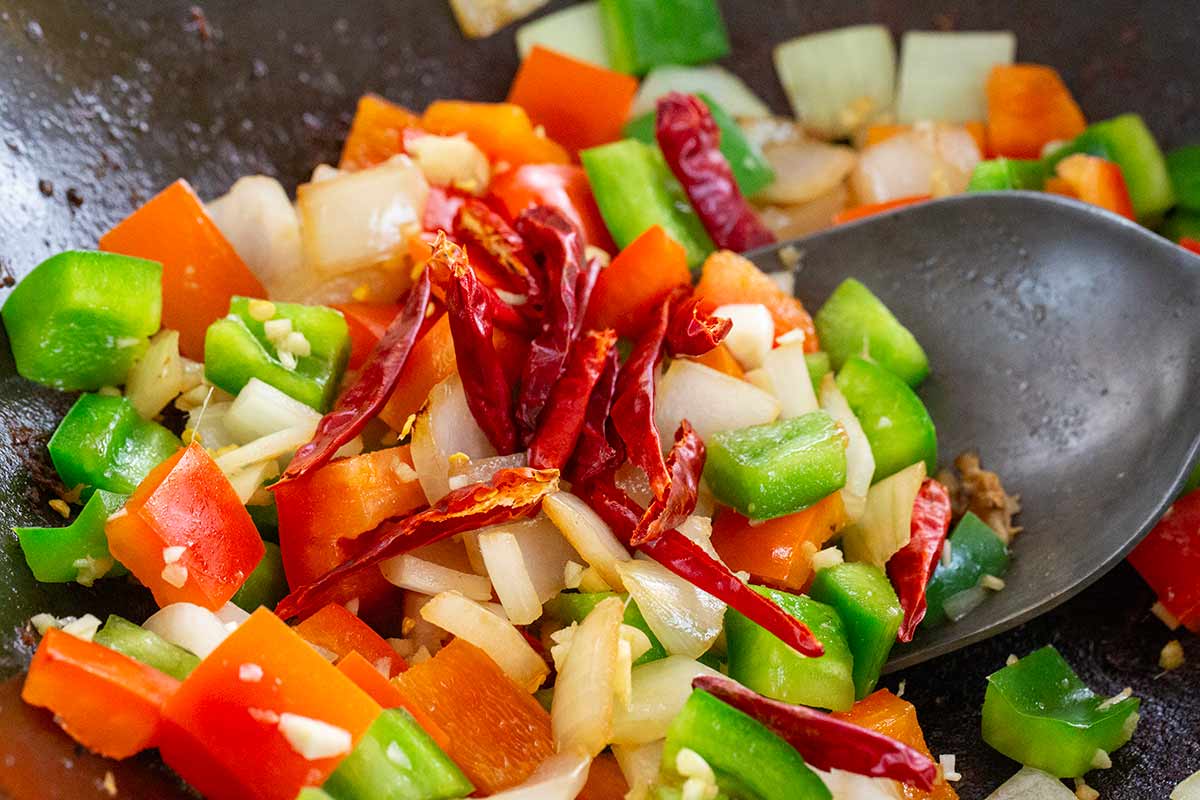
Step 5: Stir-Fry the Vegetables
White onions and bell peppers add earthy sweetness and a crisp texture, while minced garlic and ginger are the classic aromatics in Chinese stir-fries. Cooking the garlic mellows its sharp, sulfurous flavor into a more savory, nutty taste, while ginger adds a warm, pungent bite. Add the split dried chilies after the vegetables cook to infuse the oil with their fat-soluble flavor compounds, including capsaicin, which delivers the heat.
Ingredient Science: Whole dried red chili peppers are used because the flavors are more concentrated and complex compared to fresh chilies. The chilies are split in half to expose the inner membrane, where most of the spicy capsaicin is concentrated. When the chilies are sautéed with oil and vegetables, the spice molecules disperse, enhancing the dish’s heat level.
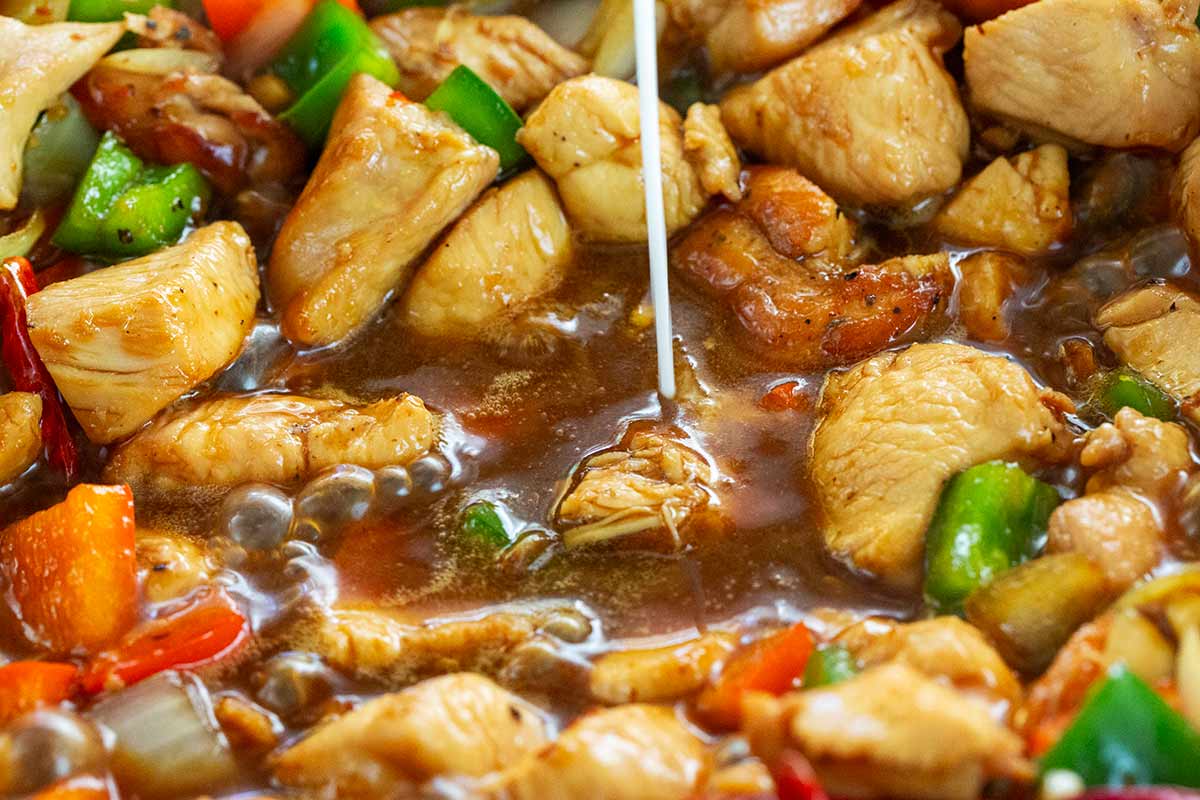
Step 6: Thicken the Sauce
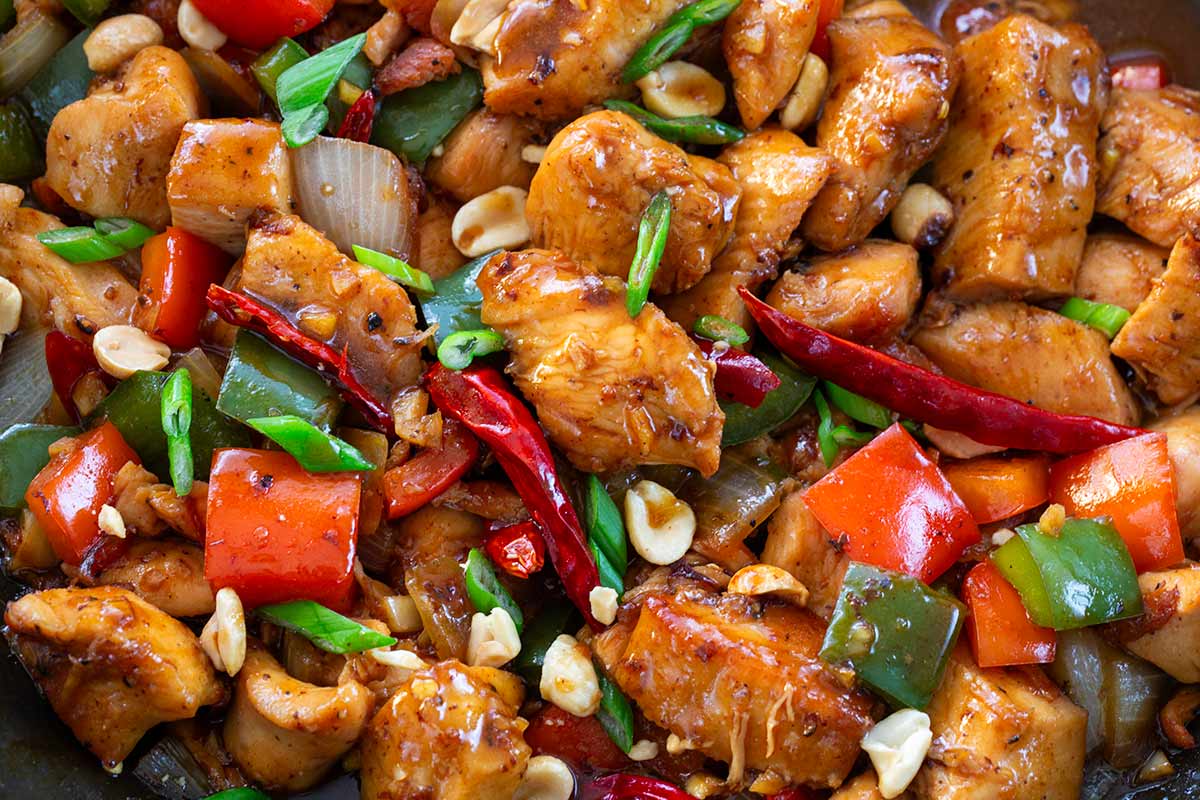
Add the cooked chicken and sauce to the pan, and bring to a simmer. Stir in the cornstarch slurry and cook for about 1 minute, stirring constantly to distribute the starch evenly. The heat activates the cornstarch, thickening the liquid into a glossy sauce that coats the chicken.
Step 7: To Serve
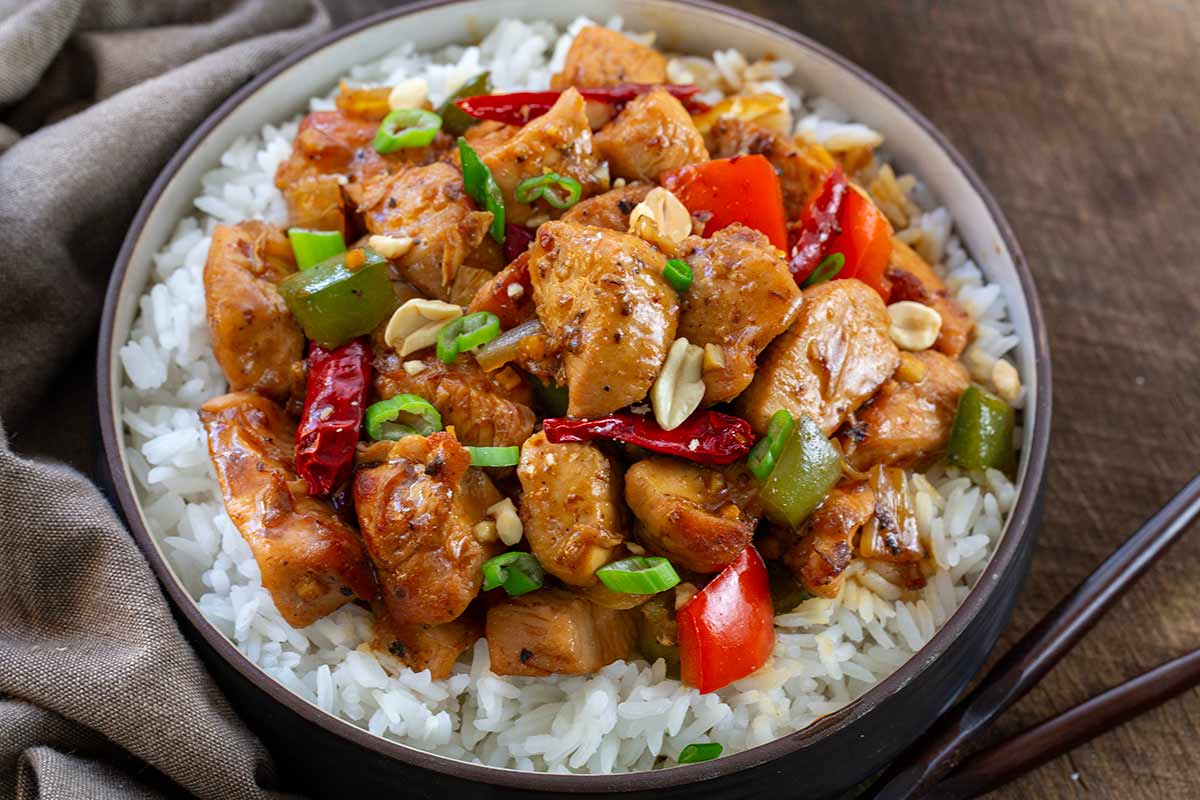
I like to garnish the dish with peanuts for crunch and sliced green onions for a pop of green color and mild onion taste. I love serving kung pao chicken over steamed white rice to soak up the flavorful sauce, or pairing it with fried rice or shrimp fried rice for a heartier meal. You can also serve it with savory chow mein or simple stir-fried bok choy for a fresh, crisp vegetable side.
Frequently Asked Questions
A stir-fried Chinese-style dish that combines small pieces of chicken tossed in a spicy, sweet, and savory sauce. The chicken can be seasoned and cooked in a wok or coated and deep-fried for a crispy texture. It’s often served with vegetables and garnished with peanuts. The dish originated in the Sichuan province in southwest China, known for its spicy cuisine. Due to its popularity, you can now find it on menus in Chinese restaurants worldwide, like Panda Express.
The sauce is a combination of soy sauce, water, and sesame oil for savory umami flavor. Equal parts honey and rice vinegar add a balanced sweet and tangy taste. Right before serving, a cornstarch slurry thickens it into a glossy sauce that clings to the chicken.
Yes, it’s meant to be a spicy dish, although you can control the heat level when making it from scratch. The split dried chili peppers give most of the lingering heat, but you can add extra chili sauce or minced fresh chili peppers to crank up the spice level.
Dried chili flakes are a good substitute for red chili peppers. Start by adding ¼ teaspoon, and gradually increase to your tolerance level. Additional alternatives include chili oil or chili sauce like sriracha or sambal oelek. Just make sure to give the base sauce a taste at the end of cooking to gauge how much extra heat is needed.
Store leftovers or meal prepped kung pao chicken in an airtight container in the refrigerator for up to 5 days. Reheat in the microwave in 30-second intervals until hot.
Not when you make it at home. Stir-frying uses just enough oil to cook the chicken and vegetables. The sauce is balanced with soy sauce, honey, and vinegar, with just enough to coat the chicken without being too heavy. I like to serve this with cauliflower rice or broccoli rice for a low-carb side dish.
Serve This With


If you tried this Kung Pao Chicken Recipe, please leave a 🌟 star rating and let me know how it went in the 📝 comments below!
Kung Pao Chicken

Ingredients
- 1 ½ pound boneless skinless chicken breast, cut into 1" pieces
- 2 ½ teaspoons cornstarch, divided
- 5 tablespoons soy sauce, divided
- 5 teaspoons sesame oil, divided
- ½ teaspoon black pepper
- 3 tablespoons water, plus 2 teaspoons, divided
- 3 tablespoons rice vinegar
- 3 tablespoons honey
- 2 tablespoons vegetable oil
- 1 cup diced white onion, ¾" dice
- 1 cup green bell pepper, ¾" dice
- 1 cup red bell pepper, ¾" dice
- 1 tablespoon minced garlic
- 1 tablespoon minced ginger
- 8 pieces dried red chilies, cut in half, seeds removed
- 2 tablespoons roasted peanuts
- 1 tablespoon sliced green onions
Instructions
- Marinate the Chicken – In a medium bowl, combine diced chicken, 1 ½ teaspoons cornstarch, 2 tablespoons soy sauce, 2 teaspoons sesame oil, and black pepper. Set aside while preparing the other ingredients.
- Make the Stir-Fry Sauce – In a medium bowl, whisk together 3 tablespoons water, 3 tablespoons soy sauce, rice vinegar, honey, and 1 tablespoon sesame oil. Set aside.
- Make the Cornstarch Slurry – In a small bowl, whisk together 1 teaspoon cornstarch and 2 teaspoons water. Set aside.
- Cook the Chicken – Heat a wok or large sauté pan over medium-high heat. Add vegetable oil. Once hot, add the marinated chicken to the pan in a single layer. Cook without moving for 2 minutes. Using a wok spatula, stir and cook until no longer pink, about 2 minutes. Transfer to a clean bowl.
- Stir-Fry the Vegetables – Turn the heat down to medium and add the onions, stir-fry for 1 minute. Add the bell peppers, stir-fry for 1 minute. Add the garlic, ginger, and chili peppers, and cook for 1 minute.
- Thicken the Sauce – Add the chicken back to the pan. Add the sauce and allow it to heat and bubble, 1 to 2 minutes. Mix the cornstarch slurry and then gradually add it to the pan, stirring to combine. Stir and cook until the sauce thickens, about 1 minute.
- To Serve – Garnish the kung pao chicken with peanuts and green onions. Serve hot with desired sides like steamed rice.
Recipe Video

Notes
- Serving Size: 1 ½ cup
- Spice Level: Add some of the dried red chili seeds to increase the heat. Alternatively, add ¼ teaspoon of chili oil or chili sauce like sriracha or sambal oelek at the end of cooking. Adjust to your tolerance.
- Storing: Cool completely and store in an airtight container for up to 5 days. Cover and reheat in the microwave in 30-second intervals until hot.
- Make it Gluten-Free: Use gluten-free tamari or coconut aminos instead of soy sauce.
Nutrition Facts
Percent Daily Values are based on a 2000-calorie diet. All nutritional information is based on estimated third-party calculations. Each recipe and nutritional value will vary depending on the brands you use, measuring methods, and portion sizes per household.





Lise Snider says
Jessica,
We made this for dinner last night and it was amazing! We are never disappointed trying one of your recipes. Thank you for another awesome recipe .
Jessica Gavin says
I’m so happy that you enjoyed the kung pao chicken recipe, Lise!
Leslie says
So good!
Jessica Gavin says
Thanks!
Karen says
Delicious! I will definitely be making it again. 😊
Jessica Gavin says
Whoo-hoo!
Maureen Dwyer says
Crazy question, but do you think I could make the dish right up until adding the sauce and freeze the results? Then I could defrost, rewarm and add the sauce and serve. I like having freezer ready dishes available for those nights when I have no energy for cooking but love eating.
Belinda Ochoa Avila says
Excelente receta. Gracias por compartir tu conocimiento. Pará cuantas personas alcanza esta receta según la cantidad de ingredientes de la receta?
Con qué se puede acompañar ya servido en el plato. Mil gracias.
Jessica Gavin says
The recipe will serve 4 people. I always serve it with steamed rice.