
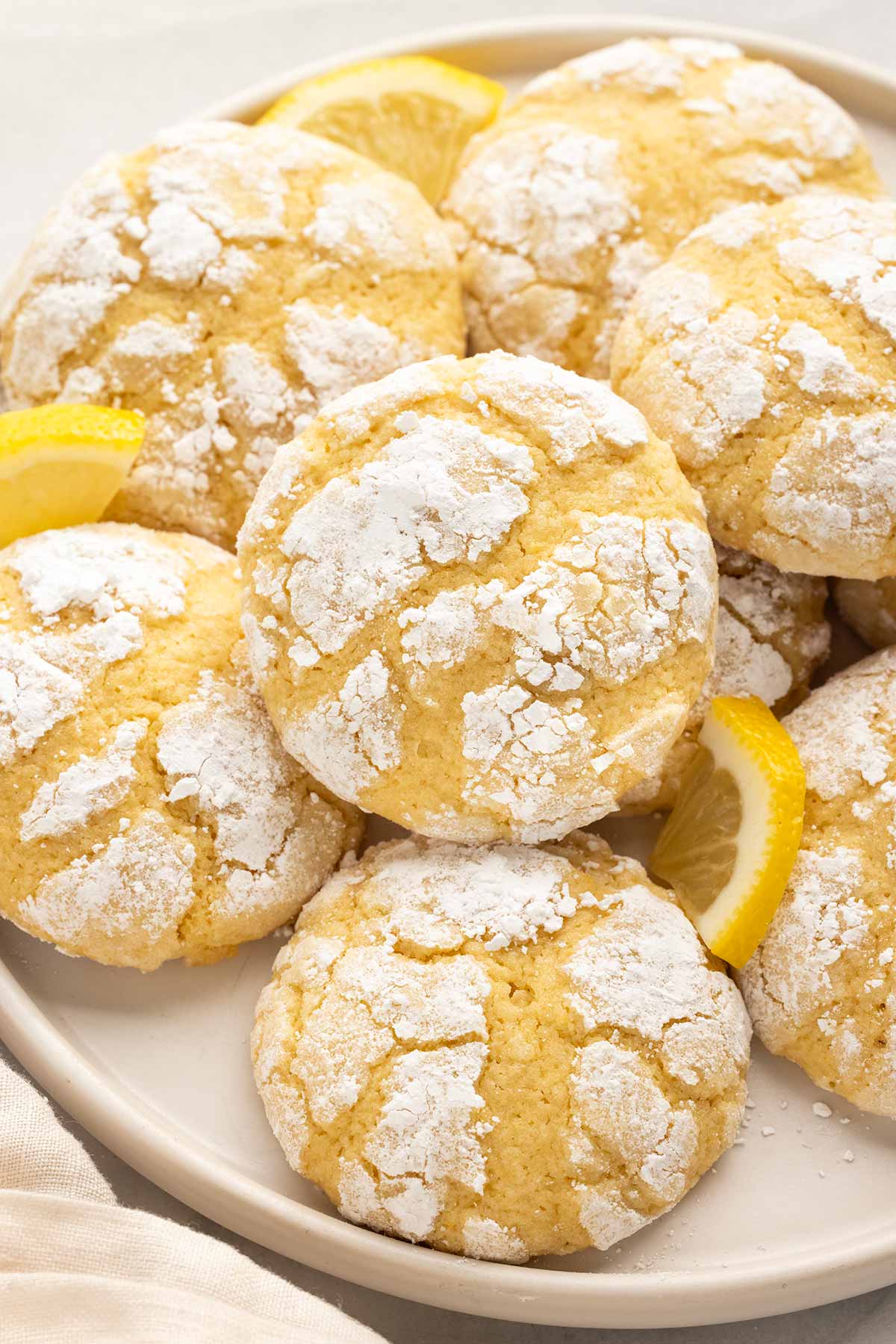
Bright and zesty, these lemon crinkle cookies strike the perfect balance between sweet and tangy. Each bite delivers a burst of citrus wrapped in a delicate, powdered-sugar crust.
Try my classic chocolate crinkle cookies or red velvet crinkle cookies for even more flavor inspiration.
Jessica’s Recipe Science
- Creaming butter with sugar traps tiny air pockets that expand in the oven, giving the cookies their soft, puffy texture.
- Acidic lemon juice limits gluten formation, creating a more tender cookie with a clean, bright citrus flavor.
- Rolling the dough in granulated and powdered sugar creates distinct crinkles as the coating dries and splits while baking.
Why It Works
I love making this simple recipe for lemon crinkle cookies when I want something quick and full of bright citrus flavor. Creaming butter with two types of sugar incorporates tiny air pockets that expand in the oven, giving the cookies their tender, puffy centers. The acidity from fresh lemon juice and zest not only sharpens the flavor but also slightly inhibits gluten development, resulting in a softer bite.
Baking powder provides the controlled lift that helps the dough “crack” once coated in both granulated and powdered sugar. The double layer pulls apart as the cookie rises, creating those signature snowy crinkles. These cookies are perfect for spring and summer gatherings, holiday cookie plates, bake sales, or any moment you want a refreshing treat.
Jump To a Section
Ingredients You’ll Need
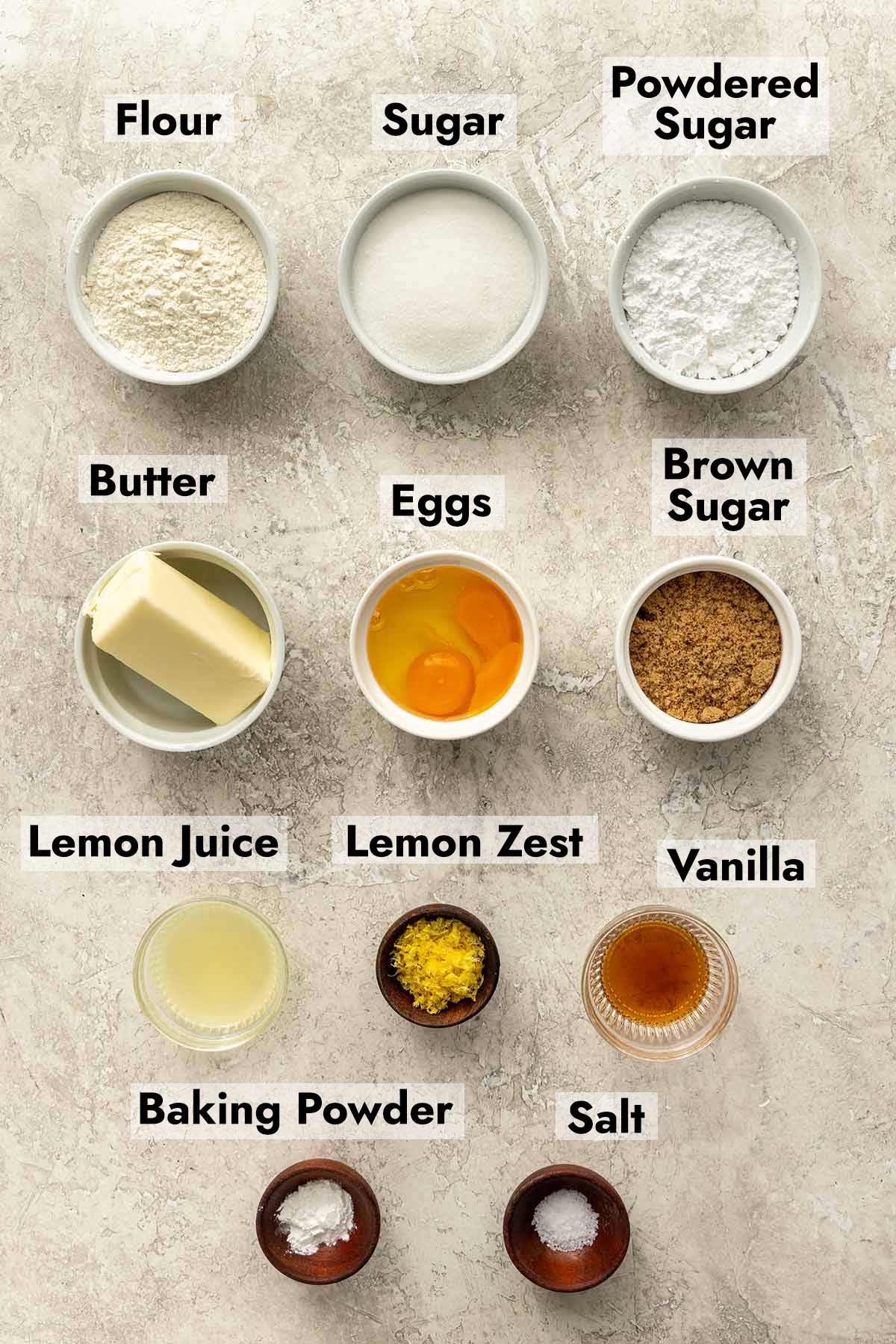
- Flour: All-purpose flour provides the base structure, giving just enough strength to support the soft, cakey, tender center.
- Powdered Sugar: Confectioners’ sugar is incorporated into the dough for a delicate chew and used again as a coating to create fissures as the cookies expand in the oven.
- Leavening Agents: Baking powder provides the lift that puffs the centers, while the eggs bind the dough and contribute additional aeration during mixing.
- Sugar: A blend of granulated and light brown sugar adds clean sweetness, gentle caramel notes, and crisp edges. Rolling the dough in sugar before baking ensures the signature cracks.
- Butter: Softened butter at room temperature (65 to 67ºF) creams efficiently with the sugars, trapping tiny air pockets that bake into a lighter, more tender cookie.
- Flavoring: Vanilla extract rounds out the citrus, and a pinch of salt balances the sweetness.
- Lemon: Fresh lemon zest infuses the dough with aromatic citrus oils, while lemon juice adds bright acidity that sharpens the flavor and limits gluten development, resulting in a softer bite.
See the recipe card below for all ingredients and measurements (US and metric).
Ingredient Substitutions
This lemon crinkle cookie recipe is easy to customize! Try these delicious options:
- Color: Fresh lemon juice and zest provide a hint of yellow color. For a more intense hue, add a few drops of yellow food coloring to the dough. I recommend yellow gel coloring for a concentrated color that won’t dilute the dough.
- Lemon Flavor: The fresh lemon flavor can be complemented with lemon extract. This will add a lingering citrus taste. Add ¼ to ½ teaspoon of lemon extract.
- Citrus: Mix in other citrus fruits, such as lime or orange, to create a citrus medley.
- Nuts: Chop nuts such as almonds, pistachios, walnuts, or pecans and add them to the cookie dough for a crunchy texture and nutty flavor.
- Flour: Use 1:1 gluten-free flour for those with dietary restrictions.
How to Make Lemon Crinkle Cookies
Step 1: Preheat the Oven
Setting the oven to 350°F (177ºC) creates a moderate, controlled heat that allows the dough to gently spread before the structure sets, giving the cookies their signature soft centers and dramatic crinkles.
Step 2: Mix the Dry Ingredients
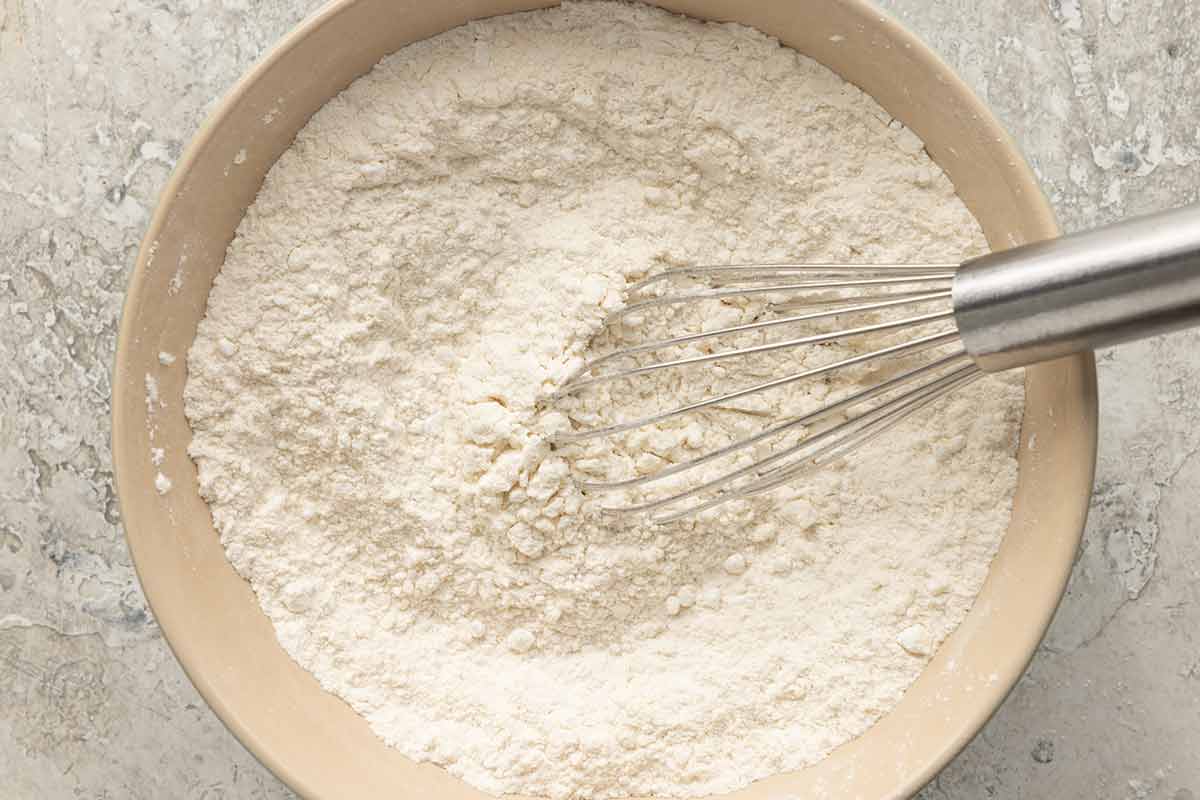
It’s essential to whisk the dry ingredients thoroughly because the flour, powdered sugar, baking powder, and salt are all very fine particles that can easily clump or settle unevenly. Combining them first ensures the leavening and seasoning are evenly dispersed throughout the dough, giving every cookie consistent lift and flavor.

Step 3: Cream the Butter and Sugar
For a soft crumb, cream the softened butter with the granulated and brown sugar until the mixture looks pale and lightly whipped. Using a stand mixer fitted with the paddle attachment makes it easy to incorporate tiny air pockets that help the cookies rise. Mix on medium speed for a few minutes, just until the texture looks fluffy.
Ingredient Chemistry: Creaming the lemon zest with the butter and sugar intensifies the fresh lemon flavor. The mechanical agitation from the mixer and sugar granules releases aromatic essential oils from the zest. This disperses the citrus compounds throughout the fat, creating a noticeably stronger lemon flavor in the cookie.

Step 4: Add the Eggs
Add the eggs one at a time so they fully emulsify into the creamed butter and sugar, creating a smooth, stable base that traps air for a lighter texture. Gradually blend in the lemon juice so the acidity incorporates evenly without breaking the mixture. Finish by mixing in the vanilla extract to round out the citrus flavor.

Step 5: Make the Dough
Add the flour mixture to the wet ingredients in four increments, mixing on low speed after each addition. This gradual approach gives the flour time to hydrate and form just enough gluten to support the cookies’ gentle rise without making them tough. The finished dough will be thick, but slightly tacky due to the moisture from the lemon juice. However, the powdered sugar contains cornstarch, which absorbs excess moisture and creates a rollable texture.
Tips for Perfect Execution: Letting the dough rest for 10 minutes hydrates the flour, thickening the dough and making it easier to roll and shape before coating it in the sugars.

Step 6: Coat and Roll the Dough
Portion the dough into 2-tablespoon mounds, then roll each piece in granulated sugar. Shape the dough into a smooth ball, then coat it generously in powdered sugar. The cornstarch in the powdered sugar keeps the exterior dry so it can split dramatically during baking.
Pro Tip: Rolling the cookie dough balls first in granulated sugar helps dry the surface more quickly during baking. While the surface hardens, the interior is still spreading and setting. Gradually, the force pulls apart the surface, causing more cracks than confectioner’s sugar alone.

Step 7: Bake
Space the dough balls at least 2 inches apart to give them room to spread and form distinct crinkles. Bake one tray at a time for the most consistent heat exposure, and rotate the pan halfway through so the cookies puff evenly in the center and the edges set just right, 12 to 14 minutes.

Step 8: Cool
Let the cookies rest on the sheet pan for 5 minutes so their structure can finish setting, then transfer them to a wire cooling rack where air can circulate and cool them evenly. Allow them to cool completely before serving to lock in their soft centers and crisp, powdered exterior.
Frequently Asked Questions
You can use bottled lemon juice in a pinch, but fresh lemon juice will give the cookies a brighter, cleaner citrus flavor. Bottled juice is heat-treated and often contains preservatives, which can slightly dull the acidity and aroma. For the best lemon pop, fresh is definitely worth it.
Yes, you can use lemon extract, but it’s best as a supplement rather than a full replacement. A small amount can boost the citrus aroma, but it doesn’t provide the same fresh acidity or natural oils from real lemon zest and juice, which are essential for the cookie’s bright flavor and tender texture.
Yes, lemon crinkle cookies freeze very well. You can freeze the baked cookies for up to 1 month, or freeze the unbaked dough balls (uncoated) for quick baking later. Thaw, then coat in the granulated sugar and powdered sugar.
More Cookie Recipes



If you tried these Lemon Crinkle Cookies, please leave a 🌟 star rating and let me know how it went in the 📝 comments below!
Lemon Crinkle Cookies

Ingredients
Dough
- 2 ¼ cup all-purpose flour
- ½ cup powdered sugar
- 1 teaspoon baking powder
- ½ teaspoon kosher salt
- ½ cup unsalted butter, softened to 65 to 67ºF (18 to 20ºC)
- ¾ cup granulated sugar
- ¼ cup light brown sugar, packed
- 1 tablespoon lemon zest
- 2 large eggs
- 2 tablespoons lemon juice
- 1 teaspoon vanilla extract
Coating
- ½ cup granulated sugar
- ½ cup powdered sugar
Instructions
- Preheat the Oven – Set the rack to the middle position. Preheat to 350ºF (177ºC). Line two baking sheets with parchment paper.
- Mix the Dry Ingredients – In a medium bowl, whisk together the flour, ½ cup of powdered sugar, baking powder, and salt.
- Cream the Butter and Sugar – In a stand mixer or hand mixer fitted with the paddle attachment, add the butter, ¾ cup of granulated sugar, brown sugar, and lemon zest. Mix on medium speed (setting 5) until light and fluffy, about 2 minutes. Scrape down the sides and paddle.
- Add the Eggs – Add the eggs, one at a time, mixing on medium-low speed (setting 4), for about 30 seconds each. Gradually mix in the lemon juice, mixing for about 15 seconds. Mix in the vanilla extract for 15 seconds.
- Make the Dough – Gradually add the flour mixture in four additions. Mix on low speed until just combined. Let the dough sit for 10 minutes to thicken. The dough will feel slightly sticky and soft.
- Coat and Roll the Dough – Add ½ cup granulated sugar into a shallow dish. Add ½ cup powdered sugar into a separate shallow dish. Portion out 2 tablespoons (1 ounce, 32 grams) of dough, then roll into a ball. Roll each ball in granulated sugar, then transfer to the powdered sugar bowl and roll to coat. Repeat with the remaining dough.
- Bake – Evenly space the dough balls on the prepared baking sheets, at least 2 inches apart. About 12 cookies per sheet pan. Bake one sheet at a time until puffed in the center and the edges set, about 12 to 14 minutes. Rotate the pan halfway through.
- Cool – Leave the cookies on the sheet pan for 5 minutes, then transfer them to a wire rack. Cool completely before serving.
Recipe Video

Notes
- Deeper Yellow Color: Add yellow food coloring to the dough until the desired hue is achieved. Gel coloring is recommended for a concentrated color.
- Stronger Lemon Flavor: Add 3 tablespoons lemon juice. The dough will be very sticky, so use a cookie scoop to portion the dough and drop it directly into the granulated sugar for easier rolling. Alternatively, add ¼ – ½ teaspoon lemon extract in addition to the 2 tablespoons lemon juice.
- Make it Gluten-Free: Substitute the all-purpose flour for Bob’s Redmill 1:1 Gluten-Free Baking Flour.
- Make Ahead: The cookie dough can be portioned and refrigerated for up to 2 days. Freeze for up to 1 month, then defrost. Roll in sugar and powdered sugar before baking.
- Storing: Airtight container for up to 5 days, freeze for up to 1 month.
Nutrition Facts
Percent Daily Values are based on a 2000-calorie diet. All nutritional information is based on estimated third-party calculations. Each recipe and nutritional value will vary depending on the brands you use, measuring methods, and portion sizes per household.


Leave a Comment