
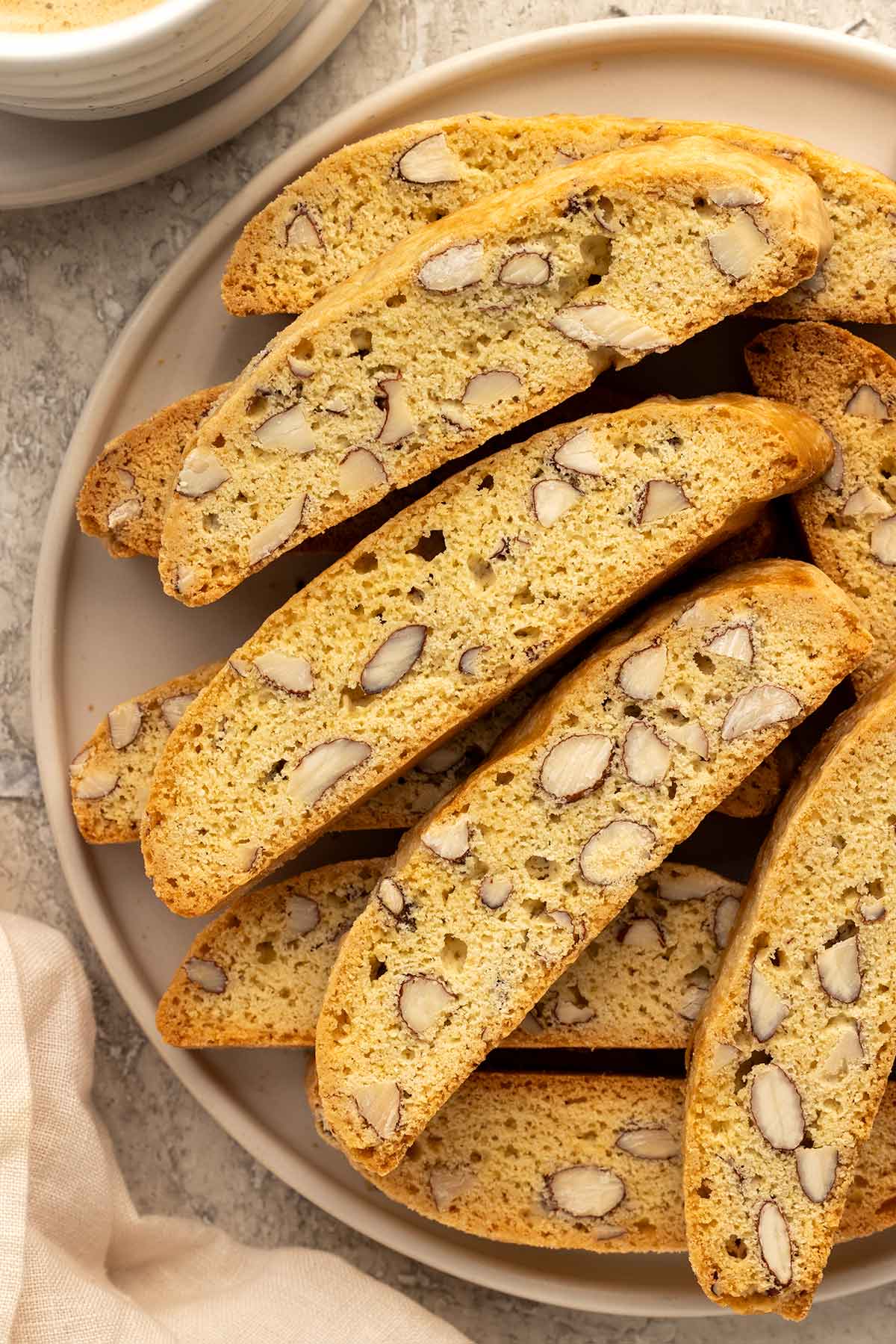
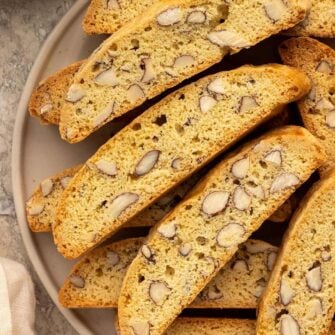
My Italian almond biscotti recipe (cantucci) bakes up crisp and full of deep toasted-almond flavor. It’s perfect for dipping into your morning coffee or a cozy cup of tea. I’ll show you the simple techniques that create their signature twice-baked crunch.
Jessica’s Recipe Science
- Whipping the eggs with sugar incorporates air, giving the biscotti lift and a lighter, crispier texture.
- Toasting the almonds intensifies their nutty flavor and helps them stay crunchy after the second bake.
- Using melted butter adds richness while still allowing the biscotti to dry out fully, resulting in the signature twice-baked snap.

Jessica Gavinjess2201Edit Profile
Featured Comment 4
“I decided to add a biscotti to our family Christmas gift bag for our friends and neighbors. I found this recipe and gave it a try. It was such a hit that my daughter-in-law (a very good cook) asked to come over with my granddaughter and watch me step-by-step because it was so good. So for a grandpa who’s never done any real baking, you’ve made me a hero!” —Steve W.
Why It Works
Right after college, I took a solo trip to Italy and visited the breathtaking region of Tuscany. During my stay, I spent several days learning to prepare regional dishes at the local restaurant Osteria Della Lodola under Chef Carlo. One of those recipes was a traditional cantucci, simple, crunchy almond biscotti meant for dipping into vin santo after dinner. This version is inspired by those unforgettable days, combining simple pantry staples like flour, eggs, toasted almonds, and fragrant extracts to create a twice-baked cookie that’s crisp, aromatic, and deeply nostalgic.
Biscotti is all about developing the right structure and texture for the Italian cookies. Whipping the eggs with sugar incorporates air, giving the cookie a lightness. Traditionally, butter is not added, but after testing, I’ve found it adds richness and enhances the classic crunchy bite. Twice-baking the cookies helps acheive the ideal crispness, perfect for dipping in your drink of choice or as a sweet treat. They also make the perfect edible holiday gift! I hope you enjoy recreating a little slice of Tuscany at home.
Jump To a Section
Ingredients You’ll Need
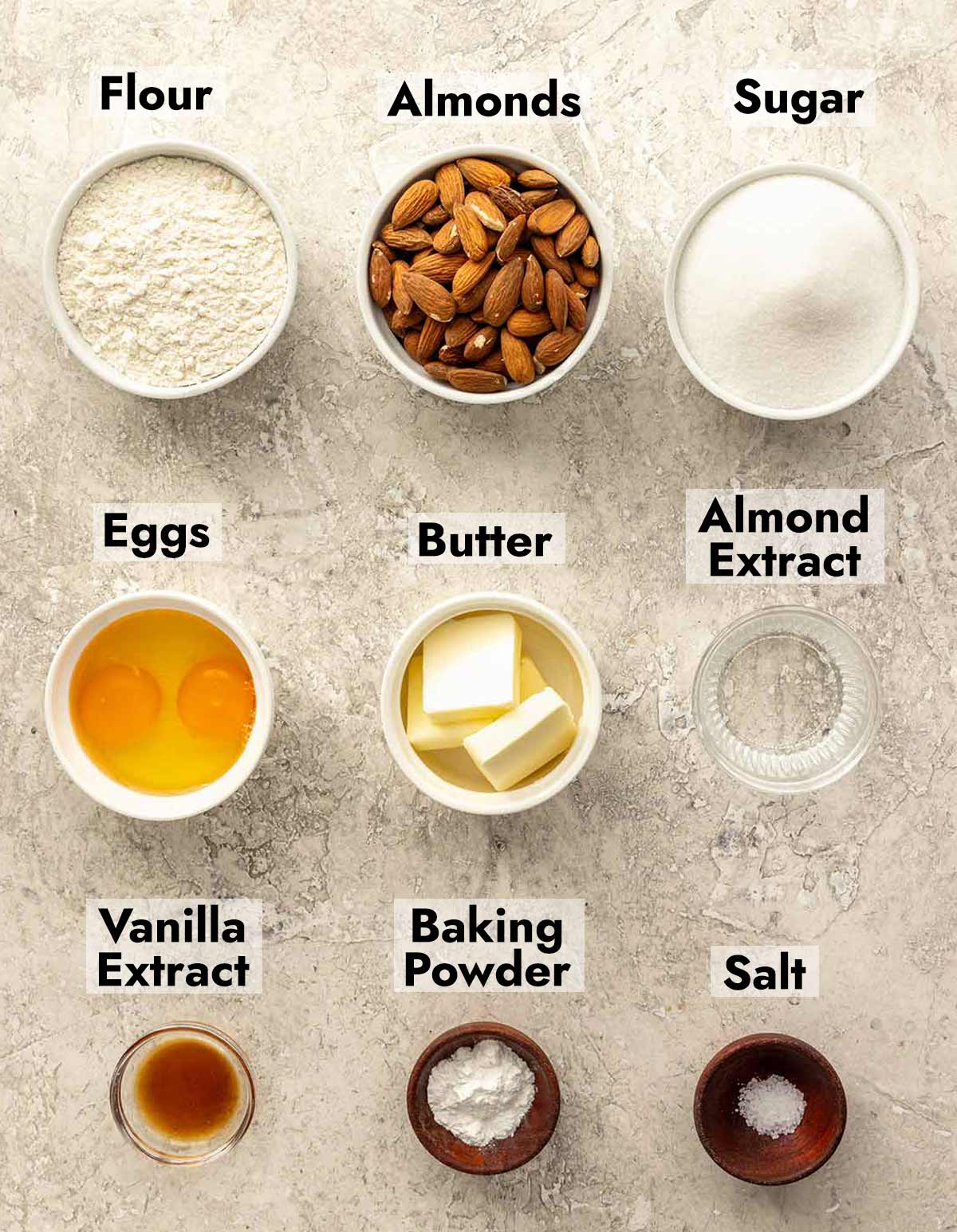
- Almonds: I use whole, unpeeled almonds for the recipe. That way, I can chop them to the desired size. I opt for unsalted so I can control the seasoning level.
- Flour: All-purpose flour has a moderate protein content of about 10-13%, providing a sturdy foundation for the twice-baked biscuits.
- Eggs: Whole eggs are used for binding and leavening the batter, preventing it from becoming too hard and dense.
- Baking Powder: The leavening agent helps the loaves rise while baking in the oven, nearly doubling in height.
- Sugar: Granulated sugar adds sweetness and the characteristic snap when the cookie is bitten into.
- Butter: Melted butter adds richness and tenderness to the biscotti. Without a little extra fat, the cookies will be very tough and dry.
- Flavoring: I use almond extract to enhance the aroma and taste of the almond cookies. Vanilla adds additional sweet baked notes. A small amount of salt keeps the dough from tasting bland.
- Egg Wash: I use an egg-white wash to maintain a light golden hue on the surface.
Adding a pinch of salt to egg whites helps break down the tight protein structure, making the mixture more fluid and easier to brush on for a shiny finish. You can use a whole egg instead if you want a deep golden hue.
See the recipe card below for all ingredients and measurements (US and metric).
Ingredient Substitutions
This almond biscotti recipe is easy to customize! Try these tasty options:
- Almond Options: You can use raw or roasted whole almonds. Use blanched almonds without the skin, or slivered almonds for a more delicate flavor; you do not need to chop them. Add Marcona almonds for a soft, buttery texture.
- Almond Swaps: Add pistachios, hazelnuts, walnuts, peanuts, cashews, or a mixture.
- Flour: Typically, 00 flour is used in Italy. It gives biscotti a finer, more delicate crumb and a cleaner bite because its ultra-fine grind and lower protein content promote a slightly more tender, less rugged crunch compared to all-purpose flour.
- Fruit: Add dried raisins, currants, cherries, cranberries, figs, coconut, or apricots for sweetness and a delightful chew.
- Sweetener: You can swap some of the white sugar for light brown sugar, but it will be slightly less crunchy.
- Flavoring: Try anise extract or anise seeds, peppermint, coconut, lemon, or caramel. For a citrus note, add candied orange, orange zest, or extract. Add cinnamon, nutmeg, cardamom, or pumpkin pie spice.
- Chocolate: Add cocoa powder for a chocolate flavor base or mini chocolate chips as a mix-in.
- Coating: For an extra luxurious finish, dip the biscotti in melted chocolate. White chocolate, milk chocolate, or dark chocolate are great options. Adding coconut oil helps them set more quickly at room temperature. Melting wafers or chips work well as sturdy coatings, especially if you plan to give them as a gift.
How to Make Almond Biscotti
Step 1: Heat the Oven
Heating the oven to 325°F (163 °C) and placing the rack in the middle ensures the biscotti bake gently and evenly, allowing the dough to set and dry without over-browning.
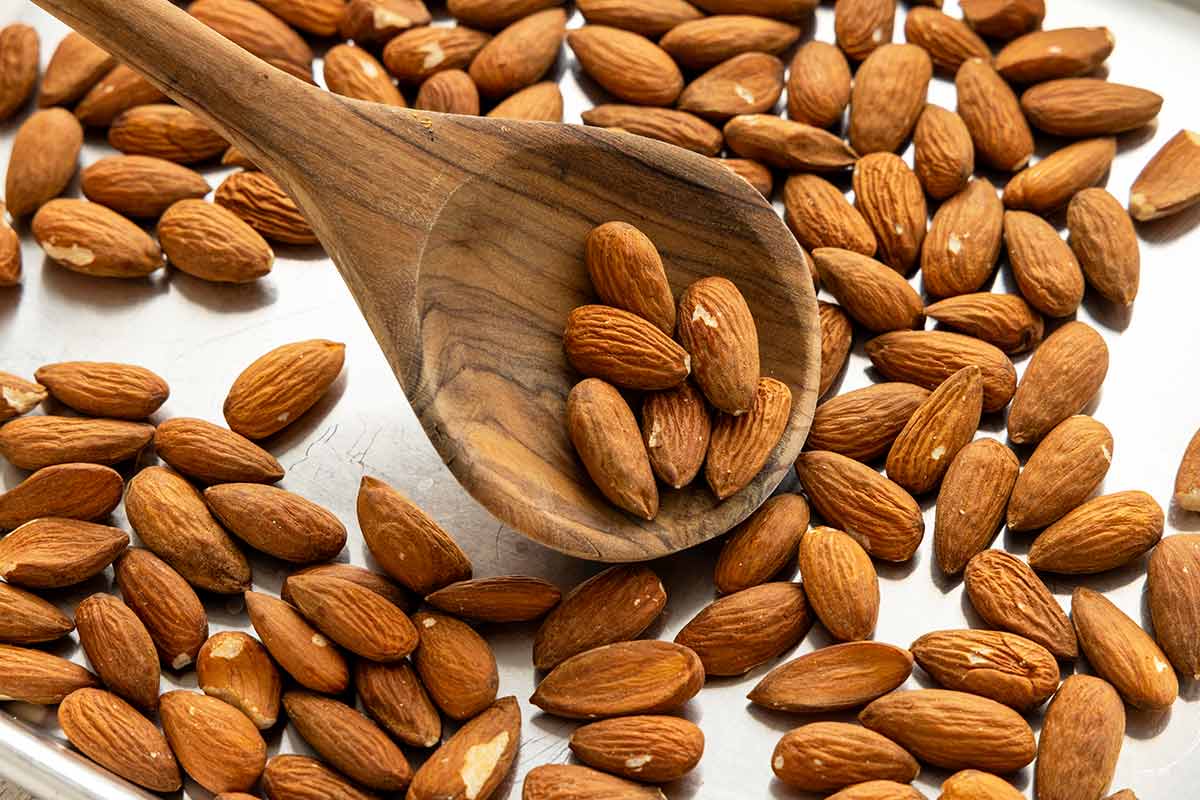
Step 2: Toast the Almonds
Lightly toasting the almonds gently heats and releases their aromatic oils, intensifying their nutty fragrance and flavor. The nuts will toast more during the two baking steps; warm them briefly.

Step 3: Chop the Almonds
Coarsely chopping the almonds into medium pieces ensures they distribute evenly throughout the dough while maintaining a size that provides a signature crunchy bite. I like to see a cross-section of the nuts in the slices, so I don’t chop them up very much.
Experimentation Encouraged: You can leave the almonds whole; however, you won’t release as much flavor from the oil. It’s also harder to slice and bite larger pieces of nuts.
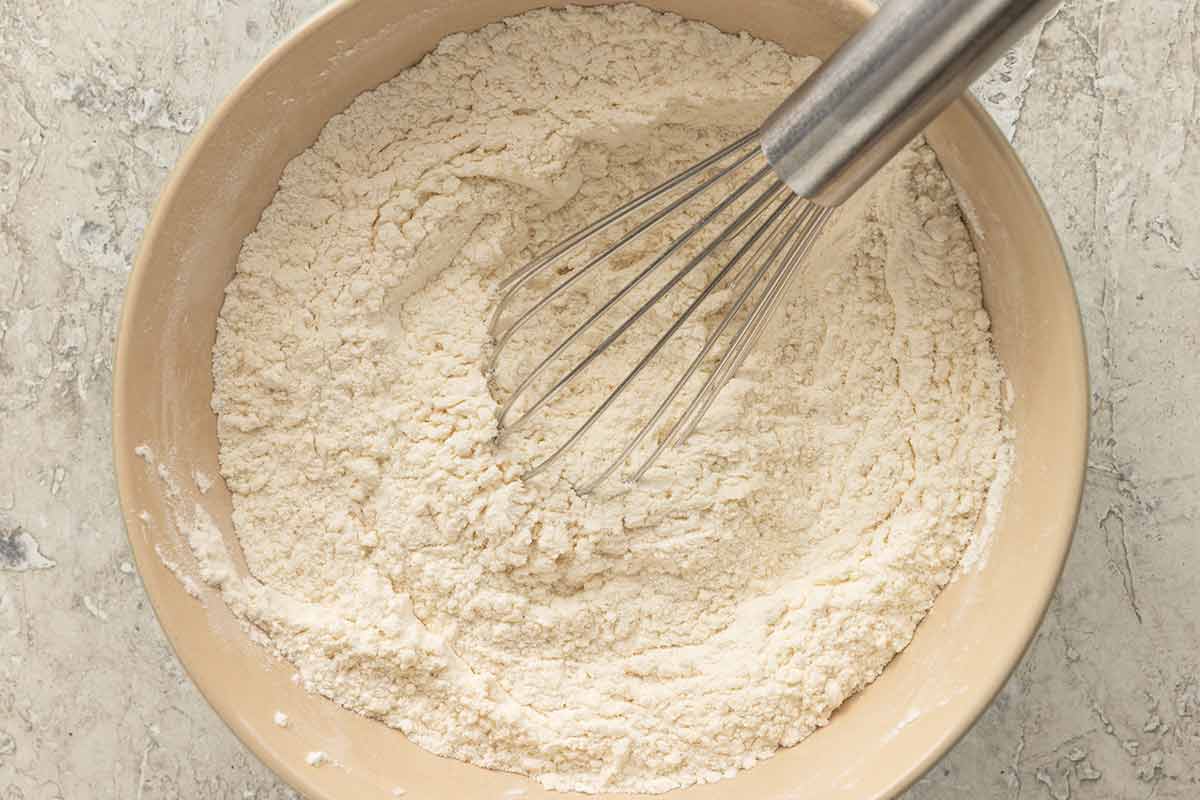
Step 4: Mix Dry Ingredients
Whisking the flour, baking powder, and salt evenly disperses the leavening and seasonings. This prevents clumps and ensures the biscotti rise uniformly with a consistent crumb structure.
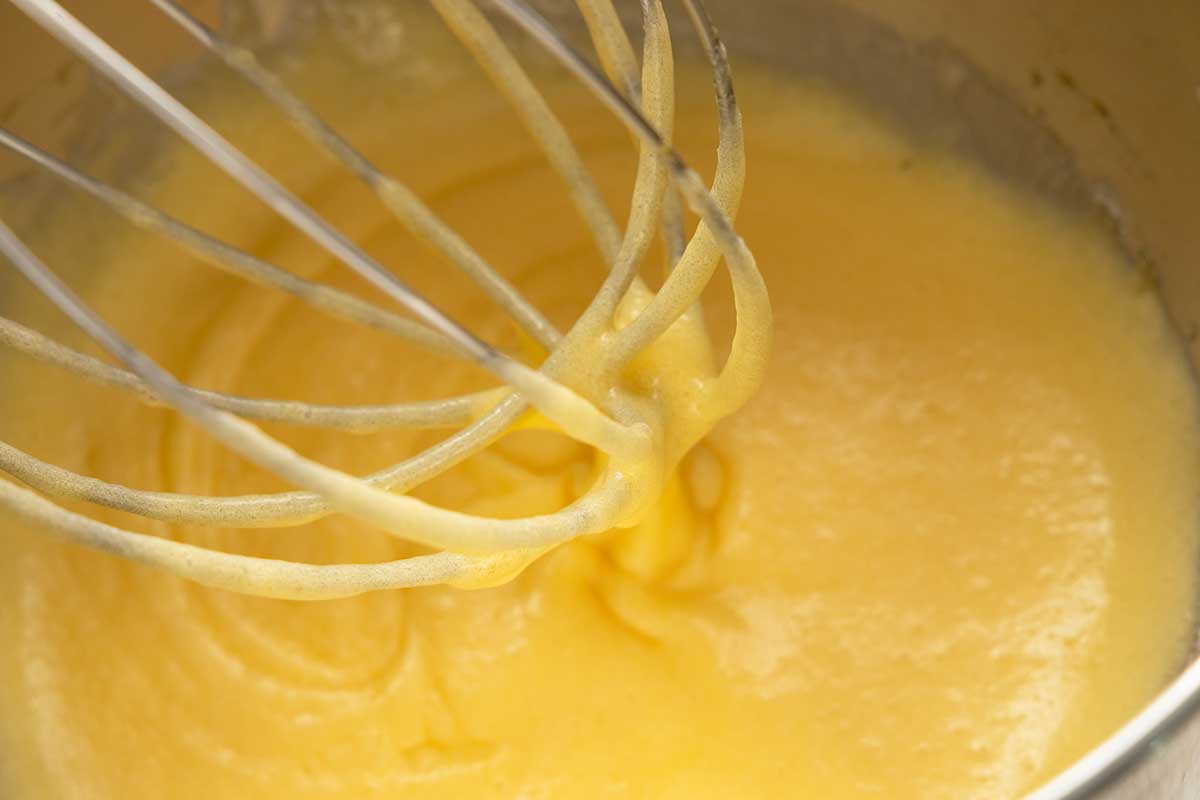
Step 5: Mix the Wet Ingredients
Whisking the eggs until pale and voluminous incorporates tiny air bubbles that give the biscotti lift and a lighter crumb, while slowly adding the sugar helps stabilize that foam. Blending in the melted butter gently coats the gluten-forming proteins, creating a finer, more tender texture that still bakes up crisp without becoming dry or crumbly.
Chef’s Tip: Adding the almond and vanilla extracts at this stage ensures their flavors are evenly distributed throughout the dough.
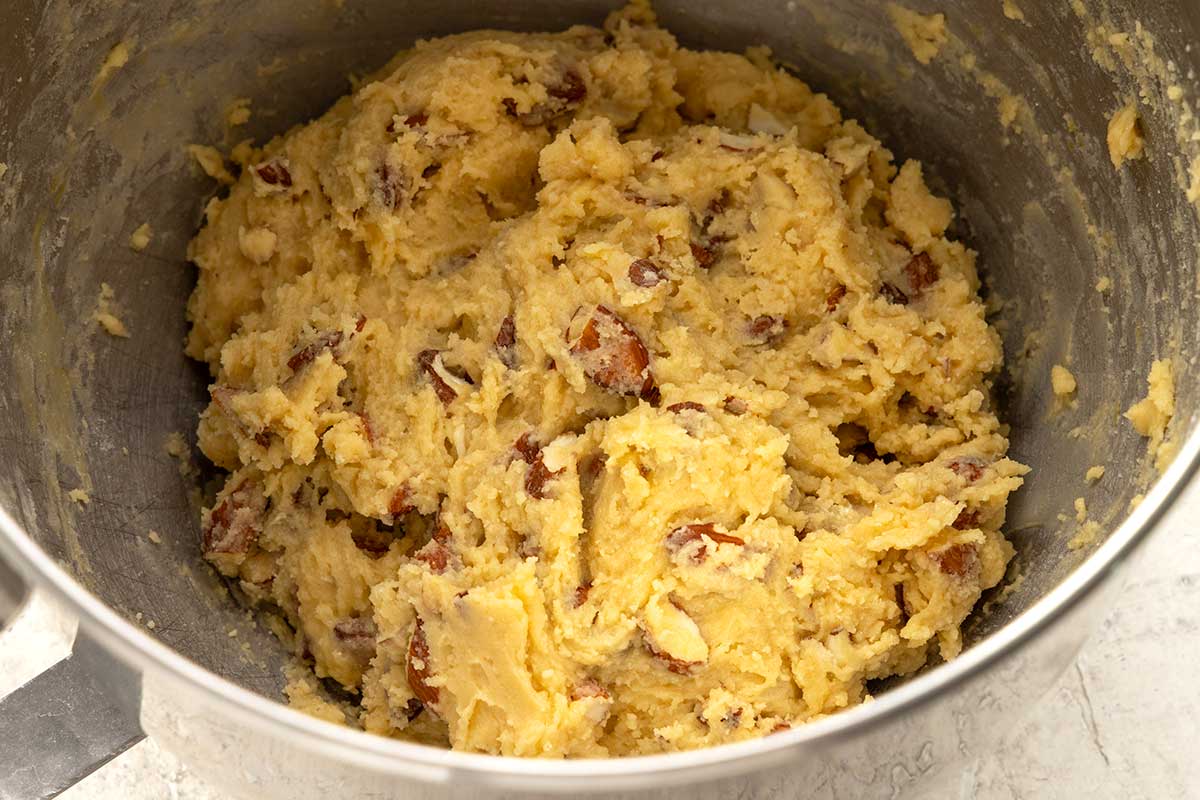
Step 6: Make the Dough
Gently folding in the flour in two additions minimizes gluten development, keeping the biscotti crisp and tender rather than tough, and mixing only until the dough comes together prevents overworking the dough. Adding the almonds at the end ensures they stay evenly suspended without crushing or releasing excess oils into the dough.
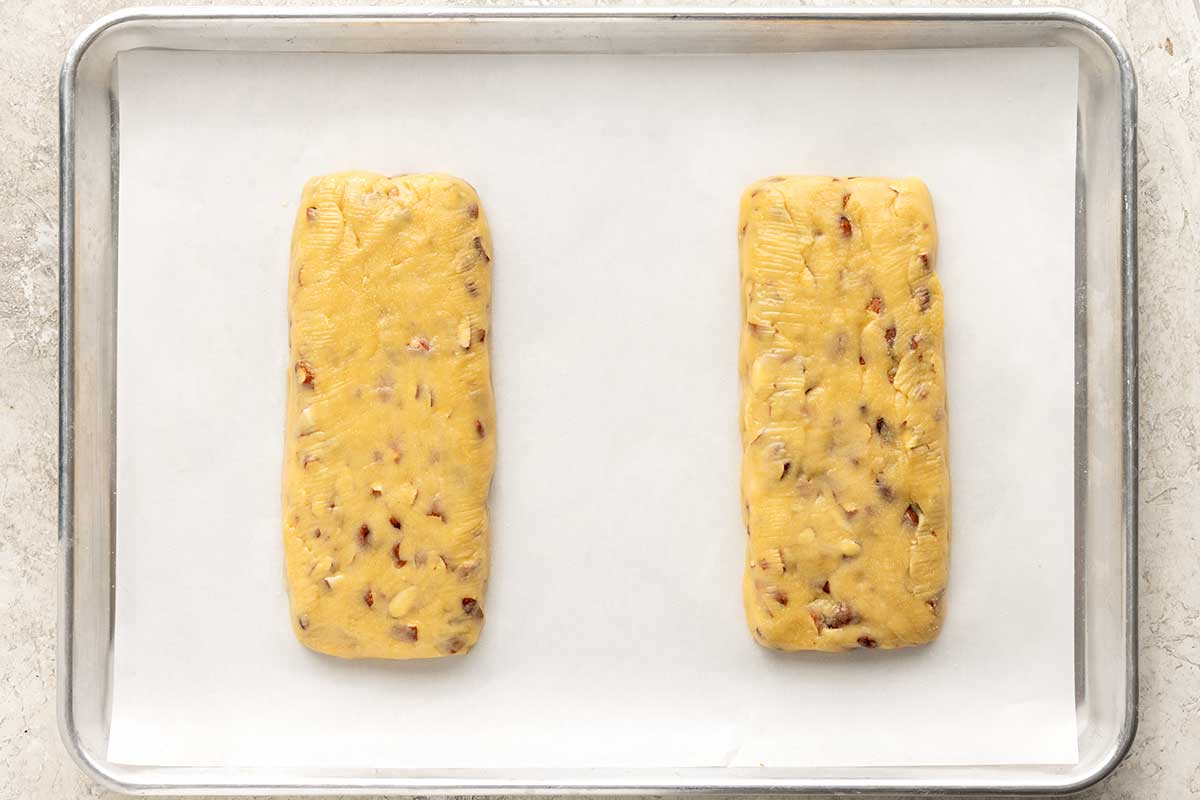
Step 7: Portion the Dough
Shaping the dough into evenly sized loaves ensures uniform baking. I create two 8-inch by 3-inch loaves, each about 3/4-inch thick. I make a slight dome, smoothing the edges to give the characteristic tapered, oblong shape. They rise to almost 1 1/2-inches tall, and about 4 ½ inches long. Brushing with an egg-white wash adds shine and a delicate, crisp finish.
Pro Tip: Chef Carlo added a light sprinkle of sugar over the egg wash to boost caramelization and create a lightly sweet crust. Just use a small amount—too much will make the top overly sweet. You can skip the sugar entirely if you plan to dip the biscotti in chocolate.
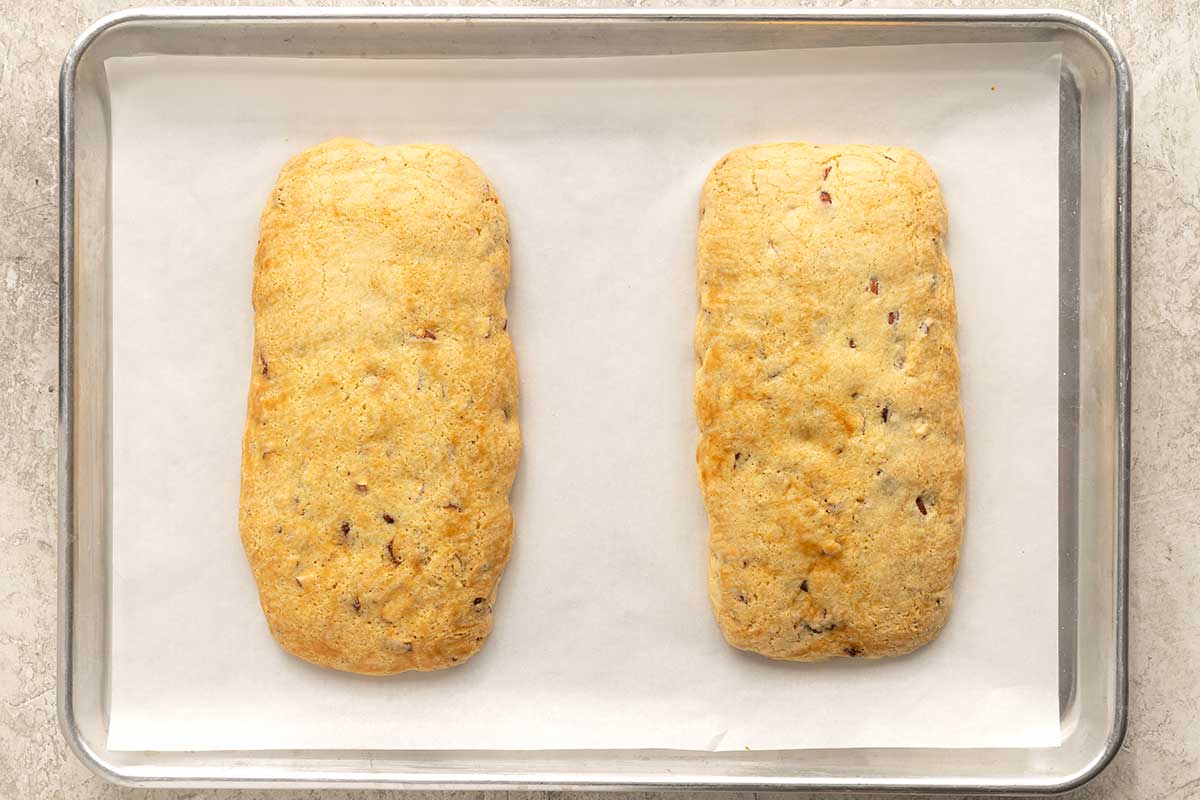
Step 8: Bake
This first 30-minute bake sets the loaf’s structure and begins drying the dough so it slices cleanly later. Rotating the cookie sheet halfway through ensures even heat exposure and uniform browning.
Tips for Perfect Execution: Cooling the loaves for 30 minutes is essential because it firms up the crumb and prevents crumbling when you slice the biscotti.
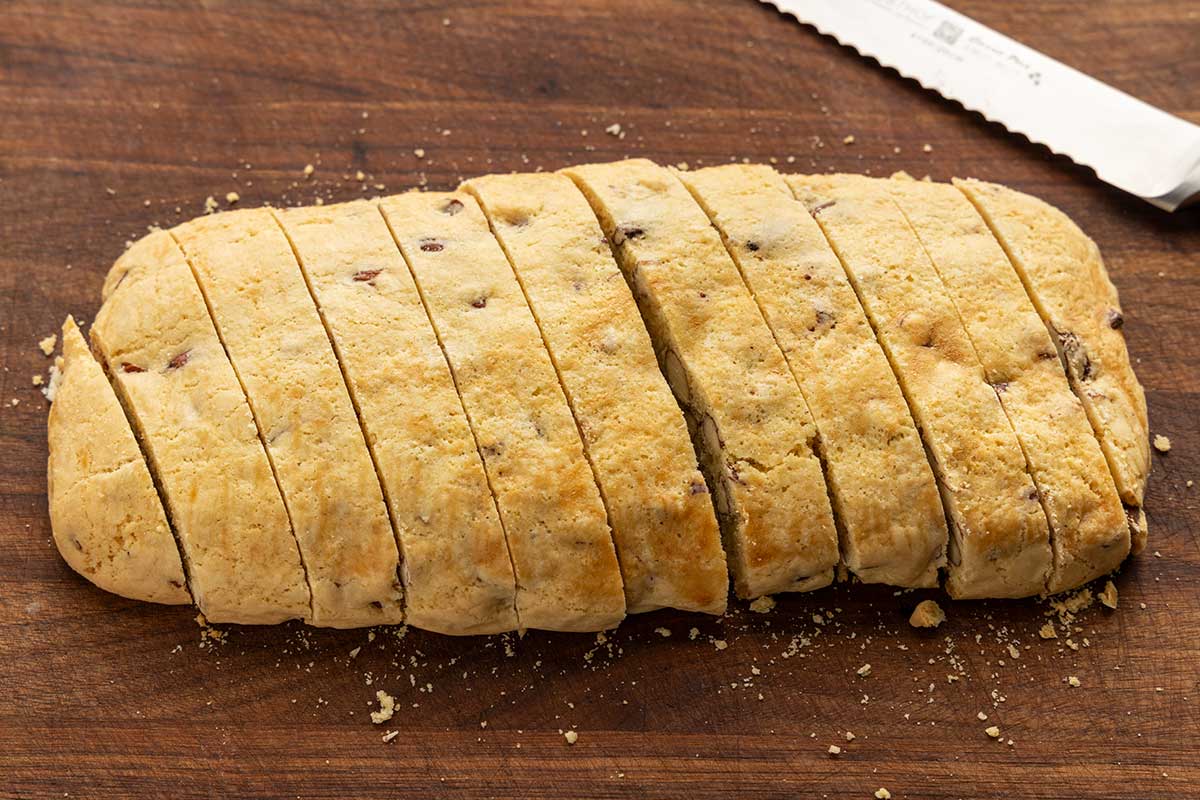
Step 9: Slice the Biscotti and Bake Again
Cutting the loaves with a sharp serrated knife at a slight bias preserves their structure and yields wider slices with more surface area for crispness. Laying the pieces cut side down exposes the interior to direct heat, allowing moisture to escape efficiently during the second bake. Flipping the biscotti ensures both sides dry evenly, giving them their signature crunchy texture.
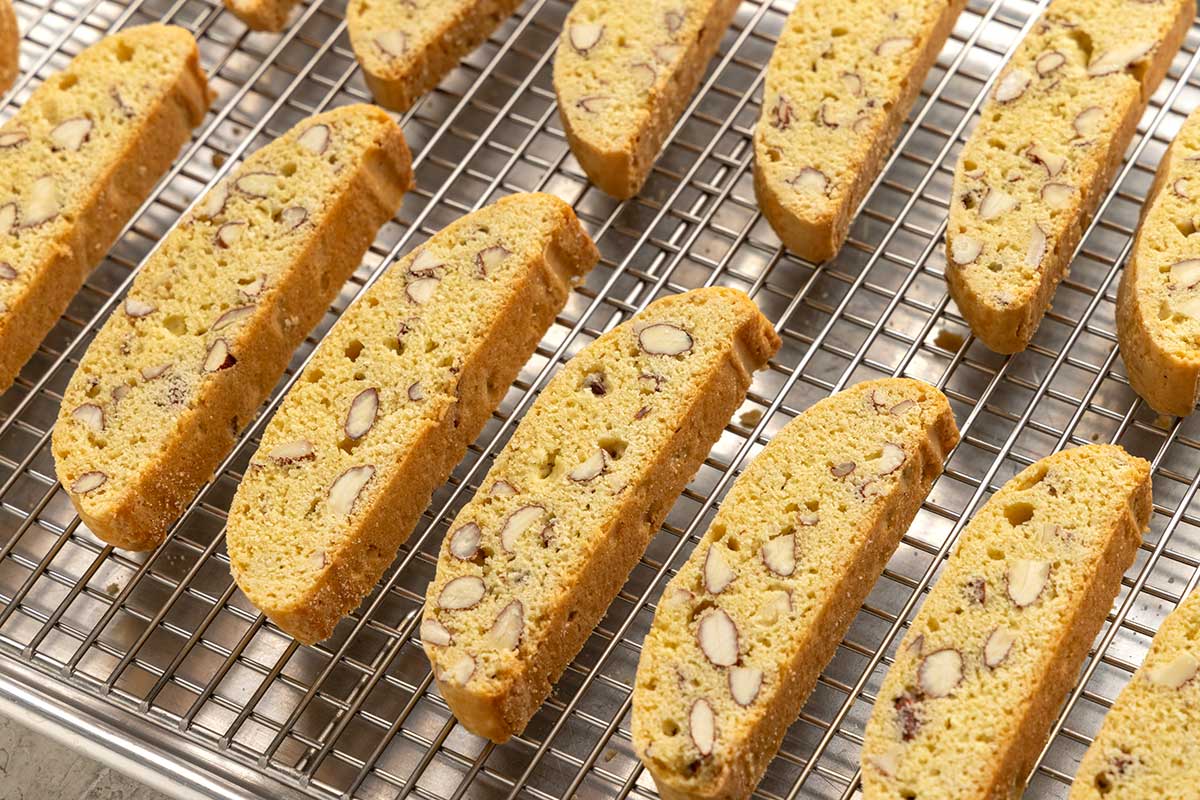
Expert Tip: Baking the biscotti on a wire rack allows hot air to circulate each slice, promoting even drying. You can bake them directly on the pan, but the direct heat contact will dry and crisp the bottoms faster, so flip the slices after about 10 minutes to prevent over-browning.
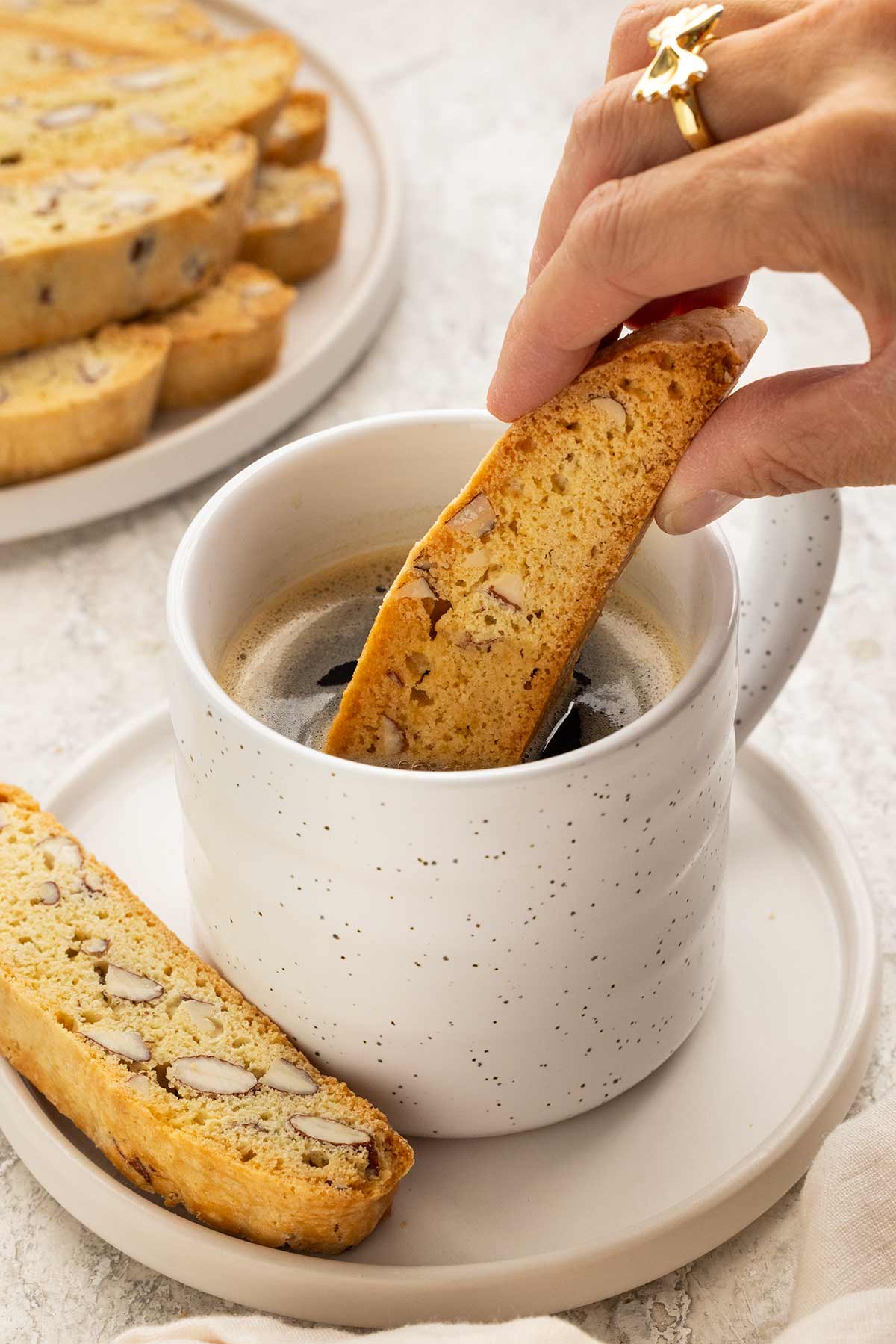
Step 10: To Serve
Cooling the biscotti on a wire rack allows any remaining steam to escape, ensuring they dry fully and achieve their signature crisp texture before serving. Enjoy the simple almond biscotto with the classic flavor, or make them fancy by dipping them in chocolate and sprinkling chopped nuts on them!
Frequently Asked Questions
You can swap ¼ cup of all-purpose flour for almond flour. It will give the cookie a more tender texture because less gluten forms. Don’t go higher than that, or the dough won’t hold together well. Gluten-free flour is also a good 1:1 replacement.
While it’s not strictly necessary, toasting the almonds is highly recommended because it releases their aromatic oils and deepens their nutty flavor, giving the biscotti a richer, more pronounced taste. Untoasted almonds will taste milder and won’t deliver the same fragrant crunch.
Yes, wrap the dough tightly in plastic wrap and refrigerate it for up to 24 hours. Keep in mind that chilling the dough firms it, so let it sit at room temperature for 15 to 20 minutes before shaping. You may lose a little height during baking since some of the air whipped into the eggs can deflate as the dough rests in the refrigerator.
Store the fully cooled biscotti in an air-tight container at room temperature in a dry area. Their low moisture content keeps them crisp for up to 1 month. For even longer storage, freeze them in a sealed bag for up to three months. Let them thaw at room temperature before enjoying.
More Cookie Recipes



If you tried this Almond Biscotti Recipe, please leave a 🌟 star rating and let me know how it went in the 📝 comments below!
Almond Biscotti (Cantucci)
Ingredients
- 1 cup whole almonds, unsalted
- 2 cups all-purpose flour
- 2 teaspoons baking powder
- ¼ teaspoon kosher salt
- 2 large eggs
- 1 cup granulated sugar, more for sprinkling
- ¼ cup unsalted butter, melted and cooled
- 1 ½ teaspoons almond extract
- 1 teaspoon vanilla extract
- egg wash, 1 egg white mixed with 1/16 teaspoon salt
Instructions
- Heat the Oven – Set the oven rack to the middle position. Heat to 325ºF (163ºC). Line a sheet pan with parchment paper.
- Toast the Almonds – Spread the almonds on a sheet pan. Toast for 10 minutes, stirring halfway through.
- Chop the Almonds – Use a chef’s knife to coarsely chop the almonds. Aim for medium pieces so they distribute evenly but still have a characteristic almond appearance.
- Mix Dry Ingredients – In a medium bowl, whisk together the flour, baking powder, and salt. Set aside.
- Mix the Wet Ingredients – Add 2 eggs to the bowl of a stand mixer fitted with the whisk attachment. Beat on medium-high speed (setting 8) until the eggs turn pale yellow and nearly double in volume, about 3 minutes. Reduce to medium speed (setting 5) and slowly pour in the sugar, mix until fully incorporated, about 15 seconds. Add the melted butter, almond extract, and vanilla, and mix again until smooth and combined, about 15 seconds. The mixture should be thick yet pourable.
- Make the Dough – Add half of the flour mixture to the egg mixture, and gently stir with a spatula until just combined. Add the remaining flour and the chopped almonds, stirring until the dough just comes together; it will be slightly tacky. Avoid over mixing to maintain a crisp, tender biscotti.
- Portion the Dough – Divide the dough into two equal portions and place them on the sheet pan. With lightly floured hands, shape each portion into an 8-by-3-inch rectangle. Space the loaves at least 4 inches apart. Smooth the edges to create a slight dome. Brush the tops with the egg white wash. If desired, lightly sprinkle granulated sugar on top.
- Bake – Bake for 25 to 30 minutes, or until the loaves are lightly golden, rotating the pan halfway through. Let them cool on the baking sheet for 30 minutes.
- Slice the Biscotti and Bake Again – Place the loaves on a cutting board. Use a serrated knife to make a ¾ inch thick slice, cut on a slight bias. Place the slices cut side down on a wire rack set in the baking sheet. Bake for 15 minutes, then flip them over. Continue baking until lightly golden brown and crisp, about 10 to 15 minutes.
- To Serve – Cool the biscotti on the wire rack, then serve when dry and crisp.
Recipe Video

Notes
- Thinner Biscotti: Make 1/2-inch-thick slices. This will yield about 24 to 26 pieces.
- Almond Flavoring: For a milder almond flavor, use 1 teaspoon of almond extract.
- Storing: Store in an airtight container for up to 1 month. Freeze for up to 3 months.
Nutrition Facts
Percent Daily Values are based on a 2000-calorie diet. All nutritional information is based on estimated third-party calculations. Each recipe and nutritional value will vary depending on the brands you use, measuring methods, and portion sizes per household.


Steve Wilder says
I decided to add a biscotti to our family Christmas gift bag for our friends and neighbors. I’m not a baker but I make good rum balls. I found this recipe and gave it a try. It was such a hit that my daughter-in-law (a very good cook) asked to come over with my granddaughter and watch me step-by-step because it was so good. So for a grandpa who’s never done any real baking, you’ve made me a hero!
Jessica Gavin says
You’re the biscotti hero, Steve! I’m so happy that your family enjoyed the recipe. I give them as gifts, too!
MARVINA JOHNSON says
Can I use pecans?
Jessica Gavin says
Yes, you can use pecans for the almond biscotti recipe. I would skip toasting them. Let me know how they turn out!