
Learn how to quick-soak beans in one hour! Hot, salted water speeds up the final cooking time, shaving off at least 45 minutes of stovetop prep. Instead of soaking dried beans overnight, try this faster method to have them ready to eat the same day.

Jessica’s Recipe Science
- Soaking the beans in salted water helps to soften the thick outer skin. This yields creamier centers and helps them not burst as much.
- Brief exposure to boiling water jumpstarts hydration, while the one-hour rest gently softens the beans without the prolonged soaking time that can dilute their characteristic flavor.
- Gentle simmering lets the beans’ starches absorb water, and the pectin in their cell walls breaks down without bursting.
Featured Comment 34
“A great time-saving recipe. The taste results were as pleasing to my palate as those produced by an overnight soaking.”—Randy P.
Why It Works
An overnight soak of beans kick-starts the hydration process. It makes cooking faster the next day and yields a creamier texture. However, sometimes we forget to soak or need a faster same-day solution. Using the quick soak method is a handy technique! I use this technique for pinto beans and black beans on the stovetop when I’m short on time.
You can use various types of beans, like large pinto, black, red, or kidney beans. The dried beans sit in hot, briny water for just an hour. The total cook time slashes down to just a few hours. Now you don’t have to wait all day to prepare wholesome dishes like a big batch of baked beans, black bean chili, or black bean soup.
Jump To a Section
Ingredients You’ll Need
- Quick Soak Beans: Dried beans are an affordable pantry staple that is easy to keep on hand for a flavorful side dish. This method works for firmer beans like pinto, kidney beans, cannellini, lima, red beans, black beans, or garbanzo.
- Don’t Soak These Beans: Lentils, split peas, adzuki beans, and black-eyed peas have smaller seeds or thinner skins, so water penetrates more easily, and they cook relatively quickly without soaking.
- Water: Hot water quickly rehydrates the beans, softening the outer skin and allowing moisture to reach the starchy center for more even cooking.
- Salt: Salt seasons the beans as they soak and helps them maintain their structure as they hydrate, resulting in flavorful, creamy beans that hold their shape.
See the recipe card below for all ingredients and measurements (US and metric).
Ingredient Substitutions
Quick-soaking beans only need water and salt, but you can customize the flavor while cooking. Check out these tasty options:
- Salt: You can use other types of salt. You can replace coarse sea salt 1:1 with kosher salt. If using table salt, add 1 tablespoon for soaking and ½ teaspoon for cooking. Adjust the seasoning to taste after cooking.
- Liquid Options: To add more flavor to the cooking liquid, you can use vegetable stock/broth, chicken stock, or chicken broth. Use water only for quick soaking the beans!
- Flavoring: As the beans are simmering, you can add more aromatics and flavor to the cooking liquid. Diced onion sautéed in olive oil, garlic, bay leaves, oregano, or seasonings like cumin, coriander, black pepper, and chili powder are great flavor boosters.
- Acidic Ingredients: Add acidic ingredients like tomatoes, lemon or lime juice, or vinegar toward the end of the cooking process. Acid makes the skins stay firm, so the beans will never cook through.
How to Make Quick Soak Beans
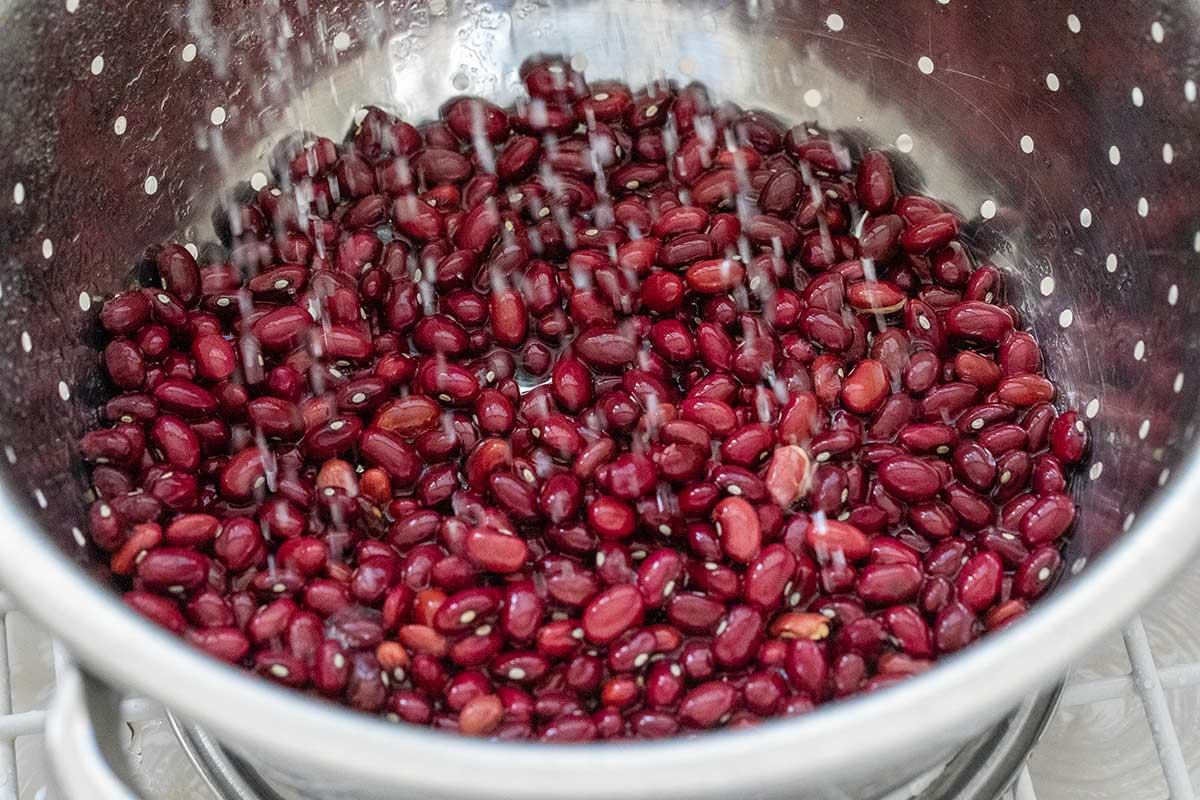
Step 1: Prepare the Beans
Rinse the beans in a colander using cold water before soaking for about 1 to 2 minutes. Beans can pick up dirt on the surface during processing. Washing ensures a clean pot of legumes. This is also a good time to check for any broken or cracked pieces and discard them.
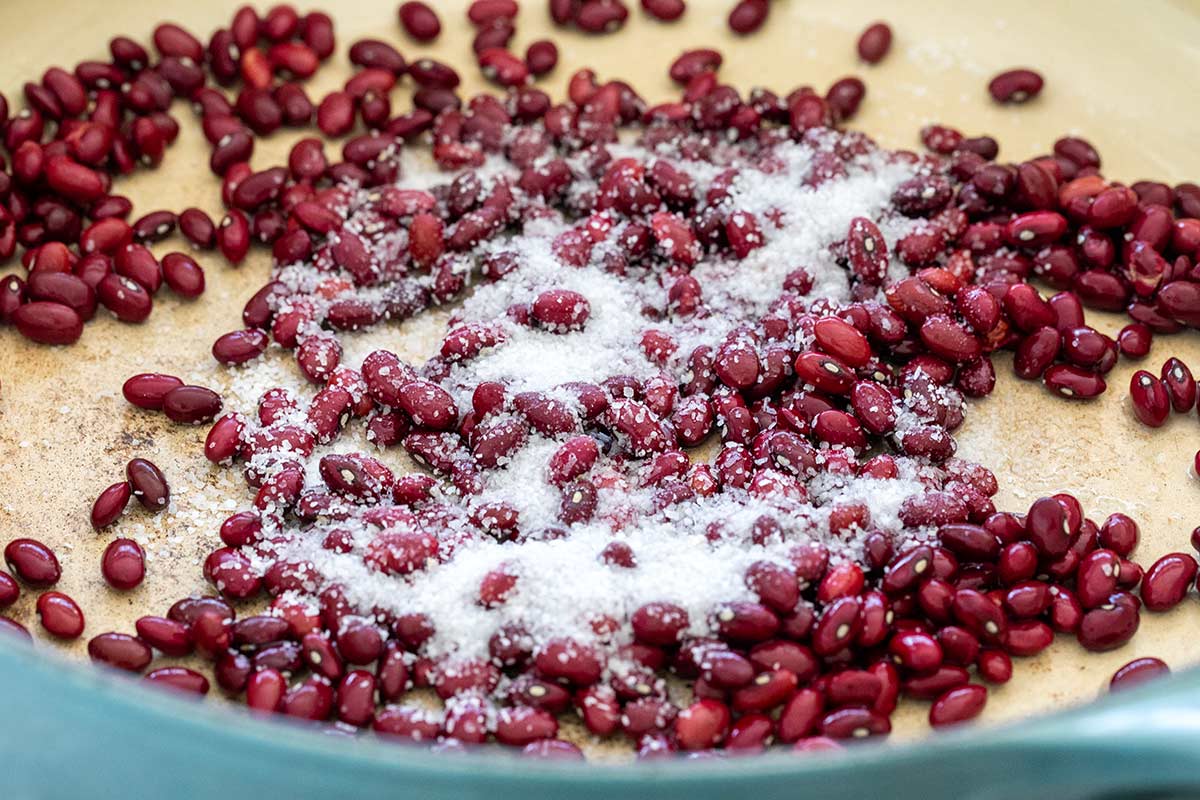
Step 2: Prepare the Salted Water
In a large pot, add salt (1 ½ tablespoons), the rinsed beans, and 8 cups of water. The generous amount of salt helps soften the outer skin and season the beans as they soak.
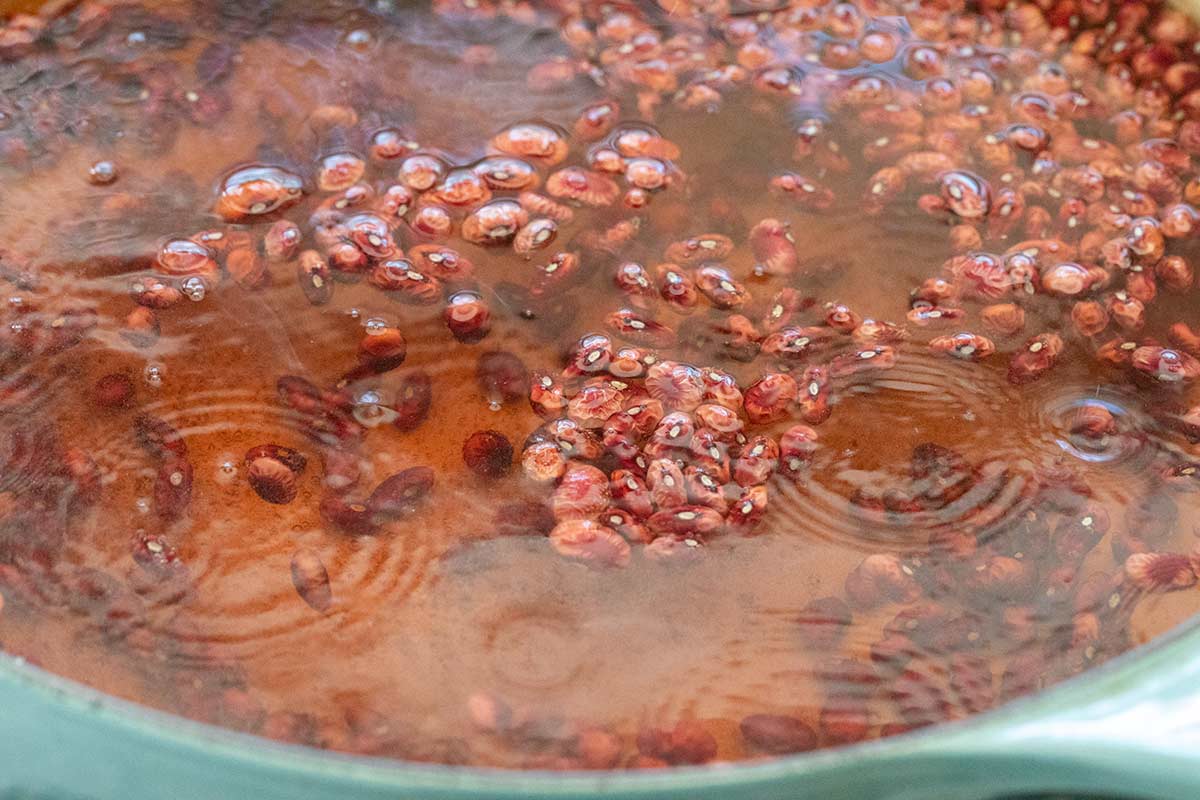
Step 3: Quick Soak the Beans
Bring to a boil briefly, just 2 minutes. This will quickly heat the cold water without fully cooking the beans. Turn off the heat, cover, and let it sit for 60 minutes. This is the critical step that lets the water and salt work their magic.
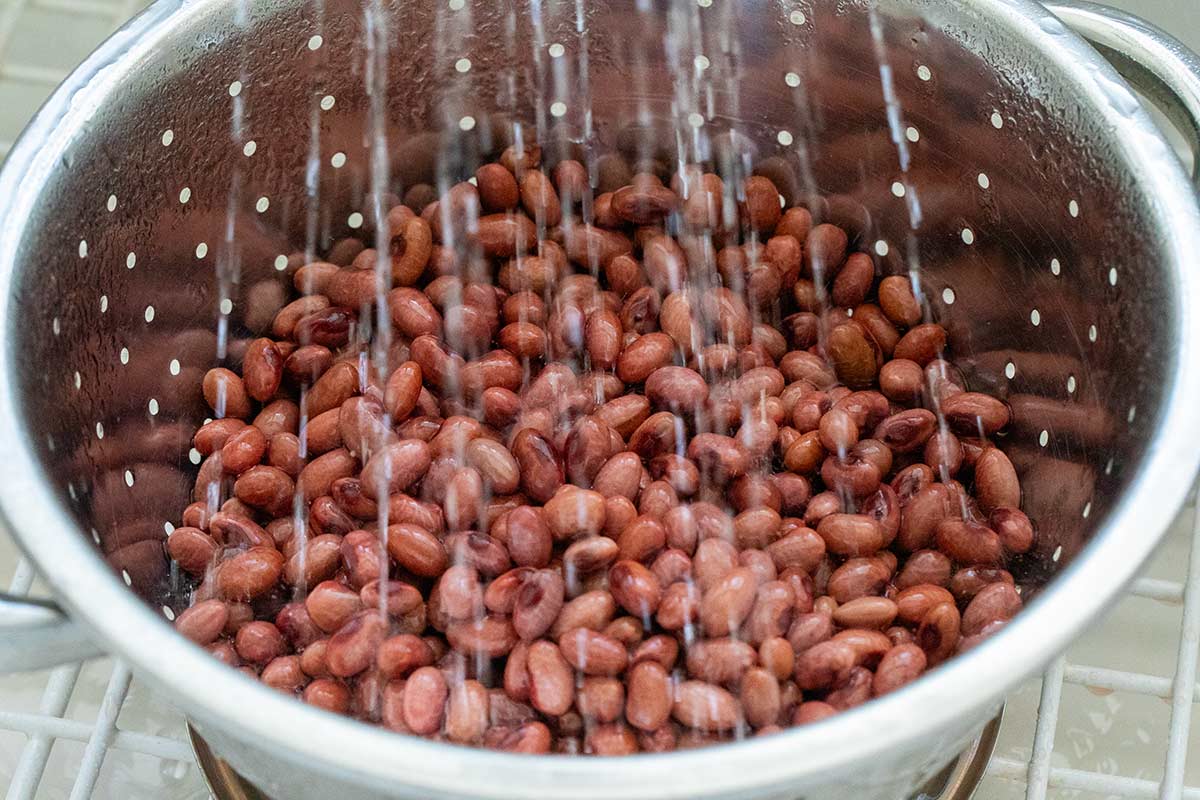
Step 4: Rinse the Beans
Drain the water and rinse the beans well before cooking so they don’t taste too salty.
Step 5: Cook the Beans
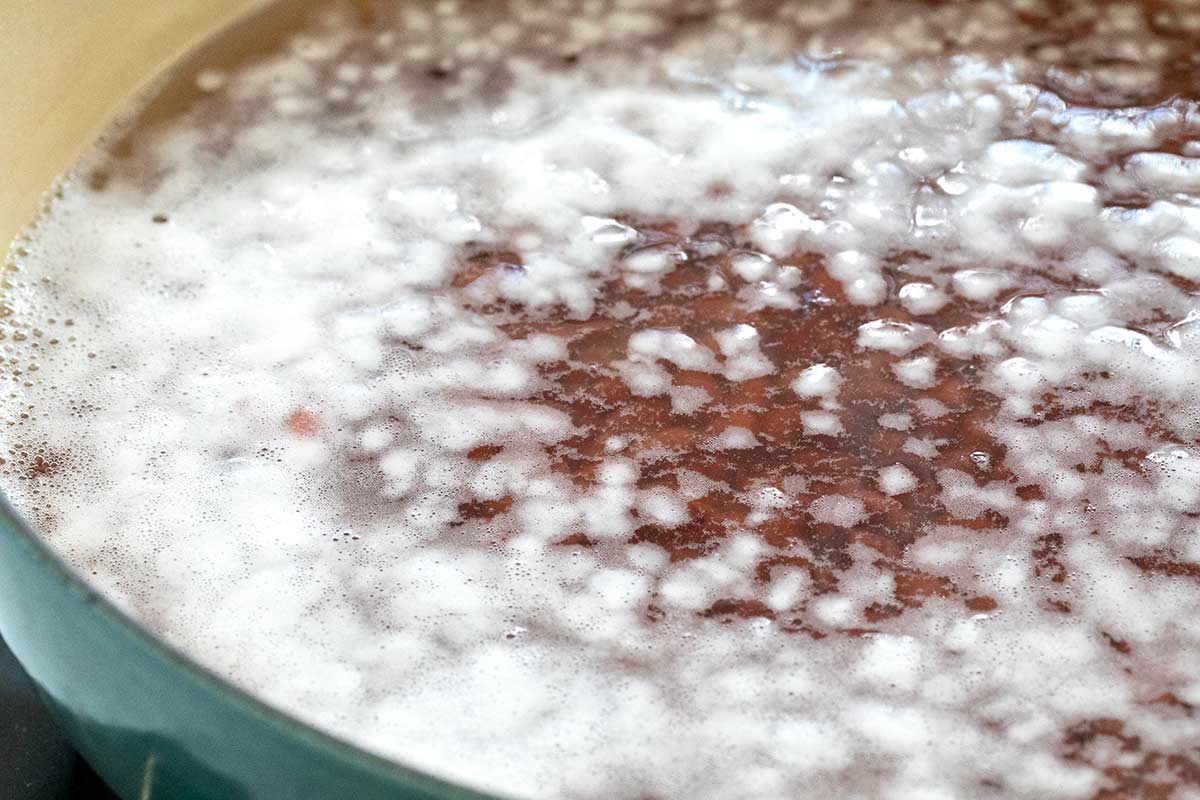
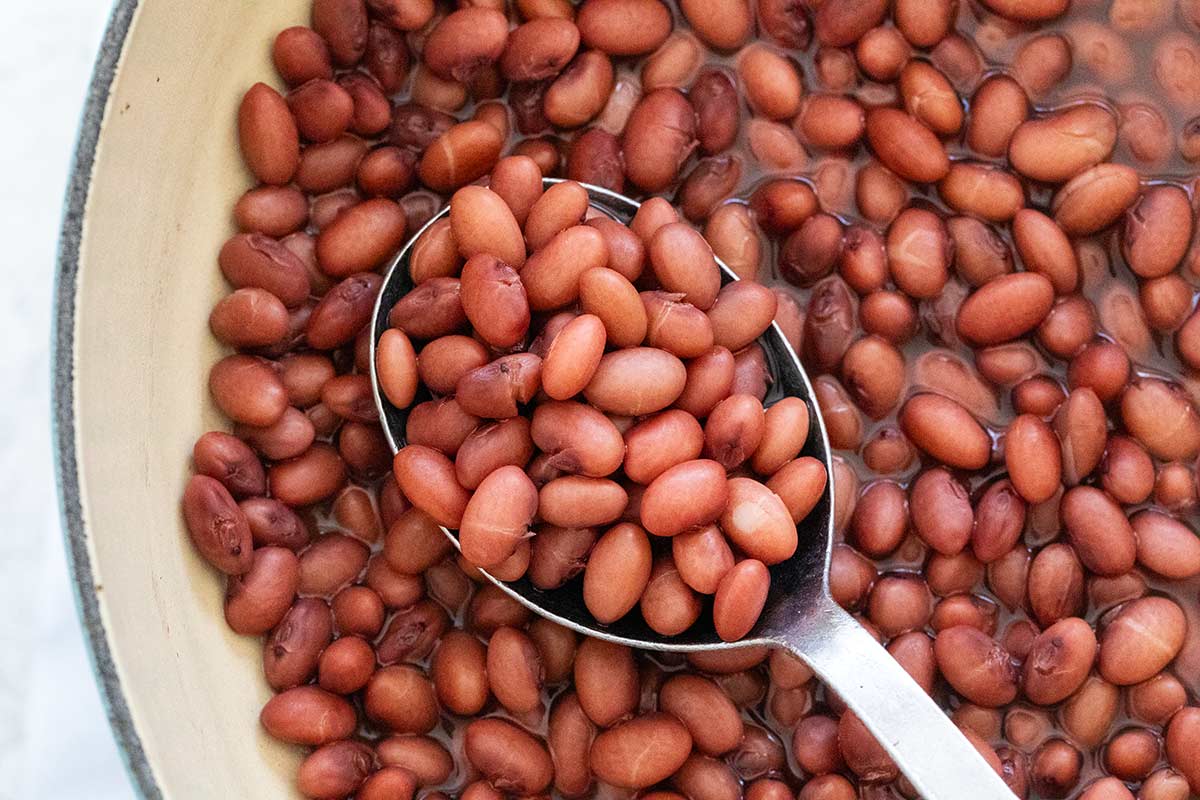
When you’re ready to cook, add 1 quart (4 cups) of water, salt (1 teaspoon), and soaked beans in a large pot. Cover and simmer. Stir the beans every 30 minutes as they cook. The beans are ready when they’re tender and creamy. This could take about 1 to 1 ½ hours or more, depending on the size.
Step 6: To Serve
Once ready, you can enjoy the beans in your favorite dishes, as a simple and healthy side dish, or for meal prepping. I like to add them to make black bean burgers, minestrone soup, or vegetarian chili. They’re a great protein and fiber addition to salads or for whipping up creamy hummus. Beans are so versatile!
Frequently Asked Questions
There are advantages to taking the time to soak beans. If the beans aren’t hydrated, they take longer to cook. Soaking can save you around 45 minutes of stovetop simmering. Limiting the simmering time also reduces the number of burst beans. Hydrating the starches inside makes the beans creamier. Legumes like lentils, split peas, adzuki, and black-eyed peas do not require a pre-soak.
Soaking the beans in salted water helps to soften the thick outer skin. This yields creamier centers and beans that don’t burst as much. The sodium ions in the salt replace the calcium and magnesium ions on the skin. The increased sodium ions weaken the pectin in the cell walls and allow more water to infuse through the skin, softening the core and cooking the starches. Don’t skip the salt! They are better tasting too.
Overnight soaking uses cool water, which takes 8 to 24 hours. Hot water hydrates the skin faster. However, I find that combining water and salt works better together. They soften the skin while drawing more water to the center. Briefly expose the dried beans to boiling water, then let them sit off the heat for one hour to absorb gently. Plus, the beans retain their characteristic taste because they sit in the water for a shorter period of time.
Serve This With


If you tried this Quick Soak Beans Recipe, please leave a 🌟 star rating and let me know how it went in the 📝 comments below!
Quick Soak Beans

Ingredients
Quick Soaking Beans
- 1 cup dried beans
- 1 ½ tablespoons kosher salt
- 8 cups cold water
Cooking Beans
- 4 cups water
- 1 teaspoon kosher salt
Instructions
- Prepare the Beans – Pick over and discard any broken dried beans. Add beans to a colander and rinse with cold water for 1 to 2 minutes.
- Prepare the Salted Water – In a large saucepan or Dutch oven, add beans, 1 ½ tablespoons salt, and 8 cups water, and stir to dissolve.
- Quick Soak the Beans – Bring the salted water to a boil for 2 minutes. Turn off the heat, cover the beans, and soak for 1 hour.
- Rinse the Beans – Drain and rinse the beans before cooking.
- Cook the Beans – In the same pan, add the soaked beans, 4 cups of water, and 1 teaspoon of salt. Bring the water to a simmer over medium-high heat. Cover and reduce heat to low. Stir occasionally to prevent sticking to the bottom of the pot, about every 30 minutes. Cook gently over low heat until tender and creamy, about 60 to 90 minutes.
- To Serve – Drain the cooked beans and serve as desired.
Notes
- Recipe Yield: One cup of dried beans yields about 2-3 cups of cooked beans, depending on the type.
- Serving Size: ½ cup cooked beans
- Do Not Soak These Beans: Lentils, split peas, adzuki, and black-eyed peas.
- Storage: Let the black beans cool, then refrigerate in an airtight container for up to 4 days. For longer storage, freeze in an airtight container or freezer-safe bag for up to 3 months. Thaw overnight in the refrigerator before reheating.
Nutrition Facts
Percent Daily Values are based on a 2000-calorie diet. All nutritional information is based on estimated third-party calculations. Each recipe and nutritional value will vary depending on the brands you use, measuring methods, and portion sizes per household.


Randy Purcell says
A great time-saving recipe. The taste results were as pleasing to my palate as those produced by an overnight soaking. Thank you, Jessica!
Jessica Gavin says
You’re welcome, Randy!
Gwendolyn says
What about replacing the salt (SODIUM chloride) with a salt substitute of POTASSIUM chloride?
I’ve eliminated all added salt from my food, including cooking, for health (blood pressure) reasons, & found that it tastes just the same; plus, the potassium is (more) healthy – in fact, it’s a necessary nutrient anyway – & doesn’t contribute to HBP.
You mentioned the action of salt on the beans in your process, & I’m wondering if you or anyone else had any thoughts or experience about how well substituting potassium chloride would work.
Jessica Gavin says
I haven’t tried using potassium chloride to soften the beans. The sodium helps the pectin in the cell walls soften by exchanging sodium ions for calcium ions. I’d love to know if you give it a try! I’m curious if you typically use less potassium chloride in a recipe when it calls for salt. Or do you use it as a 1:1 replacement?
Christine says
I like having the science perspective on a quick-soak and bean-cooking in general! Super helpful! But I am quite surprised to see you call a tablespoon and a half “a lot” of salt for dry beans! I usually add in four or five times that much salt to cook a pot of beans. As mentioned above, I also add a LOT more flavoring in general to my beans. Dry herbs, garlic, onions, maybe an orange or lemon early on. Oil on top in the middle of the cooking. I’m also usually adding even more salt to taste! (easy tasting early on: try the cooking water)
Jessica Gavin says
Thanks for sharing! I love the addition of garlic, herbs, onion, and citrus.
LLH says
Hi, Jessica. So, I can’t use baby Limas for the quick soak. I have a 1lb soaking now & it has been almost 4 hours. I forgot to soak last night & now pressed for time. Was hoping to start cooking before 6. I have an Instant Pot but I feel like beans aren’t as flavored than on a stove top. I tried everything to flavor the beans when cooking in the Instant Pot. I don’t know if I am doing something wrong or what.
Nita Bello says
I learned cooking beans from my former assistant operator. We used to cook on the job on weekends and share it with the crew. He doesn’t soak the beans. He starts boiling the beans for about an hour and then start adding other ingredients like onions, tomatoes. bell peppers and cilantro leaves. He lets it boil for another hour and add the sausage and boil it more until the beans get tender and ready to eat.
I just notice on your recipe that the beans had no other ingredientd but salt (if needed) and water
David says
How would you modify this method for those on a sodium restricted diet?
Jessica Gavin says
You could drop the salt down to 2 to 3 teaspoons, and make sure to rinse well after quick soaking. You can omit adding the 1 teaspoon of salt during the final cooking step.