

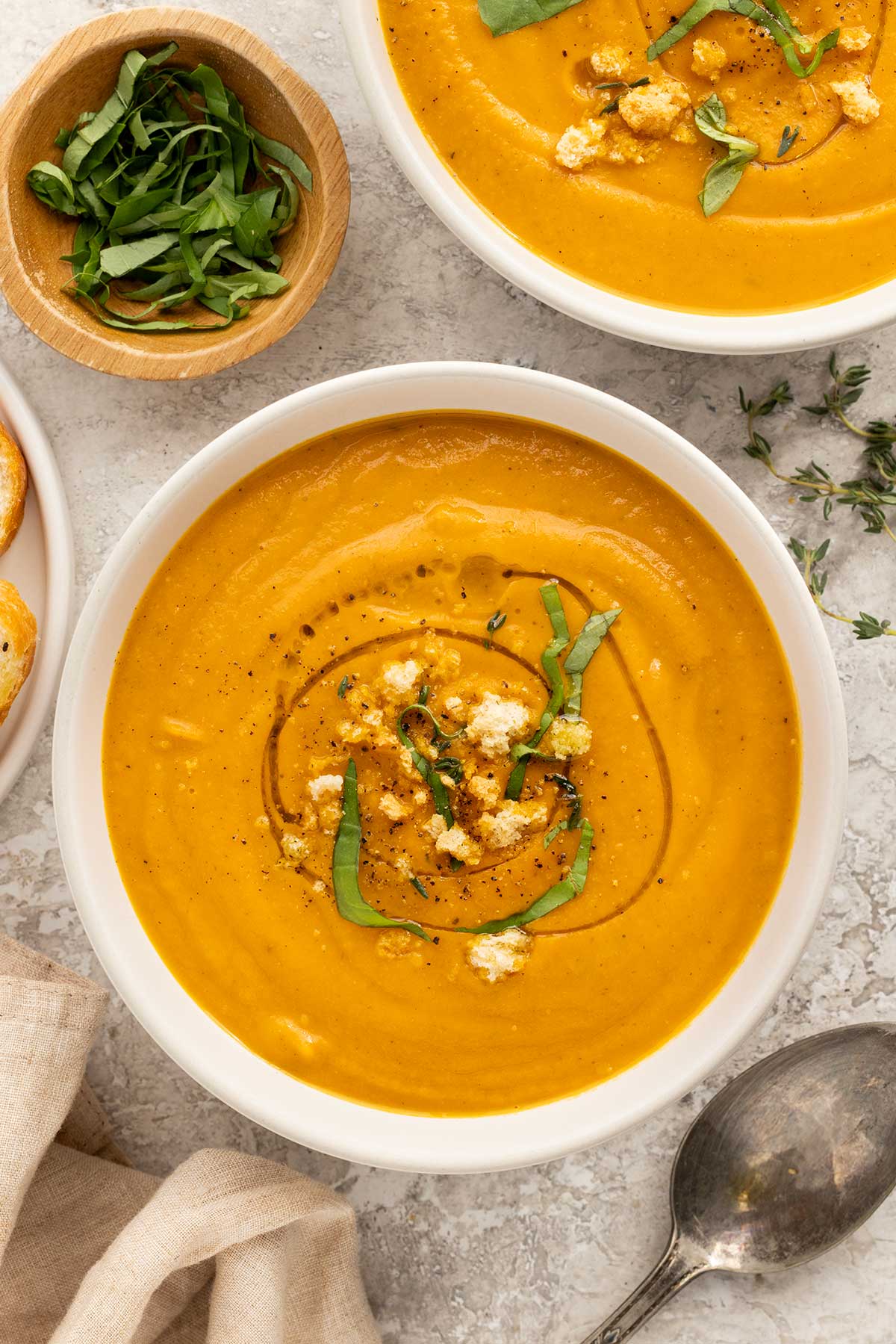
This roasted vegetable soup recipe transforms simple produce into a rich, velvety appetizer. Roasting the colorful vegetables first deepens their natural sweetness, while a blend of warm spices and herbs brings out layers of earthy flavor in every spoonful.
Jessica’s Recipe Science
- Roasting vegetables at 400ºF quickly initiates Maillard browning and caramelization, developing deep, savory-sweet flavor.
- Blooming dried spices and fresh thyme in hot oil releases their fat-soluble flavor compounds, creating an intense and aromatic base.
- Pureeing the roasted vegetables creates a smooth texture by dispersing their natural starches and fibers throughout the broth.
Why It Works
Roasting vegetables before blending them into soup is one of my favorite ways to build deep, rich flavor. The nutrient-packed veggies, like sweet potatoes, carrots, onions, and bell peppers, yield a golden surface and concentrated sweetness. When combined with earthy spices like cumin, coriander, and smoky paprika, the result is a soup that tastes slow-simmered and complex. The best part is that it’s surprisingly easy to make!
I love making this roasted vegetable soup when I need something healthy during cooler months. It’s great when you have an abundance of fresh produce to use up. It’s the perfect make-ahead meal for busy weeknights or a comforting dish to serve with crusty bread on the weekend.
Jump To a Section
Ingredients You’ll Need
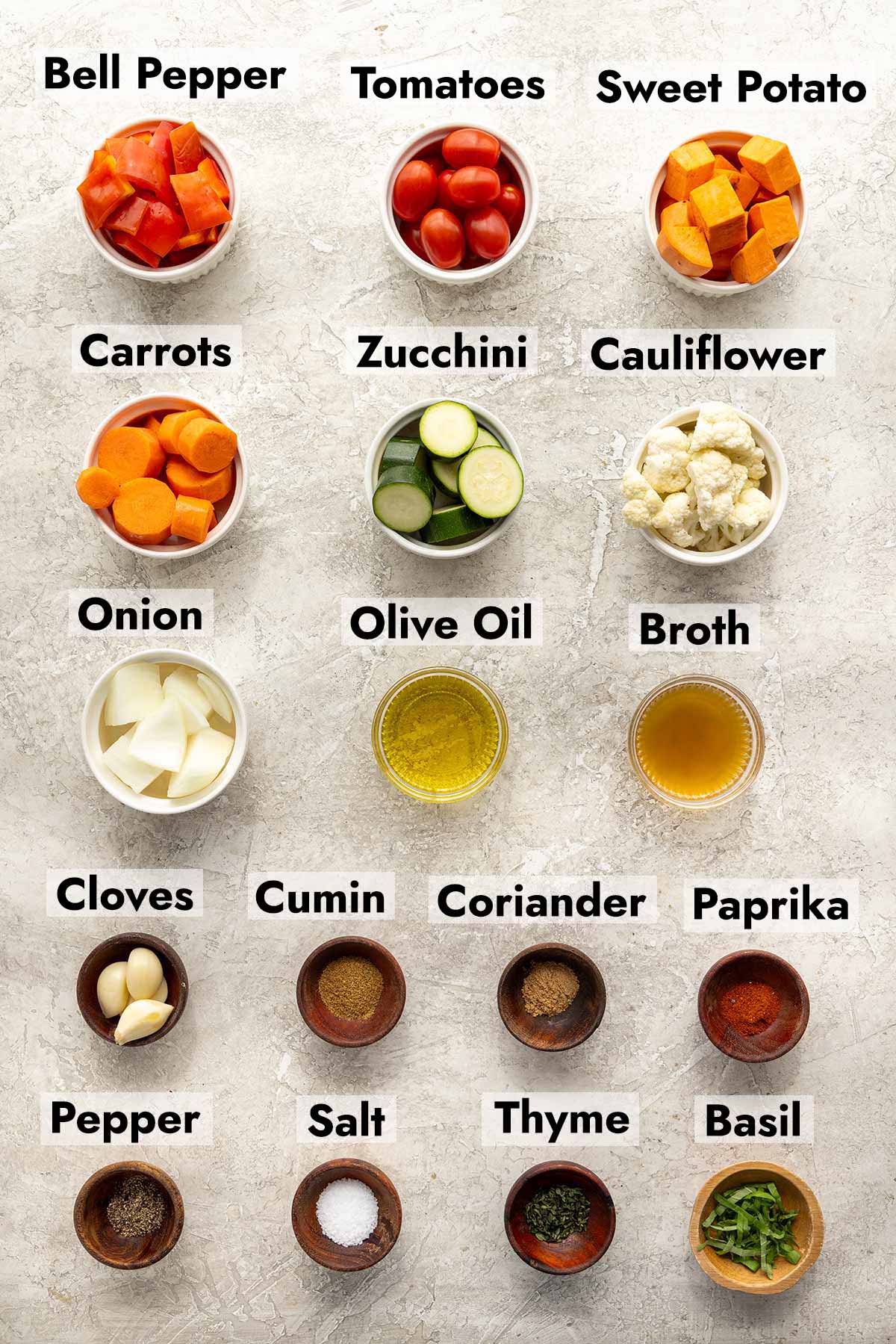
- Root Vegetables: Sweet potatoes and carrots are rich in natural sugars that caramelize during roasting, enhancing sweetness and body. Their starches also help naturally thicken the soup once pureed.
- Cauliflower: Its mild flavor and high pectin content create a smooth, creamy consistency when blended, no cream required.
- Red Bell Peppers and Tomatoes: These add natural glutamates, boosting umami and creating a more savory depth. Roasting concentrates their flavor and balances acidity.
- Onions and Garlic: When roasted, their sulfur compounds mellow into sweet, nutty aromas.
- Olive Oil: Acts as a heat conductor for the roasted veggies and solvent for fat-soluble flavor compounds from herbs and spices, helping them infuse evenly throughout the soup.
- Seasoning: Thyme, cumin, coriander, and smoked paprika add layers of earthy, smoky, citrus, and lemony notes. Salt enhances sweetness and reduces bitterness, while pepper adds a mild pungency.
- Vegetable Broth: Provides a flavorful liquid base and balances the concentrated vegetable flavors.
- Garnish: Basil adds a fresh, bright, mild minty finish to the vegetable soup.
See the recipe card below for all ingredients and measurements (US and metric).
Ingredient Substitutions
This roasted vegetable soup recipe is easy to customize! Try these tasty options:
- Vegetable Swaps: Try parsnips, pumpkin, kabocha squash, butternut squash, celery, or different types of sweet potatoes like white or purple.
- Tomato Swap: Use other types of tomatoes that are sweet and ripe. I’ll use Campari or heirloom. For a quick substitute, add a 14.5-ounce can of fire-roasted tomatoes when simmering the soup.
- Spices: Try adding turmeric, curry powder or paste, garlic powder, onion powder, chili powder, or chipotle chili for heat. Add nutmeg for a slightly sweeter taste.
- Herbs: Add fresh oregano, tarragon, rosemary, or basil to the soup. Sauté dried herbs, such as Italian seasoning, in olive oil to enhance their flavor.
- Make it Creamier: Stir in heavy cream or canned coconut milk right before serving to make a super creamy soup.
- Add protein: Add 15 ounces of canned beans like white beans, pinto, chickpeas, or garbanzo. You can keep them whole or puree them with the reserved roasted vegetables. Add shredded chicken or Italian sausage.
How to Make Roasted Vegetable Soup
Step 1: Heat the Oven
Heating the oven to 400ºF (204ºC) ensures the vegetables roast evenly from the start, allowing their natural sugars to caramelize instead of steam. Lightly coating the pan with olive oil creates a thin, conductive fat layer that efficiently conducts heat, encourages Maillard browning, and prevents the vegetables from sticking.
Step 2: Prepare the Vegetables
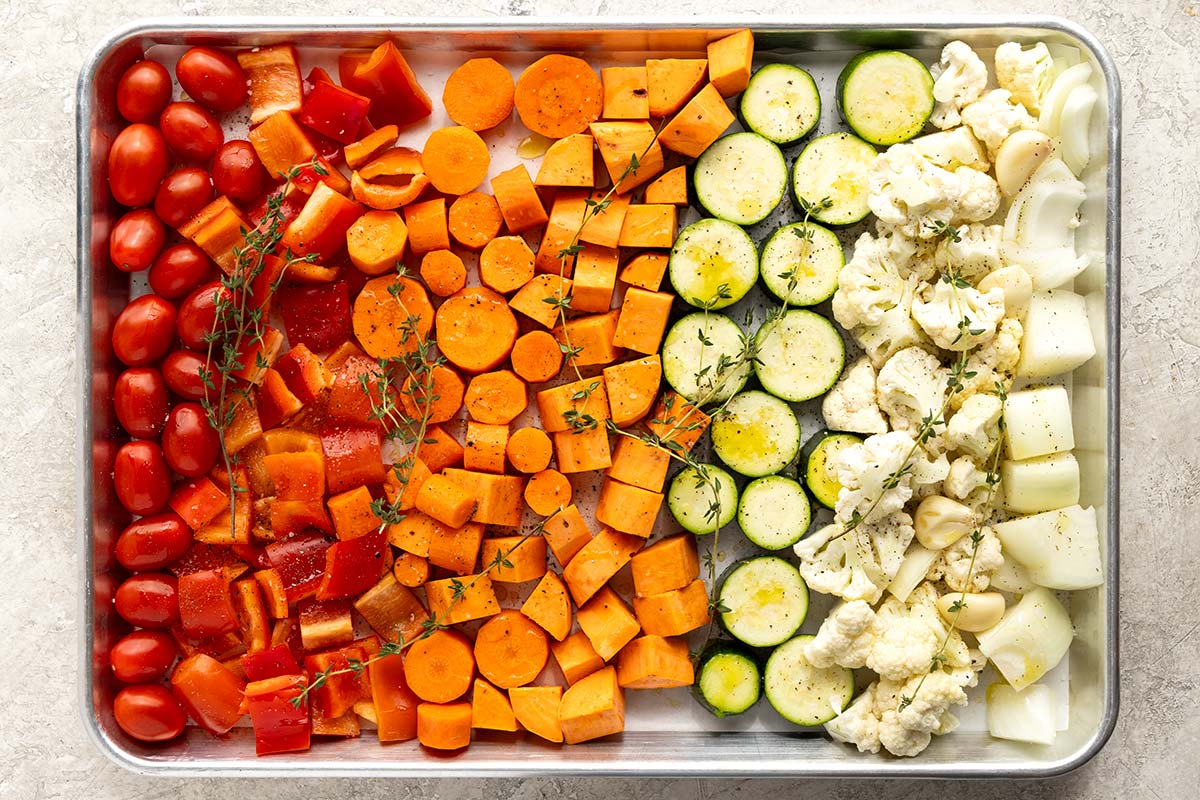
Coating the sheet pan and vegetables with olive oil ensures even roasting and rich flavor development. The oil acts as a heat conductor, promoting Maillard browning on the vegetables’ surfaces for caramelized edges and a nutty, savory flavor.
Seasoning with salt early draws out a small amount of moisture, concentrating the natural sweetness. At the same time, the thyme sprigs infuse aromatic essential oils as they heat, enhancing the soup’s depth and aroma.
Tips for Perfect Execution: Cut the vegetables into relatively uniform pieces. This ensures they roast at the same rate, so everything becomes tender and golden at the same time.

Step 3: Roast the Vegetables
Spreading the vegetables in an even layer maximizes surface contact with the hot pan, allowing excess moisture to evaporate. Adding fresh thyme on top allows its essential oils to infuse the vegetables as they roast, releasing aromatic compounds that enhance the soup’s earthy, herbaceous note. The cloves of garlic soften as they roast.
Ingredient Chemistry: The high, dry heat at 400ºF (204ºC) triggers these reactions —browning and caramelization —developing a deep golden color and a rich, savory-sweet flavor.

Step 4: Puree the Soup
For the creamiest texture, use a countertop blender. I also like to use a stick hand blender right in the pot, for a rustic texture. Blending in stages creates a smoother, more stable soup.
Starting with less liquid helps the blender break down the dense roasted vegetables into a thick, uniform base without splashing. Adding the remaining broth afterward adjusts the consistency for a silky, velvety texture, without the need for added dairy or thickeners.

Step 5: Simmer the Soup
Blooming the thyme and spices in olive oil before adding the broth is a key flavor-building step. The gentle heat releases fat-soluble flavor compounds and aromatic oils from the herbs and spices, intensifying their depth and fragrance. Simmering the soup allows the flavors to meld together. You can adjust the soup’s consistency by adding more broth for a thinner texture.

Step 6: To Serve
I like to serve an easy bowl of this comforting vegetable soup, garnished with fresh basil for a minty-anise note. It’s lovely topped with parmesan cheese, croutons, a drizzle of cream or olive oil, and freshly cracked black pepper. My family always asks for my garlic bread or crostini to dip in the soup.
Frequently Asked Questions
Yes! Roasting vegetables before making soup adds incredible depth and complexity to the flavor. The dry heat of the oven triggers the Maillard reaction, where amino acids and natural sugars interact to create rich, savory notes, while caramelization enhances sweetness and aroma. Roasting helps evaporate excess moisture, concentrating the flavors and giving the vegetables browned edges. When blended into soup, those roasted flavors create a naturally sweet and smoky taste that simmered vegetables alone can’t match.
Layer in seasonings that enhance the deep, caramelized flavors from the oven. Classic herbs such as thyme, oregano, and rosemary provide a comforting, aromatic base for the soup. Earthy spices like cumin and coriander add warmth, while smoked paprika brings a subtle smoky note. Fresh garlic, cracked black pepper, and a bay leaf round out the flavors for a rich, well-balanced dish.
Some of my favorite vegetables for roasting are hearty options that can handle high heat. Think root veggies like carrots, butternut squash, potatoes, and sweet potatoes. Cruciferous options include cauliflower, broccoli, and Brussels sprouts. Sturdy bell peppers, onions, eggplant, and zucchini, and tomatoes roast well. Roasting transforms their natural sugars, creating caramelized edges, tender centers, and a slightly sweet flavor. Great as a side dish or added to a soup.
More Soup Recipes




If you tried this Roasted Vegetable Soup, please leave a 🌟 star rating and let me know how it went in the 📝 comments below!
Roasted Vegetable Soup

Ingredients
- 2 cups sweet potatoes, ¾" dice
- 2 cups cauliflower florets, 1" pieces
- 1 ½ cups carrots, peeled, ½" slices
- 1 ½ cups red bell peppers, ¾" pieces
- 1 ½ cup zucchini, ½" slices
- 1 cup grape tomatoes
- 1 cup yellow onions, 1" dice
- 4 garlic cloves, peeled
- 5 tablespoons olive oil, divided
- ¾ teaspoon salt
- ¼ teaspoon black pepper
- 1 teaspoon chopped thyme, plus 8 sprigs
- 1 teaspoon cumin
- ½ teaspoon coriander
- ½ teaspoon smoked paprika, or sweet
- 4 cups vegetable broth
- 1 tablespoon sliced basil
Instructions
- Heat the Oven – Set the oven rack to the center position and preheat to 400ºF (204ºC). Line a large rimmed sheet pan with parchment paper or foil. Alternatively, leave the pan unlined.
- Prepare the Vegetables – Drizzle the sheet pan with olive oil to prevent sticking. Spread the sweet potatoes, cauliflower, carrots, bell pepper, zucchini, tomatoes, onions, and garlic cloves on the pan. Evenly drizzle 4 tablespoons of olive oil over the vegetables. Sprinkle with salt and black pepper. Add the thyme sprigs on top of the vegetables.
- Roast the Vegetables – Roast until tender and lightly browned, about 45 to 55 minutes. Discard the thyme.
- Puree the Soup – Transfer the roasted vegetables to a blender. Add 2 cups of vegetable broth, cover, and puree until mostly smooth. Add the remaining 2 cups of broth and puree until smooth.
- Simmer the Soup – In a large pot or Dutch oven, heat 1 tablespoon of olive oil over medium-low heat. Add the thyme, cumin, coriander, and paprika. Saute until fragrant, about 30 seconds. Add the pureed soup, stir to combine. Simmer until the soup is hot, about 5 to 10 minutes. For a thinner soup, add more vegetable broth or water. Taste the soup and season with salt and pepper as desired.
- To Serve – Garnish the soup with sliced basil and black pepper.
Recipe Video

Notes
- Recipe Yield: About 7 cups
- Serving Size: About 1 cup
- Using a Hand Blender: Use a hand immersion blender instead of a countertop blender. Sauté the herbs and spices, then add the broth and roasted vegetables. Purée the soup right in the pot until smooth, then simmer gently until heated through.
- Storing: Store in an airtight container in the refrigerator for up to 5 days. Freeze in resealable plastic bags for up to 6 months. Defrost before using.
- Reheating: Cover and microwave on high setting in 30-second intervals until hot, stirring in between. Alternatively, cook on the stovetop over medium heat until hot.
Nutrition Facts
Percent Daily Values are based on a 2000-calorie diet. All nutritional information is based on estimated third-party calculations. Each recipe and nutritional value will vary depending on the brands you use, measuring methods, and portion sizes per household.


Edward J Griffith says
In the ‘Roasted Vegetable Soup’ recipe, what is meant by “Blooming the thyme and spices in olive oil”?
Whne I signed up to follow your recipes my e-mail was griffith_edward@hotmail.com. It has changed to outlook.com.
Jessica Gavin says
Great question, Edward! “Blooming the spices” is the method of cooking the dried spices in hot fat to coax out more fat soluble flavors from the ingredients.