
This easy tomato basil soup recipe is creamy and smooth, with a generous amount of herbs for maximum flavor. Fresh tomatoes and garlic cloves are roasted to concentrate the sweet and earthy notes. Each spoonful is a delight!
If you’re a fan of this recipe, be sure to check out my roasted tomato basil pasta or my classic tomato soup recipe.

Jessica’s Recipe Science
- Roasting fresh tomatoes at high heat drives off moisture, concentrating sugars and creating caramelized, jammy flavors.
- Simmering roasted tomatoes with sauteed onions and stock blends fat and water-soluble compounds for a richer, balanced flavor.
- Pureeing the soup breaks apart plant cell walls, releasing natural pectins that give the soup a creamy, velvety texture without dairy.
Featured Comment 29
“Such a great recipe! This was my first time making tomato soup with a recipe that called for fresh roasted tomatoes versus canned, and I will never go back! The steps were so easy to follow, and the soup was DELICIOUS!”—Bethany
Why It Works
A big bowl of homemade tomato basil soup is a healthy and comforting appetizer made with simple ingredients. Whether you’re dipping hunks of crusty bread, melty grilled cheese, or just enjoying it, the dish’s simplicity lets the produce’s flavors shine. If you’ve got a bounty of fresh tomatoes that you want to use up, this is the recipe for you.
To enhance the natural sweetness of the tomatoes, oven-roast them at high temperatures. The intense heat concentrates the fruity flavors while developing new, richer ones. The tomatoes then simmer with onions and vegetable stock to meld the ingredients together. Pureeing the soup until smooth creates a velvety texture without adding heavy cream. Top with crunchy croutons for a contrast of textures with each sip.
Jump To a Section
Ingredients You’ll Need
- Tomatoes: I use two varieties, Roma and Campari (cocktail is a tasty substitute). Roma tomatoes, also known as plum tomatoes, have a slight sweetness and acidity with low water content, which is ideal for quickly concentrating their flavors during roasting. It makes up the majority of the soup. Campari tomatoes are more petite in size, juicy in texture, and have a balanced flavor that’s more robust. It adds depth to the mix. Feel free to use just one kind, or mix it up.
- Alliums: I roast halved garlic with the tomatoes to mellow its sharp sulfur notes into sweet, nutty flavors. Then I add minced garlic to the soup so it quickly releases bold aromatics for a savory base. Diced yellow onions add natural sweetness.
- Oil: Extra-virgin olive oil adds a rich, fruity flavor to the soup.
- Herbs: Sprigs of thyme are roasted with the tomatoes to add woodsy, lemony aromas. Bay leaf adds earthy, slightly floral notes. Fresh basil adds delicate licorice and peppery flavors. Chives provide a mild oniony freshness.
- Liquid: Vegetable stock or broth adds flavor nuances for more depth of flavor in the soup from ingredients like onions, carrots, and celery.
See the recipe card below for all ingredients and measurements (US and metric).
Ingredient Substitutions
This fresh tomato soup recipe is easy to customize! Try these tasty options:
- Fresh Tomato Swaps: You can use any types of tomato to make fresh tomato basil soup. Just make sure they’re at their peak ripeness, which is easy with summer veggies. However, San Marzano or whole peeled work well as a shortcut if you don’t have time to roast.
- Using Canned Tomatoes: If you don’t have time to roast, you can use various types of canned tomatoes, like San Marzano or whole peeled, which work well as a shortcut. Crushed tomatoes are great if you don’t have a regular blender. Tomato paste can add thickness to the homemade tomato soup.
- Liquid Substitutes: For a richer taste, you can use chicken stock or broth for umami flavor. Water is an affordable swap, just adjust the seasoning level.
- Herb Options: Add fresh oregano or rosemary when roasting the tomatoes. Dried herbs can also be used, or try my homemade Italian seasoning.
How to Make Tomato Basil Soup
Step 1: Heat the Oven
Preheating the oven to 400ºF (204ºC) ensures that when the tomatoes go in, they’re immediately exposed to steady, even heat, which jumpstarts caramelization and moisture evaporation for deeper flavor development.
Step 2: Prepare the Tomatoes
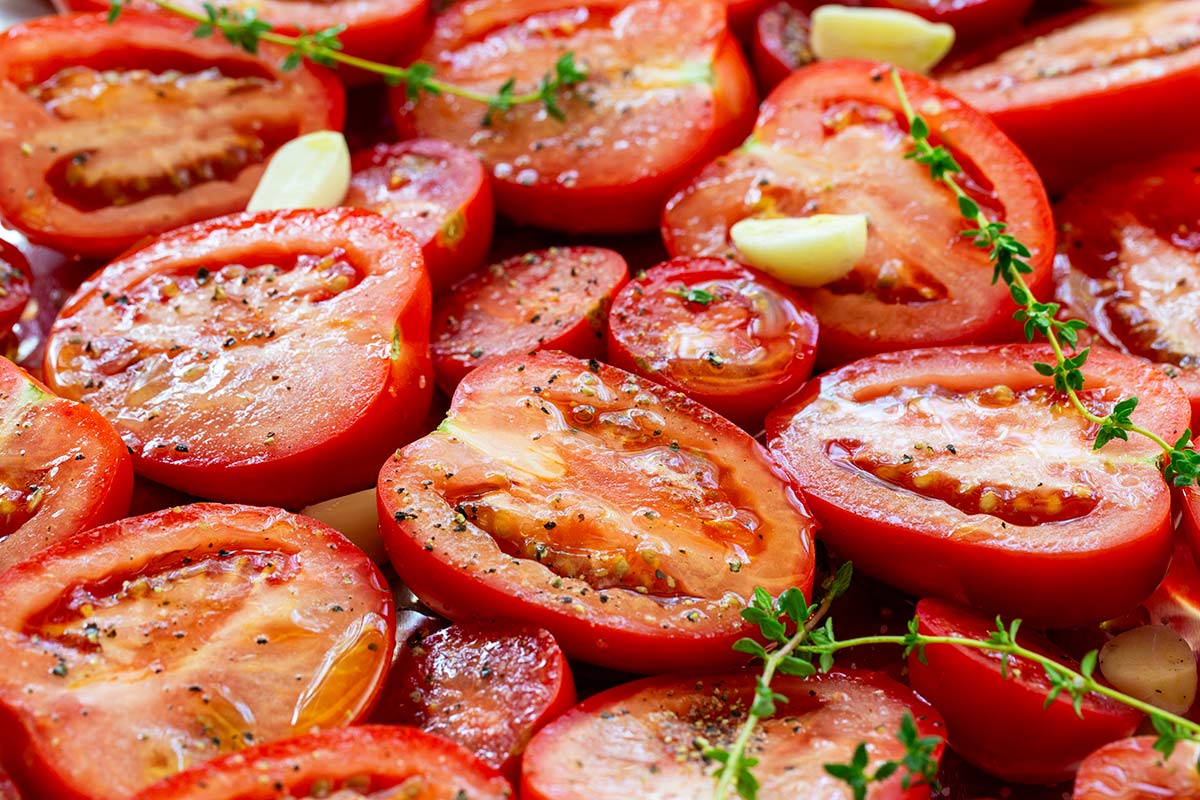
I don’t use canned tomatoes because they’re usually peeled, and I prefer the skin to be intact, which will elevate the taste once roasted. Cut the tomatoes in half lengthwise to roast some cut-side up and some cut-side down.
Add them to a foil-lined baking sheet, along with the sliced garlic and thyme sprigs. Add a drizzle of olive oil, then sprinkle with salt and pepper.
Expert Tip: Tomatoes with the skin-side up develop a more browned surface (but not charred), which creates more toasted flavors. The tomatoes with the flesh-side up evaporate water faster and are better able to absorb the flavor from the olive oil and aromatics from the thyme. This technique provides the best flavor!
Step 3: Roast the Tomatoes
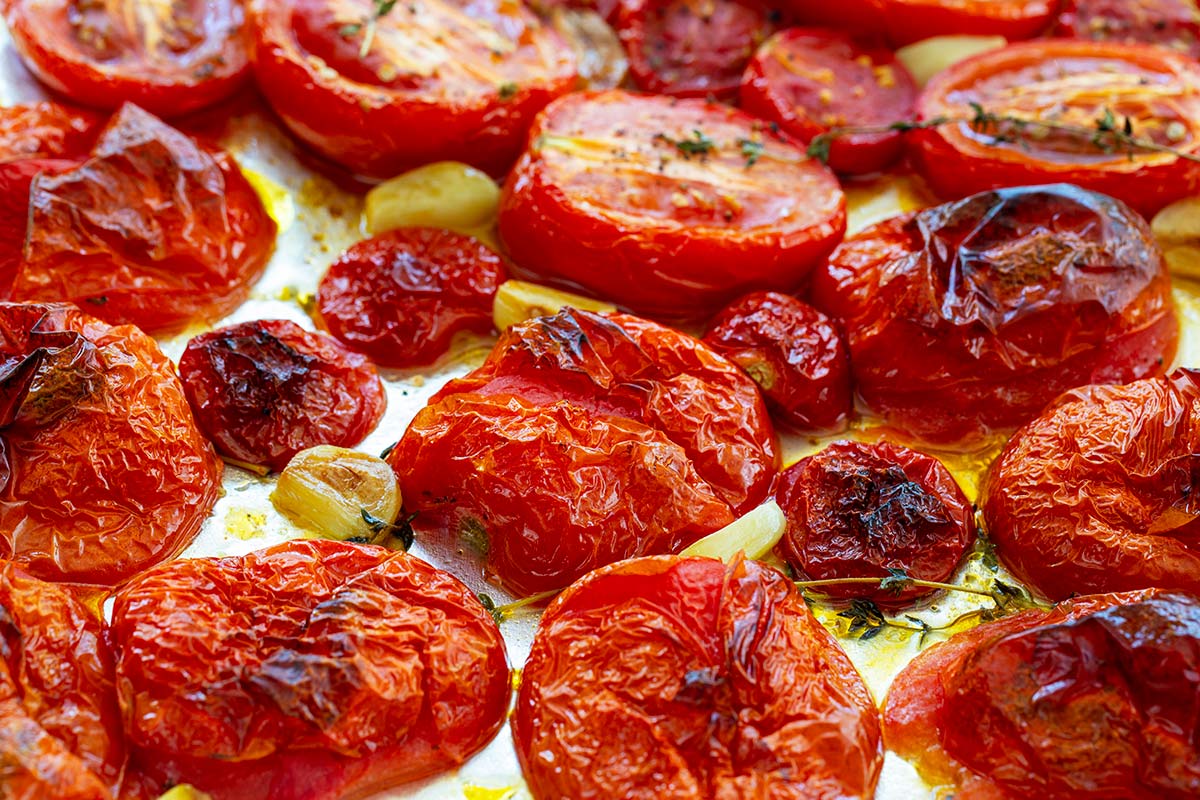
The tomatoes are cooked in the oven with extra-virgin olive oil, salt, pepper, thyme sprigs, and garlic cloves. The garlic softens, mellows out the sulfur notes, and even turns sweet. Roasting tomatoes at high heat, 400ºF (204ºC), until the excess juice dries off and the flavors concentrate is key to enhancing the natural savory and sweet notes from the fruit. The process takes about an hour.
Ingredient Chemistry: Slow-roasting garlic with tomatoes develops sweet, soft, and nutty flavors. Sautéing minced garlic with the vegetables adds stronger, pungent aromatics to the base. Using the same ingredients but cooking them differently adds a wonderful dimension.
Step 4: Cook the Aromatics
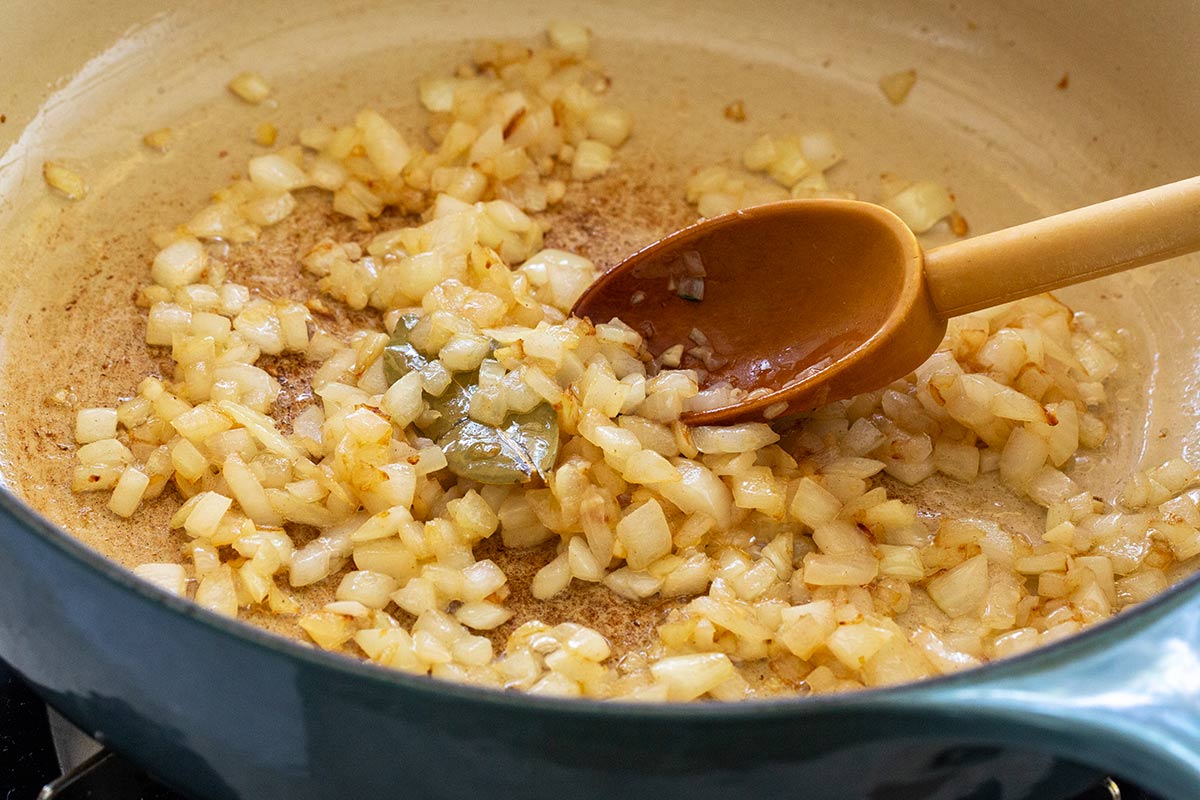
Use a large pot like a Dutch oven to make the soup on the stove. Cook the minced garlic in melted butter over medium heat, just until you can smell the fragrant allium. Add the onions, sauteing lightly to caramelize the surface for extra sweetness.
Step 5: Simmer the Soup
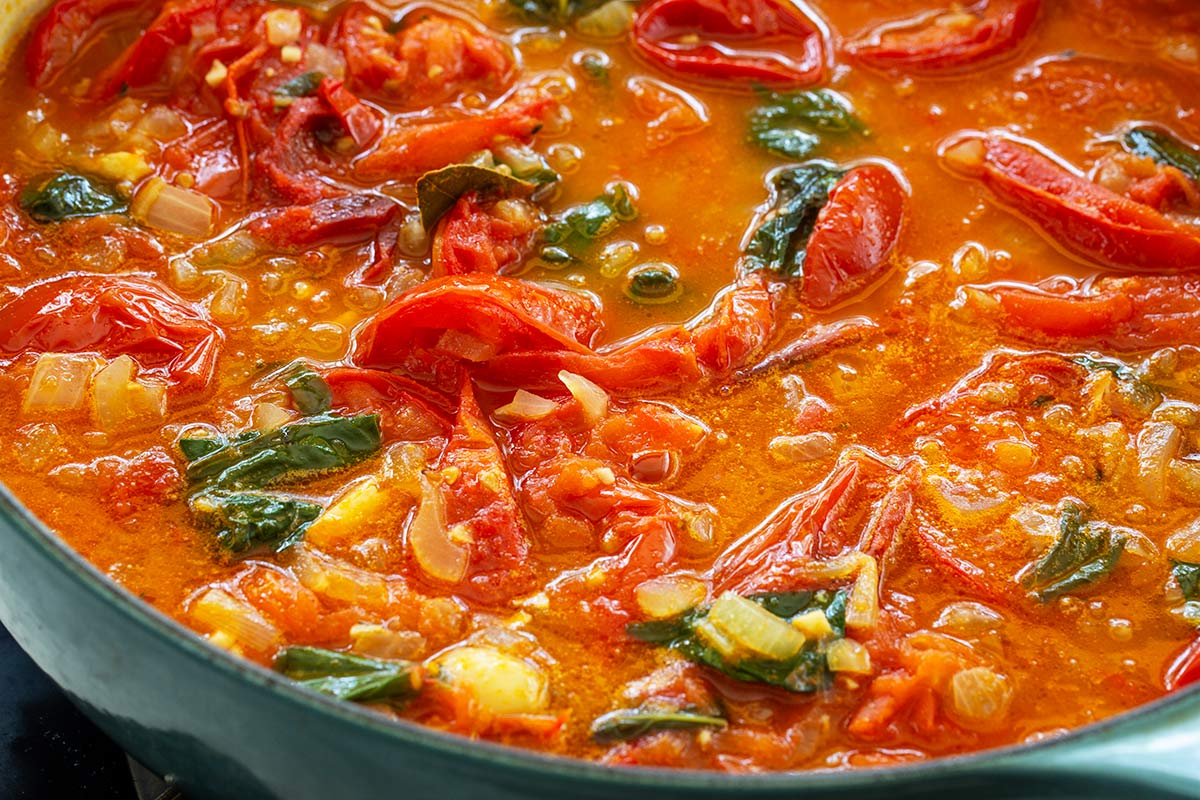
Add the roasted tomatoes and sliced garlic, bay leaf, fresh basil leaves, and vegetable broth or stock. Bring to a boil, then down to a simmer for about 20 minutes to concentrate the savory liquids.
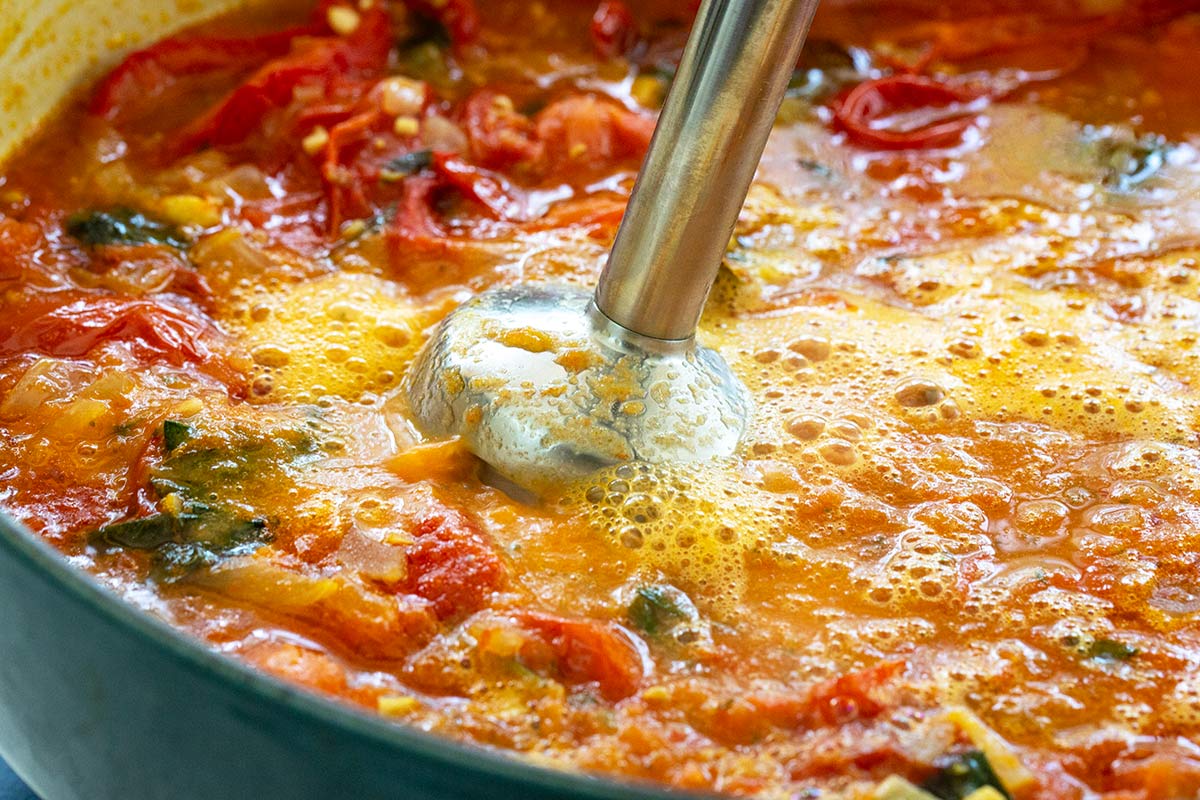
Step 6: Puree the Soup
To make creamy tomato basil soup without cream, puree with a blender until velvety and smooth. This mimics the consistency without the dairy. I like to use a hand immersion blender to break down the ingredients into extremely small particles that will suspend in the vegetable stock.
Quick Substitution: For an ultra velvety soup, carefully blend the tomatoes in a countertop blender in batches with the lid off (but covered with a towel) until a very fine texture is reached. A food processor also works very well.

Step 7: To Serve
I like to garnish the soup with freshly sliced basil, chives, croutons for crunch, or even some aged parmesan cheese. It will surely become one of your favorite soup recipes!
Frequently Asked Questions
Yes! My version does not use heavy cream. Instead, puree the tomatoes and vegetables to add richness and creamy consistency. The fruit is cooked with extra-virgin olive oil when roasted. A small amount of butter is used to saute the onions. However, you can use olive oil as a dairy-free and vegan option. Tomatoes are packed with nutrients like the antioxidant lycopene, vitamin C, K, folate, and potassium, making them a healthy base for soup.
Both are creamy tomato-based soups. Tomato basil soup may or may not contain added cream. A bisque is pureed and strained for a very fine consistency. Cream is typically added for a velvety consistency. Traditionally, bisque uses the shells of seafood to flavor and thicken the soup, however, for tomato bisque, the fruit and vegetables are pureed.
Yes! This is a great recipe to adapt for a 6-quart Crock-Pot or slow cooker. I recommend roasting the fresh tomatoes and garlic, or they will make the soup very watery in the vessel. Cook on low heat for 7 to 8 hours or high heat for 3 to 4 hours.
This soup can be stored in the refrigerator using an airtight container for up to 5 days. Make sure to cool the soup completely. Alternatively, the soup can be frozen for 6 months in 1 cup portions, then defrosted and reheated on the stovetop until warmed through. Since there is no cream in the recipe, there’s no risk of the dairy separating and creating an undesirable texture.
Serve This With


If you tried this Tomato Basil Soup Recipe, please leave a 🌟 star rating and let me know how it went in the 📝 comments below!
Tomato Basil Soup

Ingredients
- 3 pounds Roma tomatoes, halved lengthwise
- 1 pound Campari tomatoes, or cocktail, halved lengthwise
- 6 cloves garlic, peeled and halved lengthwise
- ¼ cup extra-virgin olive oil
- 1 teaspoon kosher salt
- ½ teaspoon black pepper
- 8 sprigs thyme
- 2 tablespoon unsalted butter
- 1 tablespoon minced garlic
- 1 ½ cups diced yellow onions, ¼" dice
- 1 bay leaf
- 4 cups vegetable stock , or broth
- 1 cup basil leaves, packed, cut into 1" pieces
- 1 tablespoon chopped chives
Instructions
- Heat the Oven – Set the oven rack to the center position and preheat to 400ºF (204ºC).
- Prepare the Tomatoes – Line a large baking sheet with foil. Place sliced Roma and Campari tomatoes cut-side up on the sheet. Evenly disperse the sliced garlic. Drizzle the olive oil over the top. Season with salt and pepper.Flip over some of the tomatoes, so an even amount is cut-side up and skin-side up on the baking sheet. Place the thyme sprigs on top.
- Roast the Tomatoes – Roast the tomatoes until lightly browned, slightly shriveled, and most of the liquid has evaporated, about 55 to 60 minutes. Discard the thyme sprigs.
- Cook the Aromatics – Heat a large pot over medium heat. Add butter, once melted, add the minced garlic. Saute until fragrant but not browned, about 30 seconds. Add onions, and saute until lightly browned, 8 to 10 minutes.
- Simmer the Soup – Add the roasted tomatoes and roasted garlic, bay leaf, vegetable stock, and basil. Bring to a boil, then reduce to a simmer and cook for 20 minutes, occasionally stirring to reduce some of the liquid. Remove bay leaf and discard.
- Puree the Soup – Use an immersion hand blender to puree the soup until smooth. Alternatively, process the soup in batches in a blender until smooth.
- To Serve – Taste and season the soup with salt and pepper as desired. Garnish with chives.
Notes
- Recipe Yield: About 5 cups
- Serving Size: 1 cup
- Adjusting Consistency: If the soup is too thin after blending, continue to simmer until the desired thickness is reached. If too thick, gradually add more vegetable stock.
- Make it Creamier: Add a few tablespoons of heavy cream or canned coconut milk. Stir into the soup after blending.
- Make it Vegan: Substitute butter for extra-virgin olive oil.
- Make it Whole30: Substitute extra-virgin olive oil or ghee for butter. Substitute sea salt for kosher salt.
- Storing: Cool and store in an airtight container in the refrigerator for up to 5 days. Freeze in resealable plastic bags for up to 6 months. Defrost before using.
- Reheating: Cover and microwave on high setting in 30-second intervals until hot, stirring in between. Alternatively, cook on the stovetop over medium heat until hot.
Nutrition Facts
Percent Daily Values are based on a 2000-calorie diet. All nutritional information is based on estimated third-party calculations. Each recipe and nutritional value will vary depending on the brands you use, measuring methods, and portion sizes per household.





Marti says
WOW! Superb, delicious, sensational. Where has this recipe been? No heavy cream was the key to the best soup we’ve ever had. Thank you for sharing. 86 degrees outside did not deter us from enjoying this delicacy. I didn’t have enough fresh tomatoes so added a can of chopped but it didn’t change the taste. WOW!!!
Jessica Gavin says
Thanks for your feedback, Marti!