
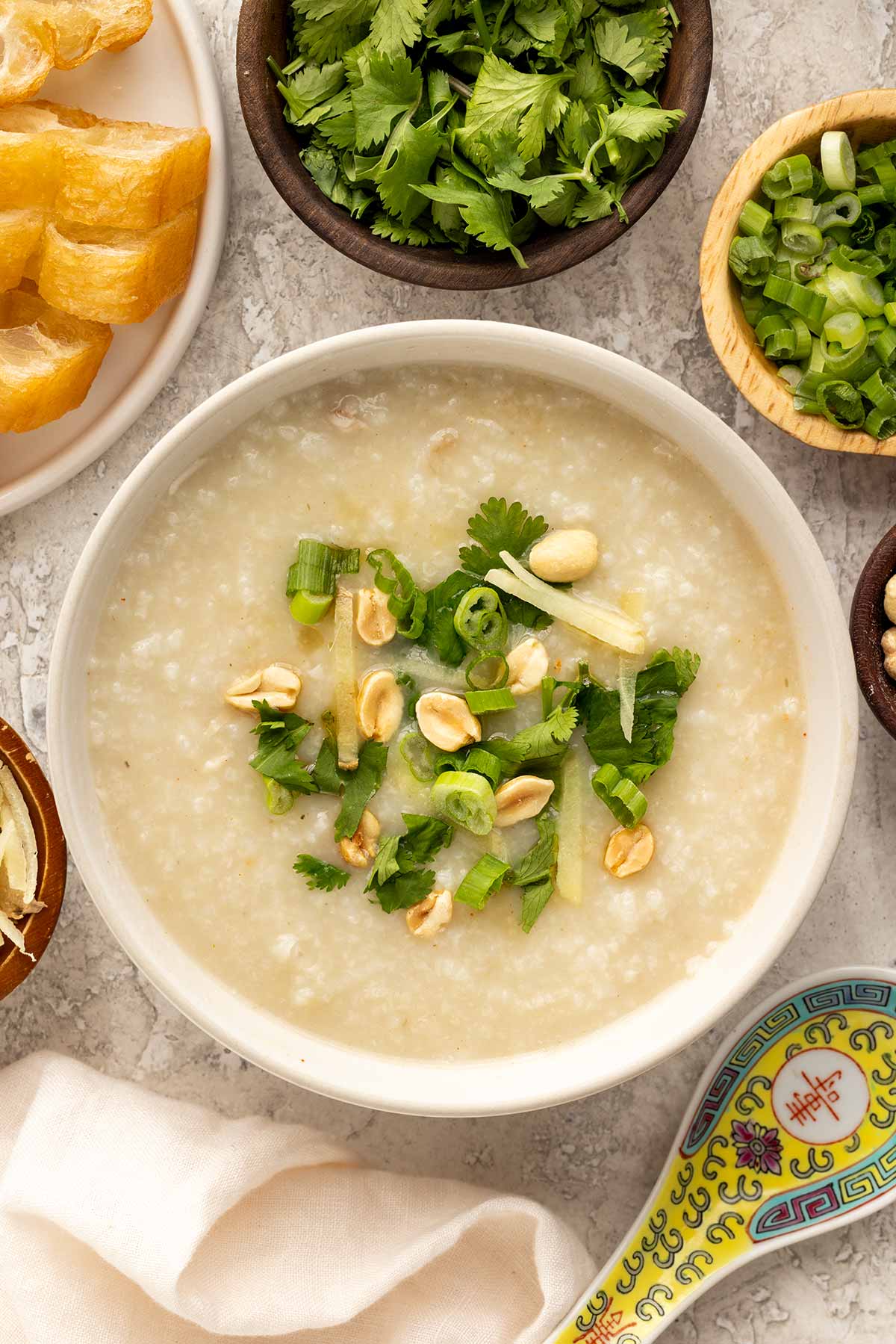
This basic congee recipe (Chinese rice porridge) transforms medium-grain rice, stock, salt, and sliced ginger into a silky, comforting porridge. It’s the perfect base technique that’s customizable and ready for any toppings or flavors you want to add.
Jessica’s Recipe Science
- Medium-grain Calrose rice is a tender grain that holds its shape and has higher starch content, resulting in a velvety consistency.
- Washing and soaking the rice removes excess surface starch and pre-hydrates the grains, helping them cook faster and more evenly.
- Maintaining a gentle simmer around 200ºF allows the rice to swell and release starch without scorching or turning gluey.
Why It Works
Congee (or jook) is one of those beautifully simple recipes where technique does most of the work, and the texture becomes a matter of personal choice. My family is Cantonese, and we’ve always preferred a thicker, velvety congee. I grew up watching my grandparents make the comforting rice porridge at least once a week, quietly absorbing the little secrets they passed down through practice.
My method gives you a reliable starting point: a silky texture, balanced flavor, and a flexible technique you can tailor to your ideal thickness. Once you master it, you can take congee in any direction. Layer in savory seasonings, aromatics, proteins, vegetables, or garnishes to suit your mood. It’s a tradition for my family to make Turkey jook after the holidays, or an easy weeknight chicken congee for busy days. Add your favorite bold toppings to customize each bowl.
Jump To a Section
Ingredients You’ll Need

- Rice: Medium-grain Calrose rice works well for congee because its higher amylopectin creates a naturally creamy, silky texture. At the same time, its moderate amylose content helps the grains stay soft yet retain some shape as they break down.
- Liquid: You can make a white congee using water. However, I prefer to use chicken stock or chicken broth with more umami flavor and depth. You can also do a mixture of water and stock for a more delicate taste. I use 8 cups of water or stock for every 1 cup of rice.
- Seasoning: Add a small amount of kosher salt to season the rice.
- Spice: To add pungency, warmth, and a spicy aromatic, add a few slices of peeled ginger while simmering the congee.
See the recipe card below for all ingredients and measurements (US and metric).
Ingredient Substitutions
This basic congee recipe is easy to customize! Try these delicious options:
- Stock Flavoring: Boost the broth with dried shiitake mushrooms, chicken bouillon, soy sauce, salted preserved turnip (chung choi), dried shrimp, fish sauce, garlic cloves, or a sachet d’épices.
- Rice Swaps: Medium-grain white rice works best for creamy congee because its balanced starch ratio releases enough amylopectin to thicken without turning gluey. Jasmine rice adds a fragrant aroma but makes a thinner porridge. Avoid short-grain rice, which breaks down too quickly and becomes pasty, and skip basmati, which stays too firm and separate to create the right texture.
- Using Other Grains: Several grains can be used to make congee-style porridges. Millet creates a soft, buttery bowl; pearled barley adds chewiness and nuttiness; quinoa breaks down into a light, protein-rich porridge; steel-cut or rolled oats give a creamy, familiar texture; bulgur wheat becomes tender and earthy; and heartier grains like farro or sorghum add a more rustic, chewy bite.
- Mix-Ins: Add sliced or shredded chicken, turkey, ground pork, ground turkey, black-eyed peas, peas, carrots, spinach, or salted century egg (pidan).
- Toppings: Try fish sauce, oyster sauce, soy sauce, sesame oil, chili oil, sliced green onions, Chinese donuts, chili crisp, peanuts, cilantro, chopped hard-boiled eggs, fried shallots, sriracha, or meat floss.
How to Make Congee (Jook)

Step 1: Wash and Soak the Rice
Washing the rice removes excess surface starch that can make the congee slimy and muddy-tasting. I usually rinse three times, gently scrubbing the grains by hand. Growing up, I watched my grandma soak the rice while the stock simmered, which evenly hydrated the grains so they swelled and softened at the same rate. This simple step helps the porridge cook faster and thicken more evenly.
Pro Tip: If you skip the soak, plan for a longer simmer and expect to add a bit more liquid as the grains take extra time to soften thoroughly.

Step 2: Cook the Congee
My family enjoys a thicker porridge, almost like a looser risotto, so I use a 1:8 rice-to-water ratio. I prefer to start with less liquid and adjust at the end. I bring the stock to a boil before adding the rice to quickly jump-start hydration, loosening the outer starches so the grains absorb liquid right away.

After it returns to a boil, I lower the heat to a simmer, around 200 to 205ºF. This is the sweet spot where the rice slowly swells and releases amylopectin, yielding a creamy texture without scorching on the bottom of the pan or turning the liquid into glue. I keep the lid slightly ajar so steam can escape and the porridge can naturally concentrate. During the first 25 minutes, I avoid stirring since agitation can shear the grains and release too much starch too early.

Once the rice begins to soften and break down, I stir occasionally to help the released starches emulsify into the broth, creating that glossy, velvety consistency. In this final stage, the starches fully gelatinize, thickening the congee, while the moderate amylose content helps the grains retain a bit of shape. As it rests, the porridge continues to thicken, so you can add a little extra stock at the end to adjust the texture.
Experimentation Encouraged: If you want a thinner, more soup-like congee, cook for a shorter time, stopping right before the porridge becomes very thick, around 35 minutes. Alternatively, use a 1:9 ratio of rice to water. However, I’ve noticed the cook time increases to about 55 to 65 minutes.
Step 3: To Serve
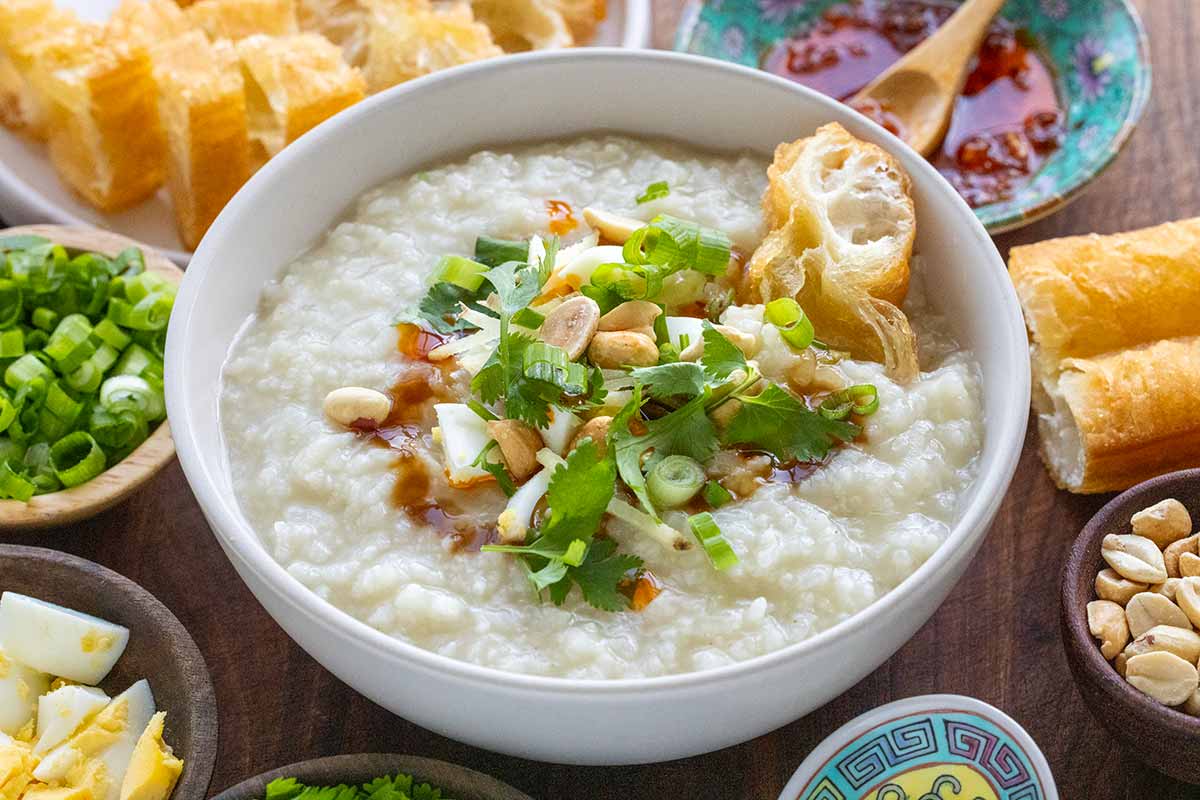
This is the moment everyone rushes to the table for a steaming bowl of congee. We each pile on our favorite toppings, like green onions, cilantro, peanuts, oyster sauce, chopped hard-boiled eggs, thin ginger slices, chili oil, or a warm, crispy Chinese donut dipped into the porridge. This is the ultimate comfort food that always reminds me of my childhood.
Frequently Asked Questions
Yes, you can absolutely make congee with leftover cooked rice. Since the grains are already hydrated and partially broken down, the porridge cooks much faster, usually in about 15 to 20 minutes. Add the rice to a pot with stock (start with about 1 cup rice to 3–4 cups liquid), bring it to a boil, then simmer and gently mash the grains as they soften so they release more starch. Add extra stock as needed until it reaches your preferred creamy consistency.
If you prefer a thinner, more soup-like congee, shorten the cooking time for a 1:9 rice-to-water ratio, and stop when the rice is soft but not yet fully thickened, usually around the 35-minute mark. You can also use a higher liquid-to-rice ratio, like 1:9 rice-to-water, though in my testing, this longer hydration time means the congee takes about 55 to 65 minutes to cook fully.
Yes, you can make congee with brown rice; it just takes longer. Because the bran layer is still intact, the grains take more time to soften and release starch, so expect a simmer of about 1½ to 2 hours. The texture will be heartier and slightly nutty, and the porridge won’t get as silky as white-rice congee. You may need extra liquid, so keep additional stock or water nearby to adjust the consistency as it cooks.
More Chinese Recipes


If you tried this Congee Recipe, please leave a 🌟 star rating and let me know how it went in the 📝 comments below!
Congee Recipe
Ingredients
- 1 cup Calrose Rice, or medium-grain white rice
- 8 cups unsalted chicken stock, chicken broth, or water
- ½ teaspoon kosher salt
- 2 slices ginger, ⅛" thick, optional
Instructions
- Wash and Soak the Rice – Add the rice to a medium bowl, cover with cool water, scrub the grains between your hands, then drain. Repeat until the water runs clear. Cover with cool water and soak the rice for 20 minutes. This pre-hydration helps the grains cook faster and more evenly. Drain the water from the rice.
- Cook the Congee – In a large pot, bring the chicken stock to a boil over medium-high heat. Add the rice, salt, and ginger (if using). Stir, cover, and let it return to a boil, about 1 minute. Stir again, reduce the heat to medium-low with the lid slightly ajar. Maintain a simmer with small bubbles breaking the surface around 200 to 205ºF (93 to 96ºC), adjusting the heat as needed. After 25 minutes, stir to prevent sticking.Continue cooking with the lid slightly ajar, stirring occasionally, until the liquid is glossy and the porridge becomes thick, about 10 to 20 minutes. The congee will thicken more as it rests. Stir in more stock, broth, or water as needed to reach the desired consistency. Taste and season with salt and white pepper.
- To Serve – Portion the hot congee into bowls. Add desired toppings like sliced green onions, cilantro, peanuts, oyster sauce, chopped eggs, thinly sliced ginger, chili oil, chili crunch, or Chinese donuts.
Recipe Video

Notes
- Recipe Yield: About 5 cups
- Serving Size: 1 ¼ cups
- Make it Vegetarian: Use unsalted vegetable stock, broth, or water.
- Using Salted Stock: Wait to add the kosher salt until the end of cooking. Adjust the seasoning to taste.
- Topping Suggestions: Sliced green onions, cilantro, peanuts, oyster sauce, chopped eggs, thinly sliced ginger, chili oil, chili crunch, or Chinese donuts.
- Storing: Refrigerate in an air-tight container for up to 5 days. Add more stock or water to thin the consistency when reheating.
Nutrition Facts
Percent Daily Values are based on a 2000-calorie diet. All nutritional information is based on estimated third-party calculations. Each recipe and nutritional value will vary depending on the brands you use, measuring methods, and portion sizes per household.





Josephine says
10
Jessica Gavin says
Thank you, Josephine!
Elisa says
Just tried this recipe today with some previously cooked rice: it’s a great way to use leftover rice and get a quick and warm comfort food. Perfect for winter. Thanks for sharing!
Jessica Gavin says
I love that you used leftover rice to make the congee recipe, Elisa! Did the cook time change for you?
Elisa says
Yes, significantly shorter cooking time (which is very convenient!)
Jessica Gavin says
That’s great to hear! Such a genius way to use leftovers!