

Braised kale is a simple way to tenderize and deepen the flavor of these healthy cruciferous greens. First, sauté the vegetables to maximize the aromatics, then cover and simmer. The savory seasonings balance kale’s bittersweet taste for a delicious side dish.
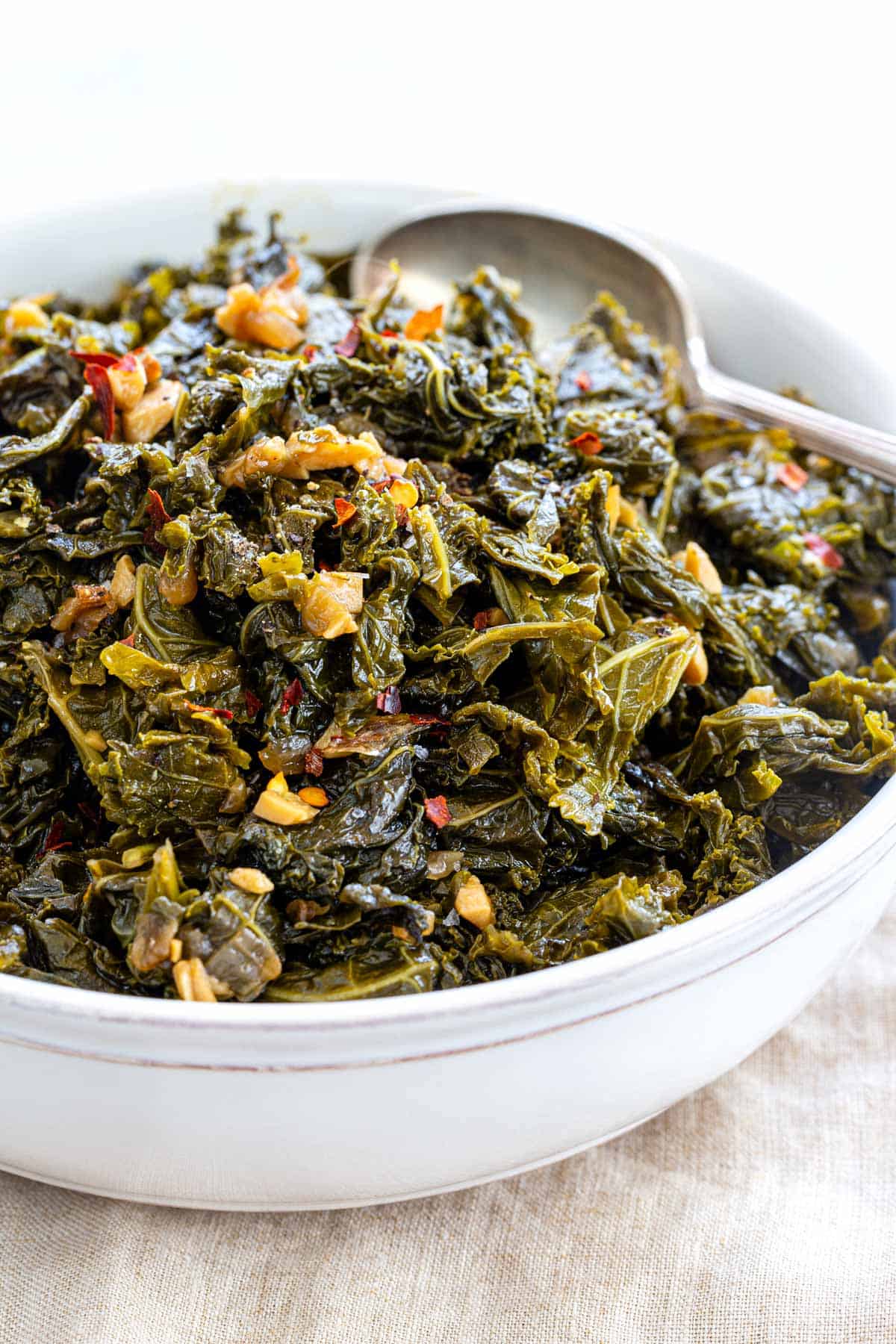
Jessica’s Recipe Science
- Sautéing kale in oil breaks down its protective waxy surface, allowing the stock to soften the leaves more effectively.
- Covering the kale as it braises traps steam, breaking down its tough fibers and tenderizing the leaves.
- Reducing the braising liquid concentrates the savory flavors of the onions, garlic, chili flakes, vegetable stock, and soy sauce.
Why It Works
Large, leafy, mature kale leaves can be hard to chew. Braising the robust greens is an ideal way to turn them from tough to tender. To make it a one-pot dish, sauté the kale first to wilt the greens while keeping them vibrant in color. Then add vegetable stock and cook, covered.
To prevent the braised kale from tasting bland, I add an Asian twist. Red pepper flakes, a splash of soy sauce, and rice vinegar add a slightly spicy, savory, tangy flavor that complements kale’s natural bitter notes—a hearty, healthy side dish that pairs well with any meal.
Jump To a Section
Ingredients You’ll Need
- Kale: I like to use hearty and thick kale leaves for braising, like curly green, red kale, or a mix. You’ll need about 8 cups of chopped kale for braising.
- Oil: Olive oil is used to sauté the onions and garlic and wilt the kale down in the pan.
- Alliums: Diced red onions and minced garlic add earthy flavors and a hint of sweetness to the braised kale.
- Seasoning: Red pepper flakes and black pepper add lingering heat. Soy sauce boosts the umami flavor of the greens.
- Braising Liquid: Vegetable stock adds savory notes while tenderizing the kale leaves.
- Vinegar: A small amount of rice vinegar adds pungency to balance the dish’s savory flavors.
See the recipe card below for all ingredients and measurements (US and metric).
Ingredient Substitutions
This braised kale recipe is easy to customize! Try these tasty options:
- Kale Swaps: Try other types of kale like smooth Tuscan (Lacinato) kale leaves. You can also use collard greens or Swiss chard in the braise.
- Vegetables: Try adding diced celery and carrots to make a classic mirepoix with the onions. Shallots work well too instead of onions. Try adding fresh or canned tomatoes. Add chopped sweet red bell peppers, jalapeños, or Thai chilies for heat.
- Braising Liquid Options: Add chicken stock or chicken broth. Add some red wine or beer for more dimension.
- Vinegar Substitutes: Add other types of vinegar like apple cider vinegar, balsamic vinegar, or red wine vinegar. Add a squeeze of lemon juice.
- Add Meat: Add in chopped bacon for a smoky flavor, or a ham hock bone. You can also use tough cuts of meat like brisket; sear the meat, then braise with the kale.
How to Make Braised Kale
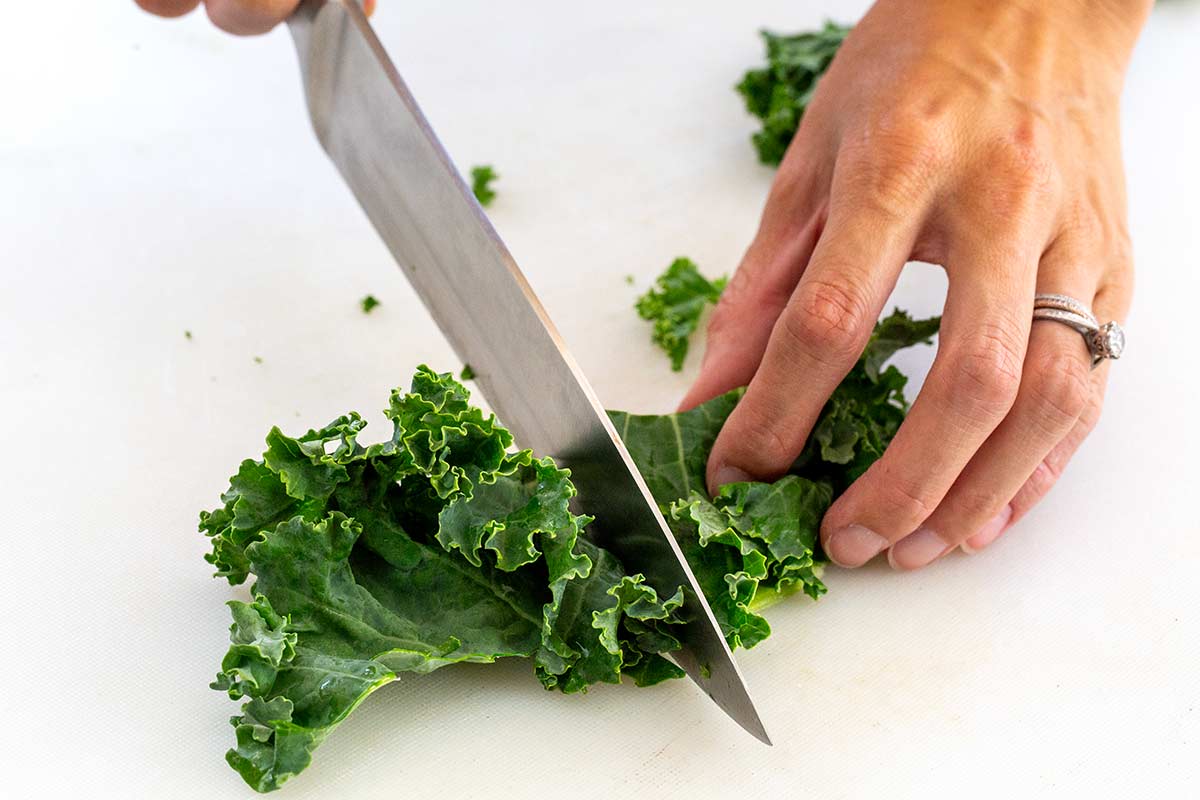
Step 1: Prepare the Kale
Remove the thick stem and cut the leaves into 3-inch pieces. The leaves can trap a lot of dirt, so rinse well, then drain.
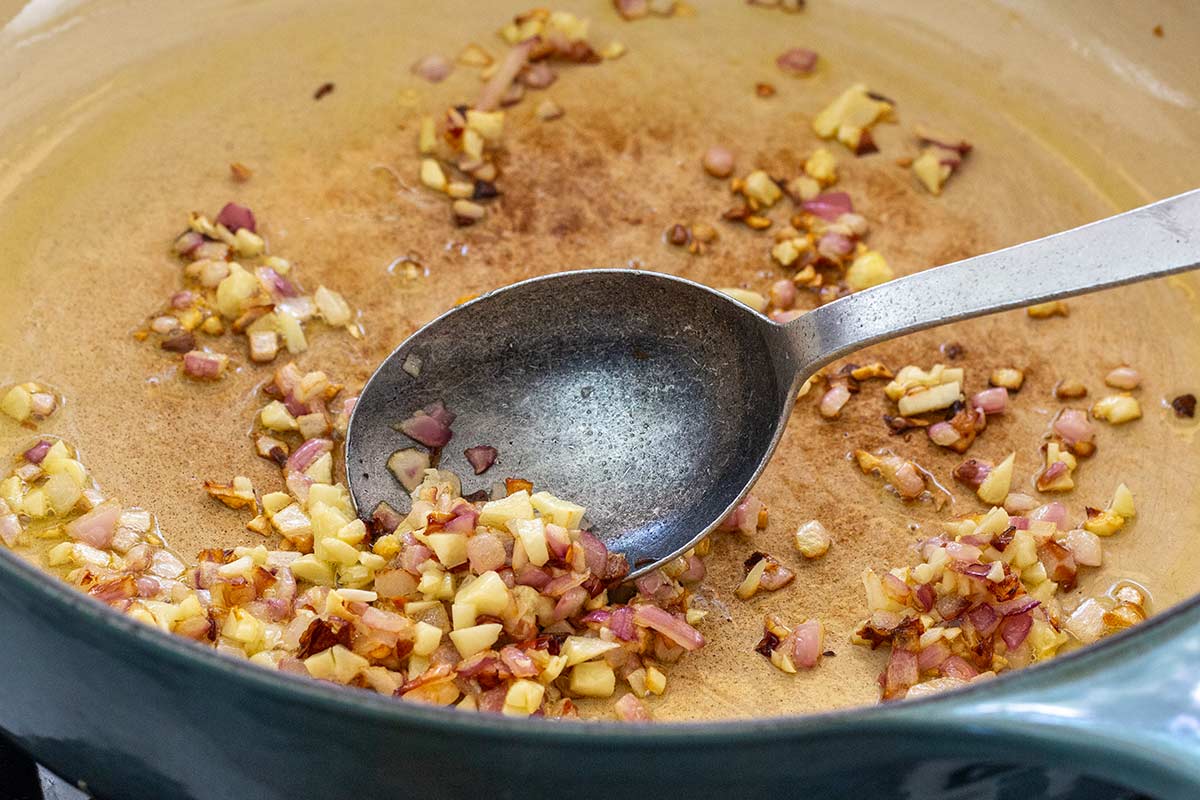
Step 2: Cook the Aromatics
Sautéing the onion in olive oil softens its cell structure and encourages browning, which develops sweeter, more complex flavors through caramelization and the Maillard reaction. Adding the garlic and chili flakes afterward lets their fat-soluble flavor compounds infuse the oil without giving them enough time to burn. This creates a flavorful base that carries through the kale as it braises.
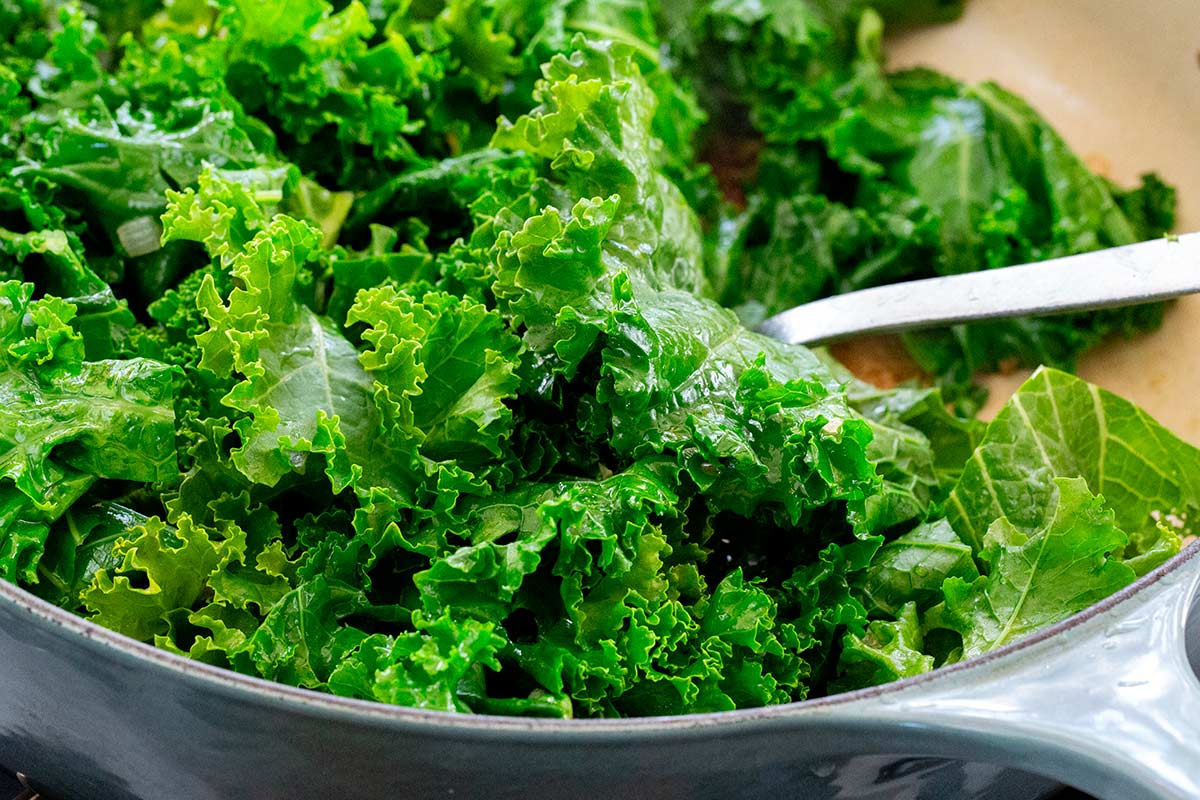
Step 3: Sauté the Kale
To get tender bites of kale, sauté first, then cover and simmer. I like a Dutch oven for braising. Sautéing the kale in extra-virgin olive oil lightly browns the surface and adds flavor before simmering. Adding the kale in two batches helps wilt the large volume of chopped leaves before braising.
Ingredient Chemistry: Kale has a natural waxy layer on its surface that protects it from water. However, this can prevent it from becoming tender when cooked. Using olive oil when preparing sautéed kale helps dissolve some of that protective waxy coating and tenderizes the leaves. This makes braising it in stock later much more effective at softening the leaves.
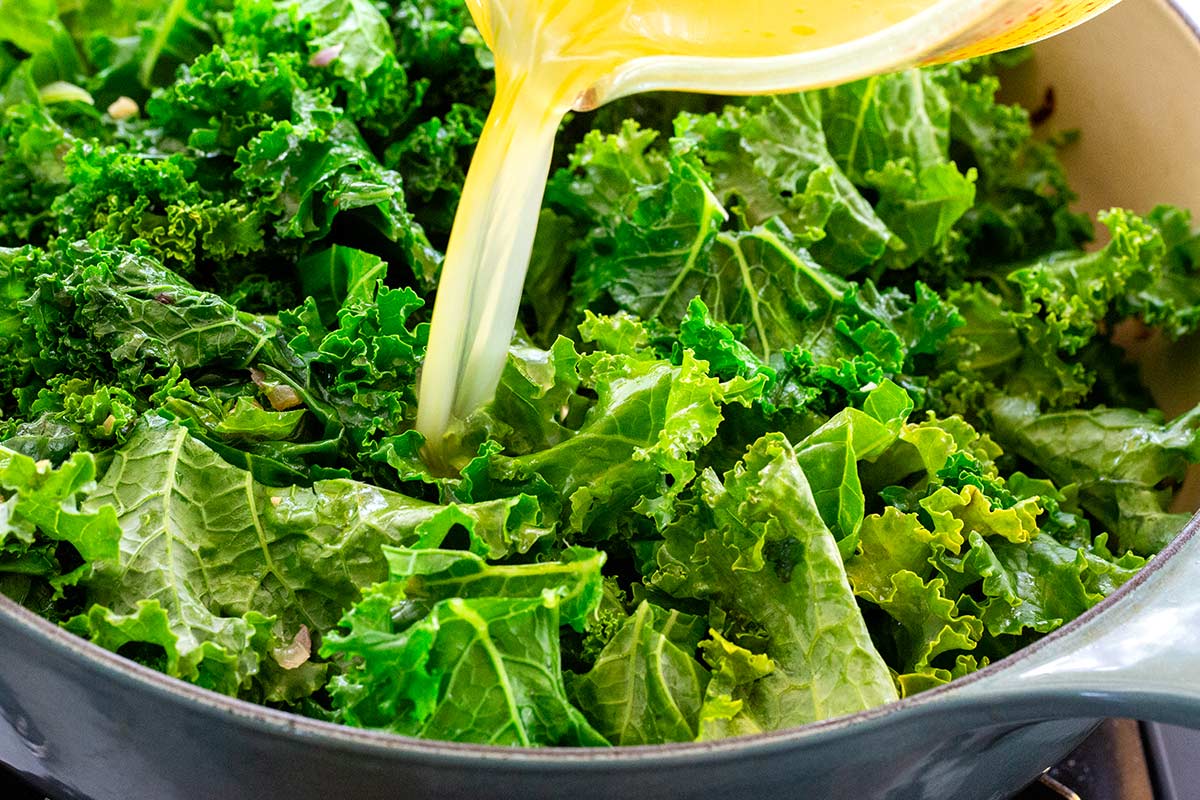
Step 4: Braise the Kale
The kale then simmers in a covered pot with just enough liquid for braising, which quickly softens the leaves while leaving them slightly firm. The process takes about 30 minutes, stirring occasionally to prevent burning.
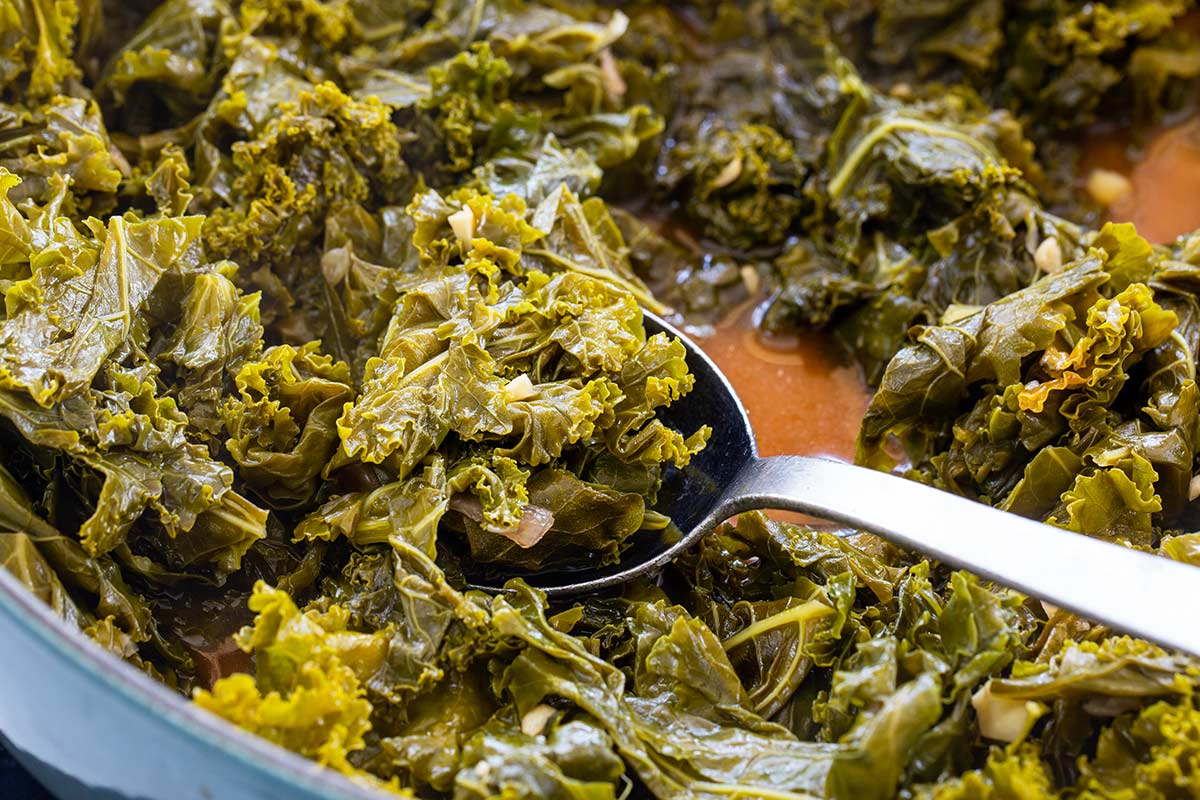
Step 5: Reduce the Liquid
The final step in braising kale is to uncover the pot and let most of the liquid evaporate. This helps to concentrate the aromatic and umami flavors of the onions, garlic, chili flakes, vegetable stock, and soy sauce already in the pan.
Tips for Perfect Results: Adding a small amount of rice vinegar at the end of cooking brightens and balances the savory, slightly sweet taste of the greens. Taking the time for this extra step makes the kale much more palatable.
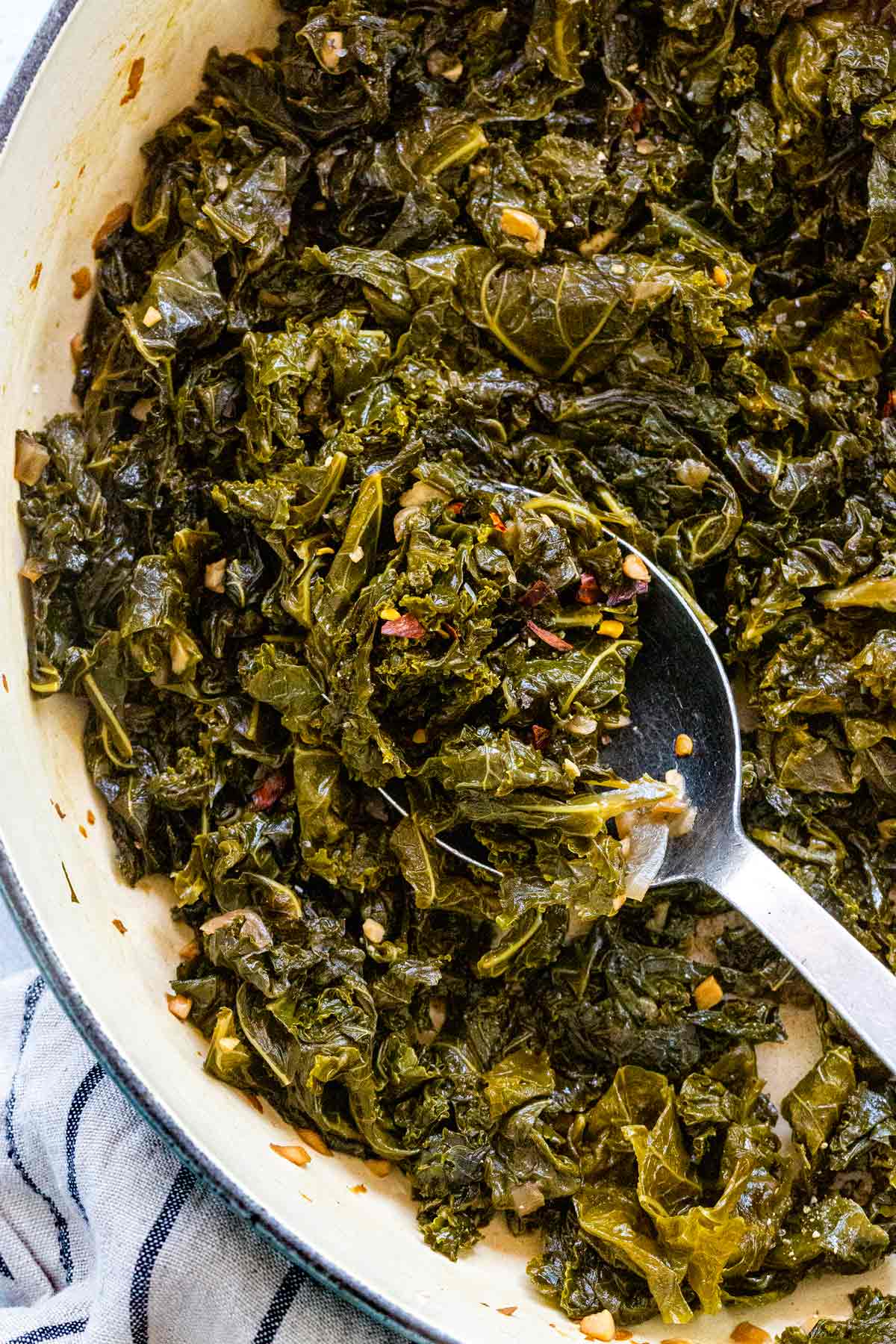
Step 6: To Serve
When the braised kale is ready, add a sprinkle of salt to finish, and grate aged cheese on top, like Parmesan or Pecorino Romano. For a little crunch, add breadcrumbs or crush some croutons on top. The braised kale pairs well with a roasted chicken, lamb chops, or reverse sear steak.
Frequently Asked Questions
Braising is a two-step method that combines dry-heat and moist-heat cooking. First, cook the main ingredient in oil to brown the surface and add flavor. Next, add a liquid like vegetable or chicken stock to the pan. Cover the pot and cook until the food is very tender. This method works well for tougher cuts of meat like pork shoulder, beef short ribs, or hearty winter greens like kale and collard greens.
Braised kale is kale that is lightly sautéed, then gently simmered and slow-cooked in a small amount of flavorful liquid until tender. Because kale has sturdy, fibrous leaves, braising helps break down the tough cell structure and soften the greens without requiring a long cooking time. In this recipe, the kale simmers with onions, garlic, chili flakes, vegetable stock, and soy sauce, absorbing savory flavor as it softens. Removing the lid at the end lets the excess liquid evaporate and concentrates the flavors, while a splash of rice vinegar adds a bright, tangy finish.
Choose mature types of kale like curly green or red, or Tuscan (Lacinato) for braising. They have thicker leaves with a rubbery texture that can stand up to cooking. Avoid tender baby kale, which will become mushy with prolonged cooking; it’s better to add raw to kale salads.
Serve This With




If you tried this Braised Kale, please leave a 🌟 star rating and let me know how it went in the 📝 comments below!
Braised Kale

Ingredients
- 2 pounds kale, about 4 large leaves (7 to 8 cups chopped)
- ¼ cup extra-virgin olive oil, divided
- ½ cup diced red onion, ¼" dice
- 2 tablespoons minced garlic
- ⅛ teaspoon red pepper flakes
- 2 cups vegetable stock
- 1 tablespoon soy sauce
- ¼ teaspoon black pepper
- 1 teaspoon rice vinegar
Instructions
- Prepare the Kale – Remove the stems and chop the leaves into 3-inch pieces. Thoroughly wash the kale and drain it; it does not need to be completely dry.
- Cook the Aromatics – Heat a large Dutch oven over medium heat. Add 2 tablespoons olive oil; once hot, add the onion and sauté until softened and lightly browned, 3-4 minutes. Add garlic and chili flakes; cook until fragrant, about 1 minute.
- Cook the Kale – Heat 2 tablespoons of olive oil, then add half the kale and cook until just beginning to wilt, about 1 minute. Add the remaining kale and cook until wilted, about 1 minute. Add vegetable stock and soy sauce, and stir to combine.
- Braise the Kale – Cover the pot and reduce the heat to medium-low. Cook, stirring occasionally every 5 to 10 minutes, until the greens are tender, 25 to 35 minutes.
- Reduce the Liquid – Remove the lid and then increase the heat to medium-high. Cook, stirring occasionally, until most of the liquid has evaporated and the greens start to sizzle, about 8-10 minutes. Turn off the heat and stir in rice vinegar and black pepper.
- To Serve – Taste the braised kale and season with salt and pepper to taste.
Notes
- Recipe Yield: 3 to 3 ½ cups
- Serving Size: about ¾ cup
- Storing: Cool the braised kale and store in an airtight container in the refrigerator for up to 5 days.
Nutrition Facts
Percent Daily Values are based on a 2000-calorie diet. All nutritional information is based on estimated third-party calculations. Each recipe and nutritional value will vary depending on the brands you use, measuring methods, and portion sizes per household.


Featured Comment
“Absolutely fabulous. I have decided to cook more kale using your recipe. All the ingredients combined make it a very pleasant experience to eat.”—Alisa