
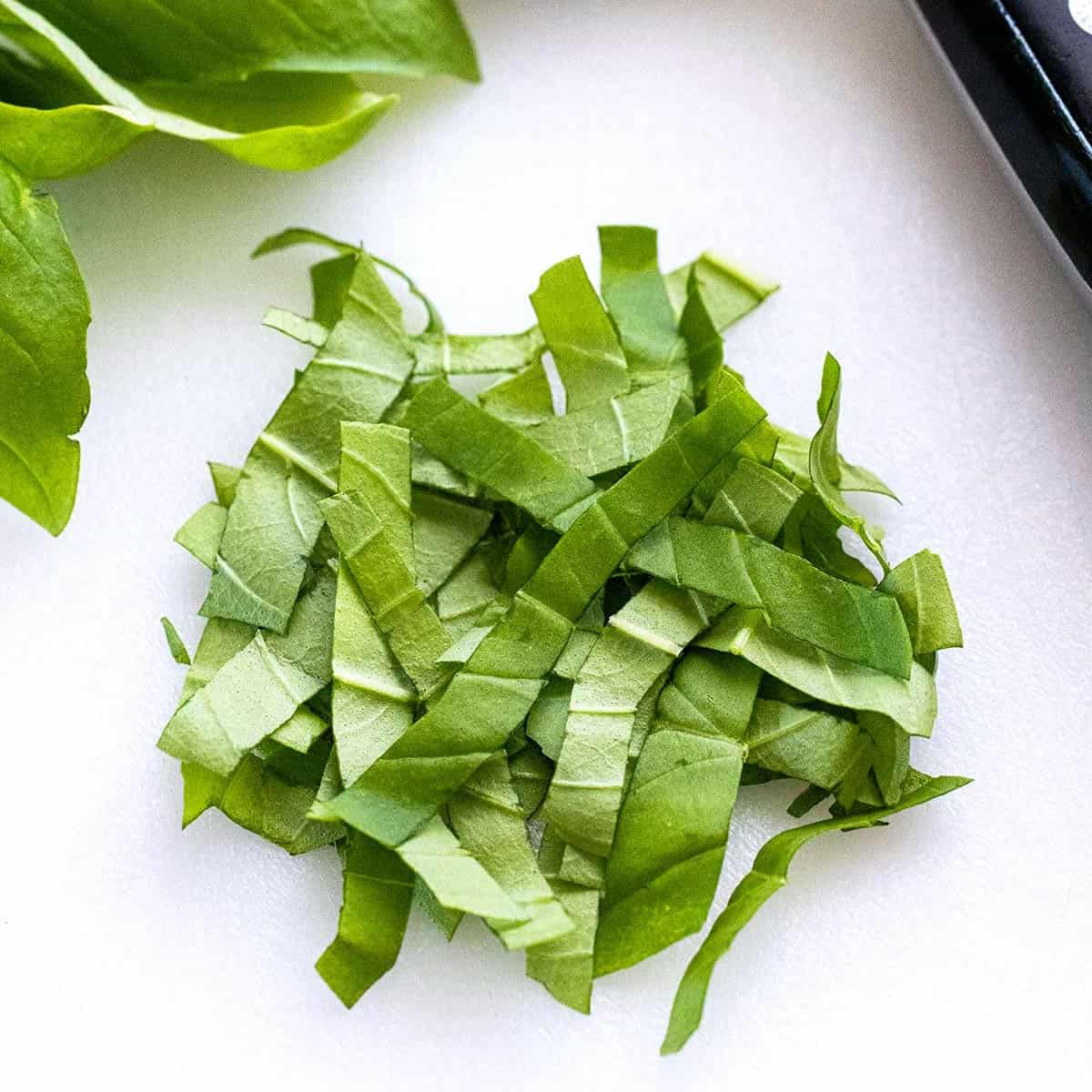
Learn how to cut basil like a pro! Add the freshest herbaceous flavor to any dish using the chiffonade or chop technique to prevent bruised leaves.

Jessica’s Recipe Science
- A sharp knife creates clean cuts through basil’s delicate cell walls, reducing bruising and slowing the enzymatic browning.
- Rolling the leaves into a cigar shape minimizes crushing when slicing, helping preserve the herb’s bright color and aromatic oils.
- Basil’s volatile flavor compounds are highly sensitive to heat, so adding fresh basil at the end of cooking preserves its vibrant taste.
Featured Comment 4
“I love your basil tips and hints in cooking and your recipes. I thought I would let you know how much I enjoy your efforts and knowledge.”—Adeline D.
Why It Works
Tender basil leaves can instantly add dimension to any dish, such as margherita pizza or tomato basil soup. Basil (Ocimum basilicum) is a member of the mint family. Its smooth, delicate leaves are fragrant, delivering a slightly sweet, peppery taste. Tiny slivers can add a significant flavor impact. That’s why I have a small basil plant on my countertop to pick and add to recipes, especially for Italian, Mediterranean, Vietnamese, or Thai cuisine.
The most common way to cut fresh basil is to finely slice it into ribbons, also known as a chiffonade, to use as a garnish. This step-by-step guide will show you how to cut pieces into thin strips and chop them up properly. Knife skills are essential because basil leaves bruise quickly and turn brown when cut improperly.
Jump To a Section
How to Cut Basil


Step 1: Wash and Dry
It’s essential to give basil leaves a good rinse before cutting. This removes any dirt and debris and prevents food contamination, especially if the herb is eaten raw. Add the basil to a bowl of cold water to release as much dirt as possible. Dry the leaves in a salad spinner or pat dry with a paper towel. Be careful not to bruise the leaves.
Step 2: Remove the Leaves
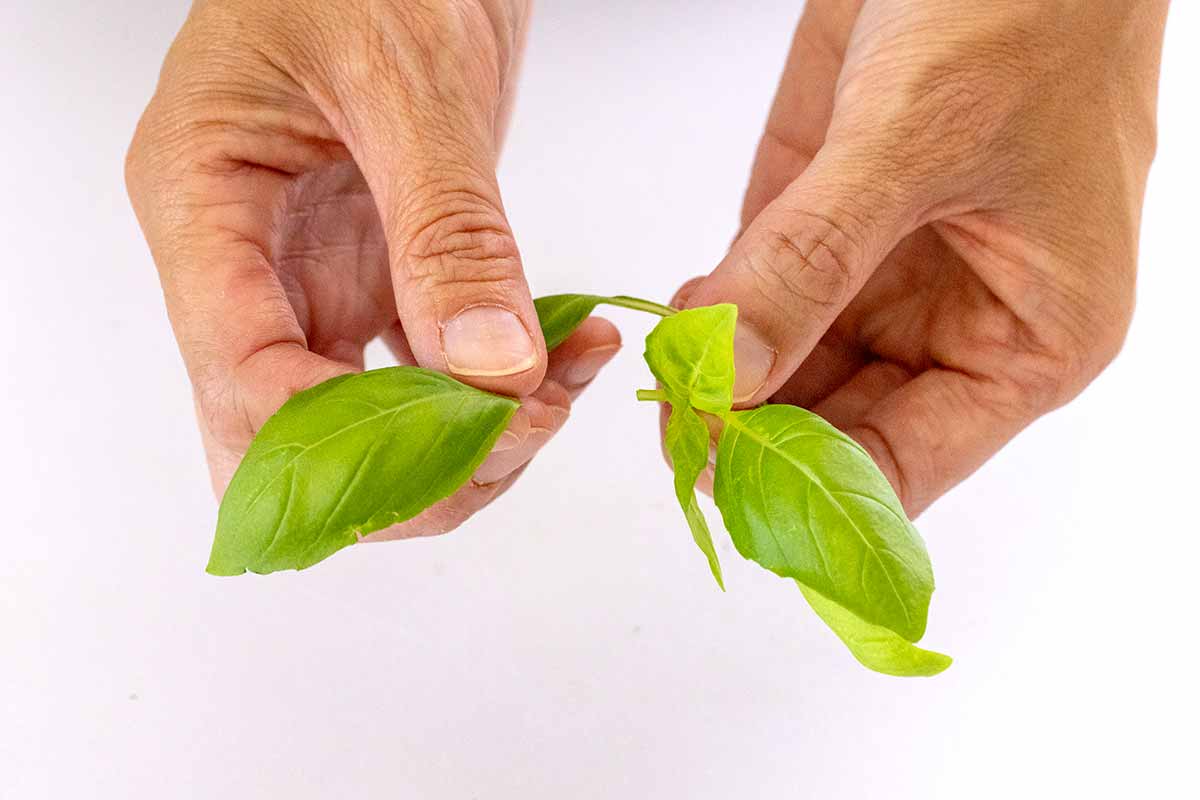
Often basil leaves are sold still connected to the stem as sprigs, with sets of leaves. Pull each leaf from the base to remove it from the central stem. Pluck one at a time so that they don’t become damaged. It’s best to wait until the day of use to pick them so they don’t wilt.


Step 3: Slice the Basil (Chiffonade)
When cutting basil, only use a sharp chef’s knife. This will give the cleanest cuts and cause the least damage to the plant’s cell walls.
The quickest and most effective way to chiffonade (thinly slice) basil is to stack the leaves into a pile of about 4 to 5 leaves, from largest to smallest. Place them on top of each other so they sit concave, with a bowl shape. This prevents the leaves from bending too much, which can cause bruising.
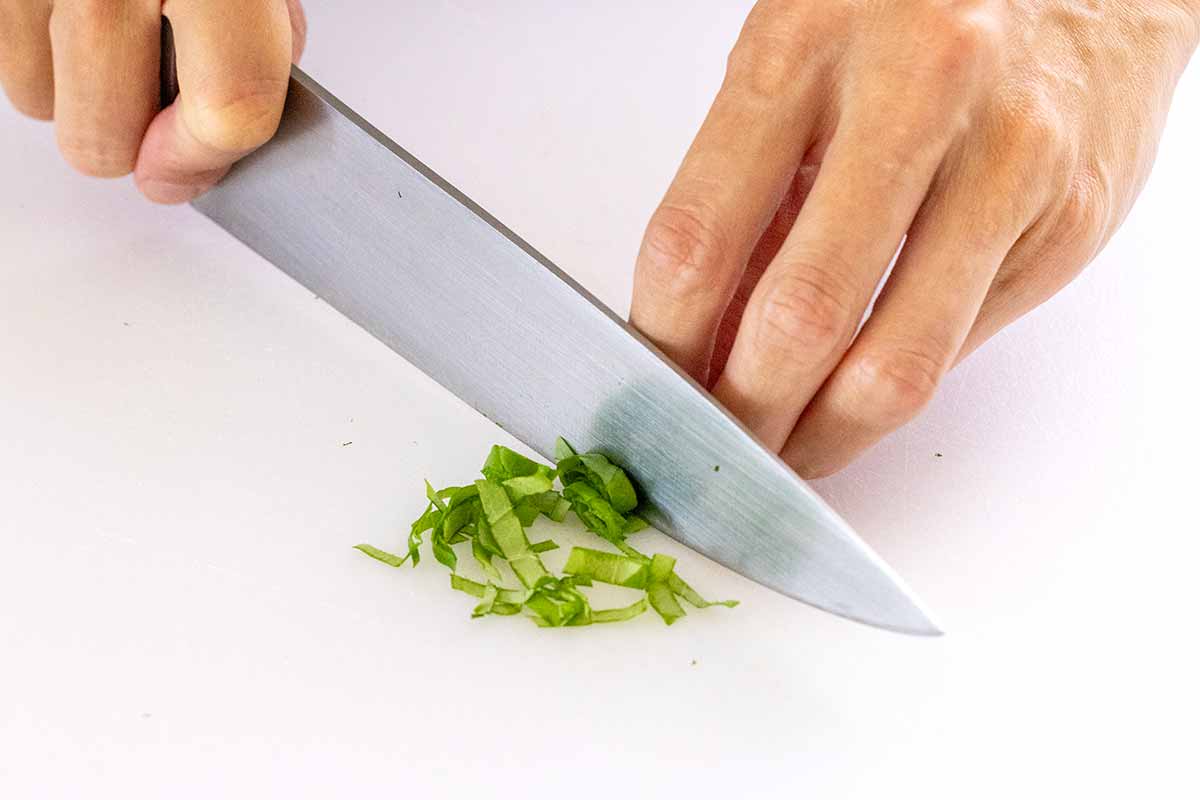
Roll the leaves lengthwise into a cigar shape. Make slices crosswise to create thin strips of the desired width. Do not drag the knife across the leaves! This will cause larger browned areas when the basil is cut. It’s best to cut the basil right before adding it to dishes. Over time, the cut areas will brown due to oxidation.
Use: Garnish for pasta, soups, curries, stews, pizzas, marinara sauce, Caprese salad, fresh green salads, sandwiches, and wraps.
Step 4: Chop the Basil
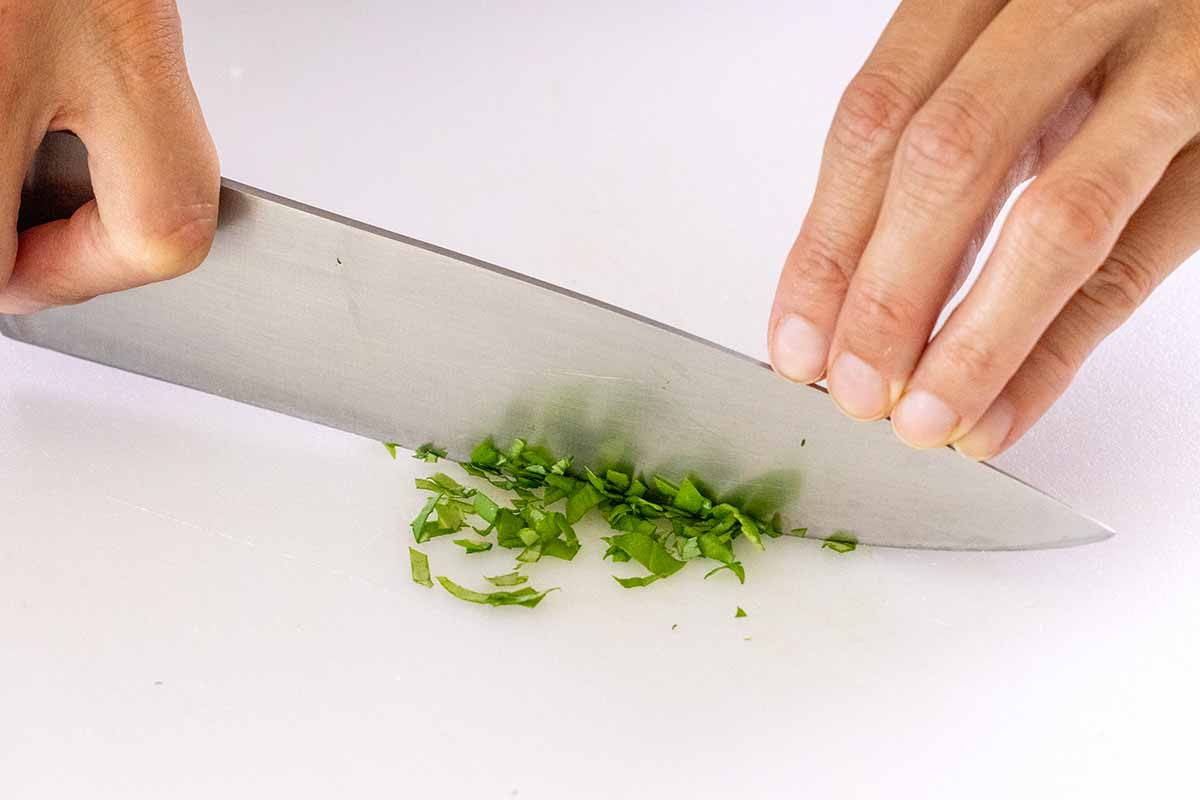
If you want to add a strong basil flavor to recipes, chop it into very fine pieces. This is great for salad dressings, sauces, or incorporating ground meat or stuffings. The leaves will brown faster because of all the cuts, but it’s okay, especially when cooked.
Use the same technique as chiffonade to slice the leaves into thin strips. Then make crosswise slices, and use a gentle rocking motion to chop into smaller pieces. Do your best to make as few cuts as possible, and don’t drag the knife, or it will bruise the leaves. Wait to chop the basil until just before adding it to a recipe to preserve its green color.
Uses: Mix into Italian dressing, marinara sauce, meatballs, and stuffed mushrooms.
How to Store Fresh Basil
- Room Temperature: If the basil plant is still potted in soil, place it in a jar with ¼ inch of water, away from direct sunlight, on the counter. Add more water as needed to prevent wilting. Basil sprigs can be placed upright in a tall glass jar with enough water to cover the stems by 1 inch. Replace the water every few days. The basil should last 1 to 2 weeks at room temperature.
- Refrigerated: Basil stems can be placed in a tall jar with 1 inch of water. Cover the top with a large plastic bag, leaving room for air to circulate below. Alternatively, wash the basil leaves or sprigs with cold water, then dry them. Wrap in a paper towel, then store in a resealable plastic bag or an airtight container. Change out the paper or pluck off any wilting leaves. Check every few days. They will last about 1-2 weeks.
- How to Store Fresh-Cut Basil: For the best taste, use freshly sliced or chopped basil immediately. However, it can be stored in an airtight container in the refrigerator for 1 to 2 days. It will only show slight browning if cut properly.
Frequently Asked Questions
Tearing basil gives a more rustic appearance and yields larger torn pieces. It reduces damage to the leaf’s cell walls. Slicing is better for thin, even pieces. There will be minimal damage and browning when appropriately cut with a sharp chef’s knife.
Place the leaves in a single layer on a parchment paper-lined sheet pan. Dry at 200ºF (93ºC) until the leaves become brittle. Depending on the leaf and batch size, this process will take about 2 to 4 hours. Cool and crumble, or keep the leaves whole. Store in a glass jar for the best shelf life. Use 1 teaspoon of dry basil for 1 tablespoon of fresh leaves.
Whole leaves can be blanched for about 5 seconds to destroy the enzymes that cause browning, then chilled in an ice bath. Dry with a paper towel, then add blanched basil to a plastic bag or airtight container and freeze. Alternatively, combine chopped basil with olive oil to make a paste. Freeze in an ice cube tray to make small portions for recipes. Frozen basil is best used for cooked dishes as the leaves become very soft.
If you want to add fresh basil to cooked dishes like tomato sauce, soups, and stews, it’s best to wait until the last few minutes of cooking. Heat turns the delicate herb brown, and it softens very quickly. The volatile aromas from the oil in the leaves will dissipate. However, the dish will still carry the herbaceous taste. If using dried basil, add it to the hot oil at the beginning of cooking to bloom the herb, so more fat-soluble flavor compounds are extracted into the dish.
Ways to Use Basil


If you found this guide for How to Cut Basil helpful, please leave a 🌟 star rating and let me know how it went in the 📝 comments below!
How to Cut Basil

Ingredients
- 4 basil leaves, or more as needed
Instructions
- Wash and Dry – Submerge the basil leaves in a bowl of cold water. Transfer to a salad spinner to dry. Alternatively, gently shake off the excess water and pat dry with a paper towel.
- Remove – Starting from the base of each leaf, gently pull the basil, one by one, from its central stem.
- Slice the Basil – Stack about 4 leaves in a pile from largest to smallest. Roll the leaves lengthwise into a cigar shape. Using a sharp chef's knife, make slices crosswise to create thin strips. Do not drag the knife across the leaves; they bruise easily.
- Chop the Basil – Place sliced basil in a pile. With a chef's knife, slice the leaves crosswise. If needed, use a gentle rocking motion to chop into smaller pieces. Be careful not to bruise the leaves; they will brown quickly.
Recipe Video

Notes
- Yield: 4 leaves yield about 1 tablespoon chopped, depending on size.
- Cutting Time: It’s best to wait to cut basil for a recipe until you are ready to use it in the dish. This will keep the color green for longer. The cut areas turn brown over time.
- Storing: Store chiffonade or chopped basil in an airtight container in the refrigerator for 1 to 2 days. Discard when browned.
Nutrition Facts
Percent Daily Values are based on a 2000-calorie diet. All nutritional information is based on estimated third-party calculations. Each recipe and nutritional value will vary depending on the brands you use, measuring methods, and portion sizes per household.


Kristal says
I’m new to growing fresh herbs! This article is very helpful in preserving my ongoing harvest and loving my new hobby and enjoy whole food cooking!! Thank you!!
Jessica Gavin says
I’m so happy that you found the basil article informative, Kristal!
Adeline DiPasqua says
I love your basil tips and hints in cooking and your recipes. I view your emails every day. I thought I would let you know how much I enjoy your efforts and knowledge. Thank you very much.
Jessica Gavin says
Thank you so much! I’m so happy that the cooking tips are helpful for you. Let me know if you ever have any questions!