

The reverse sear steak method might change the way you cook beef forever. This two-step process involves baking in the oven and searing in a hot pan. It’s a reader favorite, with hundreds of rave reviews!

Jessica’s Recipe Science
- The gentle and consistent heat in the oven provides more control of the internal temperature and prevents overcooking.
- Cooking in the oven below 300 degrees activates enzymes that tenderize the meat.
- Pan-searing at the end of cooking develops a golden brown crust through the Maillard Reaction.
Featured Comment 200
“I have used this recipe three times now, and it is THE best way to cook a steak! Thanks for a great recipe”—Katt
Why It Works
In culinary school, I was taught to sear filet mignon or ribeye in a hot pan to lock in the juices. After numerous tests, I’ve found that browning adds a flavorful crust, but the juiciness varies. A thick steak requires more time, yielding overcooked and dry exteriors with a small amount of pink center.
America’s Test Kitchen introduced me to the reverse sear method, which has become my go-to technique ever since. With reverse sear, you cook the meat gently first in the oven and then sear it on the stovetop.
- There is no need to bring the steak to room temperature for even cooking; the oven quickly does the job!
- The warm oven dries the surface moisture for effective pan-searing later on.
- More consistent pink internal color while limiting cooked grey edges.
- A thick cut of beef can be gently cooked to nearly the right level of doneness.
- A quick pan-searing on the stovetop develops a stunning crust and flavor.
Jump To a Section
Ingredients You’ll Need

- Steak: This reverse sear method is best for thicker cuts, at least 1 ½ to 2 inches thick. Anything below 1 inch will cook too quickly. Choose a quick-cooking, high-quality steak (USDA prime or choice) with some marbling. My top choices are ribeye, top sirloin, New York strip, porterhouse, T-bone, and filet mignon.
- Oil: Use a high smoke point oil like avocado oil, light olive oil, soybean, or vegetable oil to sear the steaks. Even better, use clarified butter for the richest taste.
- Butter: When the steak is nearly done cooking, I baste it with butter. The milk solids brown, adding toasted aromas and flavor to the meat.
- Seasonings: Salt and black pepper enhance the beefy taste. This technique really enhances the surface flavor and tender texture.
See the recipe card below for all ingredients and measurements (US and metric).
Temperature and Timing
| Doneness | Bake Until | Sear Until | Serve At |
| Rare | 85-90ºF (29-32ºC) | 115-120°F (46-49ºC) | 120-125ºF (49-52ºC) |
| Medium-Rare | 90-95ºF (32-35ºC) | 120-25°F (49-52ºC) | 125-130ºF (52-54ºC) |
| Medium | 100-105ºF (38-41ºC) | 130-135°F (54-57ºC) | 135-140ºF (57-50ºC) |
| Medium-Well | 110-115ºF (43-46ºC) | 140-45°F (60-63ºC) | 145-150ºF (63-66ºC) |
| Well-Done | 120-125ºF (49-52ºC) | 155°F (68ºC) | 160ºF (71ºC) |
How to Reverse Sear Steak
Step 1: Heat the Oven
Set the oven rack in the center position for even heat distribution. Heat the oven to 275°F (135ºC). Line a rimmed baking sheet with foil or parchment paper, then place a wire rack on top.

Step 2: Prepare the Steaks
Dry the surface of the steaks with paper towels to remove excess moisture.
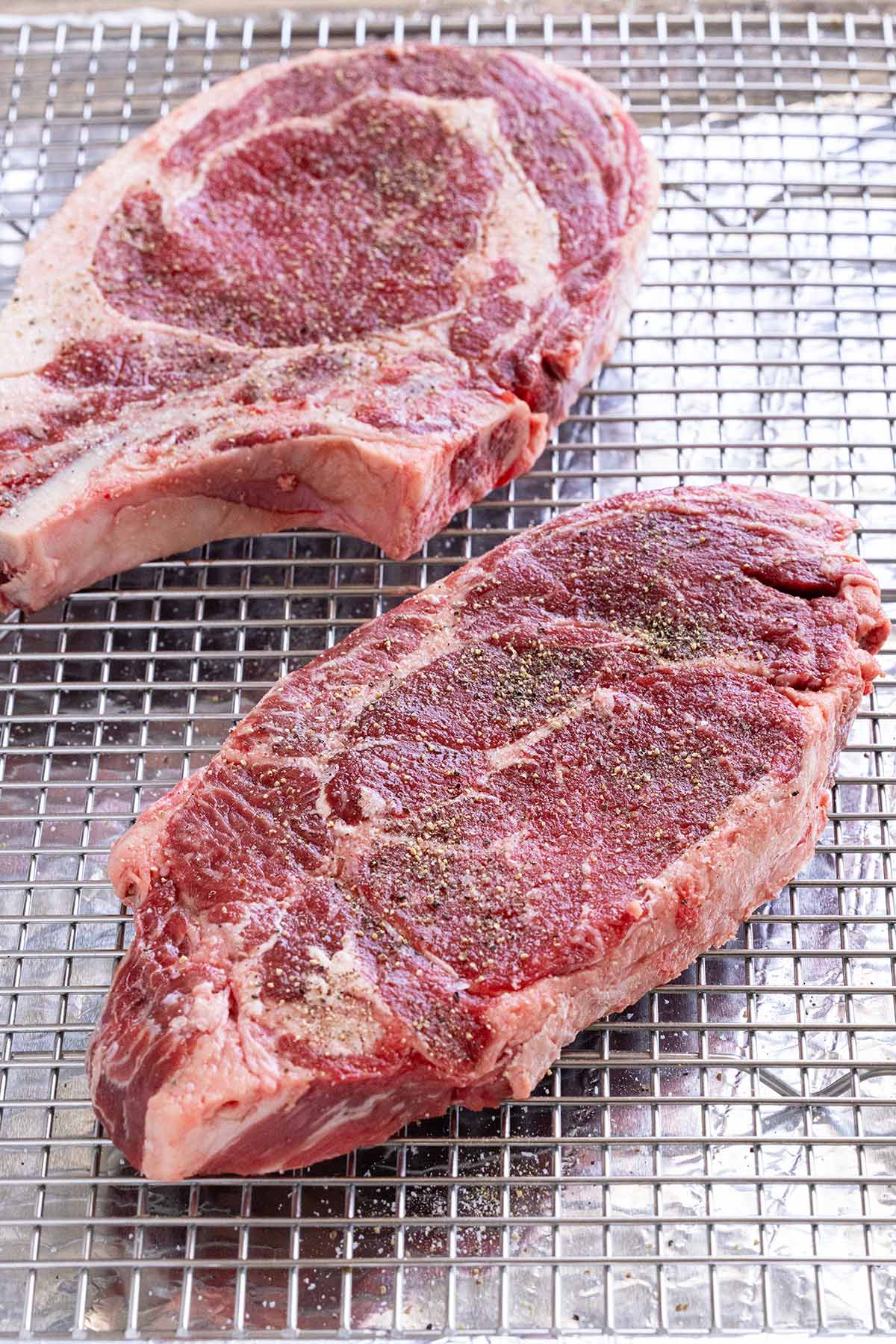
Place the steaks on the wire rack and season both sides with salt and pepper.
Pro Tip: Refrigerate the meat uncovered for 2 to 24 hours before cooking for a drier surface and more well-seasoned steak.

Step 3: Cook the Steak in the Oven
Transfer the steaks to the preheated oven. Bake for 15 to 25 minutes, depending on thickness and desired doneness. It should be about 30 degrees below the final serving temperature.
Tips for Perfect Execution: Use an instant-read meat thermometer to check the internal temperature of the thickest part of the steak.

Step 4: Pan Sear the Steak
Heat a large cast iron skillet or stainless steel pan over high heat. Once hot, add the oil and get a good sear on each side, about 1 to 2 minutes. Cook the sides to render the fat, about 30 to 60 seconds per side.
Step 5: Baste with Butter
Reduce the heat to medium-low and add the butter. Spoon the melted butter on top to baste the steaks for 2 minutes to enhance the browning and flavor.
Experimentation Encouraged: Add aromatics like sliced garlic cloves, shallots, fresh rosemary, or thyme sprigs. Toss them in at the end when basting with the butter.

Step 6: Rest, then Serve
Transfer the seared steak to a clean plate or back to the wire rack set on a baking sheet. Briefly rest for 5 to 10 minutes to allow for carryover cooking to finish heating the steaks. As I’m plating up the sides, I find that the steak is at the perfect serving temperature.
Frequently Asked Questions
It’s simple! Cook the steaks in a moderately warm oven at 275°F (135ºC). Sear in oil in a hot skillet on the stovetop until golden brown on the surface.
This method works best for thick-cut steaks, 1 ½ inches or more. It’s great for tender filet mignon, New York strip steak, porterhouse, ribeye, T-bone, or large tomahawk steaks. This method is also great for grilling tri-tip.
Cooking the steak in the oven at 275 degrees activates natural cathepsin enzymes that tenderize the meat and help break down muscle proteins. Gradual heating increases enzyme activity, making the meat more tender over time. The activity reduces at about 122°F (50°C), but the 15 to 25 minutes of slow heating allow the enzymes to work their magic.
For a tasty smoked flavor, reverse sear on the grill. Create an indirect heating side of the grill. Once warm, cover and cook the steaks on the cooler side until they reach 100 to 125ºF (38 to 52ºC), depending on the desired doneness (see recipe). Remove the steaks, then cover and increase the grill’s temperature to high, or transfer to the direct heat side if using a charcoal grill. Sear until char marks form, about 30 to 60 seconds per side.
Sous vide steak will have the most consistent doneness because it’s tough to overcook. It takes a much longer time and is more difficult to sear without a lot of drying because it’s cooked in its juices. Reverse-seared steaks quickly develop golden, flavorful crusts after the initial oven cooking. It’s a more quick and affordable process without the need for a fancy immersion circulator, bags, and vacuum sellers.
More Steak Recipes


If you tried this Reverse Sear Steak method, please leave a 🌟 star rating and let me know how it went in the 📝 comments below!
How To Reverse Sear Steak

Ingredients
- 2 steaks, 1 ½ to 2" thick, like ribeye or filet mignon
- kosher salt, for seasoning
- black pepper, for seasoning
- 1 tablespoon vegetable oil
- 1 tablespoon unsalted butter, optional
Instructions
- Heat the Oven – Set the oven rack in the center position. Heat to 275°F (135ºC). Line a rimmed baking sheet with foil or parchment paper, and then place a wire rack on top.
- Prepare the Steaks – Dry the steaks with a paper towel to remove excess surface moisture. Transfer to the wire rack. Generously season both sides with salt and black pepper.
- Cook in the Oven – Transfer the steaks to the oven and cook until the internal temperature on a meat thermometer reaches: 85 to 90ºF (29 to 32ºC) for rare, 90 to 95ºF (32 to 35ºC) for medium-rare, 100 to 105ºF (38 to 41ºC) for medium, 110 to 115ºF (43 to 46ºC) for medium-well, and 120 to 125ºF (49 to 52ºC) for well done. This will take about 15 to 25 minutes, depending on thickness and desired doneness. Check often after the first 15 minutes. Remove the steaks from the oven and set aside.
- Pan Sear – Heat a large 12-inch cast iron skillet or stainless steel pan over high heat. Wait a few minutes, then add the oil. Once hot and just beginning to smoke, carefully add the steaks to the pan. Sear the first side until a deep brown crust is formed, about 1 to 2 minutes. Flip and sear the other side for about 1 to 2 minutes. Use tongs to turn the steaks on their sides to cook and render the remaining fat, about 30 to 60 seconds per side.Cook until the internal temperature reaches: 115 to 120°F (46 to 49ºC) for rare, 120 to 125°F (49 to 52ºC) for medium-rare, 130 to 135°F (54 to 57ºC) for medium, 145 to 150ºF (63 to 66ºC) for medium-well, and 155°F (68ºC) for well done. Adjust the heat and cook time as needed to reach desired doneness.
- Baste with Butter – Reduce the heat to medium-low and add the butter to the pan. Once melted, use a spoon to briefly baste the tops of the steaks for one minute.
- Rest and Serve – Transfer the steaks to a clean plate or cutting board. Rest at room temperature for 5 to 10 minutes before serving.
Recipe Video

Notes
- Steak Selection: I recommend ribeye, New York strip, filet mignon, porterhouse, T-bone, or top-sirloin. The reverse sear method works best for thick cuts 1 ½ inches thick or more.
- Cooking Thinner Steaks: This method can be used for at least 1-inch thick steaks. Check them after 10 minutes of cooking in the oven and then every few minutes after.
- Oil Options: Use a high smoke point oil, such as vegetable, avocado, or light olive oil. Clarified butter also works well.
- Checking the Steaks in the Oven: Take the steaks’ temperature at 15 minutes, testing about every 5 minutes until the target doneness is reached. Open and close the door quickly to minimize heat loss, as this will extend cook time. A probe thermometer works well for monitoring.
- Make it Dairy-Free: Omit the butter or use a plant-based butter substitute like margarine.
- Make it Paleo: Use ghee instead of vegetable oil and butter.
Nutrition Facts
Percent Daily Values are based on a 2000-calorie diet. All nutritional information is based on estimated third-party calculations. Each recipe and nutritional value will vary depending on the brands you use, measuring methods, and portion sizes per household.


ryan says
thanks this was very helpful.
Jessica Gavin says
Glad you found the article helpful, Ryan!
Katt says
I have used this recipe three times now and it is THE best way to cook a steak! Thanks for a great recipe!
Jessica Gavin says
That’s amazing, Katt! I bet you make the best steak now!
Richard says
Can i replace the cast iron skillet for a frypan – in reverse sear… ???
Considering i dont own one
Jessica Gavin says
Yes, you can use a stainless steel frying pan. However, I would not preheat it in the oven. I would just allow the pan to heat up on the stove until very hot, then sear the steak.
Jason Fex says
Hope you bought one it is worth it
Joseph says
It’s cute how you’re not allowed to cook it to more than medium! ?
Joseph says
Why would you rest the steaks after pan searing them? I’ve always rested the steaks after coming out of the oven for about 10 minutes (as nearly every other reverse sear method indicates as well) – one of the beauties of the Reverse Sear – pull them off the pan, they’ve already rested. I maybe rest them for 1 minute, slice ’em up and eat em hot!
Jessica Gavin says
I like to allow the steak to rest to redistribute the juices back into the meat. However, if you prefer, you can dig in right away.
Doug Alder says
Thanks – another option is, if you have a digital smoker (lets you set the temperature) use it instead of the oven and give your steak say 20 minutes of smoke (just to give it a bit of wood smoke flavour) then pan sear like you point out it when it reaches the desired temperature
Jessica Gavin says
That addition of the smoke to the steak sounds delicious, Doug! Love that the smoker can be used for gentle cooking, then a quick sear.
Gerri says
Awesome, awesome, awesome! I followed the cooking instructions for medium rare. Cooking in the oven for 15 mins at 275 F was perfect, then seared stove top for two minutes each side and then turned on the edges. I coated the tenderloins w/ Kosher salt, black pepper and a special seasoning mix. I also sautéed some shrimp (from a totally different recipe) with crushed garlic, red pepper flakes, lemon juice, brine (from a jar of olives), butter and parsley… We wound up putting that buttery, garlicky, lemony, brine sauce over the steak … OMG… it was to die for! But the reverse seared steak with just salt, pepper and butter prepared per the recipe here was also amazing!
NickL says
I’m going to attempt this on a gas grill this evg. It’s Costco mech tenderized rib steak which I just found out about. Hoping the reverse searing helps as I have to cook it more than I usually like to.
Jessica Gavin says
I can’t wait to hear how the reverse searing goes on the grill!
NickL says
It went well. I used the sear station side to keep the cast iron hot, prob too much avocado oil as I added butter garlic later. But I’m def going to do this again. Thx for the advice.
Jessica Gavin says
Thanks for the update! Great to hear you’ll try the steak cooking method again.
June says
Excellent recipe instructions – the steak came out beautifully browned, crusted, tender and flavorful. This method also generated a significantly lesser amount of smoke throughout my small NYC apartment. Because I was also simultaneously roasting root vegetables, there wasn’t enough room in the oven to pre-heat the cast-iron pan, so pre-heated it on a low stovetop flame. Also added a bit of fresh rosemary to the pan butter while searing/basting, and of course, finishing salt at the end. Do believe I’m now a convert from my previous favorite (but uneven stovetop method) of cooking start to finish in a searing hot, salted pan. The leftovers the next day even remained tender, usually, they’ve turned to leather!
Jessica Gavin says
You’re an inspiration, June! Great idea to preheat the pan over a low flame on the stovetop if you don’t have room in the oven. Love the addition of the rosemary, great job!
June says
Thank you, Jessica! You’ve made my day. 🙂
Elijah Sugay says
My wife’s favorite cut is a NY strip – I’ve been preparing them for her since we’ve been married – nearly six years. I attempted your recipe this evening and we both agree, it is literally THE BEST preparation of a NY strip (next time I’ll take photos!). Thank you for sharing your talent and knowledge. I am eagerly looking forward to trying out more of your recipes. Have a great evening!
Jessica Gavin says
Whoo-hoo! I’m so happy to hear that your family enjoyed the reverse sear method. Great job!
Baz says
I’ve been afraid to try reverse searing. Tonight I did it for the first time, with a couple of prime NY steaks. It took about half an hour at 275, maybe because they’d been in the freezer, but they were brown on the outside and a perfect medium pink-red all the way through! I will never cook steak any other way.
Jessica Gavin says
Great job, Baz! Yes, being frozen will take longer to warm up in the oven.
Peggy says
Loved this recipe! Is there a way to seat the steak with some type of coating like cheese?
Jessica Gavin says
I haven’t tried coating and searing the steak with cheese. Grated Parmesan might work well, but the steak might not get browned. Let me know if you try it!
Grace Dioguardo says
Thank you sooooo much, for the very first time my NY Strip steak came out perfect!
Jessica Gavin says
Great job, Grace!