
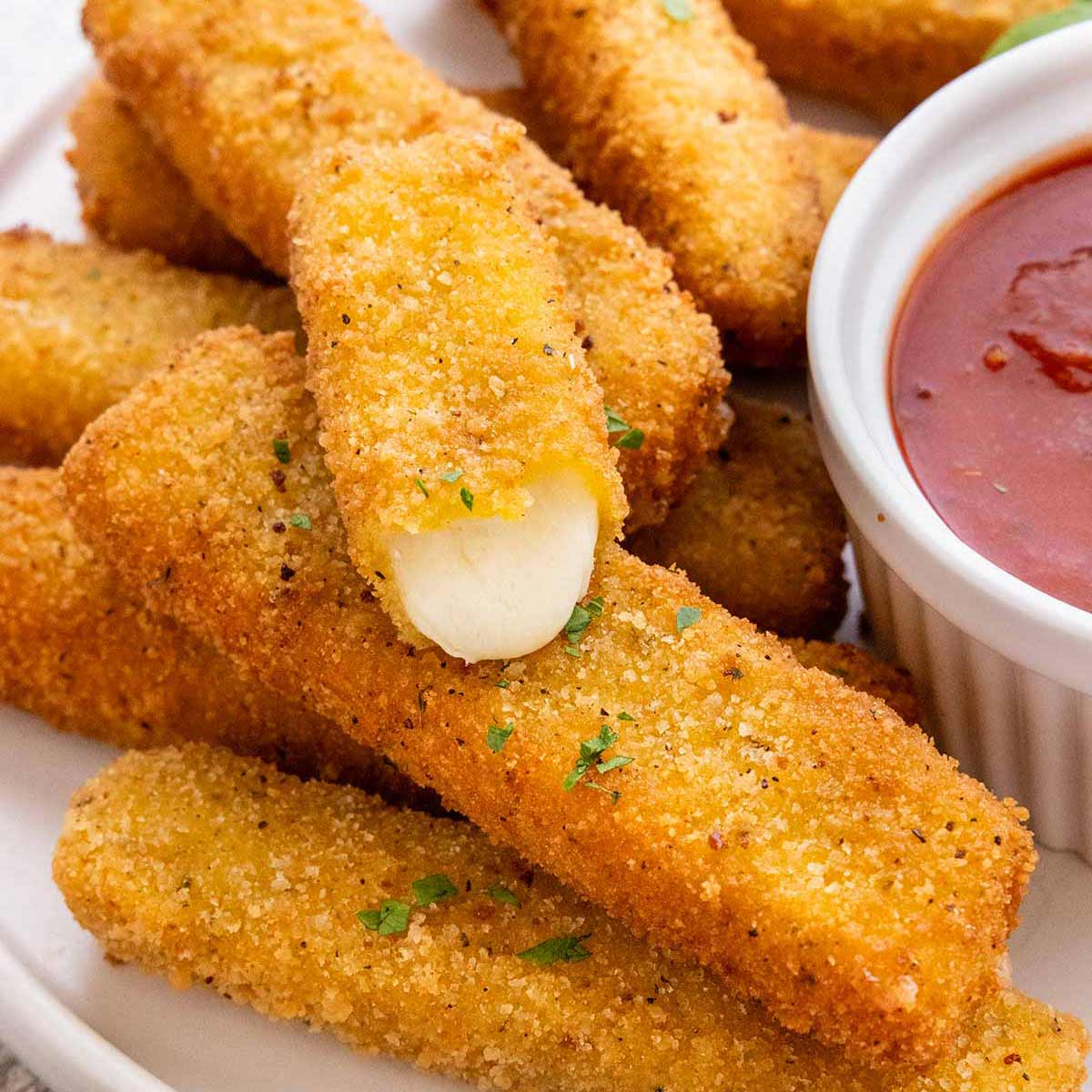
Crispy on the outside and perfectly melty on the inside, this mozzarella cheese sticks recipe is easy to make. Let me show you the science behind achieving a golden crunch and gooey center every time.
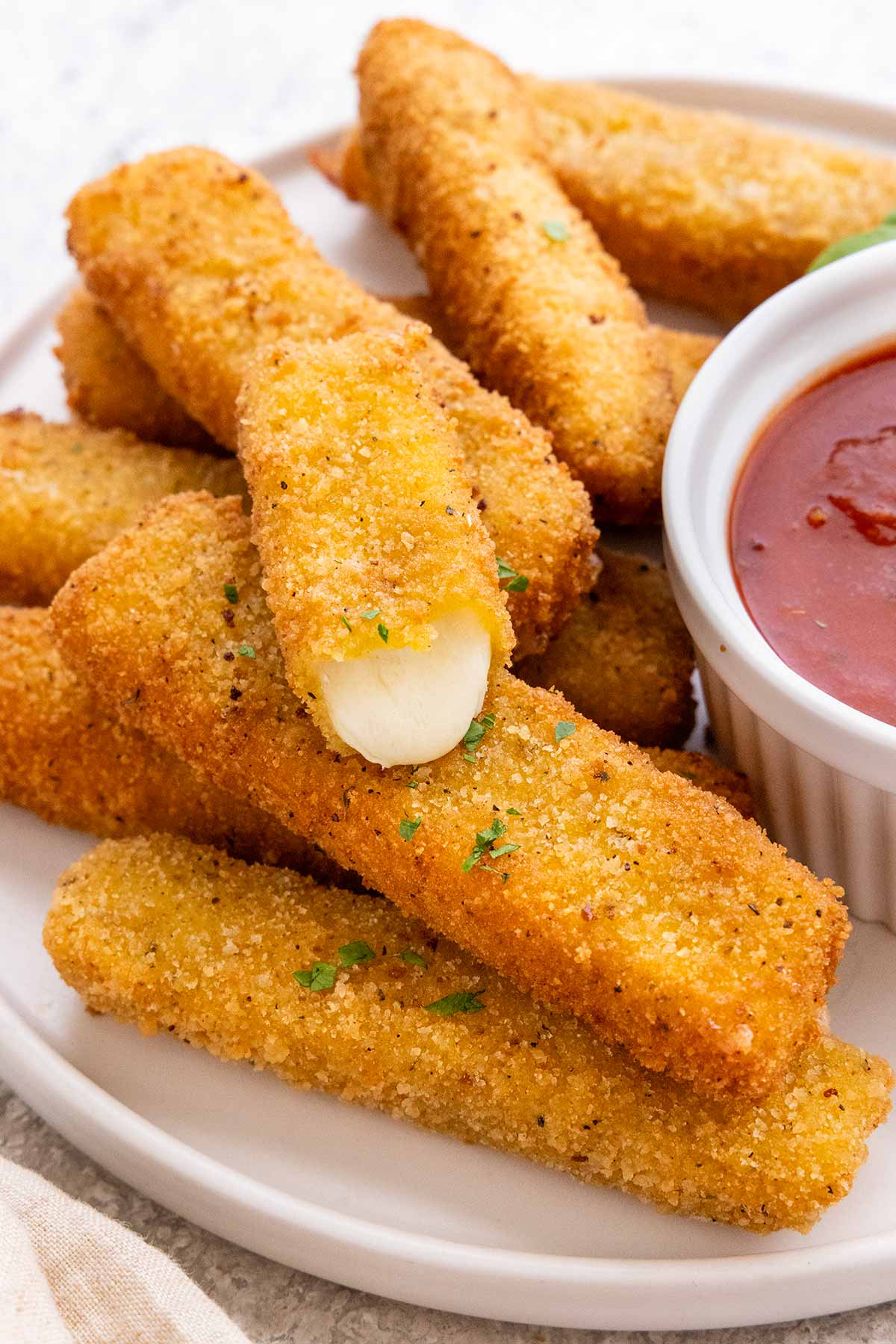
Jessica’s Recipe Science
- Freezing the breaded sticks slows heat transfer, giving the coating time to crisp up before the mozzarella fully melts.
- Double-breading creates a crunchier, thicker, insulated crust, helping the mozzarella melt rather than leak out during frying.
- Frying the cheese sticks at 350°F produces rapid browning without burning and minimizes oil absorption.
Why It Works
If you’ve ever ordered cheese sticks at a restaurant and wondered how they get that golden, crunchy shell with a perfectly gooey center, you can absolutely recreate it at home. This cheese sticks recipe uses basic pantry staples and cheese strings to deliver that satisfying contrast of textures. I use a simple deep-frying technique, but you can bake or air-fry the delicious appetizer.
The key is understanding how heat, moisture, and the coating interact. By layering flour, egg, and seasoned breadcrumbs, you create a protective barrier that crisps up quickly while insulating the cheese. Freezing the coated strips gives more control, so the cheese melts just enough without bursting through the crust.
Jump To a Section
Ingredients You’ll Need
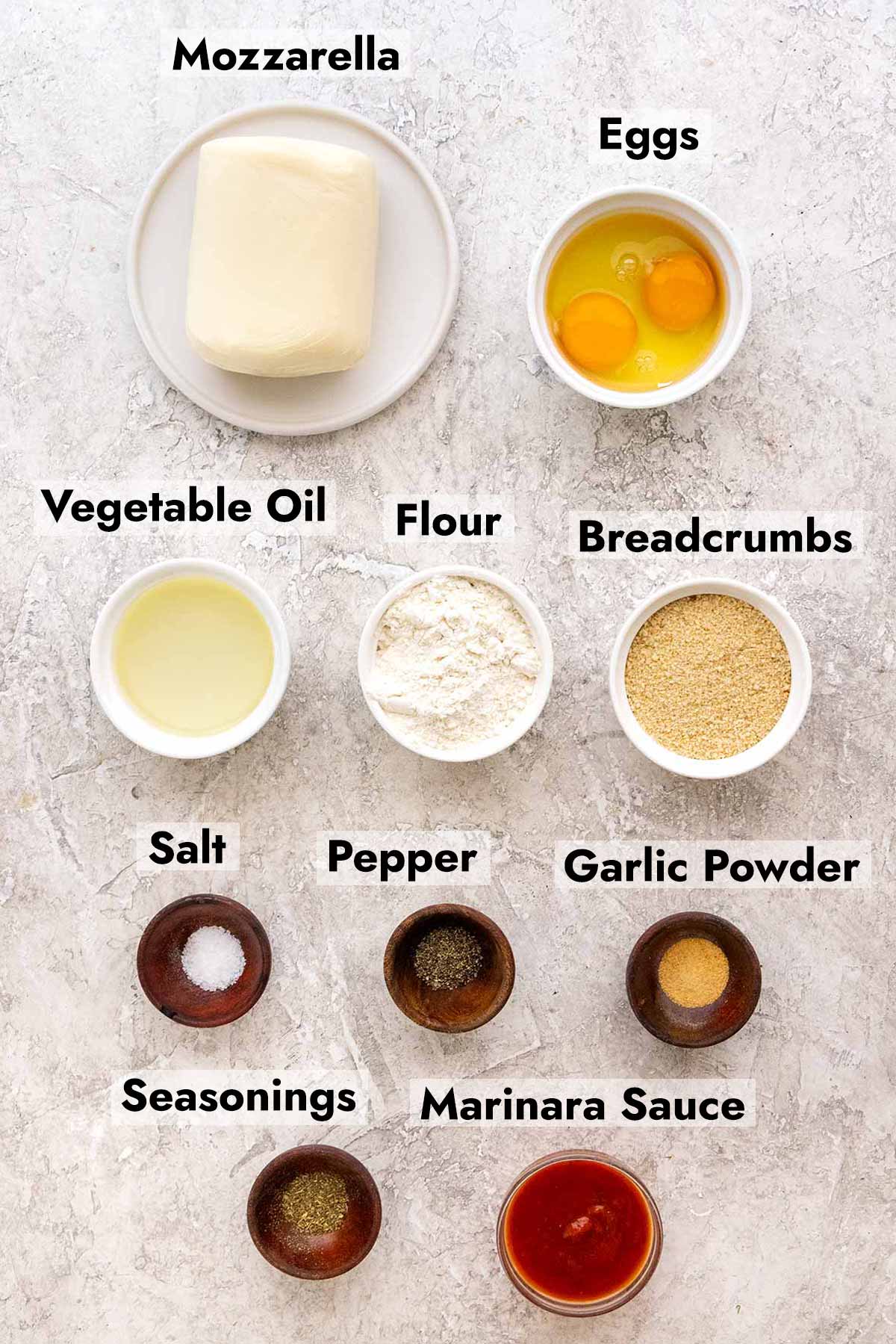
- Mozzarella Cheese: Purchase a 1-pound block of low-moisture mozzarella cheese. I use Galbani whole milk mozzarella cheese. It offers a creamier, richer melt and classic gooey cheese pull. However, its less organized protein structure and slightly higher free moisture can make it more prone to oozing if not properly double breaded and frozen. Cut into about 1/2-inch thick pieces, 3 to 4 inches long. Do not use fresh mozzarella!
- All-Purpose Flour: Creates a dry surface so the egg wash sticks evenly, forming the base layer of the breading.
- Eggs: Act as a binder, helping the breadcrumbs adhere while adding structure during frying.
- Bread Crumbs: Provide the crispy exterior for a light crunch.
- Seasoning: Kosher salt, black pepper, garlic powder, and Italian seasoning enhance the flavor of the bread crumb coating.
- Vegetable Oil: Neutral oil with a high smoke point is ideal for even frying.
- Marinara Sauce: Adds acidity to balance the rich, cheesy interior.
See the recipe card below for all ingredients and measurements (US and metric).
Ingredient Substitutions
This cheese sticks recipe is easy to customize! Try these delicious variations:
- Mozzarella Cheese Strings: Pre-portioned for easy slicing into uniform pieces. It’s made using the pasta filata method, where the cheese is heated and stretched into aligned protein strands that create a strong, elastic structure. This helps the cheese melt into long, stretchy pulls while reducing the chance of it rapidly leaking out during frying. However, the center will not be as gooey compared to block cheese. I recommend whole milk mozzarella instead of part-skim cheese for the best melt and cheese pull.
- Bread Crumbs: You can use different types of bread crumbs, like store-bought Italian bread crumbs that are pre-seasoned. Use panko bread crumbs for a lighter, extra crispy coating. However, you’ll need to crush them into smaller pieces so that they adhere to the cheese. Swap for a gluten-free version with a similar crunch.
- Spices: Add garlic powder, smoked paprika, chili flakes, or Cajun seasoning for more heat.
- Oil: Use canola oil, peanut oil, or avocado oil to fry the cheese sticks.
How to Make Cheese Sticks
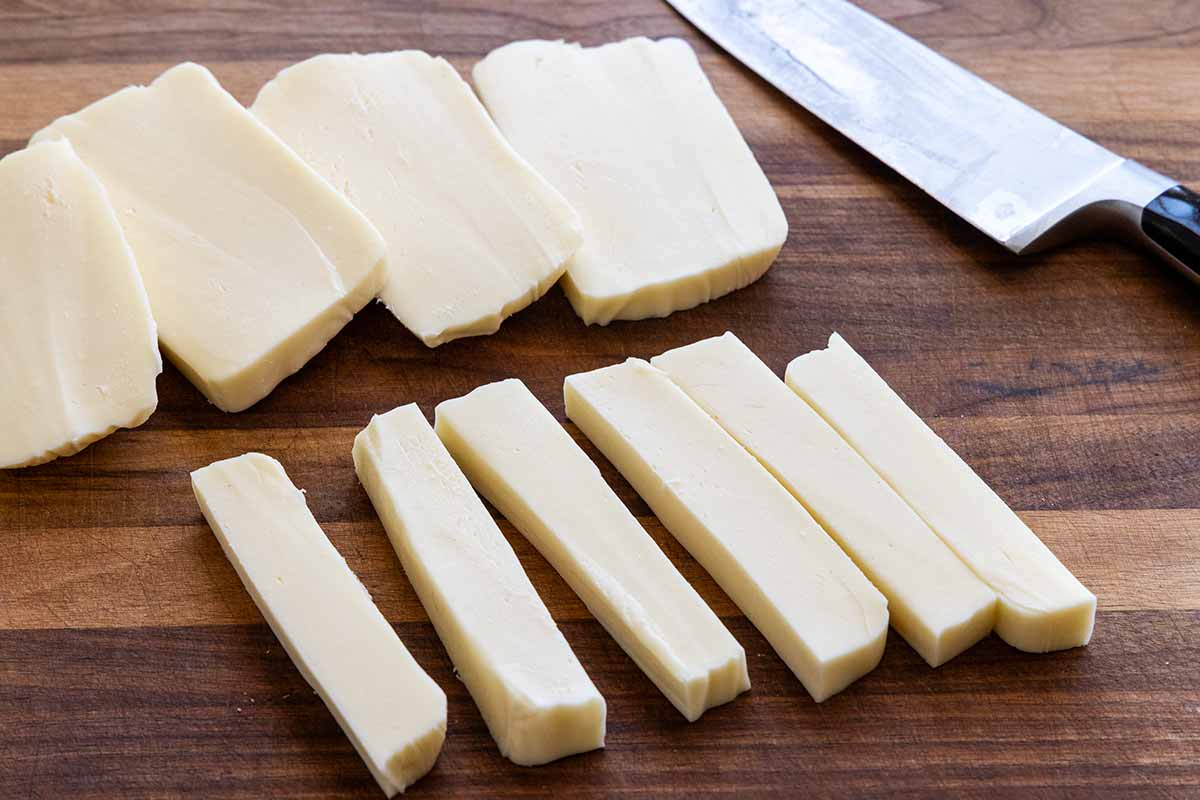
Step 1: Prepare the Cheese
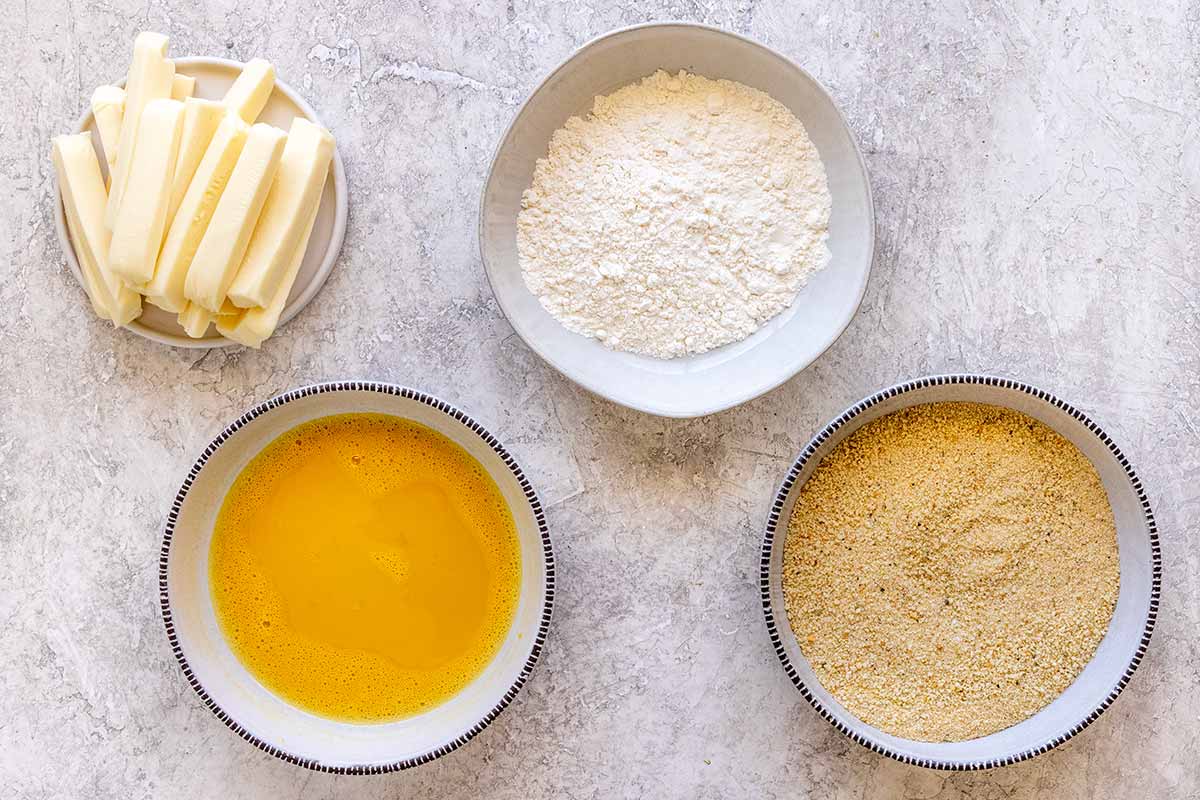
Cutting the cheese into even-sized strips ensures uniform melting. Using a sharp knife prevents tearing, which helps maintain structure during frying. Cut into planks, then into sticks, about 1/2-inch thick. You should yield about 18 pieces.
Step 2: Prepare the Breading Station
Setting up flour, egg, and breadcrumb stations creates a layered coating system that controls both adhesion and texture. The pieces will be dipped twice in the egg and bread crumbs. I use this standard breading procedure for fried zucchini and chicken Milanese to get a super-crunchy coating that sticks!
Step 3: Bread the Cheese
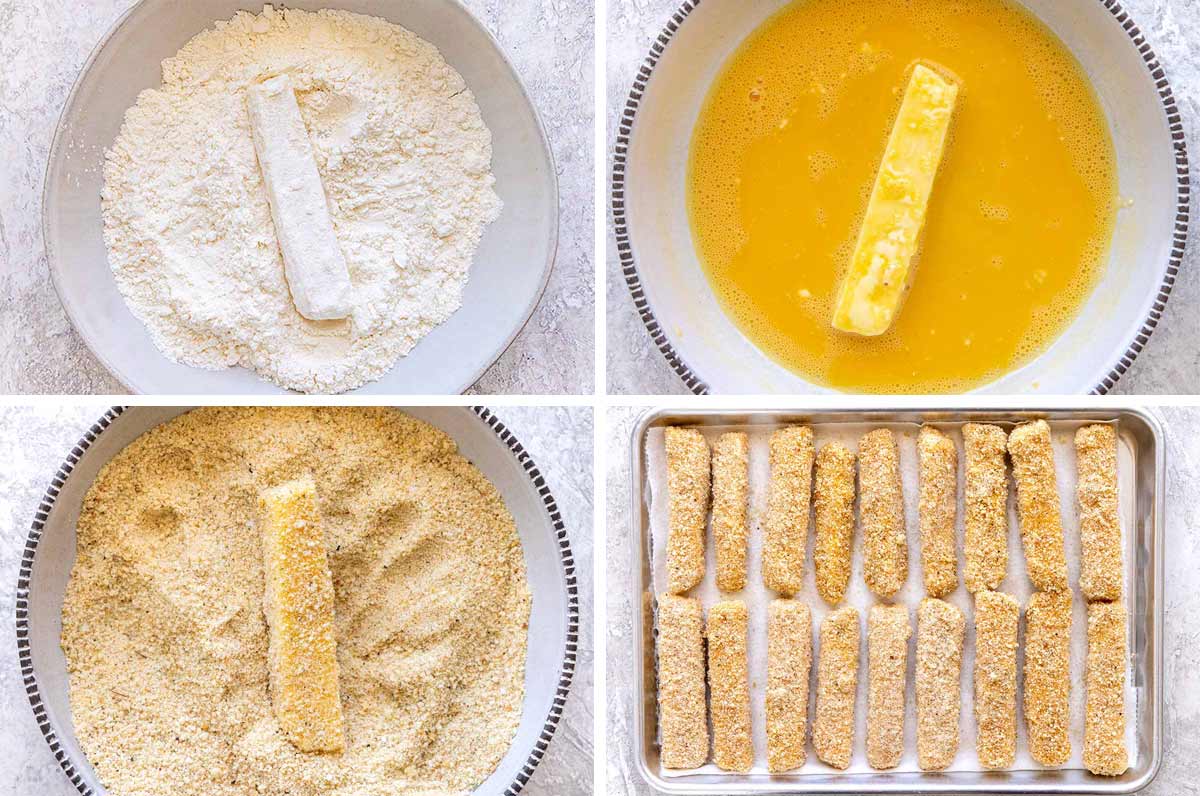
The flour absorbs surface moisture, creating a dry, starchy base that helps the egg adhere evenly. The egg acts as a protein-rich binder that coagulates when heated, securing the outer layer in place. The breadcrumbs form a porous shell that traps air and promotes even browning for a crisp texture.
Applying a double coating builds a thicker crust, which improves insulation, slows heat transfer, helps prevent the cheese from leaking out, and enhances crunch. Freezing solidifies the cheese and stabilizes the coating. This step is critical to prevent the interior from melting too quickly during frying.
Expert Tip: Freezing delays the melting enough to give the crust time to set first. If the sticks aren’t frozen, the cheese can liquefy too quickly and burst through the coating before it browns.
Step 4: Fry the Cheese Sticks
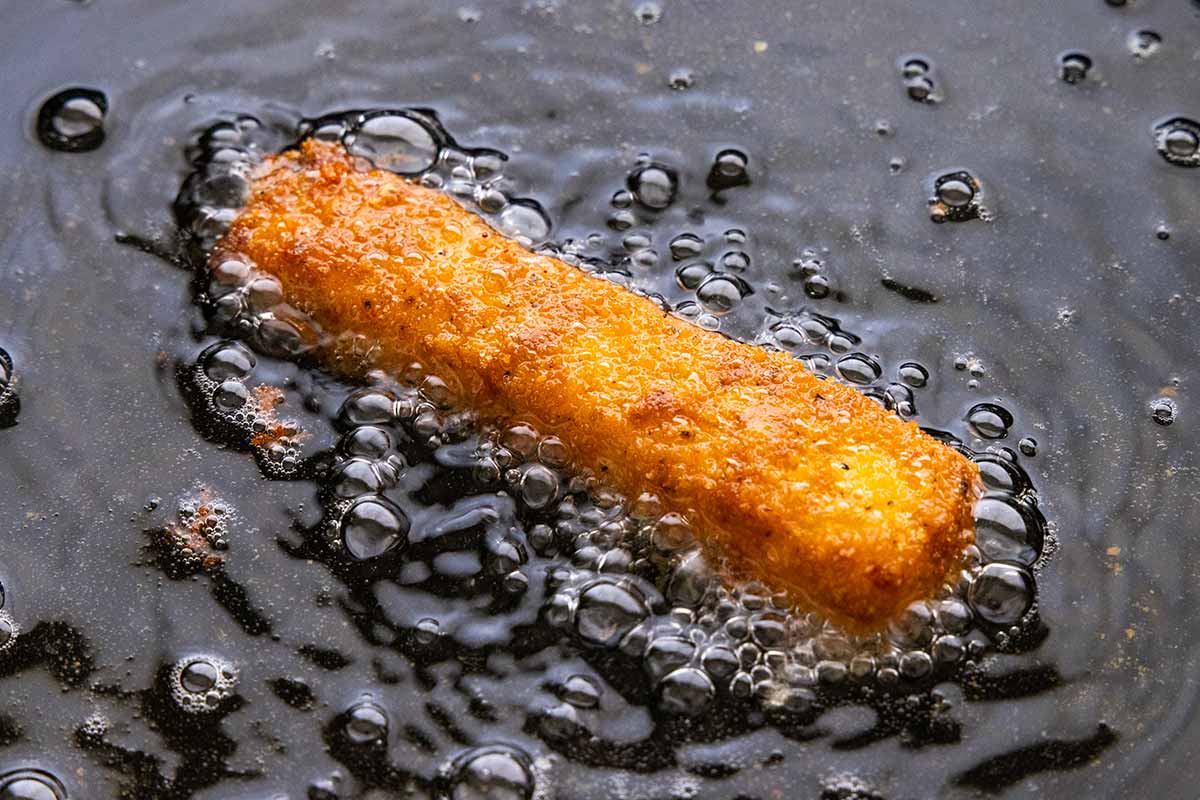
Fry the cheese sticks at 350°F (177°C), a few sticks at a time. The hot oil quickly sets the egg proteins and gelatinizes the starches in the coating, forming a crisp shell that insulates the interior, allowing the cheese to soften and stretch without leaking. It takes less than 2 minutes to cook!
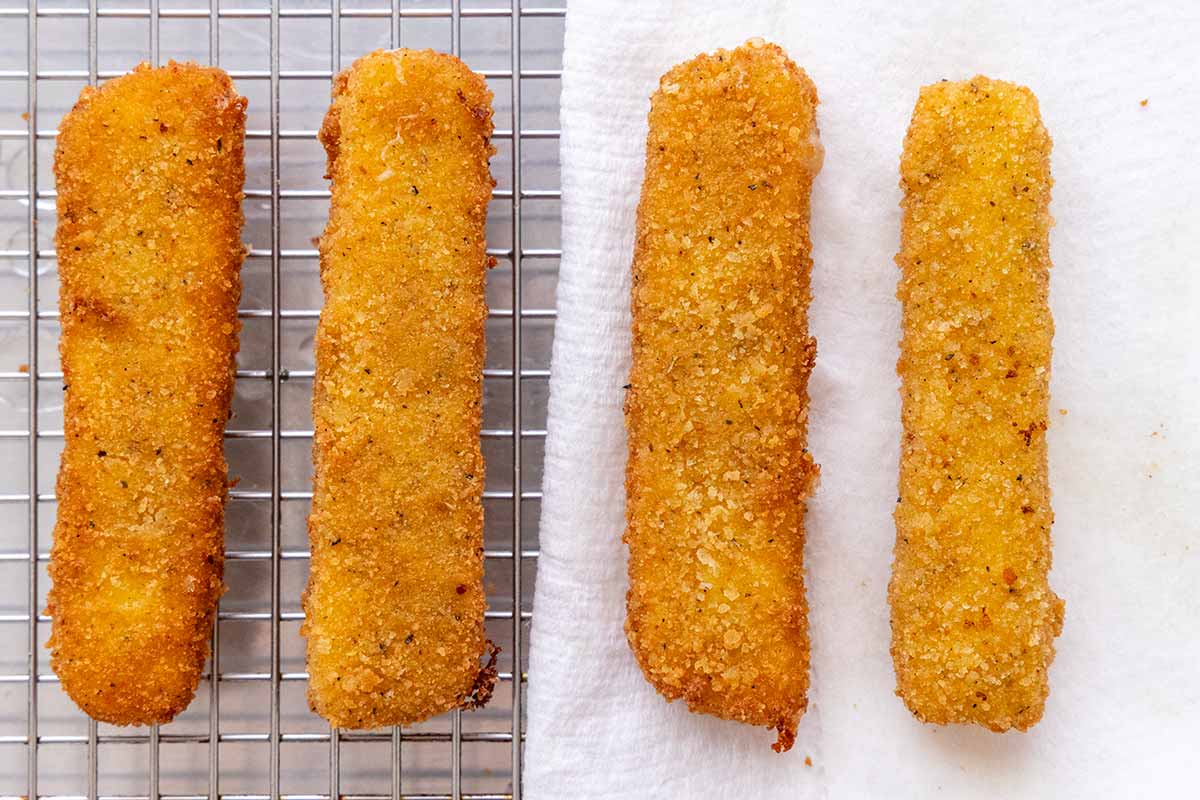
Briefly drain the mozzarella sticks on paper towels, then transfer to a wire rack so excess oil can drip away and steam can escape, keeping the crust crisp rather than soggy.
Tips for Perfect Execution: Mozzarella softens around 130 to 140°F (54 to 60°C) and becomes fully molten between 150 to 170°F (66 to 77°C). At 350°F (177°C), the coating only needs about 1½ to 2 minutes to crisp and brown while the cheese melts inside. Frying too long inevitably causes the cheese to expand and build steam pressure until it ruptures the crust. If you see any cheese starting to leak, immediately remove the sticks from the oil before the coating bursts open.
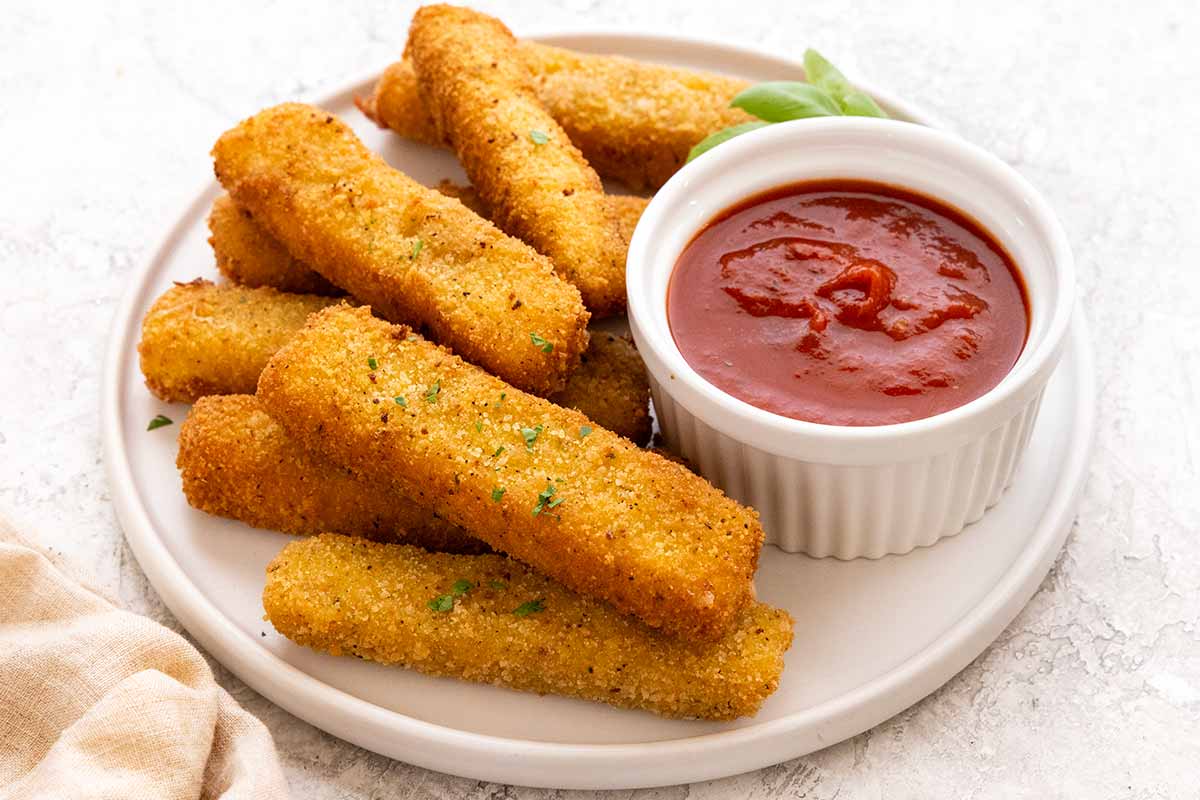
Step 5: To Serve
I like to warm up my homemade marinara sauce to serve with piping-hot mozzarella cheese sticks. Transfer them to a platter with the sauce and enjoy right away while the crust is crisp and the center is perfectly melted.
Frequently Asked Questions
Use low-moisture, whole-milk mozzarella because it melts smoothly, stretches beautifully, and contains less water, which helps prevent leaks during frying. String cheese is a convenient option since it’s pre-portioned, giving you consistent results with minimal prep. It has a slightly firmer, elastic texture because it’s made using the pasta filata method, where the curds are heated and stretched, aligning the proteins to create that signature stringy pull. A mozzarella block offers a fresher flavor and a softer, creamier melt, especially when using whole milk, and lets you cut thicker slices for a gooey center.
Yes, I highly recommend freezing mozzarella sticks for at least 1 hour, preferably 2 hours. This step firms up both the cheese and the coating, which slows down heat transfer when they hit the hot oil. That extra time helps the breading set and crisp through the Maillard reaction before the cheese inside fully melts. Without freezing, the cheese can liquefy too quickly, causing it to leak out and break the coating.
Frying at 350°F (177°C) provides the ideal balance of heat transfer and moisture control. At this temperature, surface moisture rapidly evaporates, allowing the crust to exceed 300°F (149°C), at which point the Maillard reaction creates a deep golden color and complex flavors. When I tested frying at 325°F (163°C), the cheese melted too quickly and leaked before the crust could set. At 375°F (191°C), the crust browned faster, but the center of the cheese did not fully soften or melt.
For the oven, bake at 400°F (204°C) on a lined baking sheet for 8 to 10 minutes, flipping halfway through, and lightly coat with cooking spray to promote even browning and crispness. For air frying, cook at 400°F (204°C)(190°C) for 4 to 6 minutes, flipping halfway through, and add a light coating of cooking spray for a more golden, fried-like texture. For the best results, always cook the cheese sticks from frozen so the coating sets before the cheese melts, helping to maintain structure while keeping a gooey center.
Cheese sticks are great to make in advance once they’re breaded and frozen. After coating, arrange them in a single layer on a baking sheet and freeze until solid, then transfer to a sealed container or freezer bag for longer storage. They can be stored in the freezer for up to 1 month without a noticeable loss in texture or flavor. Keeping them frozen preserves the coating’s structure and prevents the cheese from softening, so you can fry, bake, or air-fry them straight from frozen for the best results.
More Popular Appetizers


If you tried this Cheese Sticks Recipe, please leave a 🌟 star rating and let me know how it went in the 📝 comments below!
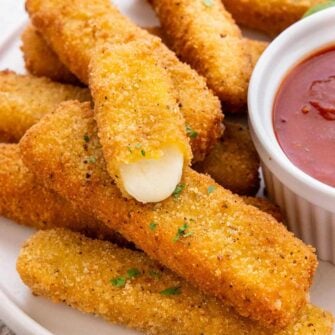
Mozzarella Cheese Sticks
Ingredients
- 1 pound whole milk low moisture mozzarella cheese
- ½ cup all-purpose flour
- 3 large eggs
- 1 ½ cups plain bread crumbs
- 1 teaspoon kosher salt
- ½ teaspoon black pepper
- ½ teaspoon garlic powder
- ½ teaspoon dried Italian seasoning , optional
- vegetable oil, for frying
- 1 cup marinara sauce
Instructions
- Prepare the Cheese – Slice the cheese into even-sized planks, about ½-inch wide and 3 to 4 inches long, depending on the brand used. You should yield about 18 pieces.
- Prepare the Breading Station – Add the flour to a shallow bowl. In a second bowl, whisk together the eggs. In a third bowl, combine bread crumbs, salt, pepper, garlic powder, and Italian seasoning (if using).
- Bread the Cheese – Working one piece at a time, coat each piece with flour, shaking off the excess. Fully dip in the egg, allowing the excess to drip off. Coat in the bread crumb mixture, pressing to adhere. After coating all of the pieces, add a second coating of egg, then breadcrumbs. This ensures that the cheese will not leak out when frying.Transfer cheese sticks to a paper towel or parchment-lined sheet pan. Freeze until they are firm, 1 to 2 hours. For longer storage in the freezer, transfer to an airtight container in a single layer.
- Fry the Cheese Sticks – Place a wire rack over a sheet pan and line half the rack with paper towels for draining. Add vegetable oil to a large Dutch oven until it’s about 1 ½ inches deep. Heat over medium heat to 350ºF (177ºC). Carefully add 2 mozzarella sticks at a time and fry until golden brown, about 1 to 2 minutes. Turn them over for even cooking, keeping a close eye on color change. If any cheese starts leaking from the coating, immediately remove them from the oil before the crust bursts open.Transfer to the paper towel-lined side for 30 seconds, then move to the uncovered wire rack to keep the coating crisp. Repeat with the remaining sticks, maintaining the oil temperature around 350ºF.
- To Serve – Warm the marinara sauce on the stovetop or in the microwave. Transfer the mozzarella sticks to a serving platter with the sauce on the side. Serve immediately while hot and gooey.
Recipe Video

Notes
- Using Cheese Strings: Cut 9 whole milk mozzarella string cheese in half crosswise.
- Make-Ahead: Coat the cheese sticks, then freeze in an airtight container for up to 1 month. You may need to fry for about 2 minutes.
- Keeping the Cheese Sticks Warm: Place on a wire rack set in a sheet pan in the oven at 200ºF until ready to serve.
- Baking: Lightly coat with cooking spray. Bake at 400°F (204°C) for 8 to 10 minutes, flipping halfway through.
- Air-Frying: Lightly coat with cooking spray. Fry at 400°F (204°C) for 4 to 6 minutes, flipping halfway through.
- Storing: Refrigerate in an airtight container for up to 5 days.
- Reheating: Place a lined baking sheet and reheat at 375ºF (191ºC) for about 8 to 10 minutes, or until crisp and cheese is melted. Microwave on a paper-lined towel in 10-second increments until hot; they will not be crispy.
Nutrition Facts
Percent Daily Values are based on a 2000-calorie diet. All nutritional information is based on estimated third-party calculations. Each recipe and nutritional value will vary depending on the brands you use, measuring methods, and portion sizes per household.


Leave a Comment