
This sautéed cabbage recipe is a simple, easy side dish that goes well with meals like corned beef or chicken. The shredded leaves cook with caramelized onions to naturally enhance the taste.

Jessica’s Recipe Science
- Sautéing cabbage over medium heat drives off excess moisture, concentrating its natural sugars and creating a tender texture.
- Gently cooking onions unlocks their natural sugars and softens pungent sulfur compounds for a flavorful base for the cabbage.
- Adding vinegar at the end brightens the flavor and balances the richness of the butter and sautéed onions.
Featured Comment 4
“What an uptick from my usual and blah steamed cabbage. This was delicious and so easy to make. Will definitely make again.”—Mrs. B
Why It Works
When you chop and cook green cabbage, a surprisingly sweet taste emerges. This fresh, crisp vegetable has a high moisture content along with bendable leaves. Sautéing softens the pieces while concentrating their delicate flavors.
To add depth to the simple dish, I start by caramelizing sliced onions in butter and oil. Gradually place the cabbage in batches to reduce the leaves’ volume. A little vinegar enhances the flavor; then lightly season with salt and pepper. Serve on the side with slices of corned beef for an Irish-inspired dinner or your favorite protein.
Jump To a Section
Ingredients You’ll Need
- Cabbage: Green cabbage has a mild flavor and a smooth yet rubbery texture when raw. When the leaves cook, they become tender but still hold their shape, and a slightly sweet and savory taste emerges. Choose a large head of cabbage, about 3 pounds, to yield about 20 cups of shredded leaves.
- Oil: Olive oil adds a fruity taste when sautéing the vegetables and helps with caramelization.
- Butter: The milkfat adds richness to the vegetables, and the browned milk solids add dimension.
- Onions: Sliced yellow onions are caramelized, balancing the cabbage’s slight bitterness. Green onions are added as garnish for a delicate allium flavor.
- Garlic: Minced garlic releases sulfur-containing compounds when cut, creating a bold savory aroma that mellows and sweetens as it cooks.
- Salt: Salt enhances the natural sweetness and savory flavor of the onions and cabbage.
- Black Pepper: Black pepper adds subtle heat and complexity from piperine, balancing the sweetness developed during sautéing.
- Apple Cider Vinegar: Balances the sweetness of the caramelized onions and cabbage while enhancing the dish’s overall flavor.
See the recipe card below for all ingredients and measurements (US and metric).
Ingredient Substitutions
This sautéed cabbage recipe is easy to customize! Try these delicious options:
- Cabbage: Red cabbage has the most similar texture, but it’s purple and has a more earthy taste. Savoy cabbage has a wrinkled surface with a delicate flavor.
- Make it Spicy: Add some red pepper flakes, chili powder, cayenne, hot sauce, or smoky chipotle powder.
- Spices: Add garlic powder, onion powder, sweet or smoked paprika, or Cajun seasoning.
- Veggies: Sauté the cabbage with shredded carrots, bell peppers, corn, or zucchini.
- Add Protein: Add pork like crispy bacon, pancetta, pork belly, or Canadian bacon for a richer savory taste.
- Onions: Add other types of onion like red onion, sweet onion, or shallots.
- Butter Swap: Use ghee, clarified butter, margarine, coconut oil, or plant-based butter.
How to Make Sautéed Cabbage
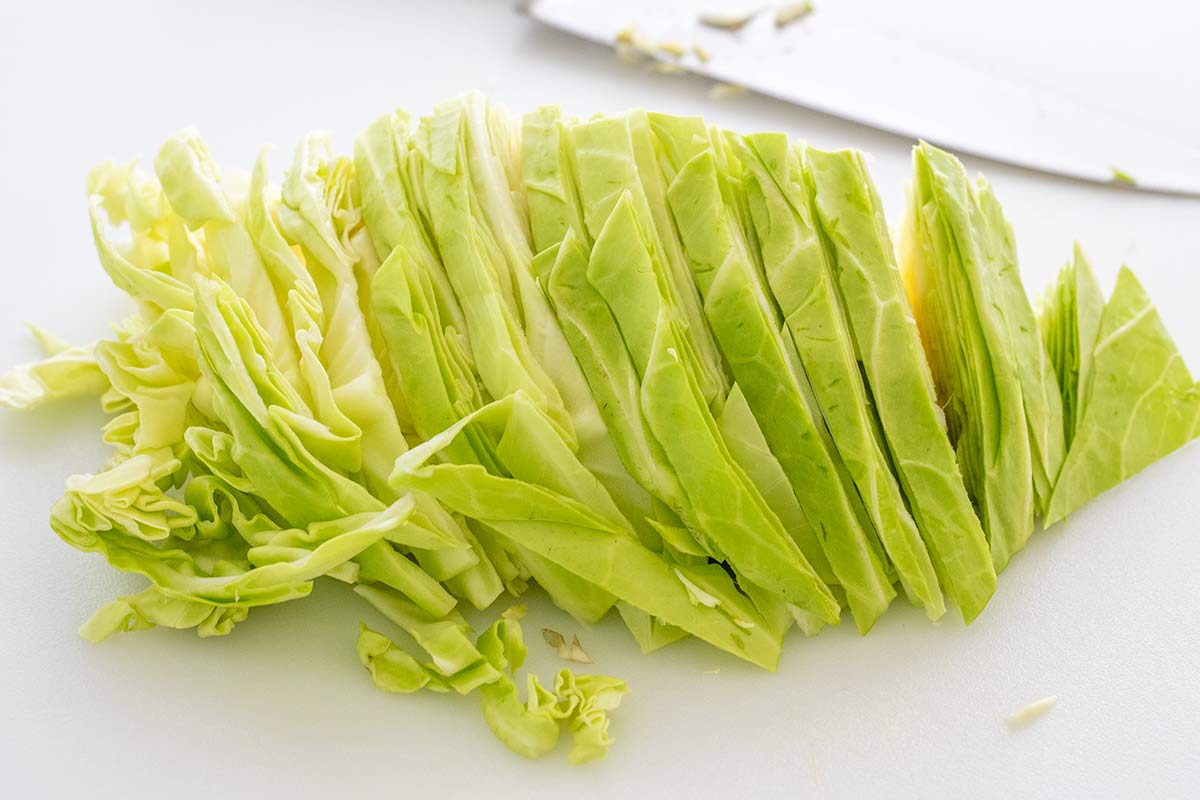
Step 1: Prepare the Cabbage
Learning how to cut cabbage is simple; don’t let the size intimidate you. Cut the round vegetable in half through the core first. Then cut it into quarters, removing the tough inner stem. From there, you can use a chef’s knife to shred the cabbage into ½-inch thick pieces. You want a decent thickness so it holds its shape and doesn’t become too mushy during cooking.
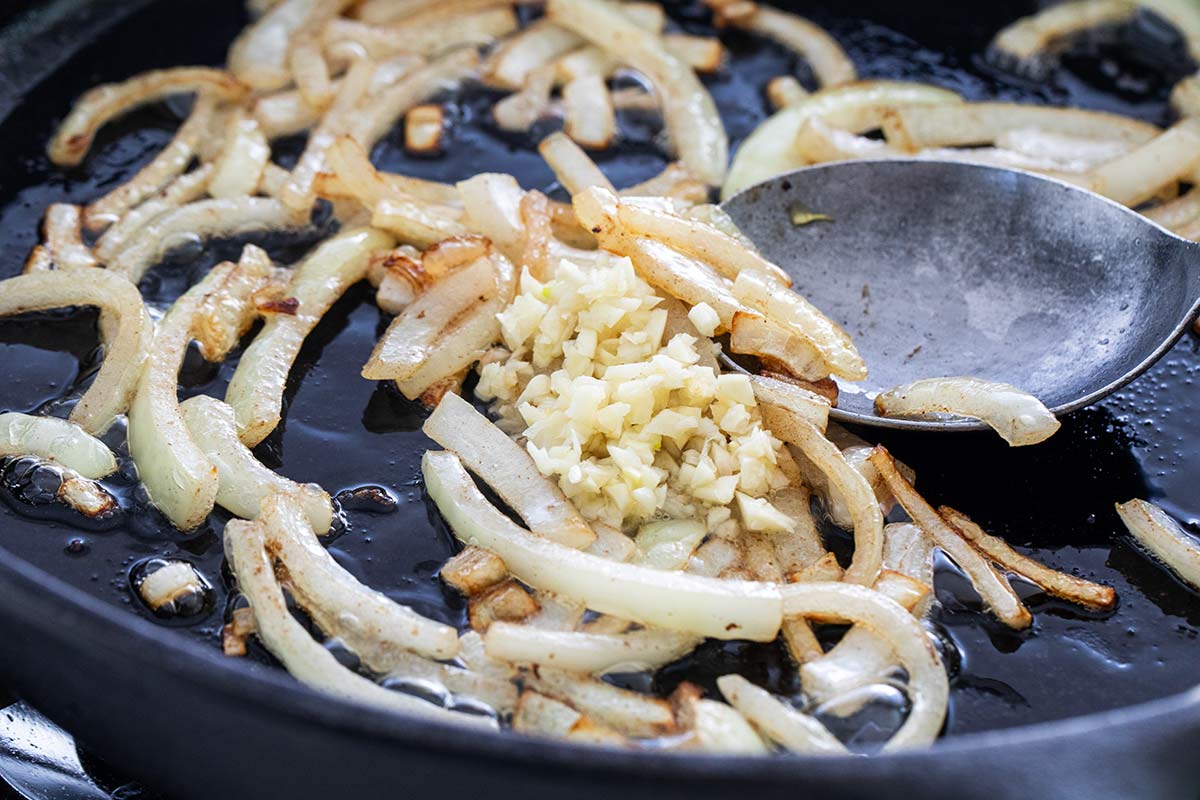
Step 2: Cook the Onions and Garlic
Onions contain natural, simple sugars in their cell walls, mostly glucose, fructose, and sucrose. When sliced into ¼-inch thin slices and gently cooked in olive oil and butter for several minutes, we can coax out those sugars and mellow out the sulfurous compounds. Minced garlic provides an earthy aroma and needs only a minute to release its flavor.
Ingredient Chemistry: Consistent heating lightly browns the surface of the onions and caramelizes the sugars, around 230ºF (110ºC) for fructose and 320ºF (160ºC) for sucrose and glucose. The sweet notes infuse into the dish, making the taste more complex and exciting.
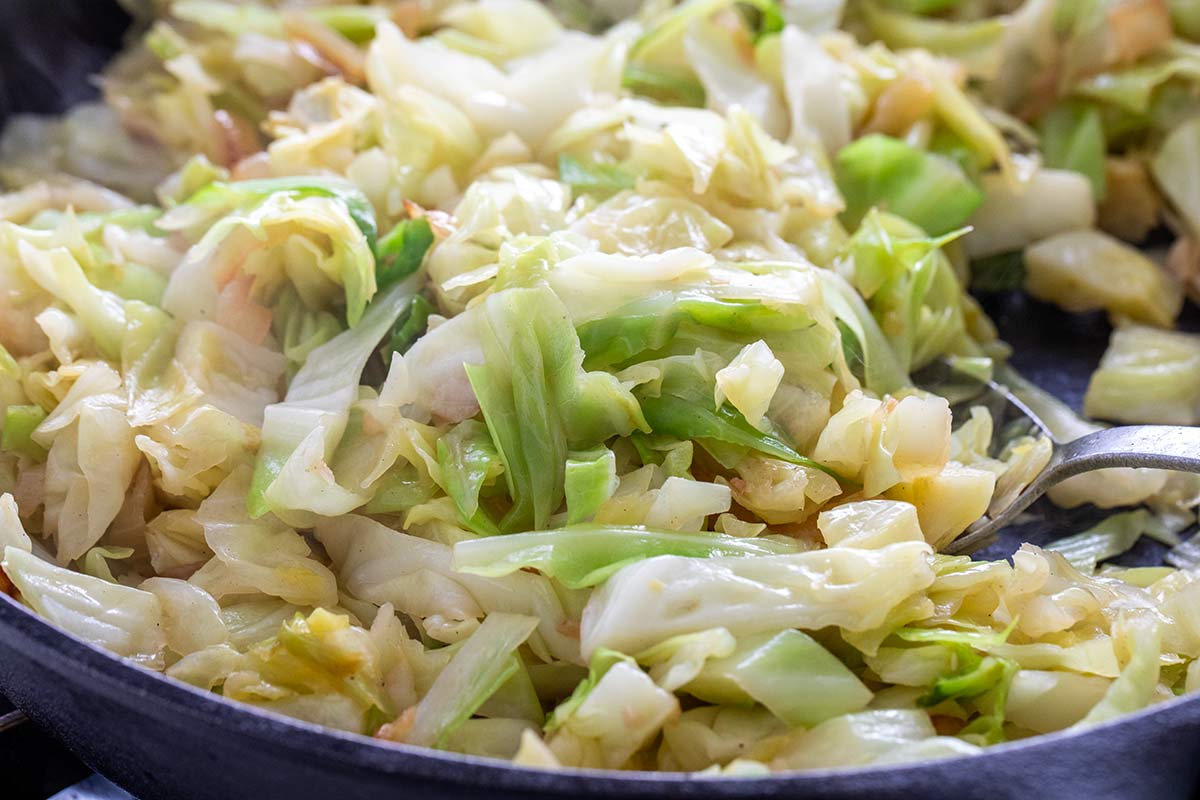
Step 3: Cook the Cabbage
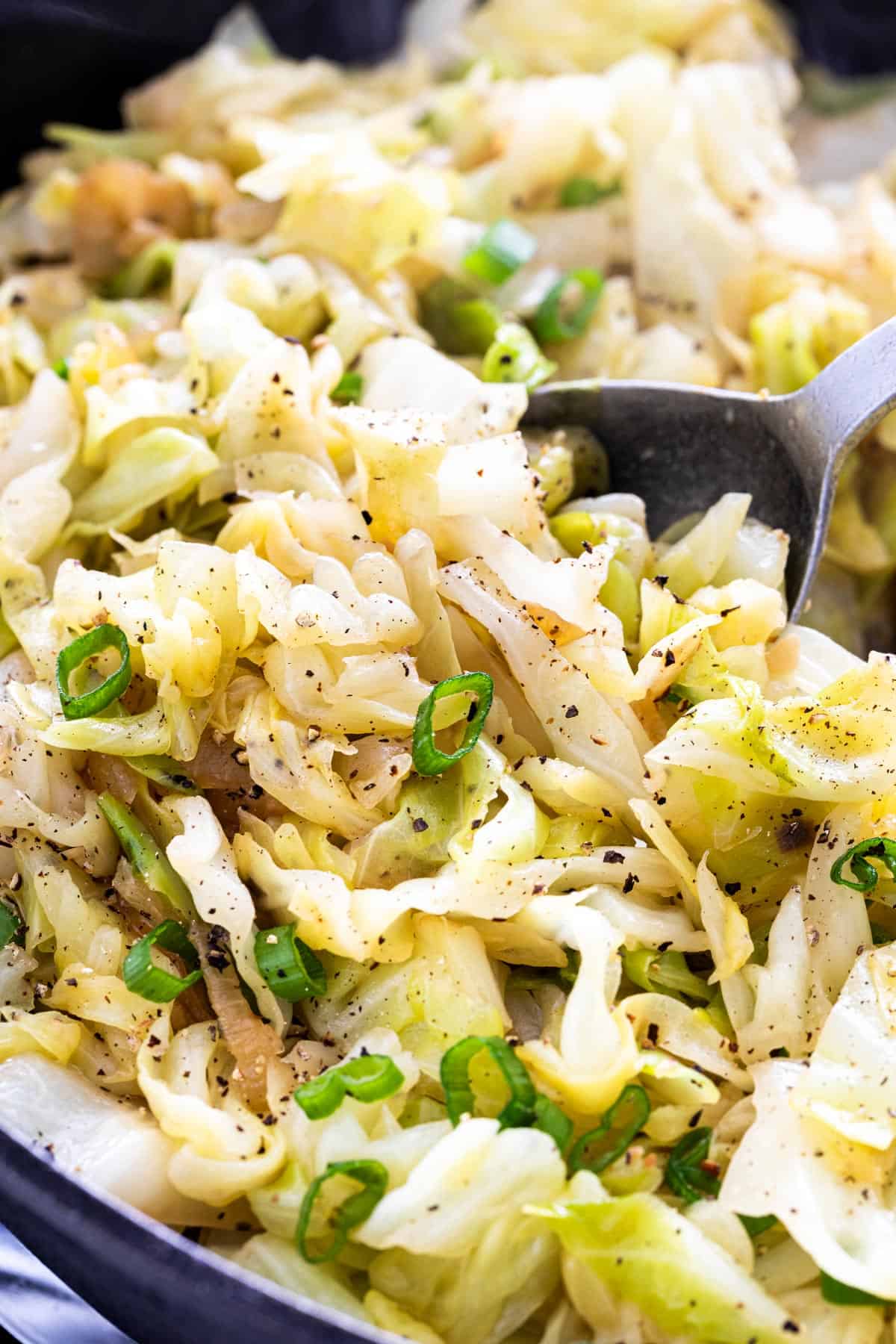
Once cut, the cabbage will be large in volume, making it difficult to add to even a large skillet. To solve this, add the shreds to the pan in two batches. The moisture content is about 92%. The heat will draw out the leaves’ moisture, shrinking them down significantly, to about 3 times their original size. To finish cooking, stir every minute and let the surface lightly brown for more flavor.
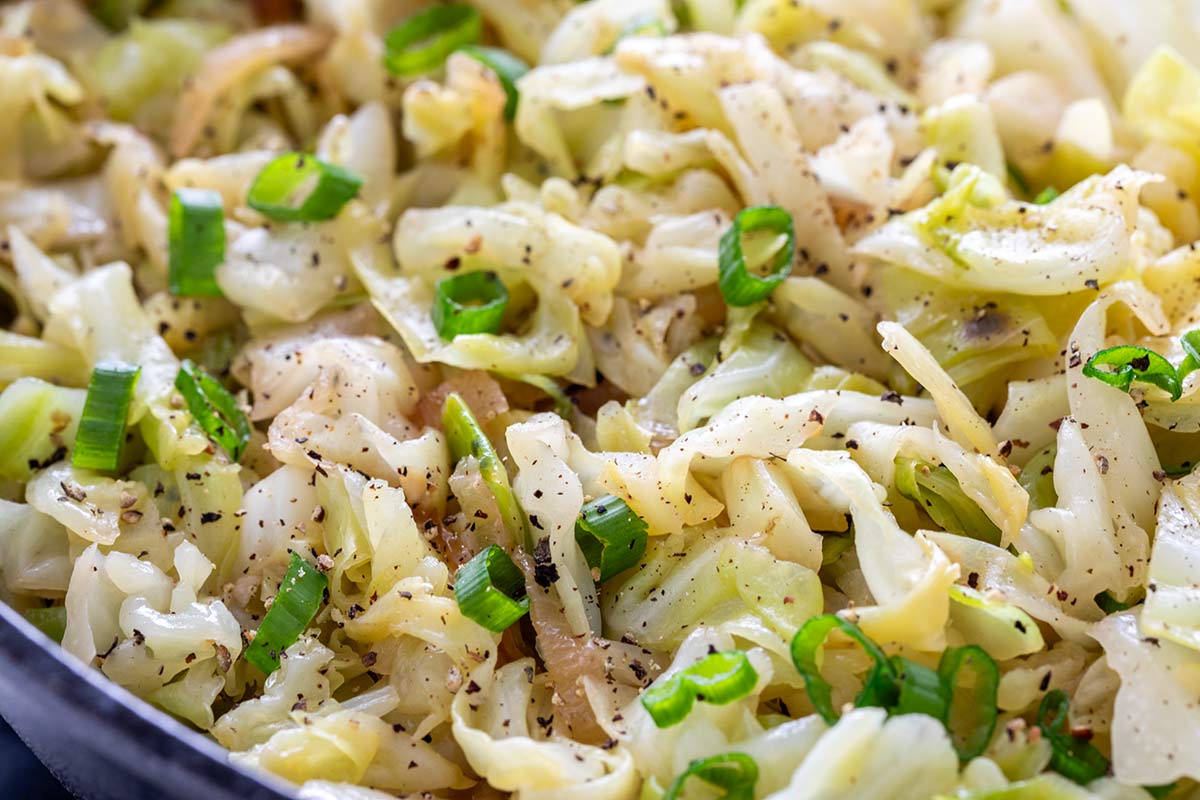
Step 4: Add the Seasonings
I add a little apple cider vinegar to the onions and cabbage. Just a small amount of tangy acetic acid enhances the sweet and savory taste without overpowering the dish. The vinegar only needs to cook for about 1 minute to volatilize the strong fermented aroma. After that, season the vegetables with salt and pepper, and if you like a spicy flavor, add red chili flakes for lingering heat.
Expert Tip: The sodium ions in the salt draw moisture out of the cabbage’s cell walls through osmosis. However, doing this too soon will make the dish too watery and prevent browning during sautéing. Adding the salt at the end will season the vegetables without compromising the taste.
Step 5: To Serve
To add a delicate onion flavor, garnish the sautéed cabbage with sliced green onions. This simple side dish is a great budget-friendly option that pairs well with baked corned beef, ribeye steak, mashed potatoes, and Irish soda bread for St. Patrick’s Day!
Frequently Asked Questions
Cook it over medium heat in a combination of olive oil and butter. Start by sautéing the onions until softened and lightly caramelized, then add the cabbage and cook until the leaves wilt and become tender, stirring occasionally to ensure even cooking. This method allows excess moisture to evaporate, concentrates the cabbage’s natural sweetness, and develops deeper flavor without making it mushy. Finish with garlic, salt, pepper, and a splash of apple cider vinegar to brighten the dish and balance the sweet, savory notes.
My secret ingredient is apple cider vinegar. Added at the end of cooking, its bright acidity balances the natural sweetness that develops as the cabbage and onions sauté. This simple addition makes the flavors taste more vibrant and prevents the dish from feeling too rich or one-dimensional. The vinegar also helps cut through the buttery richness, creating a more balanced and flavorful side dish.
Store leftovers in an airtight container in the fridge for up to 5 days. Reheat on the stovetop or in the microwave until hot. It’s great to add to a protein bowl or soups for extra flavor and nutrition!
More Cabbage Recipes


If you tried this Sautéed Cabbage Recipe, please leave a 🌟 star rating and let me know how it went in the 📝 comments below!
Sautéed Cabbage

Ingredients
- 1 head green cabbage, red, or savoy (about 3 pounds)
- 1 tablespoon olive oil
- 1 tablespoon unsalted butter
- 1 cup yellow onion, ¼" thick slices
- 2 teaspoons minced garlic
- 1 teaspoon apple cider vinegar, or red/white wine vinegar
- 1 teaspoon kosher salt
- ½ teaspoon black pepper
- 1 tablespoon sliced green onions
Instructions
- Prepare the Cabbage – Remove any bruised or damaged outer leaves. Rinse and dry the surface before cutting. Securely hold the cabbage and carefully cut it down through the stem to create two halves. Place them cut-side down on the cutting board. Then cut each half into quarters by cutting down through the stem. Carefully remove the thick cores with a knife. Cut the quarters into ½-inch thick slices. There should be about 20 cups (2 ½ pounds, 1.14kg) of shredded cabbage.
- Cook the Onions and Garlic – Heat a large 12-inch skillet or Dutch oven over medium heat. Add the olive oil and butter. Once the butter melts, add the onions. Sauté, stirring occasionally, until the surface lightly browns and the onions are translucent, about 7 minutes. Add the garlic and sauté until fragrant, about 30 seconds.
- Cook the Cabbage – Add half of the cabbage, stir, and cook until it begins to wilt and reduce in volume, about 2 minutes. Add the remaining cabbage and stir until wilted, about 2 minutes. Continue to cook for 8 minutes, stirring every minute to allow lightly even browning.
- Add the Seasonings – Add the apple cider vinegar, stir, and cook for 1 minute. Add the salt and pepper, stir, and cook for 1 minute. Season to taste.
- To Serve – Garnish the sautéed cabbage with sliced green onions and serve hot.
Notes
- Recipe Yield: 6 cups
- Serving Size: 1 cup
- Make it Paleo, Whole30, and Vegan: Replace butter with olive oil.
- Vinegar Swaps: Use red wine vinegar or white wine vinegar.
- Storing: Refrigerate for up to 5 days in the refrigerator.
Nutrition Facts
Percent Daily Values are based on a 2000-calorie diet. All nutritional information is based on estimated third-party calculations. Each recipe and nutritional value will vary depending on the brands you use, measuring methods, and portion sizes per household.


Mrs. B. says
What an uptick from my usual and blah steamed cabbage. This was delicious and so easy to make. I followed the recipe but the only thing I added was a 2 tsp sugar at the end. Probably unnecessary but just a touch I got from my mom. Will definitely make again.
Jessica Gavin says
I’ll have to try the sugar addition, I’m sure it enhances the natural sweetness of the cabbage. Thanks, Mom!
Cynthia says
I make cabbage steaks a lot and always put salt on it before putting it in the oven, is the don’t salt the cabbage before cooking rule the same for the steaks?
Jessica Gavin says
If you like the texture pre-salting then go for it. However salt will draw out more moisture from the cut areas, steaming as it cooks so it will be slightly less crisp and browned.