
Cooking with different types of ginger dates back to ancient times — and for good reason. Ginger is best known for bringing a lot of flavor and heat and is most commonly used in Asian cooking.
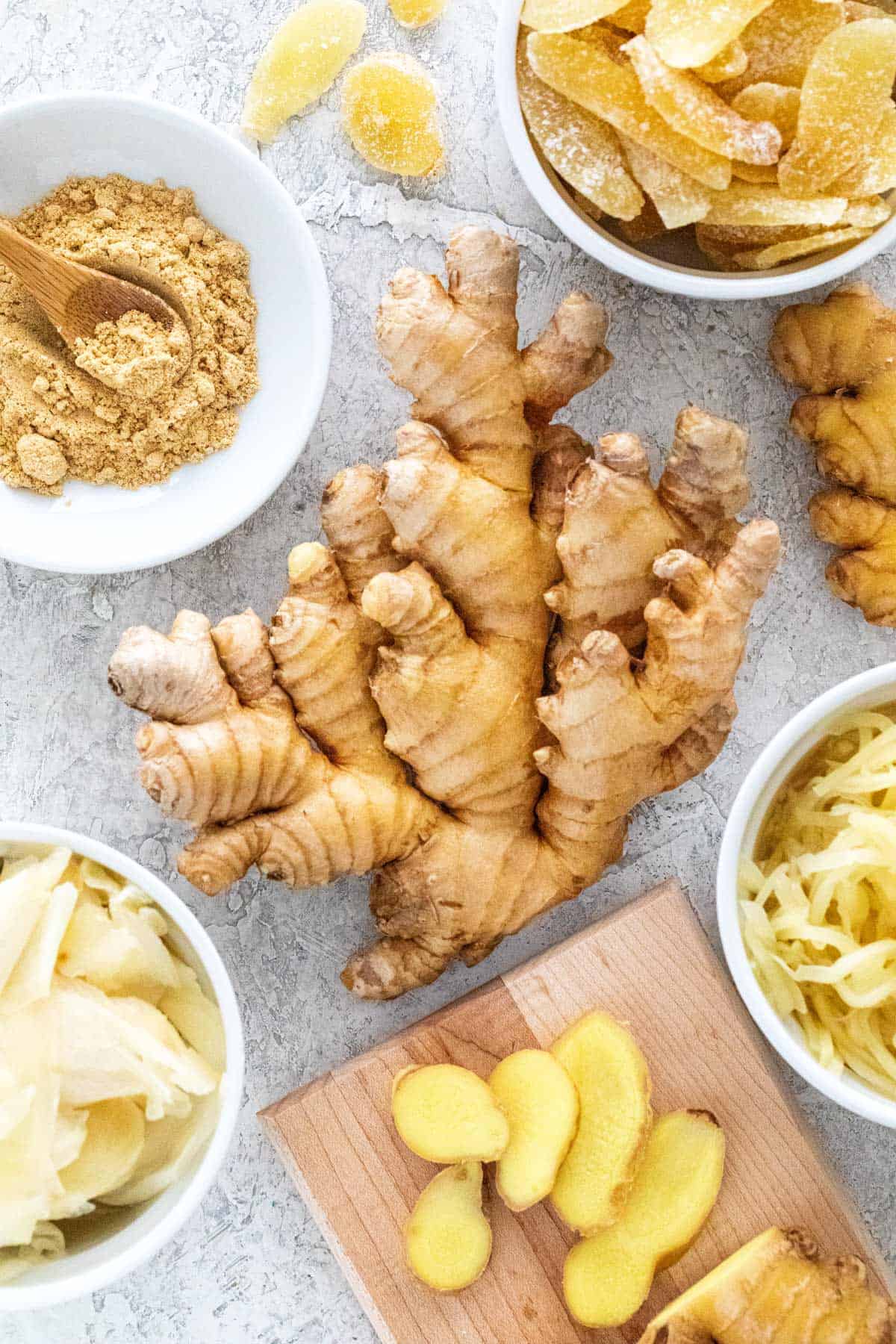
Oh, ginger. It’s zingy, aromatic, and flavorful. But one of the first things to know about ginger is that the part we cook with is the rhizome, a knobby underground stem, which is why you’ll hear it called ginger root. Ginger resembles cork, but that’s where the similarities end. Ginger is flavorful — cork, not so much.
If you’re bored with the same spices in your cooking, ginger can do the trick and wake up your taste buds fast. Ginger’s scientific name is Zingiber officinale. Ginger isn’t spicy in the typical hot-sauce way. It’s more of a bite, sometimes described as peppery and zesty.
Popular Varieties
While young ginger is sweeter, more mature ginger hits you with that spice, and this is what you typically find in grocery stores. If you want the sweet stuff, head to the Asian markets near you.
Types of Ginger at a Glance
| Ginger | Flavor and Texture | Best For |
|---|---|---|
| Fresh | Zingy, peppery; firm and juicy | Stir-fries, sauces, marinades, soups, tea |
| Ground | Warm, earthy | Baking, spice rubs, rice |
| Pickled | Sweet and tangy; tender | Sushi, stir-fries, tacos |
| Dried | Concentrated, sharp | Tea, grinding into spice |
| Candied | Sweet with a mild bite; chewy | Snacking, cookies, scones |
| Preserved | Sweet and salty | Salads, no-cook dishes |
Fresh Ginger

It looks hard and stocky, sort of like a cork. Even though it’s rough and tough on the outside, it grates and chops easily. It’s even a bit juicy. You can use it to flavor sauces, soups, and even meat marinades. It also adds a zingy kick to smoothies, tea, and other drinks. Try it minced in my ginger cranberry sauce and soy ginger lime sauce, or simmer slices in Grandma’s ginger beef stew and congee.
Ground Ginger

You’ll find powdered ginger in the spice aisle. You can season just about anything, including meat, rice, and more. It can also substitute for fresh ginger on hand; just use less. It’s the star spice in gingerbread cookies and gingersnaps.
Pickled Ginger

Pickled ginger, or gari, is what comes with your sushi because it helps cleanse your palate between bites. It’s thinly sliced young ginger pickled in sweetened vinegar, and it ranges from pale yellow to pink (some brands add coloring). It’s tender and easy to chew. You can also add it to other dishes, such as stir-fries and tacos, and it’s a great topping for an ahi tuna poke bowl.
Dried Ginger

The whole root comes in its original shape, but of course, it’s dried out and can be ground as needed to season your food or revitalize it. You can also buy dried ginger root that’s cracked into pieces, which is great for making ginger tea.
Candied Ginger

Candied ginger (sometimes called crystallized ginger) is golden, chewy ginger pieces rolled in sugar. Because it’s cooked in sugar syrup, it has less bite and more sweetness. Enjoy it as a sweet treat, or chop it up and add it to cookies, scones, and other baked goods.
Preserved Ginger

It usually comes in a jar, where it’s preserved in a sugar— and salt-based liquid mixture. It’s often added to salads and used in dishes that don’t require heat.
When is ginger in season?
Ginger is available year-round, since most of what’s sold in the United States is imported. Hawaii is the main U.S. grower. Look for young ginger, with thin, pale skin and pink tips, at Asian markets and farmers’ markets in late summer and fall.
How do I select ginger?
When selecting fresh ginger root, look for firm pieces that have a slight shine on the skin. The skin should also be smooth; wrinkles mean it’s going bad. You want pieces that are weighty for their size. But despite feeling firm and heavy, the skin should be easy to scratch.
What’s the best way to store it?
The best way to store ginger is in a resealable bag (push out the air) in your crisper drawer. It should last about a month. You can also freeze it to get a couple more months out of it. Where you store it depends on how quickly you plan to use it.
How to cook with ginger
First, use a regular vegetable peeler to peel ginger. If it’s a smaller piece, you can also scrape the skin off easily with a paring knife. A spoon will also work.
Once the ginger is peeled, you can grate it (whip out the cheese grater), cut it into small pieces like minced garlic, or slice it. Also worth noting: you can puree ginger with other ingredients when making sauces and marinades. It helps to cut into chunks first.
To make lemon ginger mint tea, steep the fresh ginger root by adding slices to boiling water (about a tablespoon per cup of water, but adjust to your taste).
Frequently Asked Questions
Use about ¼ teaspoon of ground ginger for every 1 tablespoon of freshly grated ginger. Ground ginger tastes warmer and less zingy, so it works best in baked goods, spice rubs, and long-simmered dishes. It’s the swap I use in my ginger cranberry sauce.
Not always. Young ginger has thin skin that you can leave on. For mature ginger, peeling gives you a smoother texture, especially when grating. The edge of a spoon scrapes off the skin easily without wasting much ginger.
Unpeeled fresh ginger keeps about a month in a resealable bag in the crisper drawer. For longer storage, freeze it. You can grate frozen ginger without thawing it first.




Kathryn M Watson says
This article is titled incorrectly. This is not types of ginger, this is ways to prepare ginger. There is only 1 type of ginger mentioned.
Hanna Debia says
I don’t have a store close to me that sells pickled ginger. Tried Amazon but was surprised to read contents had aspartame used in processing.
COULD YOU help me out?
Thanks.
Jessica Gavin says
The Ginger People sells pickled ginger without aspartame. You can buy their products online at places like Walmart.
Jeryl says
how would you dehydrate ginger for grinding into powder? whole root? slices? sliced lengthwise or across?
Jessica Gavin says
I would peel, slice across into an oval shape and then dry.