
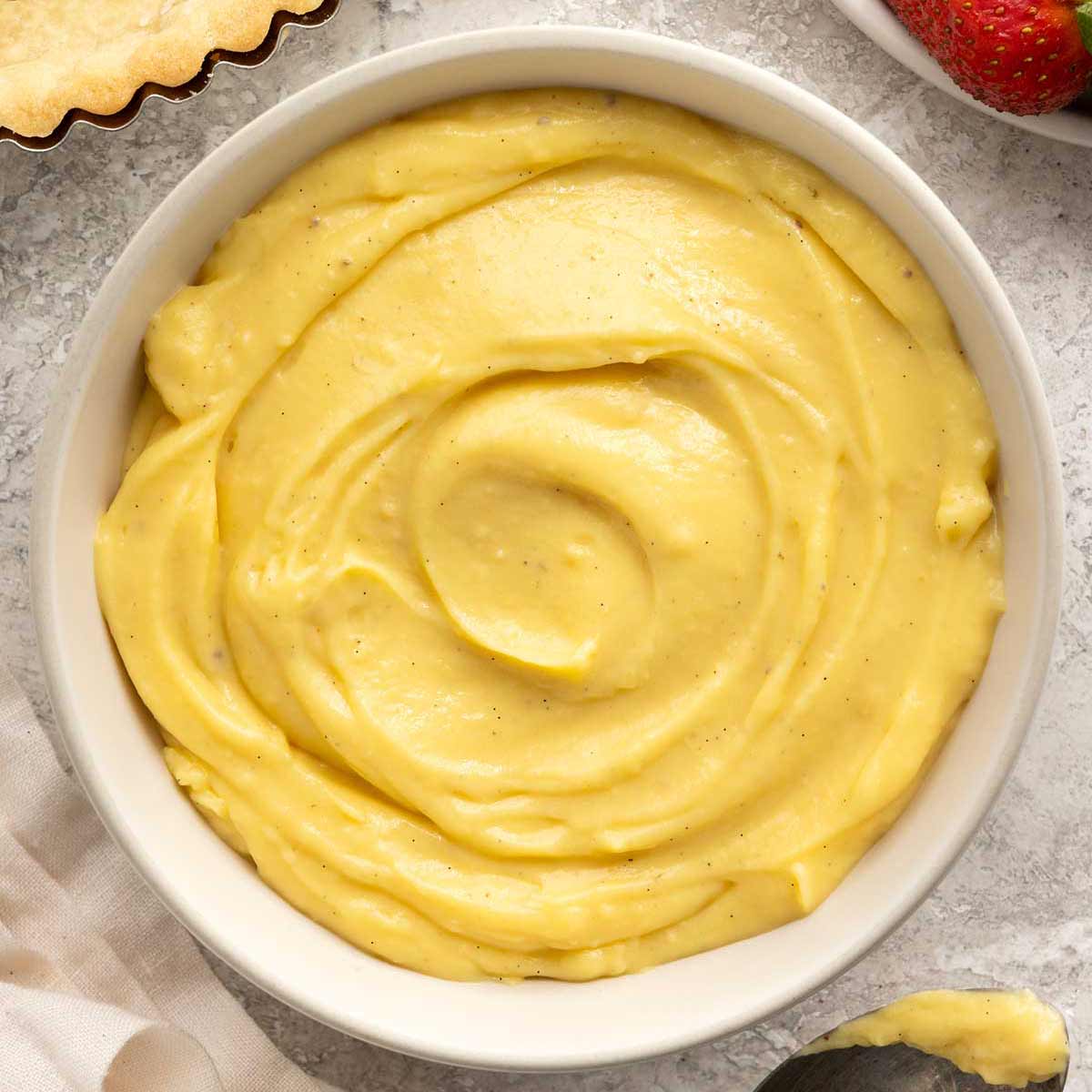
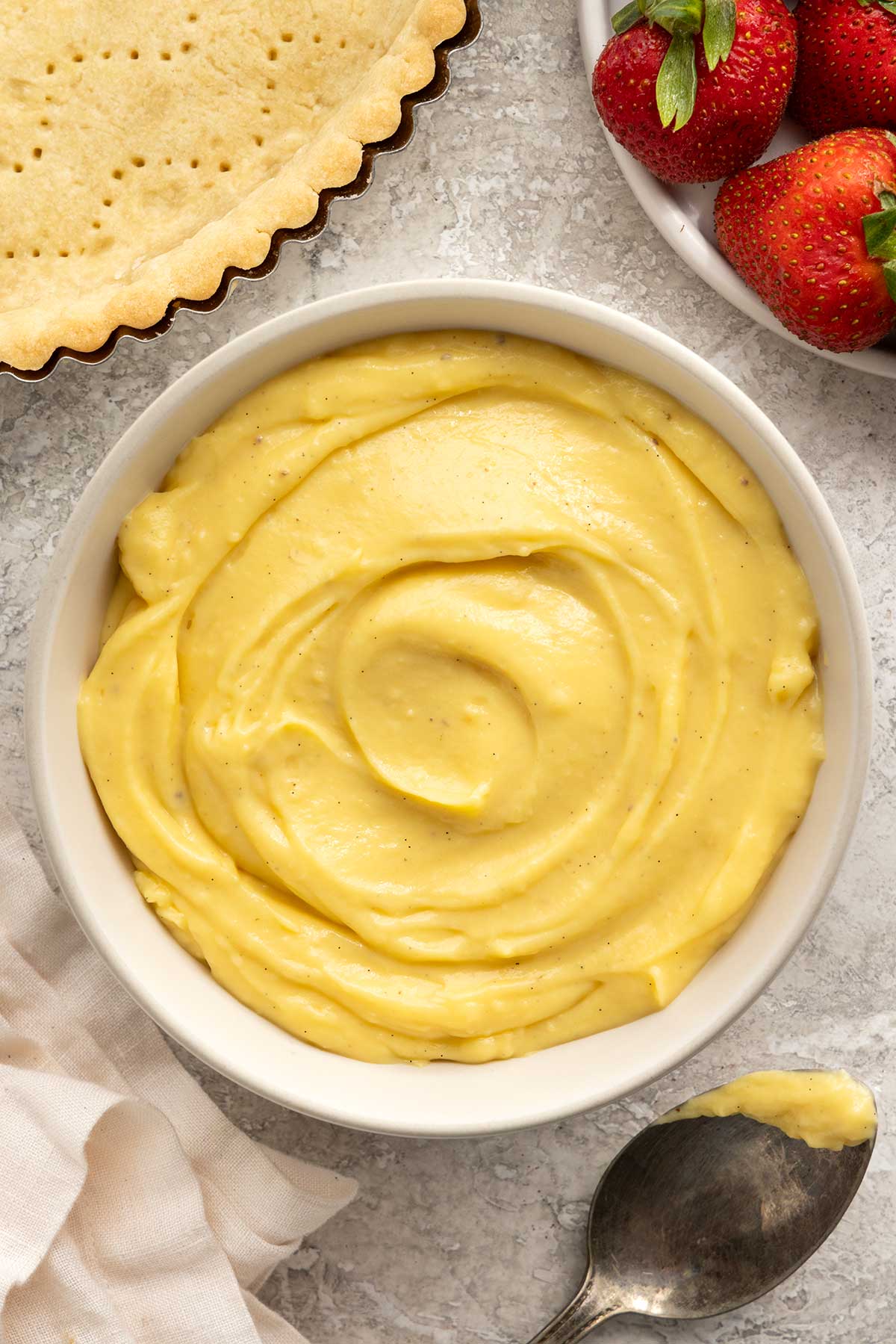
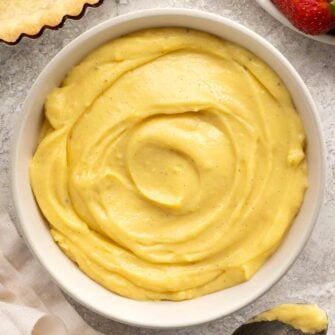
This classic pastry cream recipe (crème pâtissière) is silky in texture and rich in vanilla flavor. This foolproof custard filling is perfect for fruit tarts, cream puffs, cakes, and elegant pastries.
Jessica’s Recipe Science
- Tempering hot milk into the egg mixture slowly prevents scrambled eggs while allowing the custard to thicken evenly.
- Heating pastry cream to at least 176°F deactivates the alpha-amylase enzyme in egg yolks, preventing it from breaking down starch and thinning the custard over time.
- Cornstarch thickens fully when heated to about 185–205°F, so cooking pastry cream to around 190–200°F ensures proper starch swelling and a stable texture after cooling.
Featured Comment 2
“This is delicious, Jessica! I love it that you include the temperature to be achieved when the food item being cooked is completed. It gives confidence to the novice, like me. I did not strain it, no need to do so. I used this pastry cream between two layers in a homemade Angel food cake. Then iced the cake with 7 minute frosting. What a wonderful dessert. Thank you!” —Hetty
Why It Works
A classic pastry cream recipe, also known as crème pâtissière, is one of the most versatile custards in pastry kitchens. This silky vanilla pastry cream is the perfect filling for cakes, eclairs, cream puffs, Boston cream pie, mille-feuille, and a fresh fruit tart recipe. It has a rich dairy flavor from whole milk, egg yolks, butter, and vanilla, balanced with just enough sweetness to complement desserts without overpowering them.
What makes this recipe special is the science behind building a stable custard. Carefully heating hot milk, tempering it into the egg mixture, and cooking with cornstarch creates a thick, glossy pastry cream that slices cleanly yet stays smooth. Once you understand how starch gelatinization and egg proteins work together to create structure, you’ll be able to confidently make bakery-style fillings at home.
Jump To a Section
Ingredients You’ll Need
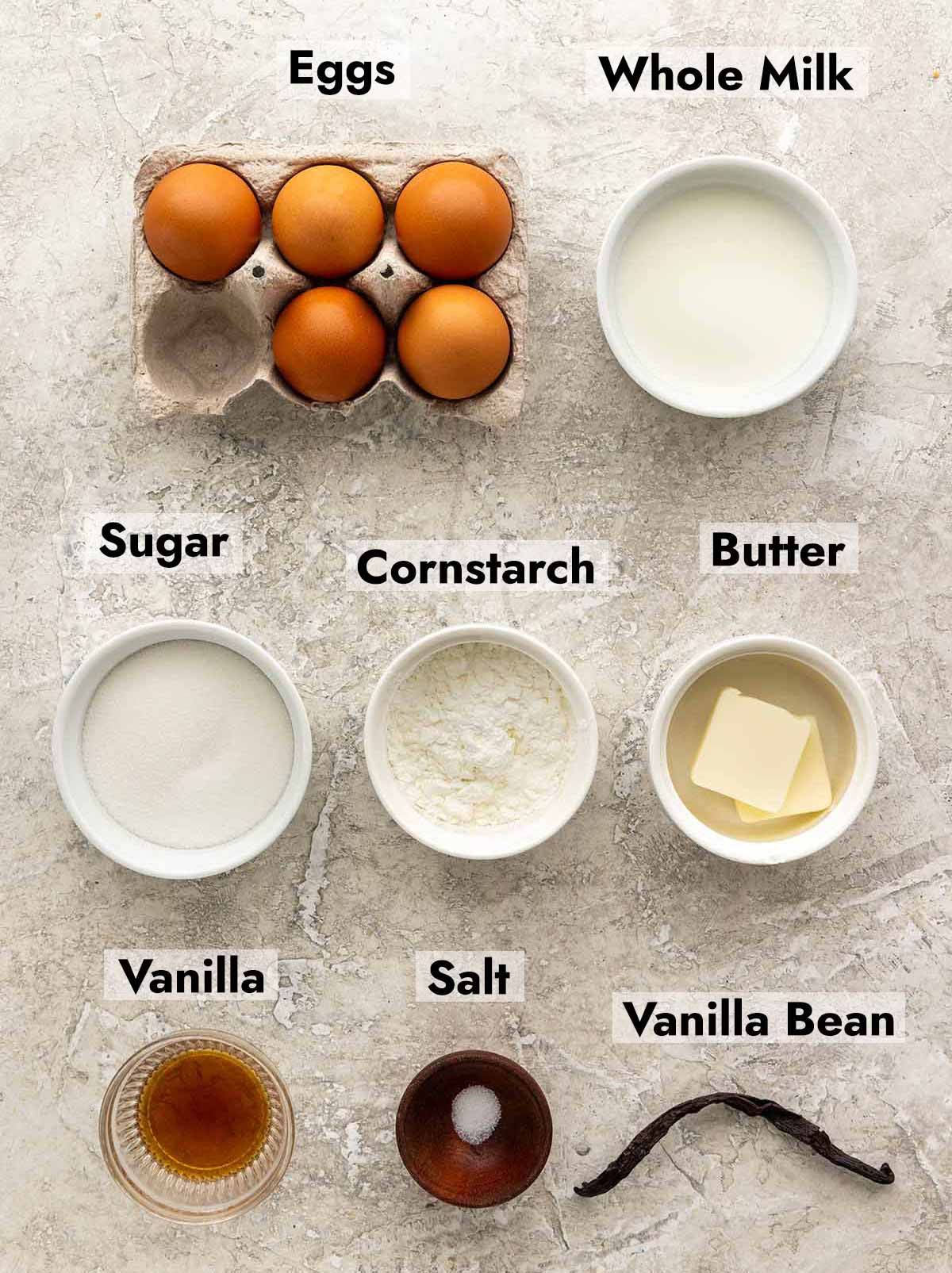
- Whole milk: The main liquid base that creates a creamy custard texture. Milk proteins and fat contribute richness while keeping the pastry cream light enough for filling pastries.
- Granulated Sugar: Adds sweetness and helps prevent egg curdling by raising the temperature at which proteins coagulate.
- Vanilla bean: Infuses the milk with aromatic flavor compounds during heating. The seeds are distributed throughout the custard for a gourmet vanilla pastry cream flavor. However, this is optional.
- Egg Yolks: Provide structure and richness. The proteins in the yolks coagulate during cooking, helping the custard thicken and giving it a luxurious mouthfeel.
- Cornstarch: The primary thickening ingredient. As the custard heats, the starch granules absorb liquid and swell, forming a smooth gel.
- Salt: A small pinch enhances the sweetness and balances the custard’s flavor. I use table salt because the small granules are easy to incorporate, but sea salt or kosher salt can also be used.
- Vanilla Extract: Added after cooking to reinforce the vanilla flavor without losing aromatic compounds to heat.
- Unsalted butter: Adds richness and creates a glossy finish while subtly softening the custard’s texture.
See the recipe card below for all ingredients and measurements (US and metric).
Ingredient Substitutions
This pastry cream recipe is easy to customize! Try these delicious variations:
- Milk Options: Replace up to half of the whole milk with heavy cream for a richer custard texture. I do not recommend using low-fat or reduced-fat milk. Full-fat unsweetened canned coconut milk can replace whole milk, creating a richer pastry cream with a light coconut flavor.
- Vanilla Options: Vanilla beans can be swapped with 1 to 1 ½ teaspoons of vanilla bean paste. Alternatively, add vanilla extract.
- Cornstarch: Use all-purpose flour instead; you would need 6 tablespoons. However, the pastry cream will have a slightly thicker, opaque, grittier, and less silky texture. Instead, I recommend using 2 tablespoons of cornstarch and 1 tablespoon of all-purpose flour for 2 cups of whole milk for balance.
- Spices: Add cinnamon sticks to the milk. Add warm spices like cinnamon, nutmeg, cardamom, ginger, or pumpkin pie spice, especially great for fall and winter desserts.
- Liqueurs: Stir in a splash of Grand Marnier, Kahlua, or Amaretto for an adult twist.
- Nuts: Fold in finely chopped toasted almonds, hazelnuts, pistachios, or Nutella. Almond extract can be used instead of vanilla.
- Fruit: Mix in raspberry, strawberry, mango, or passion fruit purée for a bright, fruity flavor boost. Infuse the milk with orange or lemon zest for a citrus note.
- Chocolate: Stir in melted chocolate and cocoa powder to create a chocolate pastry cream for cakes, chocolate cream pies, and eclairs.
- Floral: Infuse milk with rose water, orange blossom water, or lavender extract for delicate floral notes; use sparingly since they are potent.
How to Make Pastry Cream
Step 1: Heat the Milk
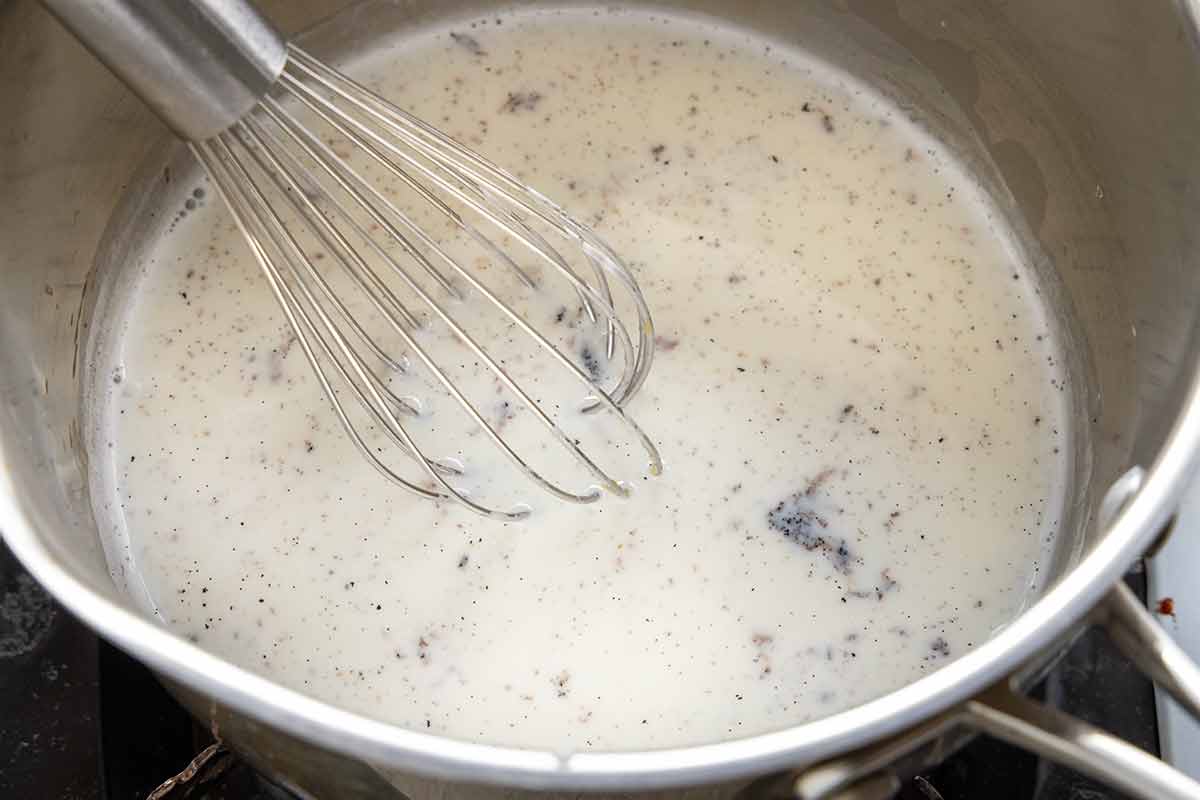
Heating the milk with sugar and vanilla bean in a saucepan over medium heat dissolves the sugar and extracts aromatic compounds from the vanilla. Keeping the milk below a full boil prevents scorching and preserves delicate flavors.
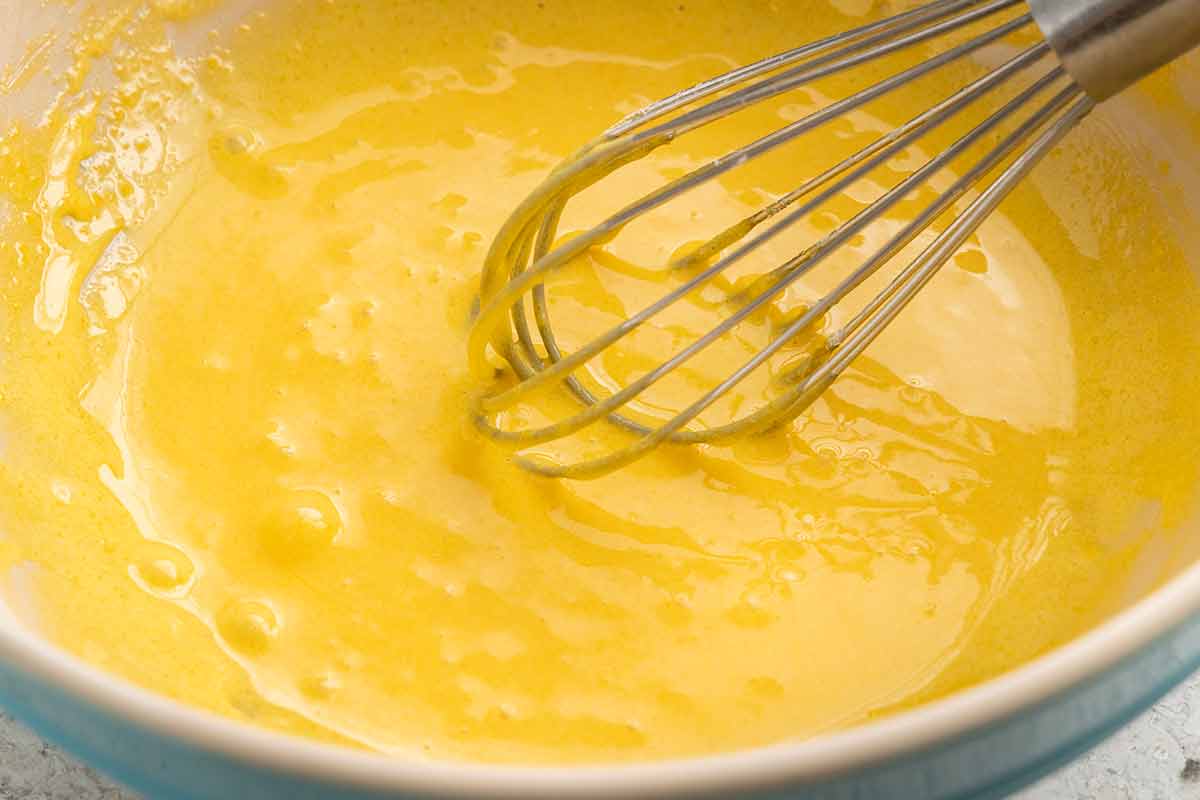
Step 2: Whisk the Yolk Mixture
Whisking the egg yolks, sugar, cornstarch, and salt in a large bowl evenly distributes the starch and dissolves the sugar. This step prevents lumps and ensures the custard thickens smoothly.
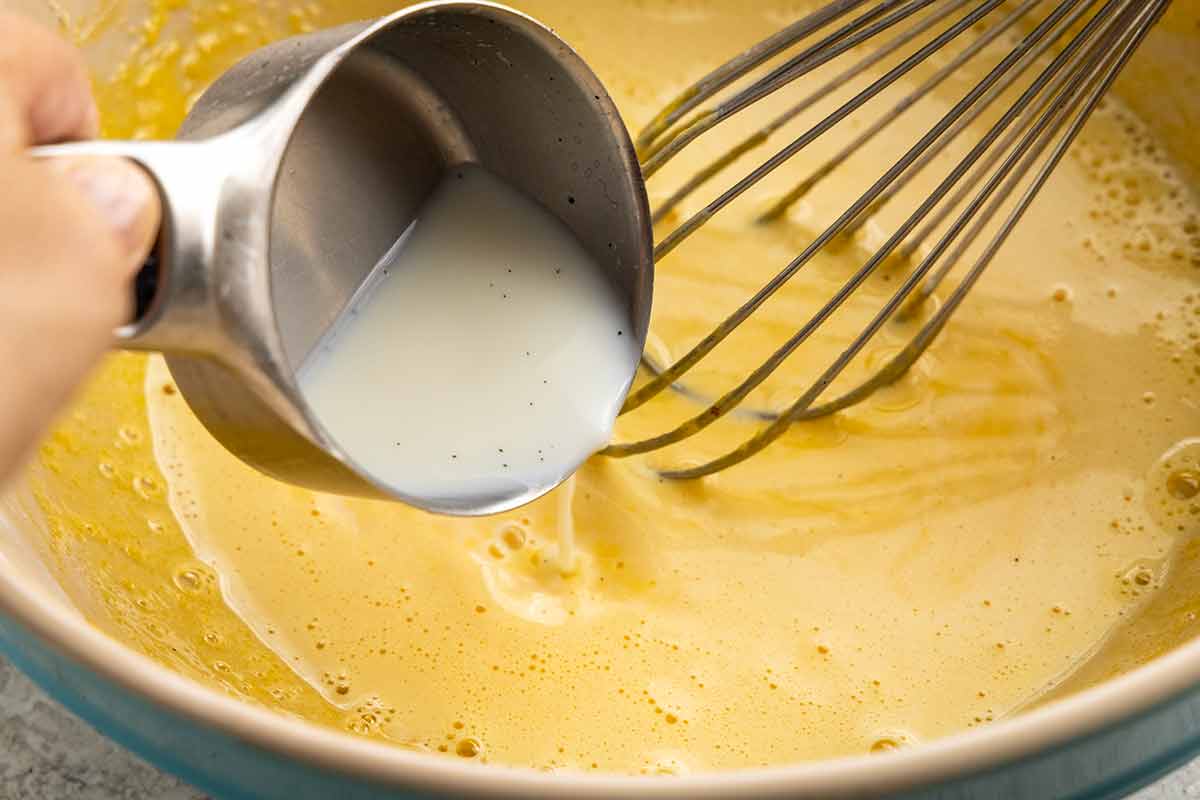
Step 3: Temper the Eggs
Slowly whisking hot milk into the egg mixture gradually raises the eggs’ temperature. This process prevents the proteins from coagulating too quickly and scrambling.
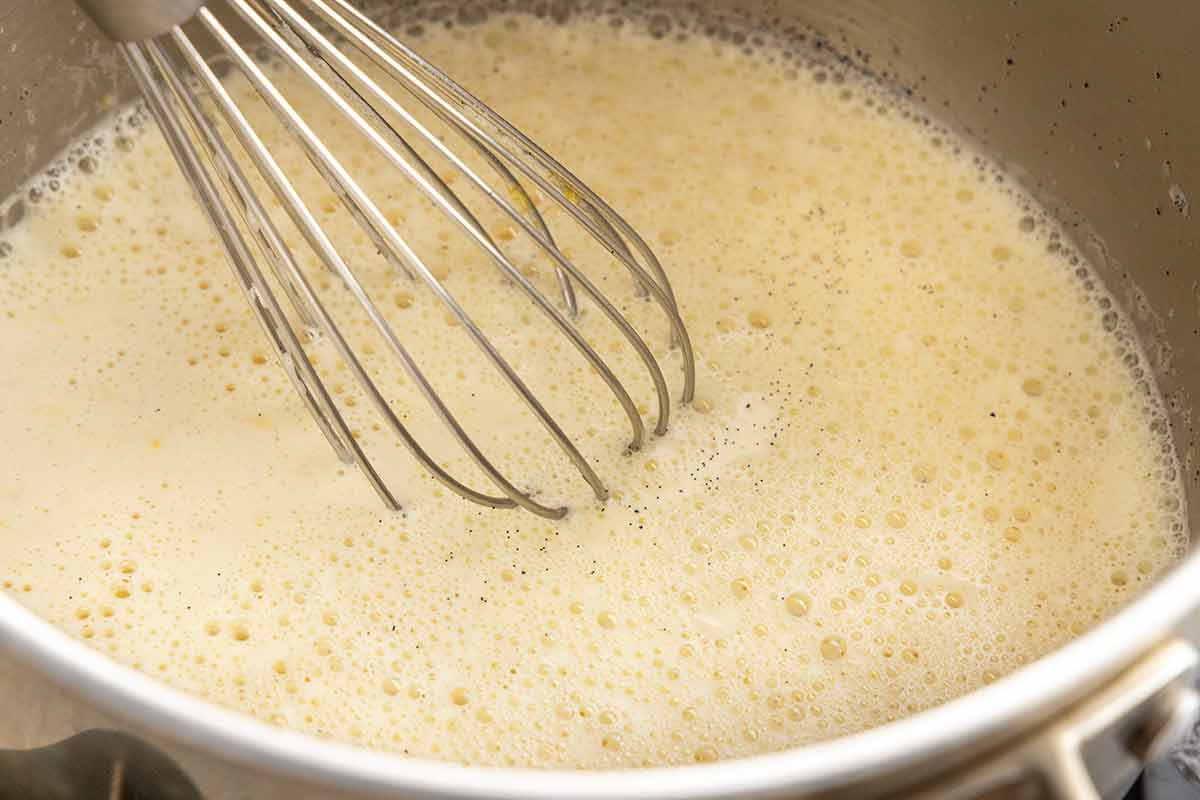
Step 4: Cook the Pastry Cream
Return the mixture to the saucepan and cook on the stovetop over medium heat, whisking constantly, until it thickens and large bubbles break the surface. Continue cooking for 1 to 2 minutes to fully gelatinize the starch and destroy the amylase enzyme in the egg yolks.
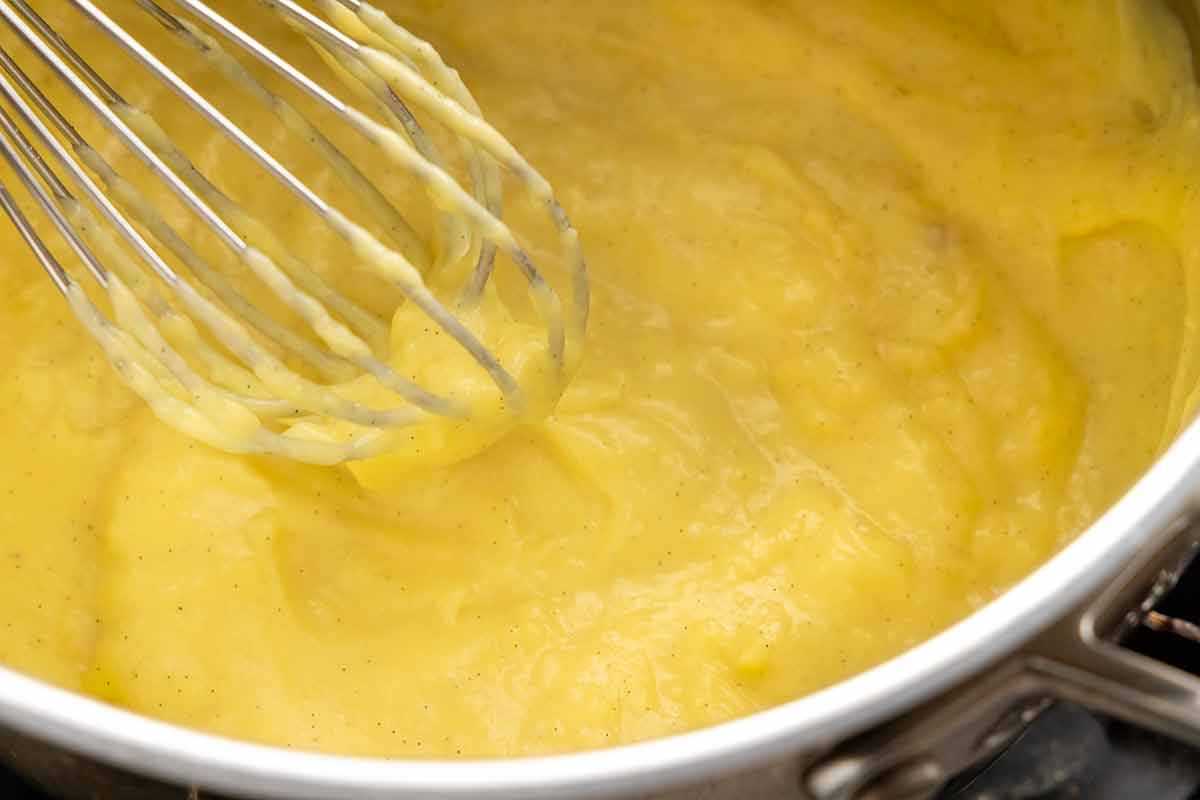
Starch granules fully swell between 185°F and 205°F, so aiming for a final temperature of 190 to 200°F ensures the pastry cream sets with a smooth, stable texture once cooled. The higher the temperature within this range, the firmer the custard will be. Whisk continuously while cooking to prevent the mixture from scorching on the bottom of the pot.
Ingredient Chemistry: Egg yolks contain the alpha-amylase enzyme, which can break down starch and cause pastry cream to thin over time. Heating the custard to at least 176°F (80°C) deactivates the enzyme. Because sugar can stabilize it, the custard should be cooked slightly hotter or longer, while a pinch of salt helps make the enzyme easier to deactivate with heat. Once denatured, the enzyme cannot reactivate, so the pastry cream stays thick and stable as it cools.
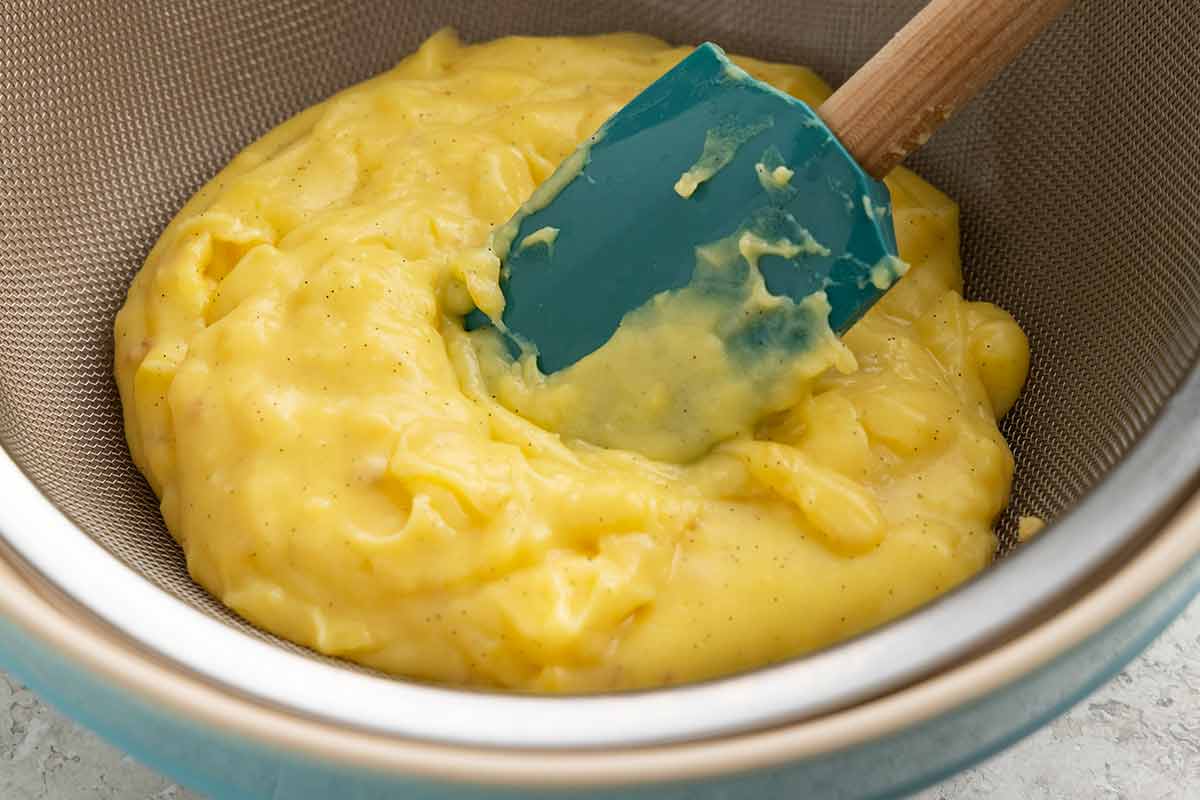
Step 5: Strain
Pass the hot pastry cream through a fine-mesh sieve into a bowl to remove any small lumps and create a smooth texture. This step is optional, but it helps ensure a more consistent custard and removes pieces of vanilla bean pod. Straining may make the pastry cream slightly less firm, but the difference is minimal once it’s stirred before using.
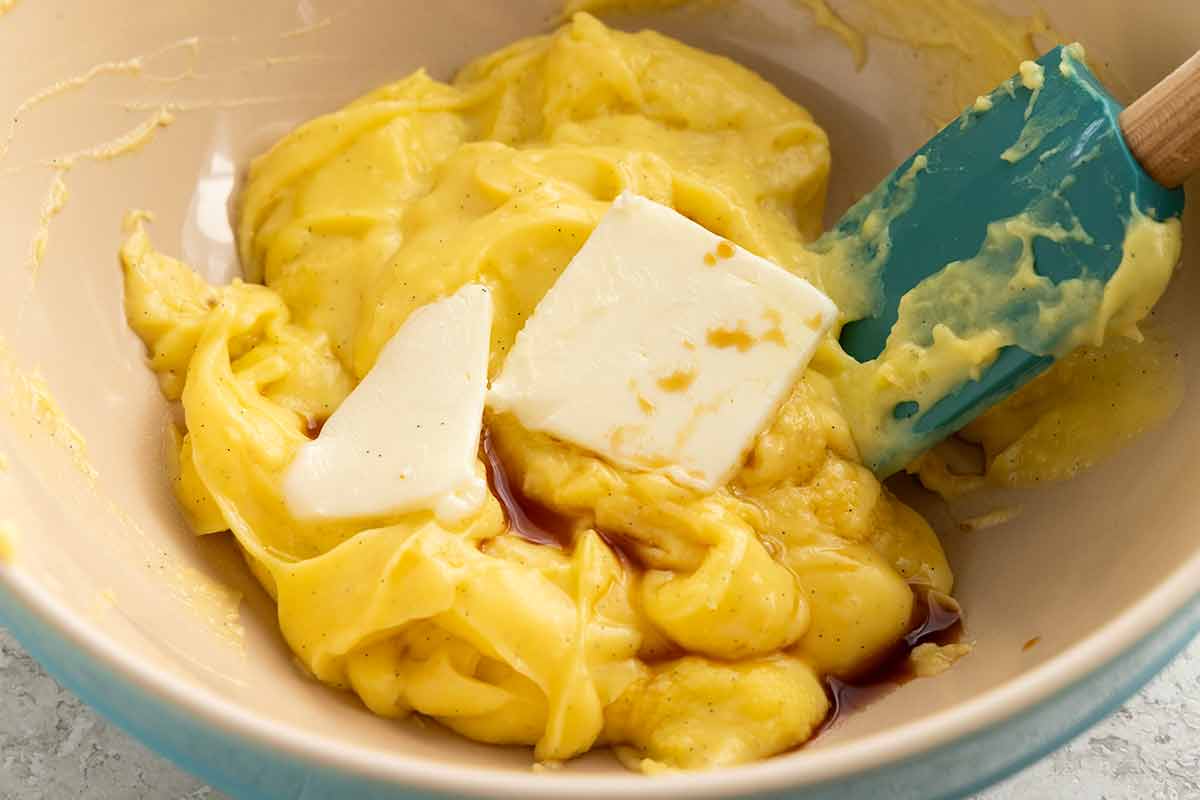
Step 6: Add the Butter and Vanilla
Whisking in butter and vanilla extract off the heat enriches the custard and adds flavor while preventing the butter from separating.
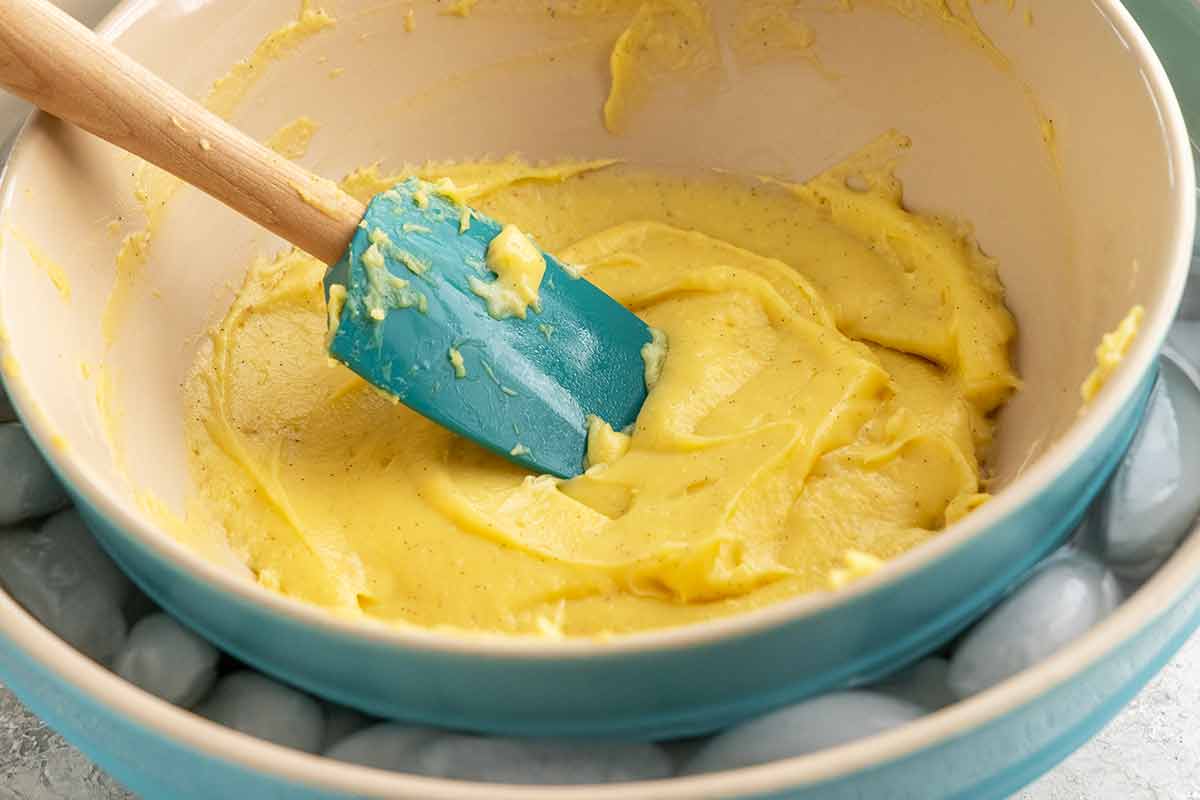
Step 7: Cool the Pastry Cream
Placing the bowl over an ice bath quickly lowers the temperature so the custard stops cooking. Pressing plastic wrap directly on the surface prevents a skin from forming.
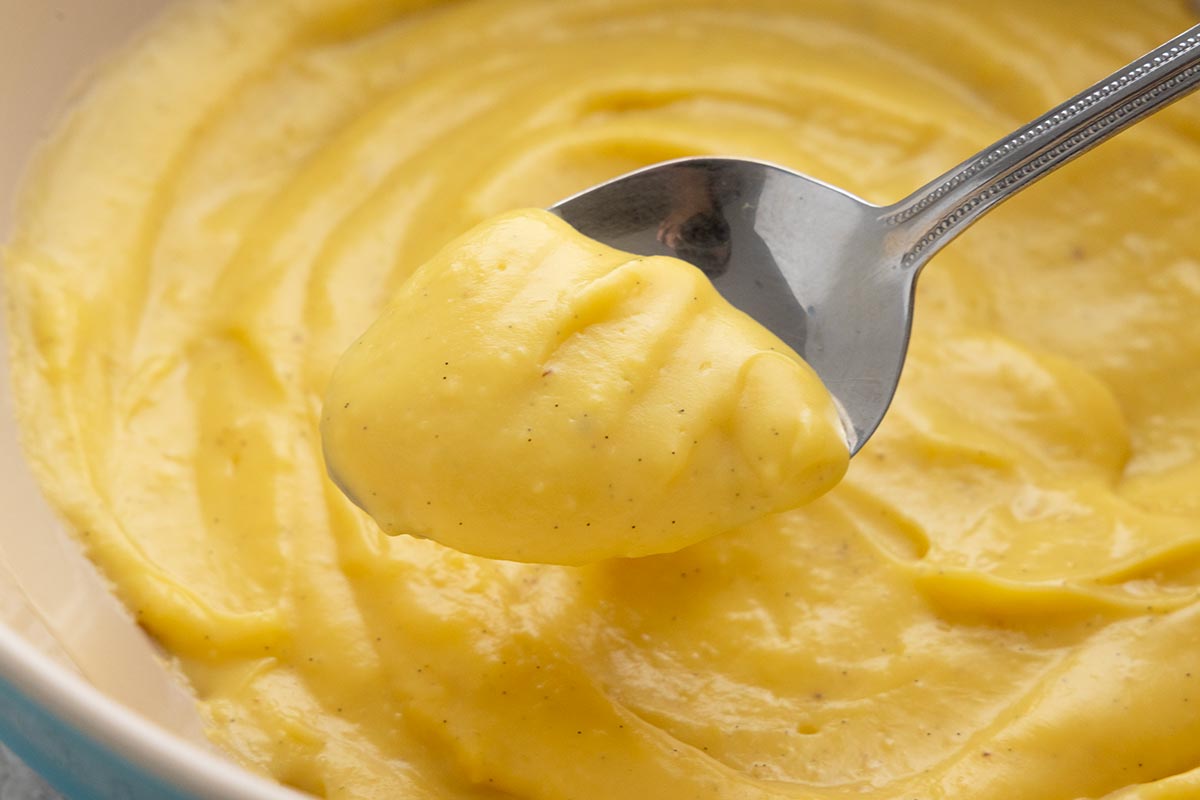
Step 8: Using the Pastry Cream
After chilling in the refrigerator for at least 2 hours, the pastry cream thickens further as the starch network sets. Stir before using as a filling for pastries, doughnuts, cake layers, banana cream pie, or fruit tarts.
You can mix it with lemon curd to make lemon pastry cream, crème mousseline, which is pastry cream mixed with softened butter, crème légère, which includes whipped cream, or diplomat cream, with stabilized whipped cream, for lighter fillings.
Frequently Asked Questions
Traditional crème pâtissière uses milk, egg yolks, sugar, and a starch such as cornstarch or flour, or a mixture of the two. Butter and vanilla are often added at the end for flavor and richness.
No. Pastry cream is thickened with starch and eggs, while Bavarian cream is a custard lightened with whipped cream and stabilized with gelatin.
Pastry cream is a type of custard, but it’s thicker because it contains starch. Other custards, like crème anglaise, rely solely on eggs for thickening and remain pourable.
You can replace up to half of the whole milk with heavy cream for a richer texture, but using all cream can make the custard too heavy and overly thick.
Common mistakes include boiling the milk too vigorously, resulting in curdling and evaporation; not whisking enough during cooking; undercooking the starch; or skipping the tempering step, which can cause lumps or scrambled eggs.
More Dessert Recipes


If you tried this Pastry Cream Recipe, please leave a 🌟 star rating and let me know how it went in the 📝 comments below!
Pastry Cream Recipe (Crème Pâtissière)
Ingredients
- 2 cups whole milk
- ½ cup granulated sugar, divided
- 1 vanilla bean, optional
- 5 large egg yolks
- 3 tablespoons cornstarch
- ⅛ teaspoon table salt
- 1 teaspoon vanilla extract, or vanilla bean paste
- 2 tablespoons unsalted butter
Instructions
- Heat the Milk – In a medium saucepan add the milk and ¼ cup of sugar. Use a paring knife to make a shallow cut lengthwise down the vanilla bean, scrape out the seeds, then add the seeds and pod to the saucepan. Heat over medium heat, whisking to dissolve the sugar, heating until the milk just begins to simmer, between 180 to 185ºF (82 to 85ºC), about 3 minutes, do not boil the milk! Turn off the heat and transfer the pan to a cool burner. For a stronger vanilla flavor, cover and steep for 30 minutes.
- Whisk the Yolk Mixture – In a large bowl, whisk together the egg yolks, ¼ cup sugar, cornstarch, and salt. Whisk until smooth and pale yellow, about 1 minute.
- Temper the Eggs – Remove the vanilla pod and discard, if using. Slowly pour about ½ cup of the hot milk into the egg mixture while whisking constantly. Continue adding the milk in a slow stream, whisking until fully incorporated.
- Cook the Pastry Cream – Return the egg mixture to the saucepan and cook over medium heat, whisking constantly, until it thickens to a pudding consistency, about 3 minutes. Allow the mixture to cook undisturbed for 15 seconds, large bubbles should break the surface. Continue to whisk and cook for 1 minute. The thickened pastry cream is done when it reaches between 190 to 200ºF (88 to 93ºC).
- Strain – For an extra silky texture, strain the pastry cream through a fine-mesh sieve into a clean medium bowl, using a spatula to press it through. This step is optional.
- Add the Butter and Vanilla – Whisk in the butter and vanilla extract until melted and smooth.
- Cool the Pastry Cream – Set the bowl of pastry cream over an ice water bath, and stir occasionally for a few minutes until the cream cools down. Press plastic wrap directly onto the surface to prevent a skin from forming. Chill in the ice water bath for 30 minutes. Transfer to the refrigerator for at least about 2 hours before using.
- Using the Pastry Cream – The pastry cream will thicken up more after chilling. Gently stir before adding as a filling to the desired dessert.
Recipe Video

Notes
- Recipe Yield: About 2 ¼ cups
- Serving Size: About ¼ cup pastry cream
- Uses: 1 (9-10 inch tart or pie), 6 to 8 filled pastries or cream puffs.
- Storing: Cover and refrigerate for up to 3 days.
- Using Vanilla Bean Paste: Add 1 to 1 ½ teaspoons vanilla bean paste instead of vanilla extract.
- More Butter: Add up to ¼ cup of butter to the pastry cream for a very rich consistency.
- Using Cream: Replace ¼ to ½ cup of whole milk with heavy whipping cream for a richer consistency.
Nutrition Facts
Percent Daily Values are based on a 2000-calorie diet. All nutritional information is based on estimated third-party calculations. Each recipe and nutritional value will vary depending on the brands you use, measuring methods, and portion sizes per household.


Hetty says
This is delicious, Jessica! I love it that you include the temperature to be achieved when the food item being cooked is completed. It gives confidence to the novice, like me. I did not strain it, no need to do so. I used this pastry cream between two layers in a homemade Angel food cake. Then iced the cake with 7 minute frosting. What a wonderful dessert. Thank you!
Jessica Gavin says
Thanks for your feedback, Hetty! I’m so happy to hear that you loved the pastry cream recipe. It sounds delicious with the anger food cake and frosting!