
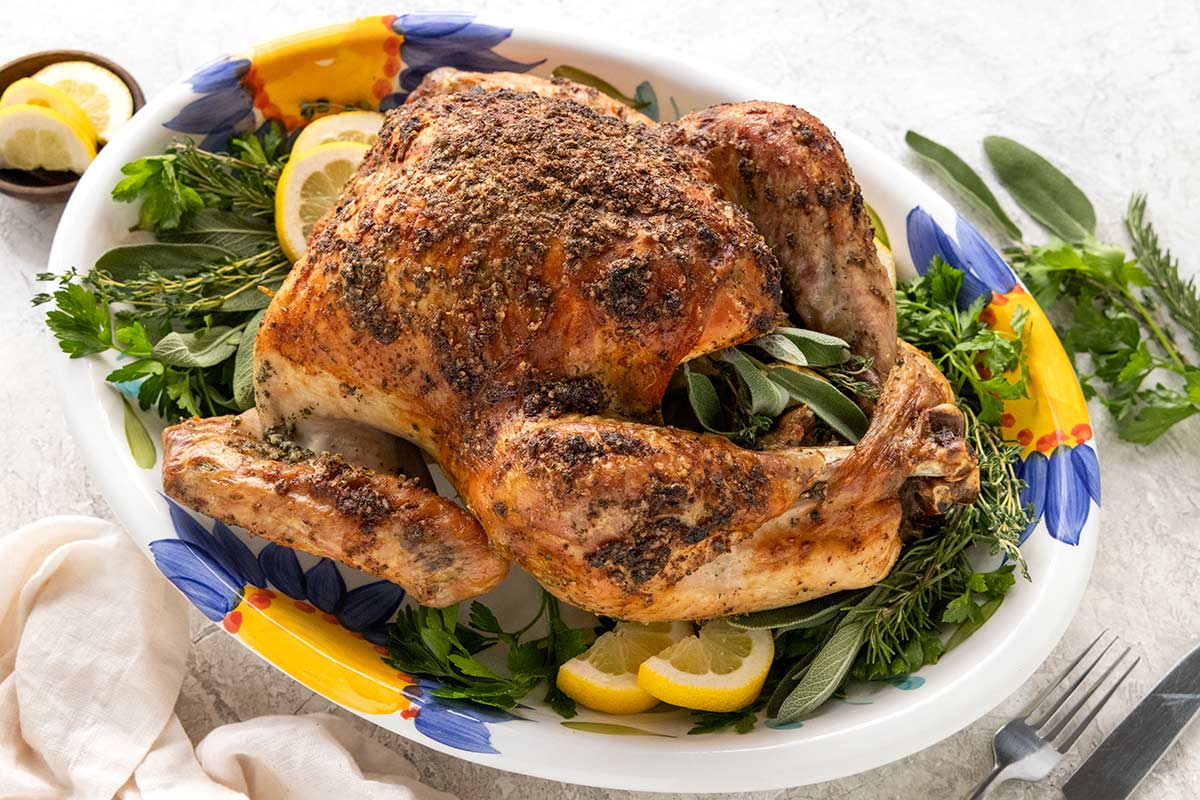
This herb roasted turkey is my go-to recipe for a perfectly juicy, golden-brown, aromatic bird. A savory herb compound butter seasons the meat and melts over the skin for a crisp, flavorful finish.
For more variations, try my classic roast turkey, Cajun turkey, and spatchcock turkey.
Jessica’s Recipe Science
- Drying the turkey creates a surface that lets butter adhere evenly, melt slowly, and drive both browning and crisp skin.
- Herb butter works as a fat-based carrier, delivering the essential oils from garlic, lemon, and fresh herbs to the meat.
- Starting at 375ºF for initial browning, then lowering the oven temperature to 325ºF, keeps the breast meat juicy and tender.
Why It Works
Roasting a whole turkey is all about managing moisture, fat, and heat so the meat stays juicy and the skin turns a perfectly golden color. This recipe uses a fresh herb compound butter to gently baste the bird from the inside out—melting under the skin to keep the breast moist, boost browning, and infuse every bite with sage, thyme, rosemary, and garlic. The veggies and stock in the roasting pan add steam to keep the meat moist, while catching the drippings for an incredible turkey gravy.
Make this herb roasted turkey recipe when you want a reliable, uncomplicated, and flavorful centerpiece. Starting the roast at a higher temperature helps the skin brown beautifully, then lowering the heat ensures the meat cooks evenly and stays tender. A short rest at the end lets all the juices settle back into the turkey so each slice is moist and delicious. It’s the perfect roast for holidays, especially a Thanksgiving turkey that feels effortless.
Jump To a Section
Ingredients You’ll Need
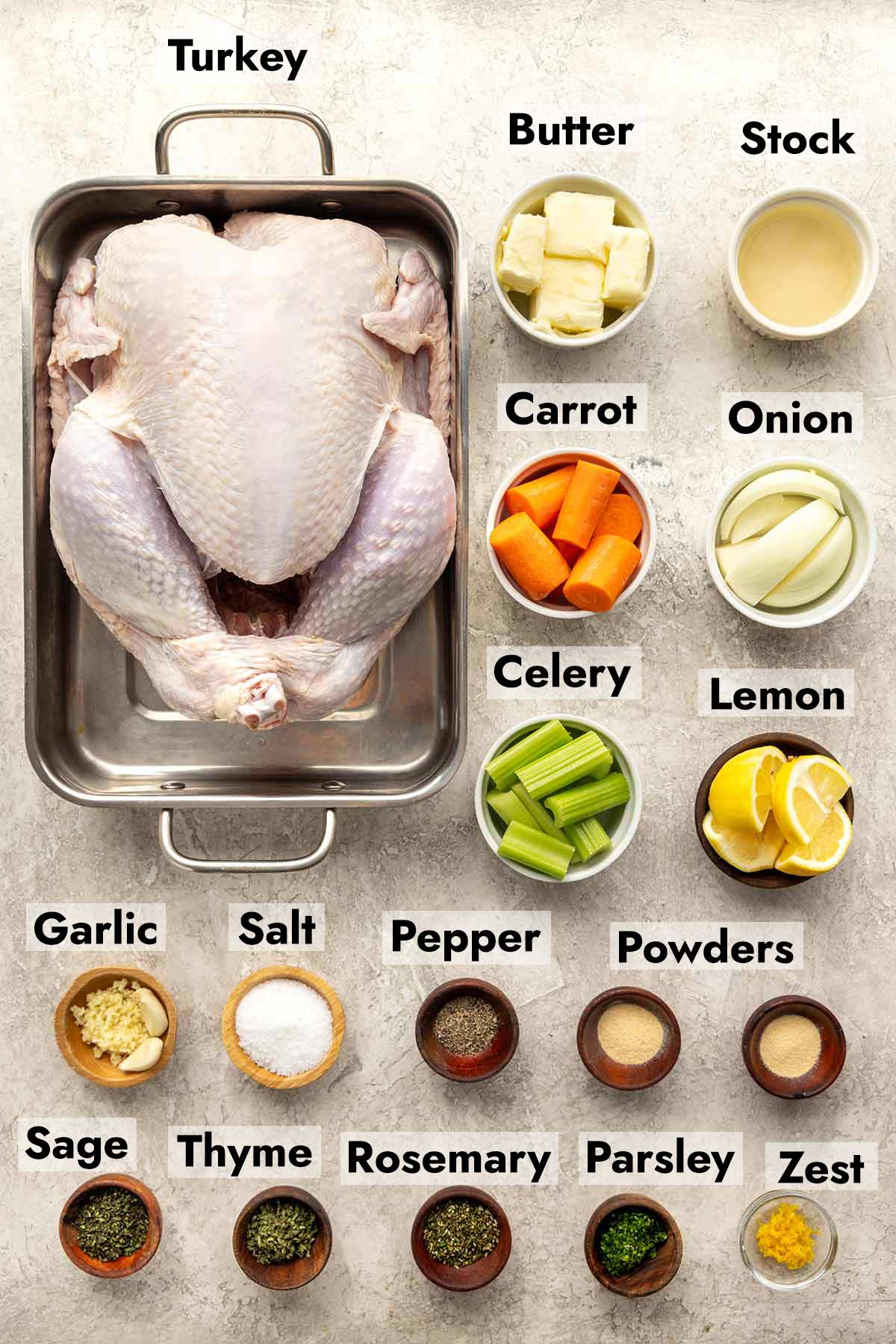
- Turkey: I recommend purchasing a 12- to 14-pound pre-brined turkey, such as a Butterball turkey. Alternatively, do a homemade turkey brine like a dry-brine or wet brine, 12 to 24 hours prior to roasting to increase juiciness and savory taste.
- Butter: Unsalted butter is used to promote browning, add flavor, and keep the turkey meat moist.
- Seasonings: Finely chop fresh thyme, sage, and rosemary for a herbaceous flavor profile. Minced garlic adds pungency for balance, which mellows out during cooking. Onion powder and garlic powder add a concentrated roasted allium taste. Salt and pepper season the meat, adding a savory flavor.
- Citrus: Lemon zest is added to the compound butter to release the citrus oils from the skin onto the meat. A slice of lemon added to the bird’s cavity adds a pleasant citrus aroma and flavor to the turkey gravy drippings.
- Vegetables: I add a mixture of onion wedges, carrots, celery, rosemary, sage, and thyme sprigs to the roasting pan to season the drippings for gravy. I like to serve the cooked veggies as a side dish or puree them into a soup.
- Liquid: A ½ cup of unsalted turkey stock is added to the bottom of the roasting pan. The liquid keeps the turkey drippings from burning as it roasts.
See the recipe card below for all ingredients and measurements (US and metric).
Ingredient Substitutions
This herb roasted turkey recipe is easy to customize! Try these delicious ideas:
- Type of Turkey: Choose between different types of turkey, including organic, natural, free-range, Heritage, kosher, unbrined, or basted. If roasting a turkey larger than 14 pounds, loosely cover the breasts with foil after 1 hour to keep the white meat juicy, and extend the cooking time as needed.
- Vegetable Options: Add hearty potatoes, sweet potatoes, shallots, butternut squash, parsnips, or fennel.
- Herbs: Try chives, green onions, tarragon, oregano, or dill. You can use dried herbs instead of fresh. Use ⅓ of the amount of the fresh herbs. Try an herb blend like Italian Seasoning or herbs de Provence.
- Seasoning: Customize the blend with paprika, cumin, coriander, or curry powder. Make it spicy with cayenne or Cajun seasoning for a unique Louisiana-inspired flavor. Try orange zest and slices for a sweeter taste.
- Butter Swaps: For those with dietary restrictions, replace butter with olive oil, avocado oil, or vegetable oil. Use ½ cup of oil to make an herb paste, adding as much as needed to cover the meat and surface. Softened ghee, coconut oil, or margarine can also be used.
How to Make Herb Roasted Turkey
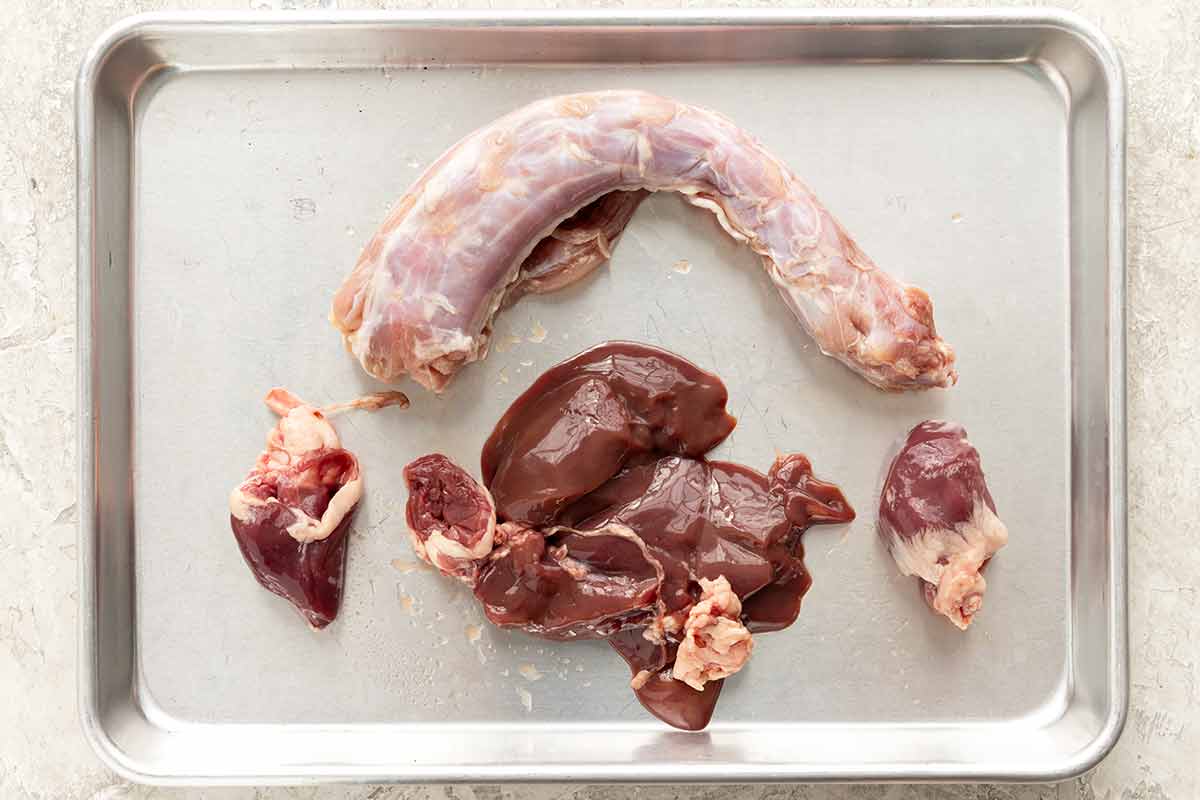
Step 1: Remove Giblets and Neck
After removing the giblets and neck, you can add them to the roasting pan later for a richer giblet gravy. Thoroughly drying the skin and cavity is key. A dry surface allows the butter to coat evenly, melt slowly, and infuse the meat with flavor while helping create a crispy skin.
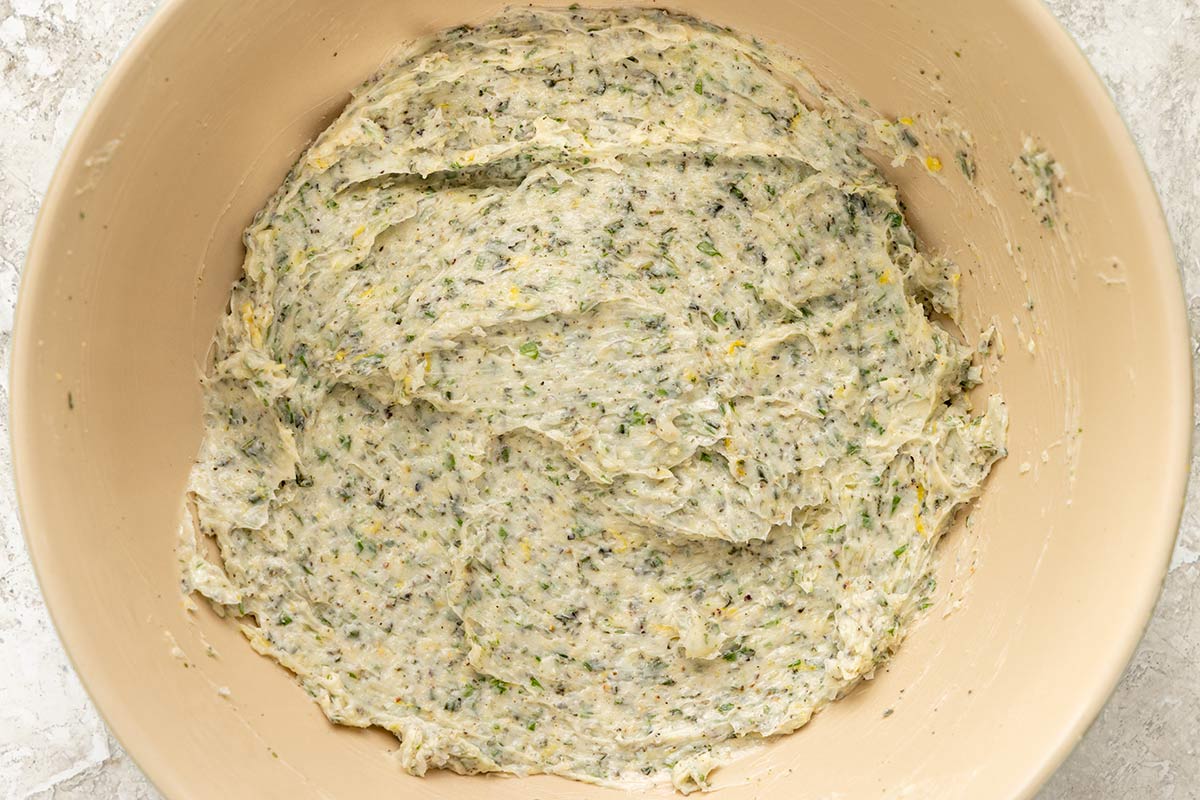
Step 2: Make the Herb Butter
Making a rustic compound herb butter blends the milk fat, aromatics, and seasonings into a flavorful paste that spreads and melts evenly as the turkey roasts. Butter’s fat carries the essential oils from herbs, garlic, and lemon zest, helping them infuse deeply into the meat rather than sit on the surface.
Experimentation Encouraged: Using a food processor to make the herb butter creates an even finer paste, ensuring every bite of the turkey gets the same balanced, aromatic flavor and seasoning.
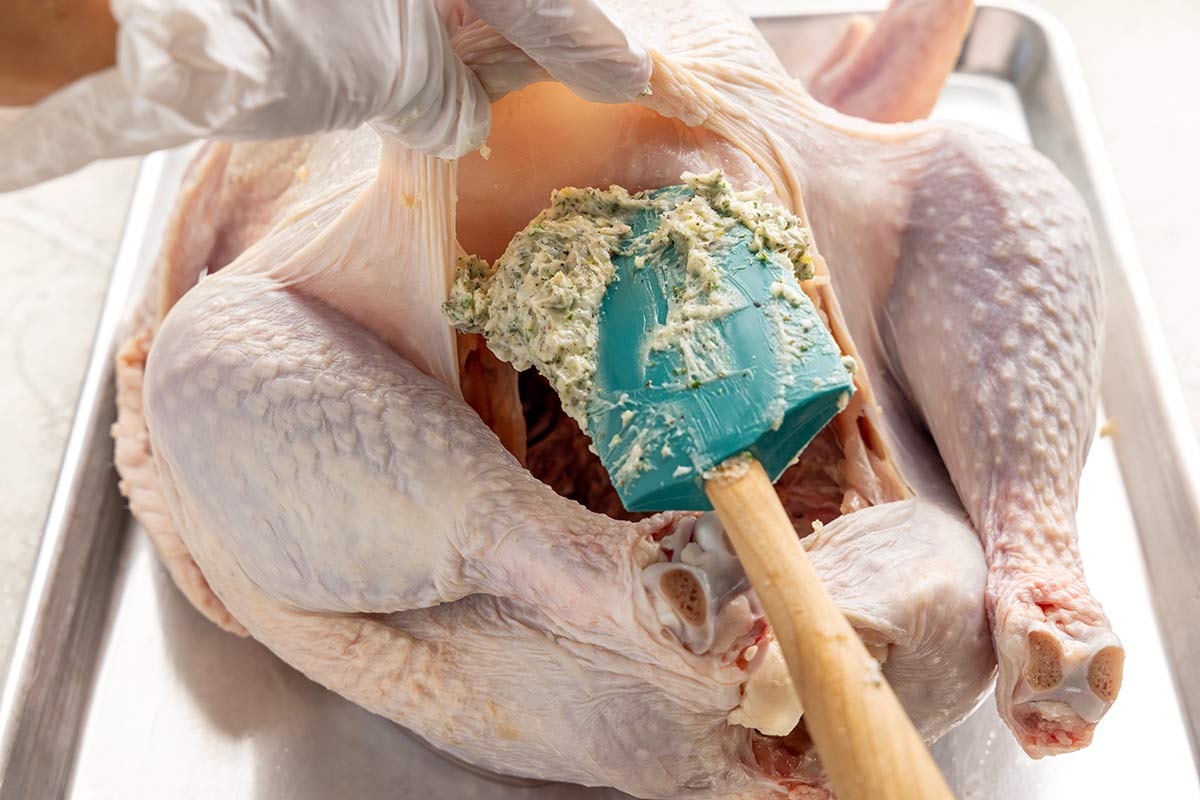
Step 3: Add the Herb Butter
Adding the room-temperature herb butter under the skin puts the fat and aromatics in direct contact with the meat, allowing them to melt slowly and preventing the protein from drying out. As the butter warms, it releases the essential oils from the herbs and garlic. Coating the entire exterior creates an even layer of fat that promotes golden skin and helps the seasoning cling.
Pro Tip: If you are having trouble spreading the herb butter onto the skin, try microwaving the mixture until melted, then brush it on. Any leftover can be reapplied to the breasts, wings, and thighs during roasting.
Step 4: Preheat the Oven
Starting the roast at 375ºF (191ºC) helps the skin start browning right away. Positioning the rack on the lowest level keeps the bird centered in the oven, allowing hot air to circulate the large roasting pan and promoting even cooking.
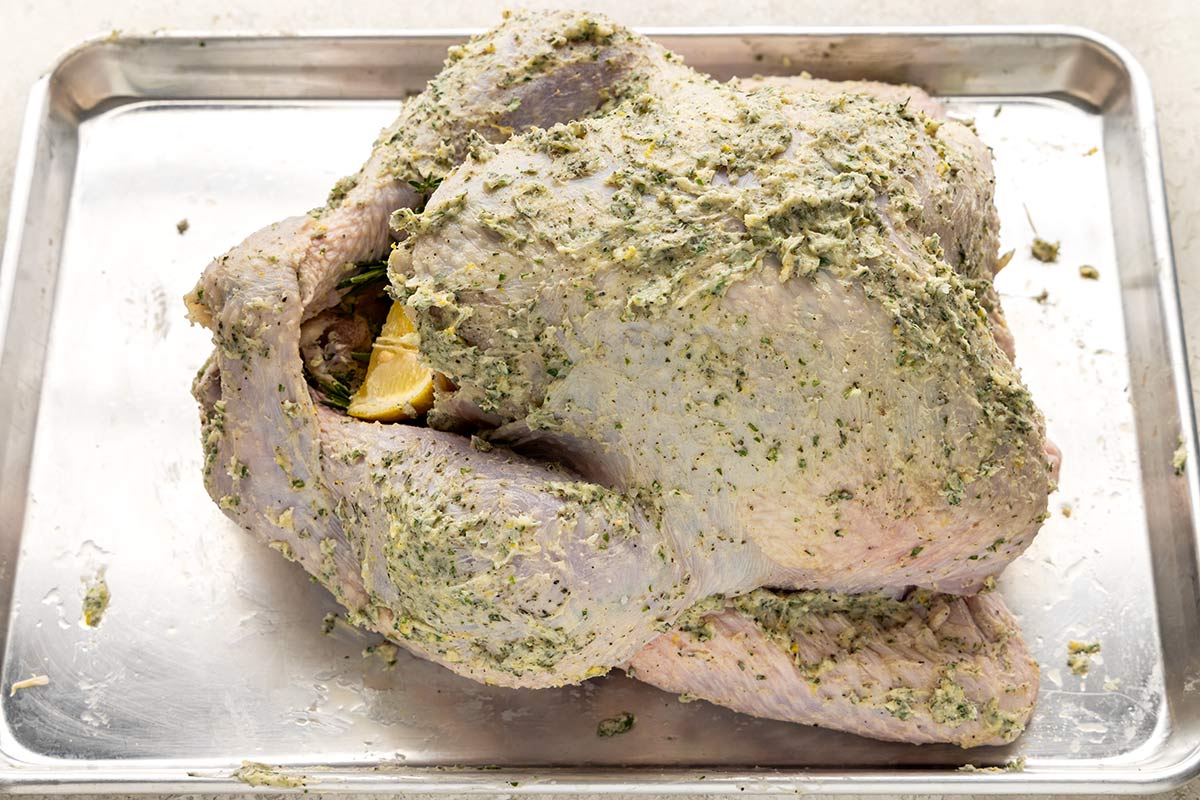
Step 5: Truss the Turkey
Adding fresh herbs, onions, and lemon wedges to the turkey cavity gently releases steam and essential oils as the turkey roasts, infusing the meat with subtle flavor from the inside out. Trussing with kitchen twine helps the turkey cook more evenly by keeping the legs and wings close to the body, preventing them from overcooking before the breast is done.
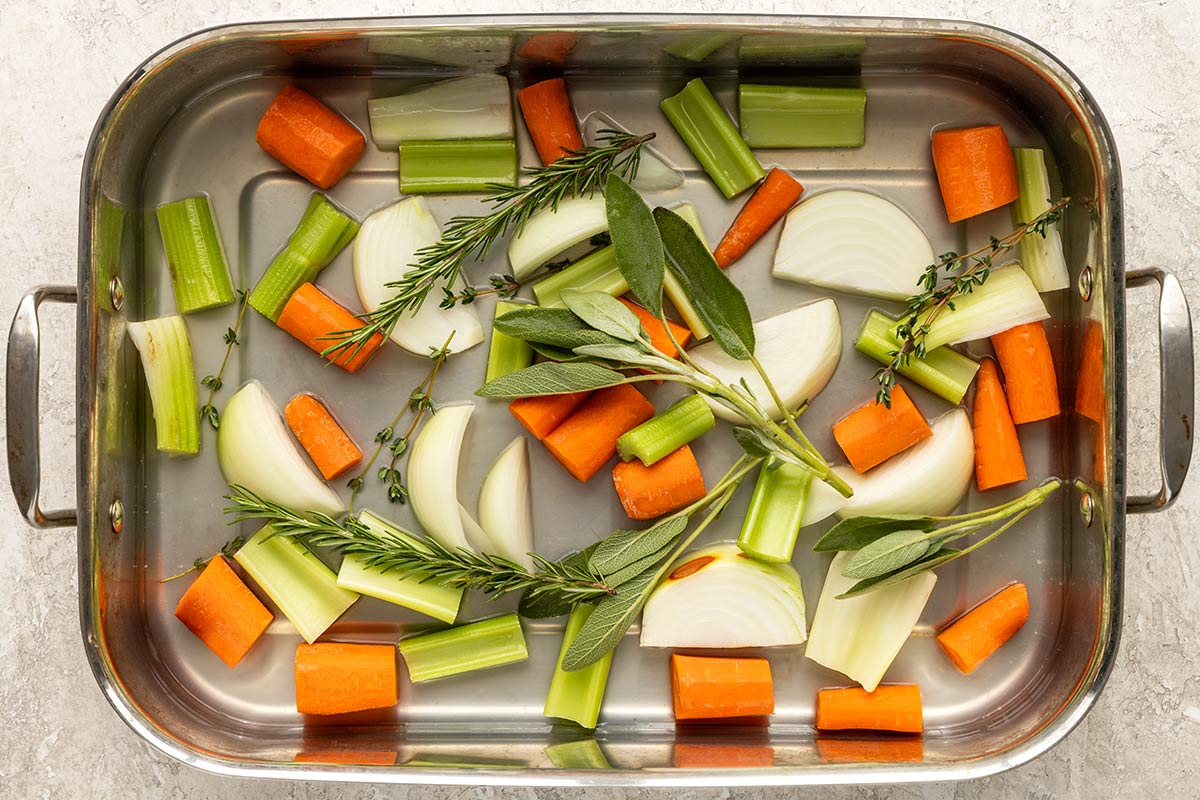
Step 6: Prepare the Vegetables
Placing the vegetables, herbs, and broth in the bottom of the large roasting pan creates flavorful juices and prevents burning. The aromatics slowly release their natural sugars and essential oils, flavoring both the drippings and the broth, which you can later reduce into a rich, deeply layered gravy.
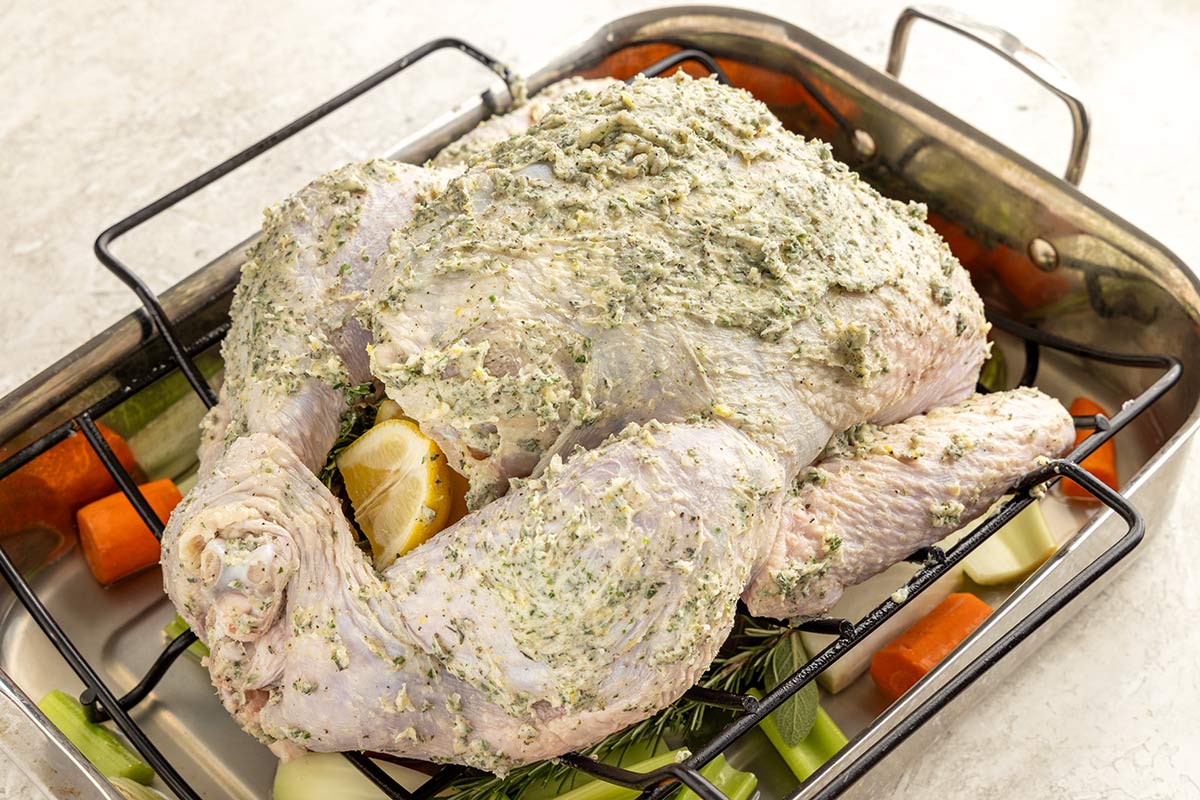
Step 7: Roast the Turkey
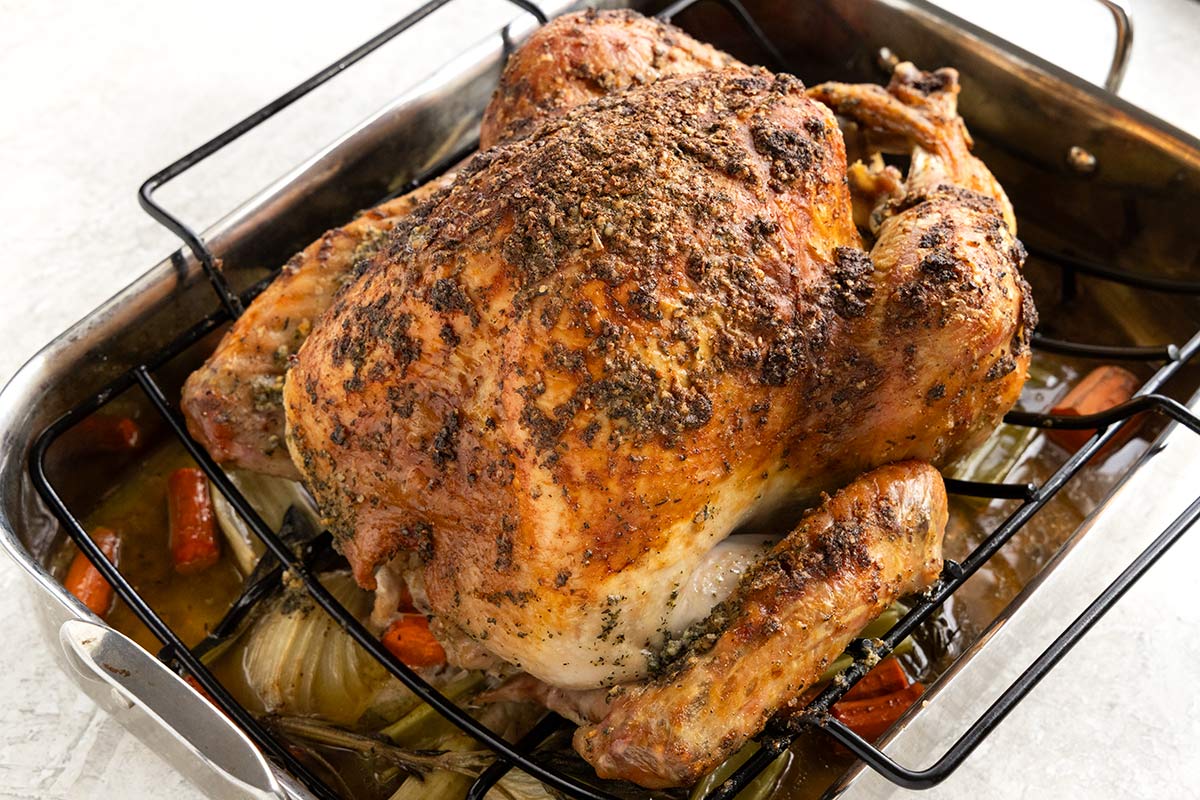
Roasting the turkey on a V-shaped roasting rack elevates it so the hot oven air can circulate evenly, helping the skin crisp while the drippings collect below. Starting the roasting at 375ºF jump-starts Maillard browning.
Lowering the heat to 325ºF ensures gentle, even cooking so the breast reaches a target internal temperature of 157ºF. This will take about 11 to 12 minutes per pound. Using an instant-read thermometer is essential for ensuring the turkey stays tender, juicy, and safe to eat.
Expert Tip: If roasting a turkey larger than 14 pounds, I recommend loosely tenting the breast with foil after 1 hour of cooking. The shield will slow heat transfer in the breast, preventing dry meat.
Step 8: Let it Rest
Let the turkey rest for about 30 minutes, allowing the hot juices to redistribute and the meat to stay juicy when sliced. The drippings in the pan concentrate into a flavorful base that you can strain to make a rich, savory turkey gravy. Don’t throw away the bones! Use them to make turkey stock.
Frequently Asked Questions
Turkey’s mild, lean flavor benefits from herbs rich in aromatic compounds that boost savoriness. Sage adds warm, earthy notes, while thyme contributes a subtle woodsy aroma. Rosemary releases piney, fragrant oils as it heats, and parsley brings brightness. Marjoram and oregano supply sweet and peppery notes. Together, these herbs build a well-rounded, aromatic flavor profile that complements turkey beautifully.
You can cover a turkey with foil, but it affects the texture. Foil slows moisture loss and blocks direct heat, helping keep the breast juicy but preventing the skin from browning and crisping. If roasting a turkey larger than 14 pounds, I recommend roasting it uncovered for the first hour or so to brown the skin, then covering it with a loose foil tent. This also helps prevent the skin from burning if it browns too fast.
Fresh herbs burn easily because their delicate oils and moisture evaporate quickly in dry heat. The key is to protect them from direct exposure. I like to mix the herbs into softened butter and spread it under the skin. This insulates the leaves, letting their aromatic oils infuse the meat rather than scorching. Any herbs on the surface should be coated with fat (butter or oil) to prevent them from drying out. Keeping the oven at a moderate temperature, around 325–375°F, also reduces the risk of burning while still allowing the turkey to brown evenly.
Basting adds flavor and enhances browning on the skin, but it doesn’t make the turkey juicier because moisture can’t penetrate the surface. In fact, repeatedly opening the oven lowers the temperature, extends cook time, and increases the risk of drying out the breast. It can also soften the skin by continually adding moisture. For the crispiest skin and the juiciest meat, skip basting and rely on a dry brine, herb butter, and steady oven temperatures instead.
Serve This With


If you tried this Herb Roasted Turkey, please leave a 🌟 star rating and let me know how it went in the 📝 comments below!
Herb Roasted Turkey
Ingredients
- 12 to 14 pound turkey, basted or salt-injected
- ¾ cup unsalted butter, softened
- 1 tablespoon kosher salt
- 1 tablespoons finely chopped sage, plus 5 sprigs
- 1 tablespoons finely chopped thyme, plus 6 sprigs
- 1 tablespoon finely chopped rosemary, plus 4 sprigs
- 1 tablespoons finely chopped parsley
- 1 tablespoon minced garlic, plus 2 smashed garlic cloves
- 1 ½ teaspoons onion powder
- 1 ½ teaspoons garlic powder
- 1 ½ teaspoon black pepper
- 1 teaspoon lemon zest, then quarter the lemon
- ½ cups unsalted turkey stock, chicken stock, broth, or water
- 2 yellow onions, cut into 16 wedges
- 2 cups carrots, cut into 2" pieces
- 2 cups celery, cut into 2" pieces
Instructions
- Remove Giblets and Neck – Place turkey on a sheet pan. Remove the giblets and the neck from the cavity. Reserve them if using to make gravy. Thoroughly dry the surface and inside the cavity with paper towels. The herb butter won't stick to a wet surface.
- Make the Herb Butter – In a medium bowl, combine the softened butter, salt, sage, thyme, rosemary, parsley, minced garlic, onion powder, garlic powder, black pepper, and lemon zest. Alternatively, use a food processor to pulse until a paste is formed, about 30 seconds.
- Add the Herb Butter – Place the turkey on a sheet pan. Gently loosen the skin over the breasts and thighs. Spread about 2 tablespoons of herb butter under the skin on each breast and 1 tablespoon under the skin on each thigh. Rub 1 tablespoon inside the cavity. Use the remaining herb butter to coat the entire exterior of the turkey. Start with the back and thighs, then flip over to cover the breasts, wings, and legs.
- Preheat the Oven – Adjust the oven rack to the lowest position. Preheat to 375ºF (191ºC).
- Truss the Turkey – Tuck the wings back on the turkey. Add 2 sage sprigs, 4 sprigs of thyme, 2 sprigs of rosemary, 2 cloves of garlic, sliced lemons, and 2 onion wedges inside the cavity. Tie the legs together with butcher's twine, or tuck the legs under the skin at the tail if still connected.
- Prepare the Vegetables – On the bottom of the roasting pan, evenly spread the remaining onions, carrots, celery, 3 sprigs of sage, 2 sprigs of thyme, 2 sprigs of rosemary, then pour in the turkey stock.
- Roast the Turkey – Lightly grease the V-rack with nonstick cooking spray or vegetable oil to prevent sticking. Place the rack in the pan and add the turkey breast side up. Roast the turkey at 375ºF (191ºC) for 30 minutes. Reduce the oven temperature to 325ºF (163ºC).The turkey is ready when the thickest part of the breast is 157 to 160ºF (69 to 71ºC) on a meat thermometer, and the thickest part of the thigh reaches 170 to 175ºF (76 to 79ºC). The process will take about 11 to 12 minutes per pound, about 2 hours 20 to 50 minutes total time, depending on size. If roasting a bird larger than 14 pounds, loosely tent the breast area with foil after 1 hour of roasting to prevent dry meat.
- Let it Rest – Transfer the turkey to a cutting board and rest it for about 30 minutes before carving. If desired, use the drippings to make a turkey gravy.
Recipe Video

Notes
- Dry Brine (For non-basted turkeys) – Combine 3 tablespoons of kosher salt and 4 teaspoons of sugar. Rub 1 tablespoon of the mixture underneath the skin of each breast. Rub 1 ½ teaspoon underneath each leg. Rub the remaining mixture inside the cavity. Place turkey breast-side up in a roasting pan with a V-rack or on a wire rack set over a rimmed sheet pan. Refrigerate uncovered for at least 12 to 24 hours. Remove the turkey from the refrigerator 1 hour before roasting. Proceed with adding the herb butter.
- Storing: Refrigerate in an airtight container for up to 5 days. Freeze for up to 3 months.
Nutrition Facts
Percent Daily Values are based on a 2000-calorie diet. All nutritional information is based on estimated third-party calculations. Each recipe and nutritional value will vary depending on the brands you use, measuring methods, and portion sizes per household.


Ron Mani says
Superb
Jessica Gavin says
I’m so thrilled that you enjoyed the herb roasted turkey, Ron! Happy thanksgiving!