
My goal is to help you build confidence in the kitchen through science. Every recipe I publish includes cooking tips that take the guesswork and mystery out of the process so that you can enjoy the tasty results.

While testing hundreds of recipes in culinary school, on the blog, and in my cookbook, I’ve made COUNTLESS mistakes along the way. I look at these as experiments and learning lessons that empower me (and now you!) to become a better cook.
I’m excited to share what I’ve learned over the years with articles on How To’s and In The Kitchen knowledge, but first, let’s cover my essential Top 10 Cooking Tips!
1) Understanding the Science Behind the Cooking Method
When developing a recipe, consider the end taste and texture you want to achieve. Knowing this, you can then figure out which essential cooking methods to use. You’ll see these reflected in my recipe instructions.
In general, cooking methods fall into three categories:
- Dry-heat (use fat to cook, or hot air)
- Moist-heat (use water or steam)
- A combination of both
When I want a crispy golden crust on pan seared halibut, I’ll use a dry heat pan-searing technique. To quickly cook broccoli and other vegetables without losing too many nutrients, I’ll steam them with moist heat. For fall-off-the-bone short ribs, sear them in a hot pan with fat, then braise them in a flavorful liquid.

2) How to Properly Measure Ingredients
In most kitchens, we use cups and spoons to measure volume instead of weight. This works fine with savory recipes, but it’s more of an issue when baking because precise measurements are needed for reproducible results.
Density also comes into play with various foods, especially with different types of flour. Finally, some foods aerate easily, while others compact under more pressure. All of these factors can affect the actual ingredient amounts used in a recipe.
The first thing to do is to make sure to use the right tool for the job:
- Dry ingredients like flour, herbs, chopped ingredients, and sugar, as well as thick, viscous foods, should be measured with a measuring cup.
- For small quantities of 1 tablespoon or less, use measuring spoons for dry or wet ingredients.
- Use a liquid measuring cup with clear markings for all liquids; pour on a flat surface.
For tricky ingredients like flour, sugar, or cocoa, use the dip-and-sweep method. I find it gives less variability. Dip the measuring cup into the bag or container, then use a straight-edge spatula or knife to sweep away the excess.
To take your cooking repertoire to the next level, use a digital kitchen scale. In my recipes, you will typically see cup, gram, and ounce measurements, whether the recipe is sweet or savory. A digital scale verifies that the amount is the same each time, yielding more consistent results.
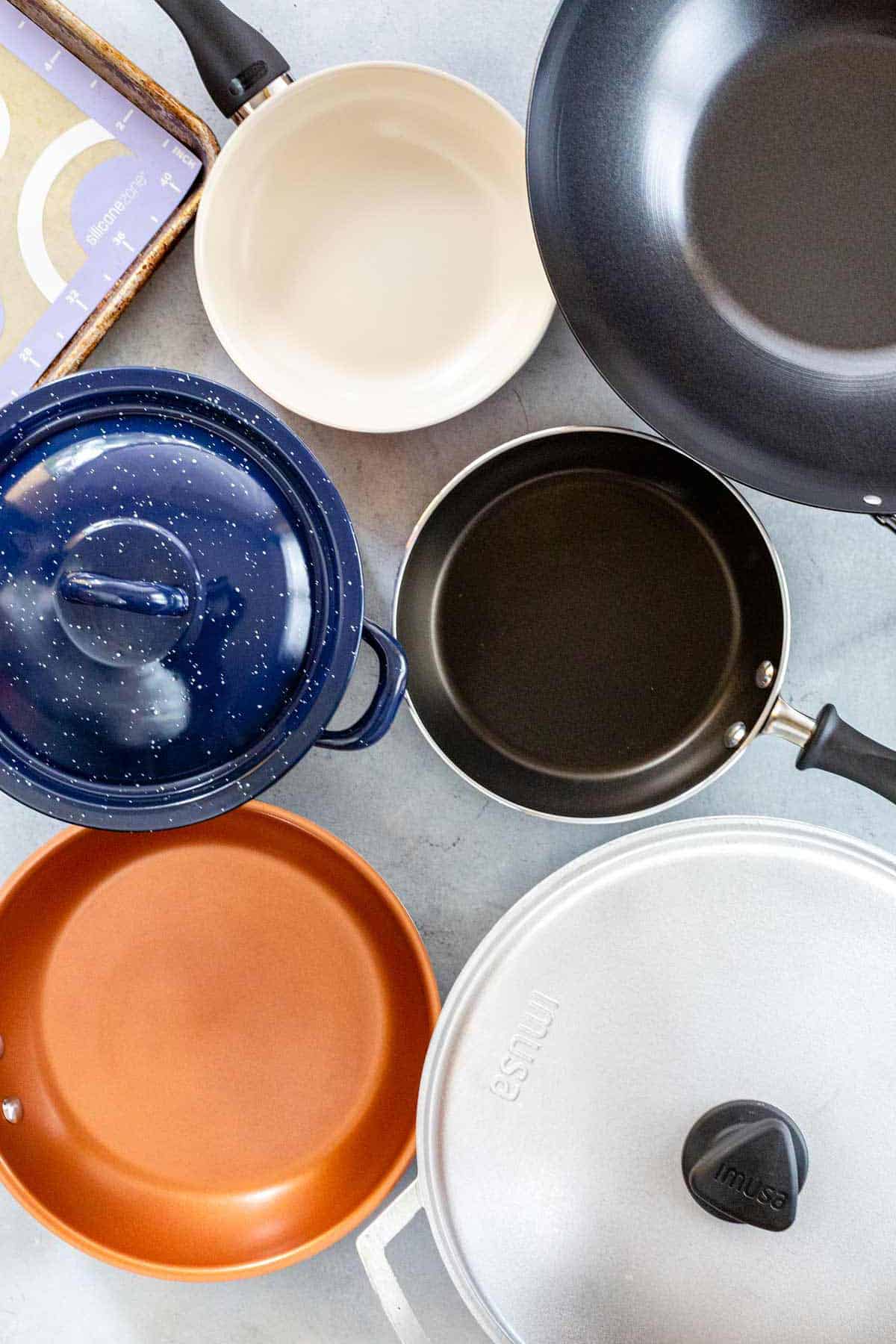
3) Choosing the Right Cookware
There are so many types of cookware materials that it can feel overwhelming. In my kitchen, I have stainless steel, cast-iron, and nonstick on hand. I also have skillets and pots of various sizes, a wok, and a large Dutch oven. Typically, an 8-, 10-, and 12-inch skillet and various saucepans and pots, like 2-, 3-, 4-, 6-, 8-, or 12-quart.
Examples of when I would choose a certain pan or pot:
- A large stainless steel pan for searing a steak to develop a golden-brown crust.
- A cast-iron skillet for baking a crispy pizza.
- A nonstick pan for cooking pancakes.
- A 6 to 8-quart stockpot for fried chicken.
- A wok for my favorite chow mein.
4) Selecting the Right Cooking Oil
A must-know culinary term: smoke point. This is when the oil or fat begins to break down and visibly produce smoke. It’s important to know how to select the right oil for different cooking methods.
Also, consider the cooking time: you’ll need a high-smoke-point oil like peanut oil for deep-frying, whereas a lower-smoke-point fat like butter can be used to finish a dish.
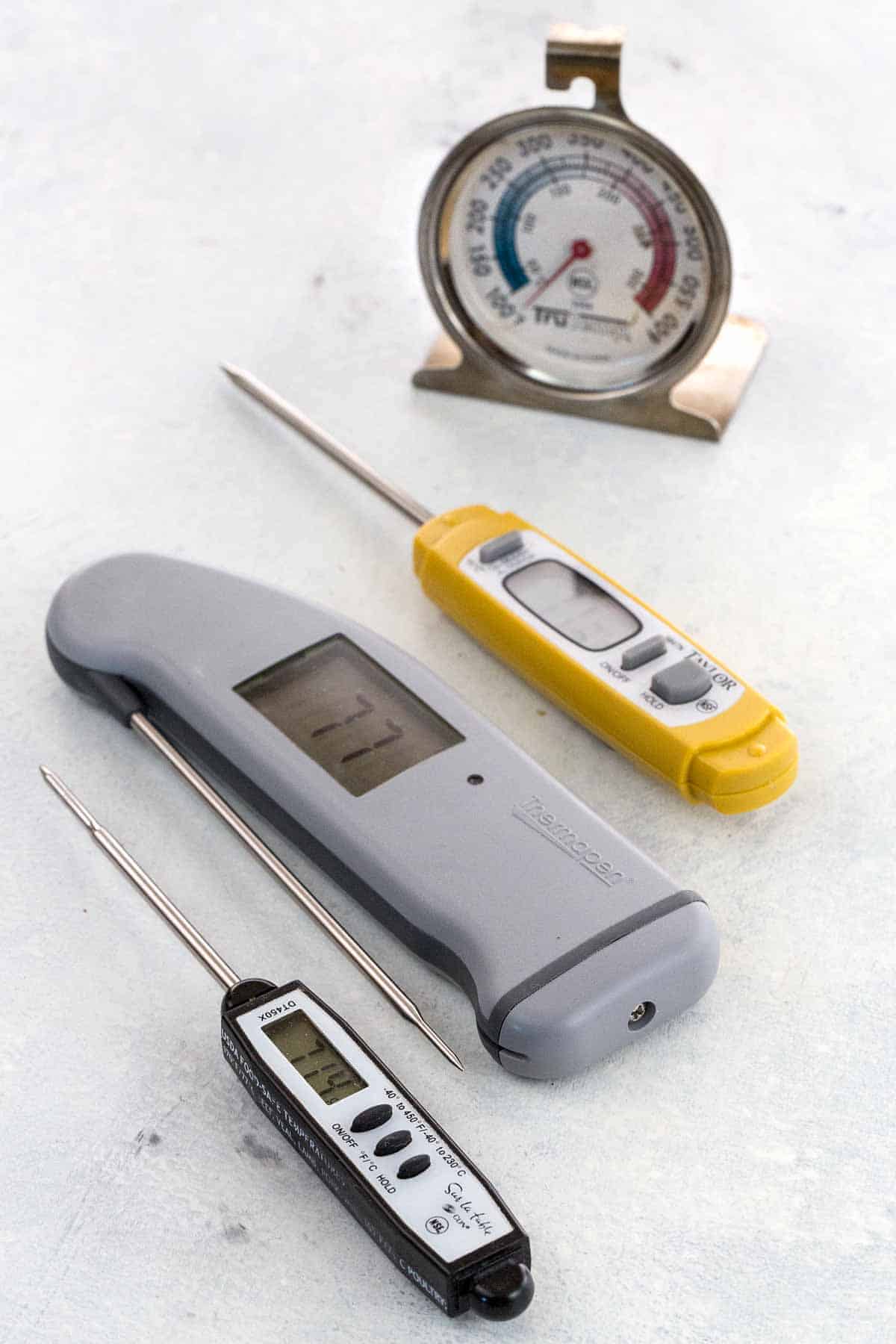
5) Take Accurate Temperature Readings
Whenever I’m cooking, I ALWAYS have an instant-read thermometer handy. It’s a quick scientific check, in addition to using your senses to tell if food is done cooking. More importantly, it is where you want it to be.
I also use a separate oven thermometer. The temperature display on the front panel of your oven can fall out of calibration over time. I’ve made the mistake of trusting my oven screen too many times, and the results have been disappointing, especially with baked goods and roasting.
Tips on how to take a proper reading (instant-read thermometer):
- Slide into the center of the food; it should not go through to the other side.
- Don’t hit the hot pan, bones, or hollow cavities; the reading will be off.
- For steaks, chops, chicken breasts, fish fillets, or other thin foods, lift them out of the pan with tongs. Insert the probe into the side closest to the center.
- For large roasts, such as roast turkey and roasted chicken, take readings from both sides of the breast and from the thickest part of the thigh.
6) Don’t Forget About Carryover Cooking
When you remove food like steaks, chops, and baked goods from the hot cooking environment, the temperature will continue to rise due to carryover cooking.
For meats, stop cooking when they’re 5 to 10 degrees below the target serving temperature, then let them rest. The only exception is poultry and fish, because their muscle structure is less dense and doesn’t retain heat as well as a ribeye steak.
Pay attention to the instructions for baking treats and bread, as carryover cooking is desirable in some cases but needs to be stopped immediately with extra cooling in others.
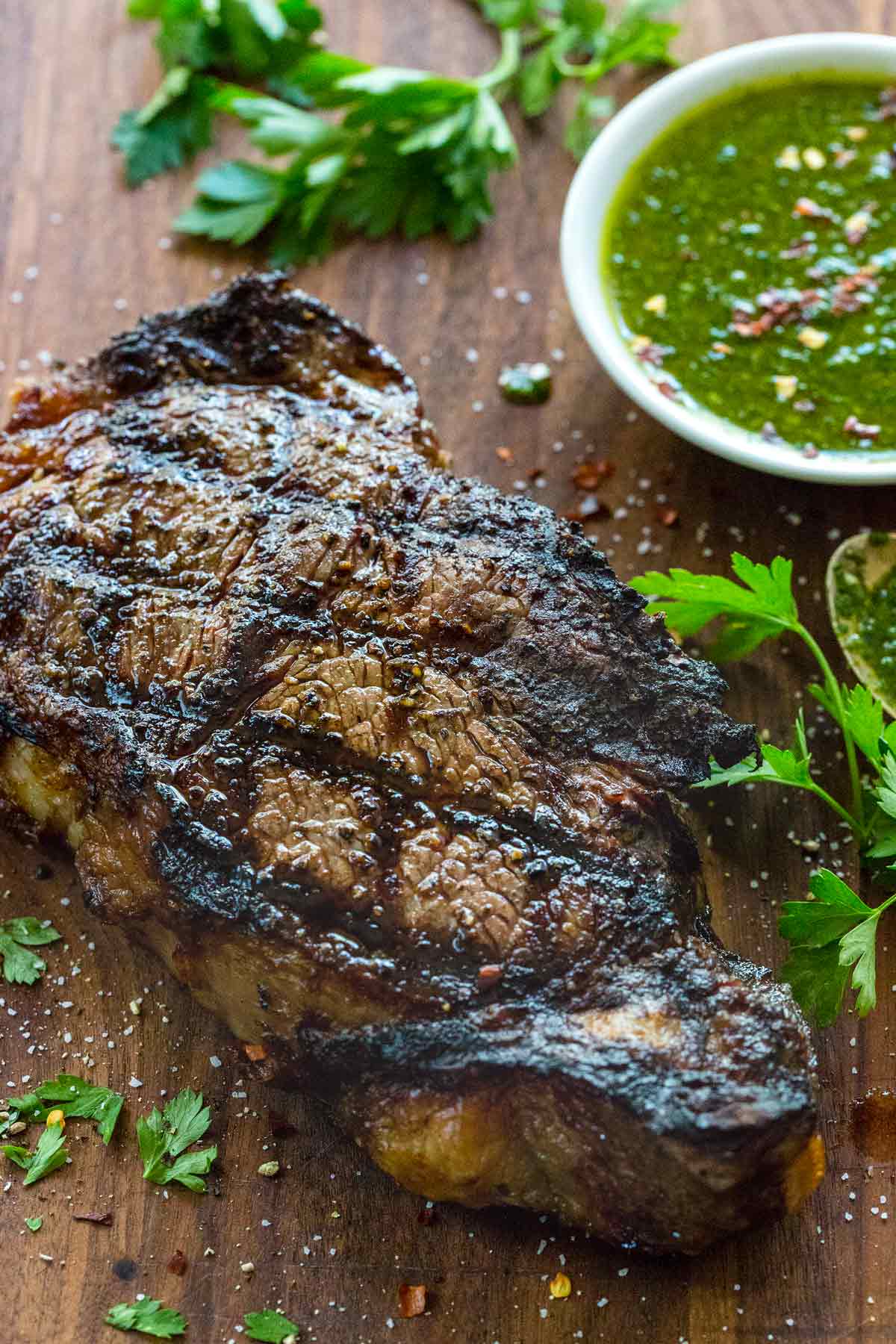
7) Patience pays off- Rest meat!
Resting meat ensures maximum juiciness. Muscle fibers contract and squeeze the moisture out as it cooks. Resting meat before slicing allows it to relax and reabsorb moisture. This process also plays into the carryover concept for certain foods so that you can nail the perfect medium-rare temperature for steaks.
Guidelines for resting different types of meat:
- Steaks, pork/lamb chops, chicken parts: 5 to 10 minutes
- Beef, pork, lamb roasts: 15 to 30 minutes
- Pork tenderloin: 10 minutes
- Whole chicken: 15 to 0 minutes
- Whole turkey: 30 to 40 minutes
8) Knowing Which Type of Salt to Use
About 99.9% of my recipes use salt because it’s an effective flavor and texture enhancer when used properly. The amounts I provide in my recipes are guidelines, and I encourage you to season to your liking.
There are endless types of salt, and they vary in size, color, and flavor. The smaller the granule, the greater its surface area, so it melts faster. For nearly all of my recipes, I use Morton’s coarse kosher salt because it doesn’t contain additives. I also like the taste and how the flakes cling well to meats and vegetables. If you use Diamond brand kosher salt, use about 30% more.
Get into the habit of always tasting your dish throughout the cooking process, especially right before serving. It’s something my culinary school teachers pounded into our brains because the seasoning transforms over time.
9) When to Use Baking Soda vs Baking Powder
These two ingredients are frequently mixed up because they both contain an alkaline leavening agent, sodium bicarbonate, which is simply baking soda. And by itself, it needs an acid like buttermilk to react and bubble. Baking powder, on the other hand, is baking soda PLUS an acid like cream of tartar, and an inert stabilizer like cornstarch to prevent it from reacting in the container.
When to use baking soda vs. baking powder? Baking soda is great for adding more spread and crispiness to cookies, or when a recipe already has a good amount of acid. I use baking powder (specifically double-acting) for cakes and cookies for extra insurance so that it doesn’t lose all its rising power during mixing.
Baking powder can also help to tenderize meat. It’s a technique often used in Chinese stir-fries to soften tougher cuts, but it also helps to create a crispy crust in baked chicken wings.
10) The Importance of Food Safety
As a food scientist, I feel it’s extremely important to mention food safety in the kitchen. Cooking for yourself and your loved ones is the fun part, but making sure the food you prepare is safe to eat shouldn’t be overlooked.
A few simple food safety tips to keep in mind:
- Cross-contamination: Do not use the same cutting board to cut vegetables as you do for raw meat, poultry, or fish. Cut all the vegetables first, then prep the uncooked proteins. Also, clean and sanitize the sink after cleaning meat. Do not serve food on plates that have raw meat! I see this a lot when barbecuing.
- Safe thawing: Thaw frozen meats in the refrigerator, not on the counter.
- Serving food: Keep cold food below 40ºF, and hot foods above 140ºF. Between 40 and 140°F (44 and 60°C) is the temperature danger zone, where bacteria can multiply rapidly and cause illness.
- Discard food: Throw food out if it’s been sitting in the temperature danger zone longer than 2 hours. If it’s above 90ºF outside and you’re having a picnic or BBQ, throw it out after 1 hour.
- Refrigerate: Refrigerate any leftovers within 2 hours. If storing hot food, make sure to cool it to room temperature before refrigerating.
Look at each recipe as a tasty experiment. Observe, learn, and have fun! I hope you find my Top 10 Cooking Tips helpful along your culinary journey.
Stay curious in the kitchen, and hungry to learn!




Albert says
I love your recipes, keep up the great work!
Jessica Gavin says
Thank you so much, Albert!
Cinda says
Yeast intimidates me! I never have the really soft fluffy rolls.
Jessica Gavin says
I have an article just for you about baking with yeast! It’s really the first step of how they are incorporated into the dough that’s crucial. I know you can do it!
Caroline says
Hi Jessica, I’m interested in fermented and blackened foods, in particular. I don’t know much about food safety, so I’m looking for direction on how to make sure the food I prepare is safe. I’m vegan, and I feel that plant based foods are less likely to culture botulism toxins than meat, but Im in no way certain of that. I’d appreciate any tips you may pass on … where could I find out more, for example. Thanking you in advance.
Caroline
Bec Childress says
I’m excited with this. Thank goodness you explain as I’ve already just today learned some things.
Jessica Gavin says
I’m so happy that you found the cooking tips helpful, Bec!
Nancy P Ellis says
Thank you, Jessica. Your Blog is very informative. I, too, would love some information concerning which herbs to use with different foods and in what amounts. Nancy
Jessica Gavin says
Thank you, Nancy! That is a great topic to create an article for! I will keep an herb and food paring post in mind.
Shirley says
What is the best digital scale to purchase?
Jessica Gavin says
I have an OXO digital scale. Totally affordable!
Mike Ridgley says
Jessica, can bacon be used as a more flavorful alternative to butter in a recipe?
Jessica Gavin says
Yes, you can use some chopped bacon or the grease for savory recipes. If using bacon pieces, just remove it from the pan so it doesn’t burn, and keep the grease in the pan.
Jerry Hadesman says
Adding salt to our water for pasta. We pretty much follow a low sodium or no sodium diet when possible. Does adding salt to the water contribute salt content to the actual pasta or is this just for taste?
Jessica Gavin says
A small amount of sodium is dissolved into the pasta, but it doesn’t taste salty, just a little less bland. However, you can skip the salt and just adjust the seasoning to the sauce you are using later.
Michele Hyson says
I just discovered you and LOVE your tips, blog, and just made grandma’s meatballs last night. The family LOVED it. We have leftovers for sandwiches tonight! Thank you!
Branko Poznanovich says
Hi Jessica.
I cook for one, as I live alone. So, I do not have much options when considering economy and waste. Fish is my favourite as well as least wastey. Am 90 yrs of age, but would love to learn something from you, regarding spicing food correctly and I am intrigued to know “The Science” which is behind food preparation. For food is not something we just need, But something to enjoy, taking time over! Thank you Jessica most kindly for this opportunity. Kind regards. Branko.
Jessica Gavin says
Thank you for your feedback and love for food! I will definitely think about an article regarding spices. Happy cooking!
Branko Poznanovich says
Thank you Jessica; you are very kind.
FLORENCE says
Very helpful…………also very clear and easy to understand,